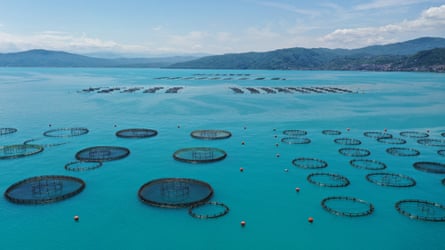
As the international community grapples with the existential challenges of climate change, food security, and world hunger, the United Nations has increasingly looked toward the world’s oceans for solutions. Central to this vision is the concept of a "blue transformation"—an ambitious strategic push spearheaded by the UN’s Food and Agriculture Organization (FAO) to reshape the global seafood landscape. By ramping up aquaculture (fish farming) by a staggering 75% by the year 2040, the organization hopes to bridge the widening nutritional gap for a growing global population and alleviate the immense pressures placed on overfished marine ecosystems.
Yet, a comprehensive new investigation and modeling analysis by the Changing Markets Foundation, conducted in collaboration with researchers at the University of British Columbia (UBC), reveals a deeply unsettling paradox at the heart of this strategy. According to the findings, if current industry practices persist and the FAO’s expansion targets are met without stringent regulatory safeguards, nearly half of the world’s wild fish catch—up to 41.4 million tonnes annually—will be dragged from the oceans not to feed hungry humans, but to be ground into fishmeal and fish oil to fatten up farmed carnivorous species like salmon and shrimp.
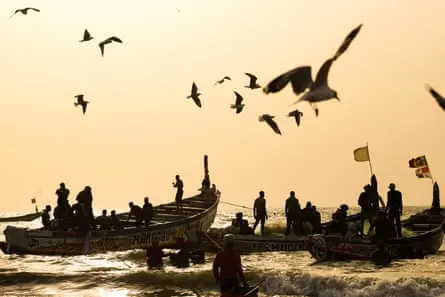
This practice represents a profound net loss of global nutrition and introduces severe human rights and food security concerns, particularly in the Global South. In coastal West African nations like Senegal and The Gambia, industrial fishmeal and fish oil factories are actively competing with artisanal fishers and local communities for dwindling stocks of small pelagic fish, such as sardines and sardinella. The consequences are stark: millions of people are being deprived of an affordable, highly nutritious staple food source, traditional livelihoods are collapsing, and marine ecosystems are being pushed closer to the brink of ecological collapse.
As experts call for a radical pivot in how the world approaches sustainable aquaculture, the central question remains: Can the global food system feed the future without devouring the very oceans that sustain it?
Detailed Chronology: The Path to the Blue Transformation Crisis
To understand how the global aquaculture debate reached this critical juncture, it is necessary to examine the trajectory of policy decisions, scientific warnings, and industrial expansion over the past two decades.
Late 1990s – Early 2000s: Global aquaculture begins its meteoric rise, quickly coming to supply more than half of all aquatic animals consumed worldwide. To sustain carnivorous farmed species—which cannot naturally transition to a plant-based diet—the industry relies heavily on "reduction fisheries," scooping up massive tonnages of wild-caught small pelagic fish to convert into aquafeed. Between 1999 and 2009, early warning signs emerge in West Africa as foreign-backed reduction plants begin setting up operations along the coast.
1999–2019: Longitudinal data tracking dietary trends reveals a devastating local impact. In Senegal, annual fish consumption per person plummets by more than 10 kilograms over this twenty-year span, as locally caught fish are increasingly diverted toward export-oriented animal feed markets in Europe and Asia.
2021: The Changing Markets Foundation publishes a landmark investigation titled "Feeding a Monster," exposing how European aquaculture and animal feed industries are effectively siphoning millions of tons of affordable protein away from vulnerable West African communities. The report estimates that enough fish to feed 33 million people across the region is being diverted annually.
December 2023: The FAO, in collaboration with the Global Roundtable on Marine Ingredients (an industry coalition), hosts a multi-stakeholder workshop in Ghana. Tensions flare as local small-scale fisheries representatives and civil society groups fiercely object to the expansion of fishmeal factories. They demand that species like sardinella be strictly reserved for direct human consumption. However, subsequent official accounts of the workshop released by organizers fail to capture the profound, unified opposition expressed by African delegates.
June 2024: The crisis reaches international diplomatic circles when Elisa Morgera, the UN Special Rapporteur on climate change, presents a scathing report to the UN Human Rights Council in Geneva. Morgera warns that utilizing nutritionally dense wild fish for industrial aquafeed raises "serious human rights concerns" by directly undermining local populations’ right to adequate food.
Present Day: Armed with new predictive modeling from the University of British Columbia, campaigners release fresh data demonstrating that the FAO’s 75% aquaculture expansion goal, if left unguided, will accelerate ecological extraction to catastrophic levels—triggering an urgent global debate over the future of the blue economy.
Supporting Context & Metrics: The Mathematics of Marine Exploitation
The mechanics of modern aquaculture present a fundamental thermodynamic challenge: transforming wild marine life into farmed seafood inherently results in a net loss of biological calories and vital nutrients.
The Feed Conversion Dilemma
Aquaculture is frequently heralded as a sustainable alternative to wild capture fisheries, which have stagnated or declined due to decades of overexploitation. However, this narrative overlooks the vast quantities of wild fish required to sustain high-value farmed species. Salmon, sea bass, shrimp, and other carnivorous species depend heavily on diets rich in fishmeal (protein-dense powder) and fish oil (lipid-rich liquid) derived from "reduction fisheries."
These fisheries target small, schooling pelagic species—such as anchovies, sardines, mackerel, and sardinella—which form the foundational bedrock of marine food webs. They are consumed by larger predatory fish, marine mammals, and seabirds. When industrial fleets vacuum these species from the ocean to feed farmed fish, the disruption reverberates across entire marine ecosystems.
The UBC Modeling Scenarios
To quantify the trajectory of the FAO’s "blue transformation" agenda, researchers at the University of British Columbia developed sophisticated predictive models examining various pathways to achieve the targeted 75% increase in aquaculture production by 2040.
Business-As-Usual Scenario: If current industrial trends, efficiency gains, and species allocations continue unchecked, the modeling shows that up to 34.6 million tonnes of wild fish will be pulled from the oceans annually by 2040 simply to be ground into feed.
Feed-Intensive Scenario: If the expansion is disproportionately weighted toward high-value, carnivorous species like shrimp and salmon—which demand high ratios of marine ingredients—demand for wild fish skyrockets to 41.4 million tonnes annually. This staggering figure is equivalent to 46% of the entire global wild-fish catch recorded in 2020.
Diversified, Low-Input Scenario: Conversely, the researchers demonstrated that this outcome is not inevitable. By deliberately shifting production away from carnivorous species and toward lower-input, extractive-free, or herbivorous species (such as certain bivalves, carp, and tilapia) alongside strict reductions in fishmeal dependency, the FAO’s growth targets can be met while keeping demand for whole wild fish well below 2020 levels.
The West African Flashpoint
The real-world human cost of these metrics is most acutely visible in West Africa. Nations like Senegal, Mauritania, and The Gambia have become major global hubs for fishmeal and fish oil production. Foreign-owned or joint-venture processing plants operate around the clock, turning nutrient-rich fish into animal feed destined for overseas aquaculture and livestock sectors.
According to research highlighted by the Changing Markets Foundation, this industrial extraction directly undermines food sovereignty:
Nutritional Deprivation: Millions of people in the region rely on fish as their primary and most affordable source of animal protein, essential micronutrients, and omega-3 fatty acids.
Livelihood Destruction: Artisanal fishers, who use sustainable, small-scale gear, find themselves unable to compete with industrial reduction trawlers.
Gender Impacts: Women in coastal communities, who traditionally manage the post-harvest processing, smoking, and local marketing of fish, are facing severe economic marginalization and joblessness as raw fish supplies dry up or become unaffordable.
Official Statements and Stakeholder Perspectives
The debate over the future of aquaculture has exposed deep fractures between UN developmental ambitions, independent scientific researchers, corporate industry lobbies, and frontline coastal communities.
Tara Ganesh, Senior Campaigner at the Changing Markets Foundation:
"These fish are naturally carnivorous species, so that is what they would eat in the wild. You can’t suddenly raise a salmon overnight that is vegetarian… Our modelling exposes the absurdity of production systems that essentially rely on other fish to make fish. It’s a net loss of fish—a net loss of nutrition."
Ganesh emphasized that while feed producers have made incremental technical efficiencies—reducing the absolute amount of wild fish used per kilogram of farmed fish produced—this has been entirely offset by exponential growth in total production volume. She stressed the urgent necessity for policy interventions:
"There is an urgent need for safeguards in the FAO’s policy to explicitly preserve wild fish for human consumption. We need to direct aquaculture growth toward species requiring little or no fishmeal or fish oil."
Muhammed Oyinlola, Aquatic Ecologist at the University of British Columbia:
"Our modelling shows that the outcome is not inevitable. A more diversified option favours growth in lower-input species, while ambiguity leaves the door open to growth that threatens communities, fisheries and the climate."
Oyinlola’s remarks underscore a glaring policy vacuum within the FAO’s official roadmap and guidelines for sustainable aquaculture. Critics have pointed out that despite outlining sweeping production targets, the roadmap fails to establish binding criteria on how that growth should be achieved. Furthermore, human rights advocates and researchers have noted with alarm that explicit safeguards addressing the nutritional and food security impacts of aquaculture trade were quietly excised from successive drafts of the FAO guidelines without transparent explanation.
Elisa Morgera, UN Special Rapporteur on Climate Change:
In her formal address to the UN Human Rights Council in Geneva, Morgera underscored the legal and ethical dimensions of the crisis, stating that the conversion of high-grade edible fish into industrial animal feed raises "serious human rights concerns" because it directly curtails vulnerable populations’ fundamental right to adequate food.
Future Outlook: Navigating the Crossroads of Marine Sustainability
As the international community looks ahead to the 2030 targets for eradicating global hunger and the 2040 horizon for the FAO’s blue transformation, the aquaculture sector stands at a definitive crossroads.
Without robust regulatory intervention, the expansion of fish farming risks exacerbating the very crises it purports to solve. Turning half of the world’s wild catch into feed for luxury seafood markets represents an unsustainable drain on marine biodiversity and an ethical failure toward the impoverished coastal populations of the Global South.
However, the scientific consensus offers a clear roadmap for reform. To avert ecological and humanitarian disaster, policymakers, international bodies, and industry leaders must enact the following structural changes:
Binding Safeguards for Human Consumption: The FAO must overhaul its policy frameworks to explicitly prioritize wild-caught pelagic species for direct human consumption, instituting strict caps on the volume of food-grade fish that can be diverted into reduction plants.
Strategic Species Diversification: Publicly funded aquaculture initiatives and corporate investments must pivot away from feed-intensive carnivorous species (such as salmon, trout, and intensive shrimp farming) and toward low-trophic, extractive species—including filter-feeding bivalves (mussels, oysters), seaweeds, and herbivorous freshwater fish—which require minimal or zero marine-based feed inputs.
Transparency and Inclusion in Policymaking: The voices of small-scale fishers, indigenous groups, and local communities from regions like West Africa must be authentically integrated into global fisheries governance, ensuring that trade policies do not sacrifice regional food security for export-driven profits.
Accelerating Alternative Feeds: Research and development funding must be aggressively funneled into scalable, sustainable alternatives to fishmeal and fish oil, including single-cell proteins, insect meal, and marine algal oils.
The oceans are not an infinite reservoir. If the blue transformation is to realize its promise of feeding the world equitably and sustainably, it must evolve from a model of industrial extraction into a truly regenerative enterprise that respects both the limits of marine ecosystems and the human rights of vulnerable coastal communities.