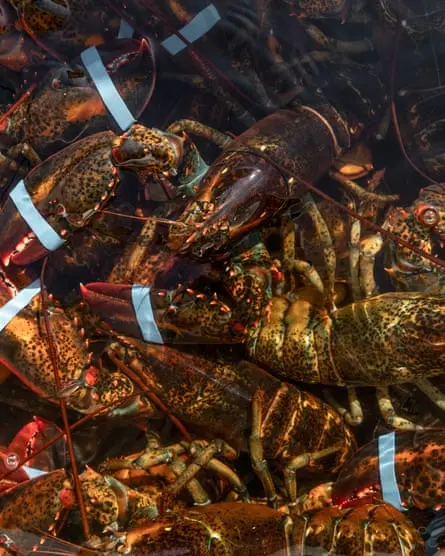
For generations, the lobster roll has reigned as the undisputed culinary emblem of a New England summer. Served hot and dripping with melted butter or chilled and tossed with crisp celery, mayonnaise, and fresh herbs, this once-humble staple of regional American cuisine has undergone a radical transformation. Today, a single roll routinely commands $30, with prices frequently scaling to $50—a striking economic symptom of changing times and, more critically, changing seas.
Beneath the surface of this gastronomic dilemma lies a profound ecological crisis. The Gulf of Maine, a vital artery of the North Atlantic marine ecosystem, is warming faster than 99% of the world’s oceans. For traditional fishing communities, this thermal shift is not an abstract statistical projection; it is a daily reality that threatens livelihoods, shifts migratory patterns, and disrupts ancient food webs.
In response to this existential threat, a new frontier of marine science and geoengineering has emerged: Marine Carbon Dioxide Removal (mCDR). Accounting for the fact that the world’s oceans absorb approximately 31% of all atmospheric carbon emissions, scientists and private enterprises are racing to determine whether marine systems can be artificially manipulated to soak up even more carbon. Proponents argue that mCDR, deployed alongside aggressive fossil fuel reductions, could prevent the planet from crossing the catastrophic 2°C (3.6°F) warming tipping point outlined in the 2016 Paris Agreement.
However, this high-stakes race faces severe turbulence. While private investments and international academic grants are pushing the boundaries of what is possible, abrupt political shifts—most notably sweeping funding cuts to U.S. federal ocean sciences—have brought crucial research to the brink of collapse. As scientists navigate uncharted biological waters to test techniques like Ocean Alkalinity Enhancement (OAE) and iron fertilisation, a critical question remains: Can we understand the impacts of marine geoengineering on life in the sea before commercial interests rush to commercialise a technology we barely understand?
Detailed Chronology: From Humble Fisheries to High-Tech Geoengineering
The trajectory of the New England fishing crisis and the subsequent rise of marine carbon removal spans decades of accumulating environmental pressures, followed by a sudden burst of technological experimentation and political crosswinds.
Phase One: The Decline of the Inshore Fishery (2010–2020)
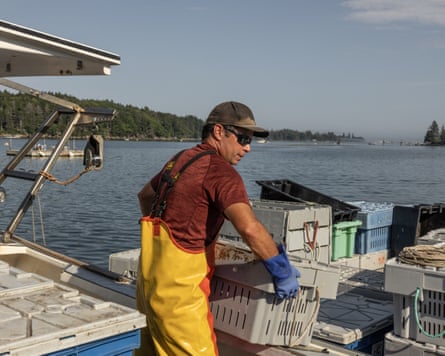
For Scott Lord, a third-generation lobster fisherman hauling traps on the Gulf of Maine, the transformation of the ocean has unfolded in slow motion over the past fifteen years. Longtime staples of coastal bycatch—such as sea urchins, sand dollars, and starfish—have grown increasingly scarce. Most alarming to Lord and his peers is the precipitous drop in the population of inshore lobsters, forcing fishers to travel farther and farther offshore to sustain their catch. Seeking answers, Lord joined a regional shellfish committee, posing a question that haunts coastal communities from Maine to Massachusetts: "Why are there not clams where there used to be clams? Why are they not coming back, no matter what we do?"
Phase Two: The Private and Federal Funding Surge (2020–2023)
While fishermen grappled with declining yields, the scientific community began looking to the open ocean as a carbon sink. Driven initially by private-sector climate tech investments, interest in marine carbon dioxide removal expanded rapidly. According to data tracked by Ocean Carbon Removal Watch—a database launched by the Pulitzer Center—more than £370m ($470m) has been poured into the mCDR sector over the past five years.
This private momentum was supercharged in 2023 by a wave of U.S. federal investments, which poured at least £44m into scientific field trials, aligning academic institutions with national climate mitigation goals.
Phase Three: The U.S. Funding Cliff and International Shifts (2024–Present)
The momentum stalled abruptly following political shifts in Washington. Sweeping administrative cuts to federally funded ocean sciences—including reductions targeting the National Oceanic and Atmospheric Administration (NOAA) and the Department of Energy (DoE)—dramatically curtailed domestic mCDR research. Major grants, such as a $5m Department of Energy allocation for iron fertilisation studies led by marine radiochemist Ken Buesseler, were halted midway with only a fraction of the funds disbursed.
As U.S. funding dried up, the focal point of academic research began shifting toward Europe. In the past two years, the European Union disbursed more than £8.5m in grants distributed across more than two dozen universities in Britain and continental Europe, providing a vital lifeline for researchers striving to establish safe ecological thresholds for marine carbon interventions.
Supporting Context & Metrics: The Economics and Science of mCDR
To grasp the magnitude of marine carbon removal, one must examine the staggering economic and environmental figures that underpin the industry.
The Ocean Carbon Sink: Oceans naturally absorb roughly 31% of all anthropogenic carbon dioxide emissions, making them the planet’s largest active carbon sink.
The Seafood Economy: In 2023 alone, the U.S. commercial lobster harvest accounted for just under $700m (approximately £550m), representing the second-highest economic value of any seafood landed nationwide.
Sector Investment: Over the past five years, cumulative global investments in mCDR have surpassed £370m, shifting from purely speculative venture capital to structured academic and field trials.
The Warming Gulf: The Gulf of Maine is warming faster than 99% of the world’s oceans, acting as a frontline indicator of global climate disruption.
European Intervention: The European Union has injected over £8.5m in academic grants over the past two years to study marine carbon dioxide removal, filling a critical vacuum left by American funding retreats.
At the center of these metrics is Ocean Alkalinity Enhancement (OAE), the technique commanding the most research attention. OAE involves dispersing alkaline materials—such as sodium hydroxide—over broad expanses of seawater. This increases the water’s capacity to securely lock away atmospheric carbon dioxide as dissolved inorganic carbon while simultaneously combating ocean acidification, the "evil twin" of global heating.
Official Statements and Expert Perspectives
The push and pull of mCDR is defined by a tension between urgent climate action and precautionary ecological science. Researchers caught in the crossfire have been vocal about the implications of current funding cuts and the rush to commercialisation.
Adam Subhas, a scientist at the Woods Hole Oceanographic Institution and head of the LOC-NESS (Locking Ocean Carbon in the North-east Shelf and Slope) initiative—described by peers as a rare "unicorn" in surviving U.S. ocean research—emphasizes the necessity of rigorous experimentation:
"The ocean is 70% of the Earth’s surface, and if this is really going to scale up, we have to understand how this might work in the open ocean, too. We need to be really clear about the need for large-scale emissions reductions, while at the same time figuring out the science behind some of these more novel approaches that might help supplement those large-scale reductions into the future."
Subhas’s team made headlines last summer when they released approximately 65,000 litres of sodium hydroxide mixed with a traceable red dye 40 miles offshore from Boston in the Gulf of Maine’s Wilkinson Basin, utilizing autonomous underwater vehicles to track carbon uptake.
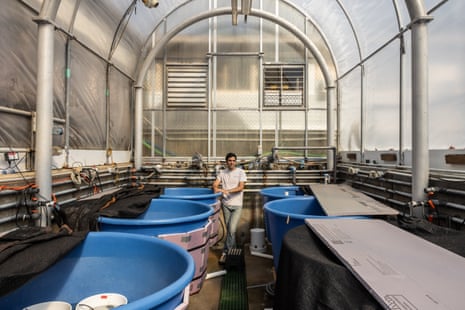
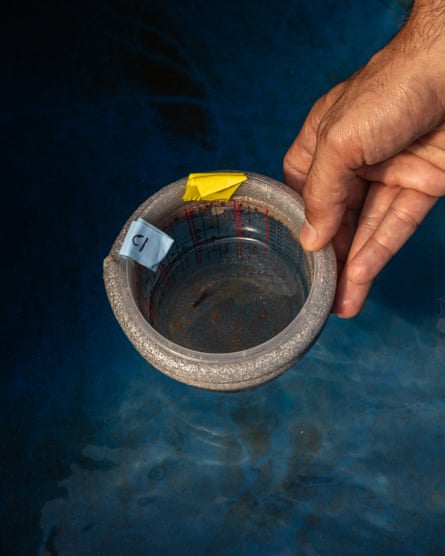
Marine biologist Chris Murray, who designed specialized floating mesh cups to prevent captive lobsters from cannibalizing each other during physiological trials at Woods Hole, highlights the intricate biological challenges of testing OAE:
"We need to do this research. It’s really important to weigh these impacts against what is predicted to occur in the ocean. We know that ocean warming is going to be a major disruptive force to marine food webs."
From across the Atlantic, Sam Dupont, a senior lecturer at the University of Gothenburg studying the physiological thresholds of sea urchins, mussels, and fish eggs in Sweden and Iceland, issues a sharp warning regarding private industry’s rush toward carbon-credit monetisation:
"The equivalent would be: you smoke a cigarette and you go to the doctor the next day and say, ‘There is no effect on cancer.’ Commercial scale is ready to jump, but we don’t understand how it [OAE] is going to impact biology yet. It will likely take a decade before scientists can accurately state what the safe alkalinity thresholds are for marine life."
Ken Buesseler, professor emeritus at Woods Hole and leader of the Ex-OIS iron fertilisation project, echoes these frustrations regarding political volatility:
"I feel like we are just kicking the can. The climate crisis isn’t going away because we stop funding research into ocean solutions, so the problem will be with us. It is getting harder and harder to address."
Future Outlook: Navigating Uncharted Waters
As the scientific community looks toward the latter half of the decade, the future of marine carbon removal hangs in a delicate balance.
On one hand, pilot projects are proving that chemical additions and carbon sequestration signals can be measured with unprecedented precision using autonomous aquatic drones and satellite monitoring. On the other hand, the withdrawal of federal backing in the United States threatens to cede leadership in marine governance and safety protocols to unregulated or hastily commercialized private actors.
Projects like Ex-OIS—seeking permits to study iron fertilisation hundreds of miles off the coast of Alaska by 2028—demonstrate that researchers are attempting to navigate rigorous national and international regulatory frameworks. Yet, without sustainable public funding, such ambitious ventures risk stalling before they leave the laboratory.
For fishermen like Scott Lord, hauling traps in a rapidly warming Gulf of Maine, the philosophical debate over geoengineering matters far less than the tangible recovery of the marine ecosystem. Whether through cutting global fossil fuel emissions or carefully exploring the boundaries of ocean alkalinity and carbon removal, scientists agree on one foundational truth: the health of human coastal economies and the stability of the global climate remain inextricably bound to the fate of our oceans.
This investigative report was produced in partnership with the Pulitzer Center and with support from an Alicia Patterson Fellowship.