


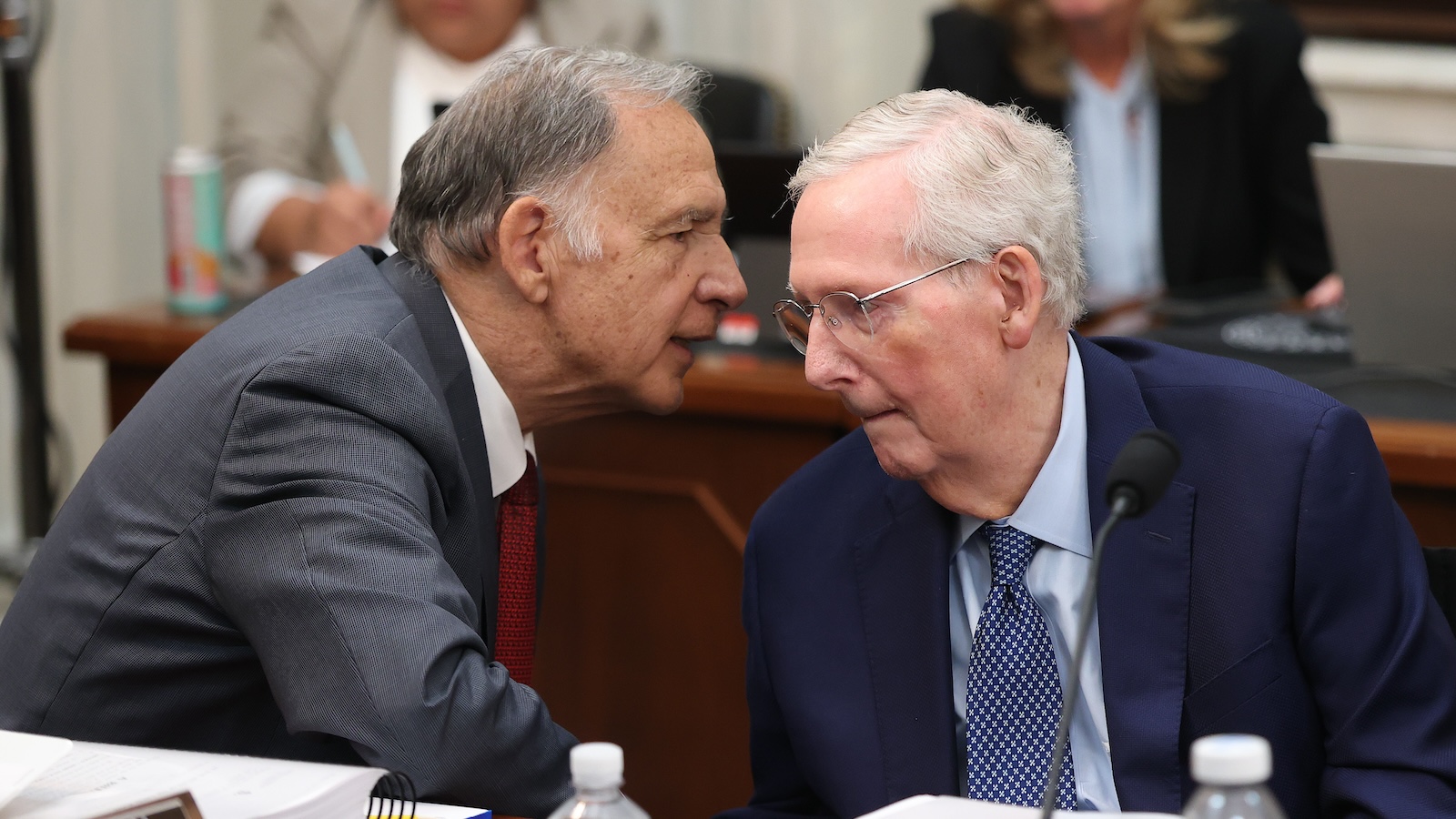
WASHINGTON — After a three-month medical absence, Senator Mitch McConnell made a high-stakes return to Congress last Tuesday, immediately casting a decisive vote within the Republican-led Senate Agriculture Committee. The move broke a legislative logjam that had stretched back to August, when committee Democrats blocked the chamber’s draft of the farm bill from moving forward to a full floor vote.
Yet, despite McConnell’s return and the procedural victory in committee, the path forward remains perilous. Lawmakers on both sides of the aisle acknowledge that it is increasingly unlikely Congress will pass a comprehensive farm bill this year. If current trends hold, it will mark the fourth consecutive year that lawmakers have failed to renew the nation’s cornerstone legislative package for agricultural policy, nutrition assistance, and rural development—a multi-year failure that has left farmers, state officials, and anti-hunger advocates navigating an unpredictable regulatory and financial landscape.
Executive Overview
The legislative paralysis gripping Capitol Hill is not merely a byproduct of routine partisan bickering; it is a structural collision between sweeping federal budget cuts and critical domestic assistance programs. At the heart of the standoff is the Supplemental Nutrition Assistance Program (SNAP), which faced a staggering $186 billion funding reduction under the One Big Beautiful Bill Act signed into law by President Donald Trump last summer.
While Republicans hold a 53-seat majority in the Senate, passing a farm bill requires a 60-vote threshold to overcome procedural hurdles. To clear this bar before the impending November midterm elections, GOP leadership will need to sway several Democrats to their side. However, Senate Democrats have drawn a hard line, refusing to back any agricultural package that fails to restore SNAP funding or mitigate the administrative cost-shifts slated to hit state budgets.
For small- and medium-sized farmers, rural communities, and state governments, the stakes could not be higher. Caught between soaring input costs—such as record diesel prices—unstable trade markets, and the specter of reduced federal support, agricultural stakeholders are increasingly forced to question whether a stalled legislative process and reliance on stopgap measures might actually be preferable to a deeply flawed overhaul.
Detailed Chronology of the Legislative Standoff
To understand how American agricultural policy arrived at this critical juncture, it is necessary to examine the timeline of events leading up to McConnell’s return:
- Summer: Tensions reached a boiling point when President Trump signed the One Big Beautiful Bill Act, which slashed federal spending for SNAP by $186 billion. The legislation fundamentally altered the fiscal math for social safety net programs typically governed or adjusted by the quinquennial farm bill cycle.
- Late August: Committee-level negotiations collapsed when Senate Democrats unified to block the Republican-authored farm bill from advancing out of the Senate Agriculture Committee, citing the absence of SNAP funding restoration and unaddressed administrative burdens for states.
- Early September: Senator Mitch McConnell returned to Washington following a three-month medical hiatus. His immediate presence provided the pivotal vote needed to break the committee-level stalemate and push the draft legislation out of the agriculture panel, setting up an anticipated, yet deeply uncertain, floor fight.
- Mid-September to Present: With midterm elections looming in November, the legislative calendar is shrinking rapidly. Industry analysts, policy directors, and farm advocacy groups have expressed growing pessimism regarding the prospect of a floor vote reaching the 60-vote threshold before the end of the year.
Supporting Context & Metrics: The Human and Economic Toll of SNAP Cuts
While the term "farm bill" often evokes images of Midwestern cornfields, tractors, and commodity subsidies, the vast majority of the legislation’s baseline funding—typically around 80 percent—is dedicated to nutrition programs, primarily SNAP. Consequently, any legislative changes to SNAP send shockwaves well beyond urban food banks, directly impacting the economic vitality of rural America.
The Rural SNAP Paradox
A common misconception is that SNAP is exclusively an urban program. In reality, rural communities frequently experience higher per-capita rates of SNAP participation than their urban counterparts due to lower average median incomes and a scarcity of high-wage employment opportunities in agriculture-dependent regions.
"The farmers in our network live in rural areas," notes Jody Osmund, a founding member of the FACE Ag Network, a coalition of pasture-based livestock producers. "Rural areas have a higher uptake of SNAP participation than urban areas. So it’s hurting our community directly."
When low-income families in rural counties see their nutritional benefits slashed by federal policy, local grocery stores—often the lifeblood of small-town economies—experience immediate drops in revenue. This, in turn, diminishes the local customer base for regional farmers who sell their goods through direct-to-consumer channels or local distribution networks.
State-Level Budgetary Strain
Compounding the direct cuts to beneficiaries is an unaddressed provision in the Senate’s current farm bill draft: a failure to delay structural changes to SNAP’s cost-sharing mechanism. Under the proposed framework, states will shoulder significantly heavier administrative costs to operate the food assistance program.
Mike Lavender, policy director for the National Sustainable Agriculture Coalition, warns that this dynamic will force state legislatures into impossible budgetary dilemmas.
“States are gonna have to rethink their budgets,” Lavender explains. “That could mean that states are looking at, ‘Hey, do we fund education at this level or do we fund SNAP? Or do we fund transportation or SNAP?’ So this is forcing really difficult decisions that could impact departments of agriculture at the state level.”
These zero-sum budget battles disproportionately threaten small- and medium-sized agricultural enterprises. Unlike large agribusiness conglomerates cushioned by massive capital reserves and diversified portfolios, independent producers operate on razor-thin margins. At a time when farmers are grappling with historically high fuel and diesel prices, as well as unpredictable international trade dynamics, state-level retrenchment of agricultural support programs deepens financial vulnerabilities.
Official Statements and Stakeholder Perspectives
As the legislative process stumbles forward, advocacy groups, agricultural coalitions, and policy experts have articulated sharply divergent views on what the failure of this year’s farm bill means for the future of American food production.
A Mixed Bag: Conservation and Animal Welfare Provisions
Amid the broader partisan warfare over nutrition spending, the current Senate draft contains a few provisions that have drawn cautious praise from sustainable agriculture advocates—alongside fierce criticism of others.
One notable development is the complete exclusion of the controversial Save Our Bacon Act. The proposed legislation would have severely restricted the ability of states to set their own animal welfare standards, effectively overriding voter-approved measures designed to ban inhumane practices such as extreme gestation crates for livestock.
“It’s encouraging,” Osmund said regarding the exclusion of the act. Prior to the committee vote, Osmund and members of his coalition traveled to Washington, D.C., to lobby lawmakers directly against the measure.
However, other provisions have sparked intense debate. The current bill includes notable reductions and structural adjustments to vital conservation initiatives, including:
- EQIP (Environmental Quality Incentives Program)
- CSP (Conservation Stewardship Program)
According to Osmund, the issue extends beyond simple budget allocations. He argues that federal conservation dollars have historically been misallocated, directing substantial sums toward waste management systems on massive industrial livestock operations rather than focusing on genuine climate adaptation and regenerative farming techniques.
The Argument for a 2018 Farm Bill Extension
Given the deep divisions over nutrition funding, state-level cost-shifting, and conservation priorities, many agricultural stakeholders have arrived at a counterintuitive conclusion: letting the current legislative effort die might be the best available outcome.
If Congress fails to pass a new farm bill before the statutory deadlines or the end of the year, federal agricultural programs will not immediately grind to a halt. Instead, lawmakers will likely rely on stopgap spending measures or a formal extension of the 2018 Farm Bill.
"A continuation of the 2018 farm bill may be better," Osmund argues. "It’s not good. It is not ideal, but no deal on the current versions of the farm bill, in our opinion, is much better than a very, very bad deal."
Future Outlook: Back to the Drawing Board in 2027?
As Capitol Hill prepares for the final stretch before the November midterm elections, the political reality of the 119th Congress is setting in. With a razor-thin Republican majority in the House and a Senate that requires bipartisan consensus to clear the 60-vote filibuster threshold, bridging the gap on SNAP funding remains an insurmountable obstacle.
Democrats are unlikely to capitulate on nutritional assistance cuts so close to a national election, and Republican leadership faces intense pressure from fiscal conservatives to maintain spending caps established under recent budget deals.
Should the current farm bill initiative collapse entirely, attention will inevitably shift toward stopgap funding extensions to prevent the expiration of baseline commodity supports, dairy margin coverage, and foreign market development programs. For American farmers, however, an extension offers only temporary relief, kicking the fundamental questions of agricultural resilience, climate adaptation, and nutritional security down the road to 2027.
Until then, the nation’s food and agricultural policy remains suspended in a state of chronic legislative paralysis—a casualty of broader partisan battles playing out against the backdrop of an unforgiving electoral calendar.



