

Executive Overview
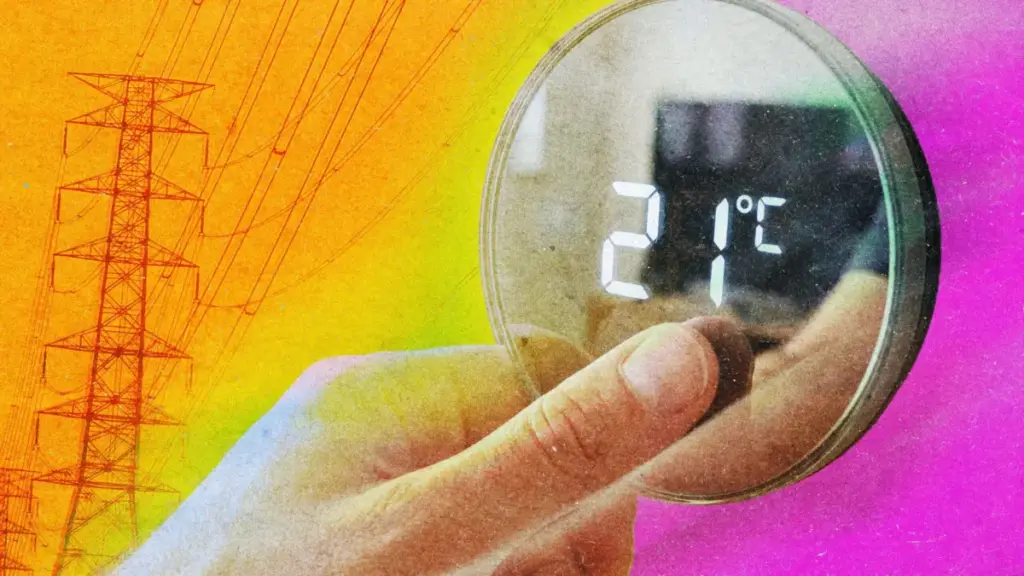
To the casual observer, a suburban home looks entirely ordinary. Inside, the smart thermostat maintains a steady 72 degrees, an electric vehicle sits quietly plugged into the garage charger, and a sleek home battery unit hums softly in the corner of the utility room. To the homeowner, these are simply modern conveniences designed to enhance comfort and lower household chores.
However, to the utility companies and regional grid operators struggling to manage an increasingly strained electrical infrastructure, these everyday appliances represent something entirely different: a distributed, highly responsive power plant.
This paradigm shift is driven by the rapid rise of Virtual Power Plants (VPPs)—synchronized networks of residential energy devices that utilities can digitally command to curb electricity demand or discharge stored power during critical periods. Rather than constructing expensive, fossil-fuel-guzzling peaking plants that sit idle most of the year, modern grid operators are turning to consumer technology to stabilize the grid.
By strategically delaying an electric vehicle’s charging cycle by an hour, slightly dialing back air conditioning units during a scorching summer afternoon, or drawing a trickle of reserve power from a garage-mounted battery, VPPs create a cumulative impact that rivals traditional utility infrastructure.
The numbers are staggering. As of 2023, more than 500 distinct VPP programs were operational across the United States, engaging an estimated 4 million households with smart thermostats alone. With major technology conglomerates like Google heavily investing in VPP architecture to power energy-intensive data centers, and grid stress mounting due to extreme weather and electrification, the movement is scaling rapidly.
Yet, as millions of consumers are invited to turn their homes into micro-generators, critical questions remain regarding equity, data privacy, device compatibility, and daily convenience. This comprehensive guide explores the mechanics of virtual power plants, the financial incentives driving participation, and a practical roadmap for consumers evaluating whether joining a VPP is right for them.
Detailed Chronology: From Peak Demand Pricing to Modern VPPs
To understand how our living rooms became tied to the wholesale electricity market, it helps to examine the evolutionary timeline of demand-side energy management.
Phase 1: The Era of Manual Conservation (1970s–1990s)
Long before smart homes existed, utilities faced the perennial challenge of "peak load"—the fleeting moments during blistering summer heatwaves or freezing winter storms when electricity consumption spiked to dangerous levels. Historically, utilities managed this through blunt instruments: emergency public appeals for conservation (asking citizens to turn off their air conditioners at 5:00 PM), rolling brownouts, or time-of-use pricing structures that charged punitive rates for electricity consumed during peak hours. These measures relied entirely on manual consumer behavior, yielding unpredictable results.
Phase 2: Direct Load Control and Early Smart Devices (2000s–2010s)
The introduction of advanced metering infrastructure (AMI) and early programmable thermostats allowed utilities to take their first tentative steps toward remote control. Programs branded as "Peak Rewards" or "Direct Load Control" emerged. Utilities installed radio-controlled switches on residential central air conditioners or electric water heaters, granting themselves the ability to cycle compressors off and on for short intervals during grid emergencies. While effective, these early systems were one-way streets: utilities broadcasted a signal, and dumb switches obeyed, often leaving consumers frustrated by unexpected shifts in home comfort without any real-time feedback or robust compensation.
Phase 3: The Connected Home and Software Integration (2015–2020)
The proliferation of Wi-Fi-enabled smart thermostats—most notably pioneered by Nest—transformed the landscape. Suddenly, millions of homes possessed internet-connected climate control devices equipped with sophisticated user interfaces. Software platforms like EnergyHub emerged to bridge the gap between fragmented utility infrastructure and proprietary consumer hardware. For the first time, utilities could orchestrate demand response across diverse brands of thermostats via cloud-to-cloud integrations, making participation seamless for tech-savvy homeowners.
Phase 4: The Electrification Boom and the Modern VPP (2021–Present)
Today, we have entered the true VPP era. Driven by aggressive decarbonization mandates, the rapid adoption of electric vehicles (EVs), and the falling cost of residential lithium-ion battery storage (such as Tesla Powerwalls and competitor systems), VPPs have evolved from simple thermostat-cycling schemes into complex, multi-asset energy networks.
Modern VPPs do not merely reduce demand; they actively orchestrate bidirectional energy flows, allowing households to function as active market participants. With major software firms, automakers, and specialized startups entering the space, VPPs are now officially recognized by grid operators as a reliable, scalable alternative to traditional fossil-fuel peaking plants.
Supporting Context & Metrics: The Scale of Distributed Energy
The financial and operational metrics underpinning virtual power plants reveal why utilities, software developers, and policymakers are so bullish on the technology.
Financial Incentives for Consumers
Participating in a VPP is rarely an uncompensated sacrifice. Utilities and third-party aggregators offer a tiered structure of financial rewards designed to offset the minor inconveniences of device control:
- Smart Thermostat Programs: Typically feature an initial sign-up bonus ranging from $50 to $150, supplemented by annual performance or participation payments of $25 to $50.
- Electric Vehicle Managed Charging: Rewards vary widely based on utility territory and rate structures, but drivers often secure hundreds of dollars annually through free charging credits, discounted off-peak electricity rates, or direct cash rebates.
- Home Battery Storage: Representing the most resource-intensive asset class, home battery VPP programs can yield hundreds or even thousands of dollars in annual savings, particularly when paired with time-of-use arbitrage and capacity market payments.
Grid Impact and Capacity Equivalency
While an individual thermostat dropping its cooling target by two degrees or delaying an EV charging session by an hour yields a negligible drop in overall power consumption, aggregation changes the math entirely.
According to industry experts, scaling these micro-adjustments across hundreds of thousands—or millions—of interconnected homes achieves an aggregate load reduction equivalent to firing up a mid-sized, fossil-fueled peaking power plant. This allows regional grid operators to maintain system frequency, prevent brownouts, and defer billions of dollars in capital expenditures required to build new transmission lines and generation facilities.
Geographic Distribution and Market Concentration
VPP deployment is not evenly distributed across the globe. Adoption heavily concentrates in regions characterized by volatile wholesale energy markets, stressed physical grids, supportive state-level regulatory policies, and high densities of flexible consumer technologies. Consequently, the most robust VPP ecosystems today are found in California, Texas, New England, and increasingly across parts of the mid-Atlantic region.
Official Statements and Expert Insights
The transition toward decentralized, software-driven power grids has attracted commentary from top industry leaders, software executives, and regulatory officials.
- Seth Frader-Thompson, CEO and Co-founder of EnergyHub: Emphasizing the cumulative power of aggregation, Frader-Thompson notes that while an individual home’s contribution is minor, scaling the technology creates a profound system-wide impact. He champions VPPs as a rare triple-win for society: "There are not that many things that you can do that directly contribute to decarbonizing the electric supply, or to improving affordability, or to improving reliability, and this is just a clearly effective way to do that. And you get paid for it."
- Severin Borenstein, Faculty Director of UC Berkeley’s Energy Institute at Haas: Offering a measured, regulatory perspective as a member of the board of governors for the California Independent System Operator (CAISO), Borenstein warns against poorly implemented programs. He points out that if a utility miscalculates consumer baselines, it risks paying households for curtailing energy they never intended to use, which could inadvertently drive up costs for non-participating ratepayers. However, he remains optimistic, concluding that "if we do it well, I think it can really be a benefit" in avoiding expensive grid upgrades.
- Joseph Vellone, CEO of ChargeScape: Highlighting the user-friendliness of modern automotive integration, Vellone explains that enrolling an electric vehicle in a managed charging VPP has become as frictionless as clicking a button within an automaker’s proprietary mobile application, removing historical barriers to entry.
- Dr. Sanya Carley, Professor at the University of Pennsylvania: Raising crucial social equity concerns, Dr. Carley cautions that not all households possess the schedule flexibility required to participate. Individuals working night shifts, managing chronic health conditions, fulfilling intensive caregiving roles, or already practicing extreme energy austerity may find their daily lives disrupted if a utility alters their home climate or charging schedules during peak hours.
Future Outlook: Challenges, Privacy, and the Road Ahead
As virtual power plants transition from an innovative novelty to a cornerstone of modern electrical engineering, several critical hurdles must be navigated to ensure sustainable, equitable growth.
1. Navigating the Data Privacy Maze
The backend infrastructure of a VPP relies heavily on continuous data transmission. Smart thermostats log occupancy patterns, sleep schedules, and daily routines; EV chargers track commuting habits and vehicle idle times; home batteries report exact charging and discharging metrics.
While companies like EnergyHub and ChargeScape emphasize that their data collection is strictly functional—focused on asset physics and aggregate population behavior rather than individual surveillance—privacy advocates remain vigilant. The Electronic Frontier Foundation (EFF) has long warned that granular utility and smart-device data can be exploited to infer deeply private domestic behaviors. Ensuring strict regulatory guardrails around who can access, store, and monetize this telemetry will be essential for maintaining public trust.
2. Lowering Barriers to Entry
The financial reality of VPPs presents a distinct equity paradox. The devices yielding the highest financial returns—electric vehicles and residential solar-plus-battery systems—are also the most expensive upfront investments. Lower-income households, renters, and multi-family dwelling residents often lack access to these technologies, leaving them excluded from lucrative grid services while potentially shouldering the systemic costs of grid operation. Expanding smart thermostat programs and subsidizing hardware installations in underserved communities will be vital to democratizing VPP benefits.
3. The Evolution of Battery-to-Grid (Vehicle-to-Grid) Technology
While most consumer VPP programs today operate on a demand-response model (simply turning things off or slowing them down), the future points toward active bidirectional power flow. Vehicle-to-Grid (V2G) and advanced battery-to-grid integration will soon allow homeowners to discharge excess electricity stored in their EV batteries or home storage units directly back into the local grid during high-priced peak events. This capability transforms consumers from passive energy users into active micro-producers, maximizing financial returns and cementing the home’s role as a vital node in the clean energy transition.
Conclusion: Is a Virtual Power Plant Right for You?
For consumers considering whether to enroll their household devices in a VPP program, the decision requires balancing financial incentives against personal lifestyle flexibility.
Before signing up, homeowners should follow a structured evaluation process:
- Discover Programs: Search your utility provider’s website using keywords like demand response, peak rewards, connected solutions, managed charging, or bring your own device. Alternatively, check the companion mobile apps for your smart thermostat, EV, or battery manufacturer.
- Assess Flexibility: Evaluate your household’s daily routines. If your electric vehicle sits plugged in for twelve hours but only requires three hours to recharge, shifting that charging window will be completely invisible to you. If your schedule is rigid or healthcare needs dictate strict climate control, participation may prove too burdensome.
- Review Opt-Out Rules and Privacy Terms: Ensure the program grants you the right to easily override utility adjustments when life demands it (such as preparing for a road trip or hosting guests) and examine how your operational data is handled.
- Weigh the Compensation: Determine whether the sign-up bonuses, bill credits, or free charging align with the device compromises being made.
Your home will likely never look like a towering industrial power plant. But by allowing your thermostat, electric vehicle, or battery storage system to gracefully flex when the electrical grid calls for help, your household can become a powerful, paying participant in the clean energy future.



