

Executive Overview
The renewable natural gas (RNG) and biogas sectors are experiencing a period of profound evolution and maturation. As major waste management firms approach the final completion milestones of their initial landfill-gas-to-RNG infrastructure commitments, the broader industry is strategically pivoting. Stakeholders are aggressively seeking novel end uses for captured gases, upgrading processing technologies, and expanding into non-traditional feedstocks.
A newly published report from the American Biogas Council (ABC) highlights that wastewater treatment plants remain the absolute cornerstone of this movement. Historically the earliest adopters of anaerobic digestion technology, these municipal and industrial facilities continue to anchor the North American biogas ecosystem. Wastewater treatment plants currently operate nearly half of all active anaerobic digesters across the United States.
Simultaneously, private sector project developers are forging multi-million-dollar partnerships, breaking ground on massive agricultural waste-to-energy facilities, and modernizing vital municipal fueling and energy infrastructure. Driven by shifting regulatory frameworks, volatile yet lucrative carbon credit markets, and increasing corporate sustainability commitments, the biogas sector is cementing its role as a critical pillar of the clean energy transition. This comprehensive review examines the structural findings of the latest ABC industry data, details key corporate developments from September 2026, and provides an analysis of current environmental credit pricing trends shaping the economic viability of the market.
Supporting Context & Metrics: The Wastewater Advantage and Market Indicators
Wastewater Treatment Facilities: The Bedrock of Biogas
According to the ABC’s comprehensive report released in late 2026, wastewater treatment plants operate 47% of all anaerobic digesters installed throughout the United States. The data reveals that 29 new facilities have successfully come online nationwide since 2020, bringing the total count of U.S. wastewater plants utilizing anaerobic digestion to 1,213.
Industry criteria generally classify wastewater treatment plants with a flow rate of at least 1 million gallons per day as prime candidates for anaerobic digestion systems. However, the ABC report notes that only about 24% of qualifying facilities currently operate digesters. This leaves a vast, untapped market potential. If the remaining eligible facilities were to adopt anaerobic digestion, the sector could unlock a massive surge in domestic biogas production.
Presently, wastewater digesters capture in excess of 100 billion cubic feet of biogas annually. ABC projections indicate that with more widespread adoption, these facilities could capture an additional 70 billion cubic feet of biogas each year. Furthermore, the operational scope of these digesters has evolved significantly since 2018. Rather than relying solely on traditional power generation, a growing number of wastewater facilities are investing in advanced infrastructure to upgrade raw biogas into pipeline-quality RNG, implement combined heat and power (CHP) systems, or utilize co-digestion techniques to process external organic waste streams alongside standard wastewater sludge.
Carbon and Environmental Credit Markets
The financial viability of biogas and RNG projects remains deeply intertwined with regulatory environmental credit markets. As of October 7, 2026, market evaluations compiled by EcoEngineers provide a clear picture of the regulatory landscape governing renewable fuels:
- D3 RIN Prices (Cellulosic Biofuel): Trading at $2.294, reflecting a slight contraction from the $2.380 average recorded in 2025.
- D5 RIN Prices (Advanced Biofuel): Trading at $2.085, marking a modest increase from the $2.060 price point observed in 2025.
- Oregon Clean Fuels Program: Valued at $81 per metric ton of carbon dioxide equivalent.
- California Low Carbon Fuel Standard (LCFS): Valued at $88 per metric ton of carbon dioxide equivalent.
These pricing benchmarks continue to dictate investment strategies, capital deployment schedules, and revenue forecasting for major RNG producers across North America.
Detailed Chronology: Key September 2026 Industry Developments
The month of September 2026 marked a flurry of operational milestones, project completions, and strategic expansions across the North American biogas sector. Prominent industry players—including Montauk Renewables, Waga Energy, LRS, Casella Waste Systems, and Opal Fuels—advanced significant multi-million-dollar initiatives designed to scale production and capture market share.
Montauk Renewables Opens Swine Waste Facility in North Carolina
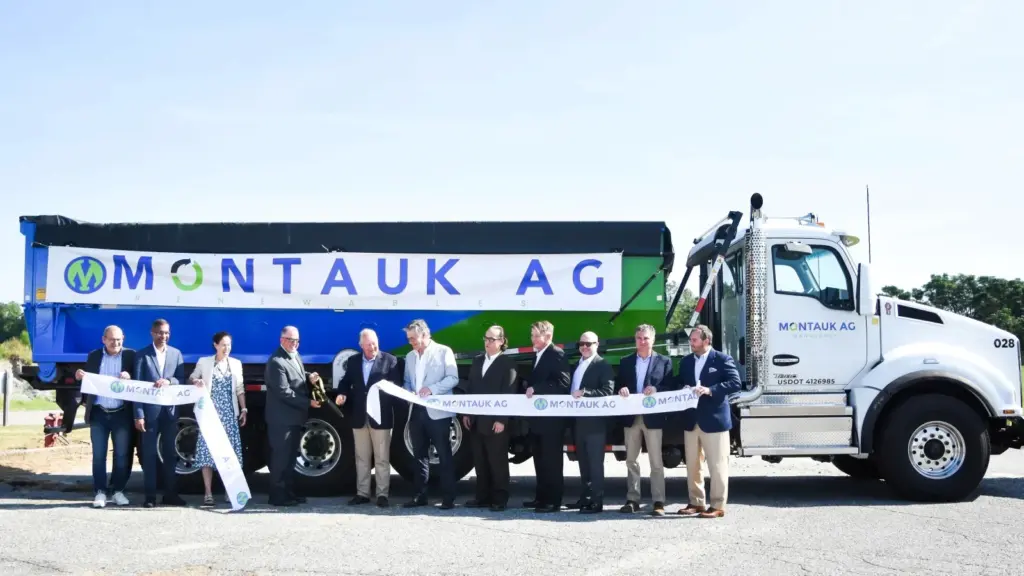
On September 15, 2026, executives from Montauk Renewables, alongside local dignitaries and agricultural partners, celebrated the official ribbon-cutting and opening of a landmark anaerobic digestion facility in Turkey, North Carolina. Representing a major capital investment of approximately $200 million by Montauk, the project is designed to capture agricultural methane emissions by harvesting manure biogas to generate dispatchable electricity.
According to statements released by Montauk Renewables CEO Sean McClain, the facility is backed by long-term supply agreements with more than 80 independent farming operations in the region. To secure reliable off-take revenue, Montauk has secured a 10-year agreement to sell the facility’s electricity, alongside a separate contract to market approximately one-third of the renewable energy certificates (RECs) generated on-site to Duke Energy, as detailed in Montauk’s 2025 annual corporate report.
At maximum operational capacity, the Turkey facility is projected to yield up to 41 megawatt-hours of electric power annually. In addition to clean electricity, the facility will produce roughly 870 tons of high-grade organic fertilizer alternatives each year, creating a circular economy model that diverts waste from local watersheds while enriching regional agricultural soils. This agricultural expansion complements Montauk’s broader financial growth; the company concluded the second quarter with revenues climbing 19.7% year-over-year to $54 million, while quarterly RNG production reached 1.5 million million British thermal units (mmBtus), representing a 3% annual increase.
Waga Energy Expands Landfill Portfolio with LRS and Casella Milestones
French RNG developer Waga Energy, backed by private equity, made waves in September with two major project announcements focused on transforming landfill emissions into high-value renewable natural gas.
On September 15, Waga announced that Lakeshore Recycling Systems (LRS) had selected the company to design, build, own, and operate a state-of-the-art RNG production facility at the Eco-Hill Landfill. Located in Atkinson, Illinois, the landfill is owned by LRS and serves as a vital waste management hub for the greater Chicago metropolitan area. The facility is engineered with an initial processing capacity of 3,000 standard cubic feet per minute, with expectations to yield up to 610,000 mmBtus of pipeline-quality RNG annually. Under the terms of the agreement, LRS will retain a defined percentage of the revenue generated from on-site RNG sales. Construction is currently underway, with commercial operation slated to commence in 2028.
Earlier in the month, on September 3, Waga Energy and Casella Waste Systems jointly announced the successful commissioning of their third collaborative landfill gas-to-RNG project. Situated at Casella’s McKean Landfill in Mount Jewett, Pennsylvania, the facility is designed to process 2,000 standard cubic feet per minute of landfill gas, generating up to 407,000 mmBtus of RNG annually when operating at full capacity. Production at the Mount Jewett site is actively ramping up.
The strategic partnership between Casella and Waga now encompasses three distinct landfill sites. Under this framework, Waga fully finances the engineering and construction phases of each project, retaining ownership and operational responsibilities for a 20-year term, while revenues derived from RNG market sales are equitably shared between the two firms.
Opal Fuels Advances California Biogas and Fueling Infrastructure
Opal Fuels reported substantial operational updates throughout September 2026, reinforcing its foothold in the California clean transportation and municipal energy sectors.
On September 16, Opal announced the formal renewal of its long-standing agreement with the City of San Diego. The five-year contract extension enables Opal to continue operating a premier landfill-gas-to-energy project at the Miramar Landfill. Operating continuously since 1998, the Miramar facility captures methane emissions to generate approximately 400,000 megawatt-hours of electricity annually, supplying power to the local grid and supporting municipal decarbonization goals.
This municipal renewal followed an announcement regarding Opal’s heavy-duty transportation network. In late August, the company completed a major capacity upgrade at its compressed natural gas (CNG) fueling station in Goshen, California. Following extensive engineering renovations, Opal expanded the station’s capacity by 1.7 million gasoline gallon equivalents (GGEs), incorporating a steady supply of low-carbon RNG. Opal originally acquired the Goshen site in 2025. Demonstrating aggressive capital deployment, the company has invested $52.7 million across its broader project portfolio during the first half of 2026, including the Goshen station upgrades.
Financially, Opal reported a 4% year-over-year revenue increase during the second quarter of 2026. While aggregate revenue for the first half of the year experienced a minor 5% contraction compared to the previous year, total RNG production experienced robust growth, climbing 6% year-over-year to reach 2.4 million mmBtus.
Official Statements
Industry leaders have emphasized the necessity of strategic expansion and operational diversification as the biogas market matures.
Commenting on the findings of the American Biogas Council’s newly released municipal wastewater data, ABC Executive Director Patrick Serfass underscored the unrealized potential resting within the nation’s municipal infrastructure:
"Our survey shows there are opportunities to do more — by expanding anaerobic digestion where it makes sense and getting more value from the digesters already in place."
Serfass’s remarks highlight a broader industry consensus: while initial waves of anaerobic digestion infrastructure successfully captured baseline market share, future growth relies on retrofitting existing facilities with advanced gas-upgrading technology and integrating complex co-digestion systems to maximize chemical and thermal energy yields.
Corporate executives leading private sector deployments echo this sentiment of purposeful expansion. Discussing Montauk Renewables’ multi-million-dollar agricultural push, CEO Sean McClain noted that long-term feedstock security remains paramount for institutional investors. By securing multi-decade supply contracts with over 80 individual farming locations in North Carolina and establishing guaranteed off-take agreements with entities like Duke Energy, Montauk has insulated its capital-intensive agricultural projects against short-term commodity price fluctuations.
Similarly, executives from Waga Energy and Casella Waste Systems have praised the collaborative Build-Own-Operate (BOO) model. By removing the capital expenditure burden from waste operators while guaranteeing long-term environmental compliance and revenue-sharing mechanisms, projects like the Atkinson and McKean landfill installations demonstrate how private-equity backing can accelerate the deployment of complex clean energy infrastructure across North America.
Future Outlook
As the biogas industry looks toward the remainder of the decade, the strategic trajectory is shifting from rapid, baseline capacity building to sophisticated optimization and vertical integration.
The wastewater sector is positioned to serve as a primary growth vector. With only 24% of qualifying municipal treatment plants currently utilizing anaerobic digestion, industry advocates like the ABC are actively lobbying for federal and state incentives to unlock the estimated 70 billion cubic feet of uncaptured biogas remaining in the municipal pipeline. Encouraging wastewater facilities to transition from basic flaring or electricity generation to pipeline-quality RNG injection will likely dominate capital allocation strategies in the municipal sphere through 2030.
Meanwhile, private waste management firms and independent RNG developers are expected to pivot toward complex co-digestion models—combining food waste, agricultural slurries, and industrial organic streams within single digester footprints to optimize methane yield. Concurrently, transport-focused producers like Opal Fuels will continue to leverage LCFS credits and regional clean fuel programs in states like California and Oregon to support heavy-duty fleet electrification and RNG fueling corridors.
Ultimately, while environmental credit pricing experiences natural market fluctuations—evidenced by slight shifts in D3 RIN values and regional carbon credit valuations—the structural demand for reliable, domestic, low-carbon baseload energy remains unshakeable. Through continued technological innovation, strategic municipal partnerships, and aggressive agricultural waste reclamation, the North American biogas sector is well-equipped to sustain its upward trajectory for decades to come.



