

By Rudy Lu and Peter Aldhous
Originally published by Inside Climate News | Adapted for Corporate Knights style
Executive Overview
China stands at the vanguard of the global clean energy transition, leading the world in solar, wind, and battery storage deployments. Yet, beneath the surface of this green infrastructure lies a profound paradox. The nation’s sprawling electrical grid harbors a dirty secret: it is the world’s single largest emitter of sulfur hexafluoride ($textSF_6$), the most potent greenhouse gas known to science.
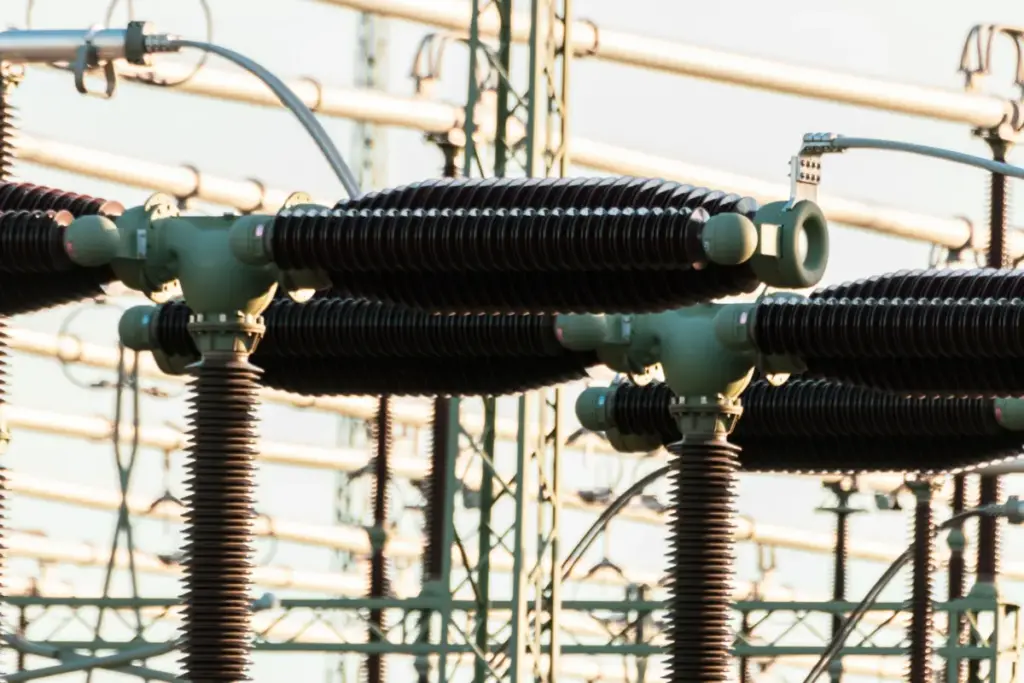
Invisible, odorless, non-toxic, and non-flammable, $textSF_6$ is a synthetic marvel utilized primarily as an electrical insulator in high-voltage circuit breakers and switchgear. Its chemical resilience makes it an indispensable backstop for modern electrical grids, preventing dangerous arcs and ensuring reliable power distribution. However, that same resilience makes it an atmospheric nightmare. Pound-for-pound, $textSF_6$ is 24,300 times more effective at warming the planet than carbon dioxide ($textCO_2$), and once vented, it persists in the atmosphere for roughly 1,000 years.
While emissions of the gas have successfully dropped across Europe and the United States over the past two decades, China’s releases nearly doubled between 2011 and 2021, accounting for more than half of global $textSF_6$ emissions today. In 2021 alone, China emitted 5,100 metric tons of the gas—a volume of pollution equivalent to the annual greenhouse gas output of 29 million gas-powered automobiles. Last year marked the largest annual spike in global atmospheric concentrations of $textSF_6$ since recordkeeping began in 1998, driven largely by unchecked operational venting at the end of electrical equipment lifecycles.
Despite government researchers warning as early as 2014 that $textSF_6$ poses a "significant potential threat to the global environment," national emissions remain largely unregulated. But a shifting policy landscape, combined with mounting international pressure and newly introduced carbon credit mechanisms, may finally force China’s state-owned utilities to confront this low-hanging fruit of industrial decarbonization.
Detailed Chronology: From Western Industrial Discovery to the Asian Grid Crisis
The 1980s–1990s: The European Awakening
The industrial dilemma surrounding sulfur hexafluoride is not entirely new. In the late 1980s, workers at a chemical manufacturing plant in West Germany realized that the $textSF_6$ they were producing had an astronomical impact on the global greenhouse effect. They recognized that if the chemical industry and utility operators failed to manage the byproduct responsibly, regulatory crackdowns would inevitably follow.
The core issue was not the chemical compound itself, but the operational habits of its primary consumers: electric utility companies. Whenever high-voltage equipment required maintenance or reached the end of its operational lifecycle, grid operators routinely vented the gas directly into the atmosphere.
In response, the Belgian chemical company Solvay—operating a crucial plant in Bad Wimpfen, Germany—pioneered a collaborative paradigm. Partnering with European equipment manufacturers, power suppliers, regulators, and environmental advocates, Solvay developed closed-loop protocols to clean and recycle waste $textSF_6$. For these efforts, the German Ministry for the Environment honored Solvay with the European Recycling Award in 1997.
The 2000s–2015: The Transatlantic Reduction
Building on European frameworks, industry officials shared their recycling insights at international conferences hosted by the U.S. Environmental Protection Agency (EPA) throughout the early 2000s. By adopting voluntary yet robust industry partnerships, the U.S. and Germany slashed emissions from electrical equipment by two-thirds or more by 2015.
2007–2020: China’s Pilot Projects and Stalled Capacities
Sensing the looming environmental liability, the State Grid Corporation of China—the world’s largest electric utility—launched $textSF_6$ recycling pilot projects across three provinces in 2007. More than a decade ago, a landmark book published by China’s Ministry of Environmental Protection concluded that $textSF_6$ recycling technology was mature, highly effective for near-term emissions reductions, and modest in cost relative to total industry expenditures.
Yet, implementation lagged. By 2020, studies published in Environmental Science & Technology revealed that China’s entire electric power sector possessed the capacity to handle only about 30% of the $textSF_6$ requiring recycling annually. Out of 2,518 total metric tons of waste gas generated, regional facilities could theoretically process 727 tons—yet actual utility reporting showed that vastly less was recovered.
2024–Present: New Regulations and Modern Scrutiny
In recent years, scrutiny over the chemical supply chain has intensified globally. A 2025 atmospheric study revealed that Solvay’s German facility was itself responsible for higher-than-reported emissions—roughly 30 metric tons annually—prompting a criminal complaint from Environmental Action Germany and a subsequent legally binding remediation agreement with regional authorities.
Meanwhile, China has begun taking tentative steps toward systemic reform. In December, China’s Ministry of Ecology and Environment (MEE) rolled out a carrot-and-stick policy framework: utilities that achieve a recycling rate exceeding 90% are now authorized to issue and sell valuable carbon credits. This milestone aligns with China’s broader National Climate Change Response Plan, which mandates a reduction of 30 million metric tons of $textCO_2$-equivalent non-$textCO_2$ gases by 2030.
Supporting Context & Metrics: The Economics of the "Climate Super-Pollutant"
An exhaustive assessment conducted by Inside Climate News—drawing on hundreds of pages of government documents, utility annual reports, peer-reviewed literature, and expert interviews—reveals that China’s state-owned grid operators could dramatically alter the trajectory of global $textSF_6$ emissions at a remarkably low cost.
The Cost-Benefit Breakdown
- The Scale of the Problem: China could increase its recycled volume of $textSF_6$ by roughly 1,400 metric tons per year, eliminating nearly one-third of the country’s total $textSF_6$ emissions across all sectors.
- The Financial Investment: The estimated cost to achieve this 90% recycling threshold is approximately $6 million annually.
- Comparison to Grid Investments: This $6 million price tag represents a minuscule fraction of the roughly $70 billion invested annually into China’s electric grid infrastructure.
- Marginal Abatement Costs: According to a 2025 U.S. EPA analysis, the cost of abating $textSF_6$ emissions in China’s power sector is roughly 18 cents per metric ton of $textCO_2$ equivalent ($textMTCO_2texte$). By comparison, reducing emissions via wind energy installations costs around $11 per $textMTCO_2texte$, while solar panel deployments run upward of $31 per $textMTCO_2texte$.
As Deborah Ottinger, a former fluorinated greenhouse gas emissions analyst for the U.S. EPA, noted:
"It’s such a three-alarm fire if you are venting that gas to the atmosphere instead of recycling it. It’s a very obvious thing that can be implemented immediately."
| Metric Area | China National Data / Estimate | Global Comparison / Context |
|---|---|---|
| Global Share of Emissions | >50% of worldwide $textSF_6$ emissions | Decreasing in Europe/US; doubling in China (2011–2021) |
| Total Annual Emissions (2021) | 5,100 metric tons | Equal to annual emissions of 29 million gasoline vehicles |
| Atmospheric Lifespan & GWP | 1,000 years; 24,300x warming power of $textCO_2$ | The worst greenhouse gas in terms of thermal persistence |
| Current vs. Claimed Recycling | Actual rate ~30%; MEE claimed capacity 90% | U.S. voluntary-yet-high rate; EU mandatory 100% target |
Official Statements and Industry Perspectives
Despite the mounting body of scientific evidence, transparency from major stakeholders remains limited. The Ministry of Ecology and Environment (MEE), the Chinese Embassy in Washington, D.C., and two dominant state-owned utility giants—the State Grid Corporation of China and China Southern Power Grid—all declined to comment on the findings of recent investigative assessments.
Independent policy and atmospheric experts, however, have been outspoken about the urgent need for structural reform:
-
Matthew Rigby (University of Bristol):
"It’s pretty much the worst greenhouse gas in terms of its global warming potential and its lifetime. Once it’s in the atmosphere, it’s there forever as far as human timescales go."
-
Jin Yana (Peking University):
Commenting on the new MEE carbon credit program, Jin praised the policy design for its stringency:"It ensures that the market only issues carbon credits for exceptional, above-and-beyond efforts rather than rewarding standard industry practices."
-
Hermann Kraehling (Former Solvay Environmental Assessment Lead):
Reflecting on China’s massive renewable buildout juxtaposed against its unchecked $textSF_6$ venting, Kraehling characterized the situation as a avoidable oversight:"If you are able to bring together all these stakeholders, you not only have a good chance for success, but you also have a good chance for acceptance."
Future Outlook: Navigating Alternatives and Global Coalitions
Eliminating $textSF_6$ entirely from electrical transmission will require navigating complex physical and logistical hurdles. In low-to-medium-voltage applications, State Grid and China Southern have begun experimenting with alternative insulating mixtures, such as $textSF_6$ blended with nitrogen gas. However, industry assessments indicate that viable, pure non-$textSF_6$ alternatives for high-voltage heavy equipment will require another 10 to 20 years to fully mature within domestic supply chains.
Furthermore, geography dictates strategy. According to Hu Jianxin, a professor at Peking University’s College of Environmental Sciences and Engineering, $textSF_6$ remains difficult to substitute in extreme cold-weather climates, but is largely non-essential in milder regions:
"I think the direction first of all is to block its use in non-essential places. We do not use $textSF_6$ anymore in such places and we just keep allowing less and less essential use."
On the international front, external technical assistance is expanding. The German government, operating through its International Climate Initiative and development agency GIZ, has launched a collaborative initiative aimed at building a "coalition of the willing" among emerging economies to phase out $textSF_6$. Philippe Lempp, who oversees the project at GIZ, emphasizes that sulfur hexafluoride represents a unique mitigation window:
"It’s really one greenhouse gas where not much has happened yet, and actually, a lot can happen."
Ultimately, whether through stringent legal mandates, localized on-site recycling incentives, or the progressive adoption of chemical alternatives, China’s power sector holds the keys to extinguishing its invisible climate fire—turning what is currently an atmospheric disaster into a manageable, low-cost triumph of industrial stewardship.



