Executive Overview
When modern consumers envision the catastrophic scale of global plastic pollution, their minds typically drift toward conventional culprits: single-use water bottles, polyethylene shopping bags, takeaway food containers, and discarded ghost nets drifting through our oceans. Yet, one of the most prolific and insidious sources of environmental contamination and personal chemical exposure is hanging quietly right inside our bedroom closets.
According to the 2025 Materials Market Report published by Textile Exchange, synthetic fibers—predominantly petroleum-derived materials such as acrylic, nylon, spandex, and polyester—now account for a staggering 69% of global textile fiber production. Polyester alone makes up 59% of this output. These textiles are, for all practical purposes, wearable plastics. While they are engineered to mimic the tactile softness and resilience of natural fabrics, they harbor deep-seated ecological and toxicological consequences that the public is only beginning to comprehend.
Beyond the macro-level environmental footprint of extraction and manufacturing, these garments are actively shedding microscopic plastic threads into our municipal water systems with every wash cycle. Compounding this issue are the mass-produced synthetic dyes and chemical finishes that bind to these fibers, which have been clinically linked to skin sensitivities and allergic contact dermatitis. As the global conversation around circularity and public health deepens, a fundamental question emerges: What are our clothes actually made of, and what happens to our bodies and ecosystems when we wear, wash, and ultimately discard them?

Detailed Chronology: From Fossil Fuels to Fast Fashion
To fully understand the dominance of synthetic textiles, one must trace the historical trajectory of material science and industrial manufacturing over the past century.
- The Mid-20th Century Synthesis (1930s–1950s): The commercial emergence of synthetic polymers revolutionized the global textile landscape. Nylon made its historic debut at the 1939 New York World’s Fair as a durable, silk-like alternative for stockings, quickly pivoting to military applications during World War II. Shortly thereafter, polyester and acrylic were commercialized, driven by the rapid post-war expansion of the petrochemical industry.
- The Rise of Fast Fashion (Late 20th Century–2000s): As global supply chains globalized, clothing production shifted toward hyper-accelerated models. To meet consumer demand for inexpensive, trend-driven apparel, manufacturers heavily favored synthetic fibers. Because petroleum extraction is heavily subsidized globally, plastic-based textiles became artificially cheap to produce compared to sustainably grown natural fibers.
- The Microfiber Revelation (2011–2016): Scientific awareness regarding aquatic plastic pollution expanded rapidly during this period. Researchers began tracing micro-sized particles found in marine environments back to domestic laundry sources. This culminated in a landmark 2016 study published in Marine Pollution Bulletin, which definitively established that a single standard wash load of synthetic clothing could shed hundreds of thousands of plastic microfibers.
- The Human Biomonitoring Breakthrough (2022): Marking a chilling paradigm shift in toxicology, a 2022 study published in Environment International by researchers at Vrije Universiteit Amsterdam detected measurable plastic particles directly in the human bloodstream for the first time, proving that environmental plastic pollution has breached our biological barriers.
- The Push Toward Radical Transparency (Present Day): In response to mounting consumer distrust, pioneering textile brands and regulatory advocates are introducing comprehensive disclosure tools—such as "Textile Health Facts" labels—mirroring the standardized nutritional disclosures found on food packaging to demystify clothing chemistry.
Supporting Context & Metrics: Shedding, Chemicals, and the Human Cost
The environmental degradation caused by synthetic textiles operates on both macro and micro scales. The threat is not merely aesthetic; it is structural, chemical, and systemic.
Shedding at the Source: The Mechanics of Microfiber Pollution
Every cycle of a domestic washing machine places immense mechanical stress on synthetic garments. This friction causes microscopic threadlike particles—microfibers—to break away from the weave. Because these particles are microscopic, they routinely bypass municipal wastewater treatment infrastructure, passing directly into rivers, lakes, estuaries, and oceans.
Peer-reviewed literature demonstrates the sheer volume of this shedding. While the 2016 Marine Pollution Bulletin study calculated that a 6-kilogram (13.2-pound) load of synthetic fabrics releases over 700,000 microfibers per single wash cycle, subsequent research has painted an even starker picture. A 2021 study published in PLOS ONE analyzed a wide range of fabric types and constructions, finding that individual loads can shed anywhere from roughly 8,800 to more than 6.8 million microfibers. Fleece fabrics and mechanically-treated polyester emerged as the most prolific shedders.

Unlike organic waste, synthetic plastic fibers do not biodegrade. Instead, weathering, UV radiation, and mechanical forces fracture them into progressively smaller, highly persistent fragments. These particles have successfully permeated virtually every global ecosystem, and have been detected in agricultural soils, remote mountain snowpacks, deep-sea sediments, human food supplies, and drinking water. Most alarmingly, the aforementioned 2022 Vrije Universiteit Amsterdam study found plastic particles in the blood of 77% of anonymous human donors tested, cementing the reality that synthetic textile pollution is now circulating inside the human body.
Beyond the Fiber: The Chemical Cocktail on Our Skin
While the physical persistence of microplastics represents a severe environmental crisis, the chemical composition of mass-produced textiles presents a direct health concern. The raw fiber is only the foundation of a garment; fabrics are routinely subjected to synthetic chemical treatments to impart wrinkle resistance, stain repellency, moisture management, flame retardancy, and durability.
Furthermore, textiles require intensive dyeing processes. Dermatological literature—dating back to a foundational 1995 study published in the Journal of the American Academy of Dermatology, alongside ongoing clinical notes from DermNet NZ—has explicitly linked specific synthetic textile dyes, particularly disperse blue dyes utilized heavily in dark synthetic garments, to adverse skin reactions. These include pruritus (severe itching), acute rashes, and allergic contact dermatitis. These reactions are frequently localized to areas where tight-fitting clothing makes prolonged contact with warm, perspiring skin, such as the neck, waistline, underarms, and inner thighs.
Despite these documented health considerations, a systemic transparency gap remains. Modern consumers meticulously scrutinize ingredient lists on food packaging and clean-beauty cosmetics, yet items worn directly against sensitive skin for 16 hours a day typically feature little more than a generic fiber-percentage tag and rudimentary washing instructions.

Official Perspectives and Industry Insights
Environmental advocates, public health researchers, and forward-thinking apparel innovators are increasingly vocal about the urgent need to restructure the textile economy away from its dangerous reliance on petrochemicals.
Environmental coalitions emphasize that the solution cannot rely solely on individual consumer behavior; it requires systemic manufacturing accountability. As noted by analysts tracking global material markets, the artificial cost advantage enjoyed by petroleum-based synthetics masks their true long-term price tag—a price paid by municipal water treatment plants, marine ecosystems, and human health.
To combat this opaque industry standard, alternative frameworks are emerging. Companies such as AIZOME are pioneering new standards of radical supply-chain transparency through initiatives like the Textile Health Facts label. Modeled after the ubiquitous Nutrition Facts panel familiar to every grocery shopper, this initiative aims to:
- Disclose Exact Fiber Content: Providing clear, plain-language breakdowns of what a garment is physically constructed from.
- List Dye and Chemical Ingredients: Informing consumers about the specific colorants and finishes applied to the fabric that will make direct contact with their skin.
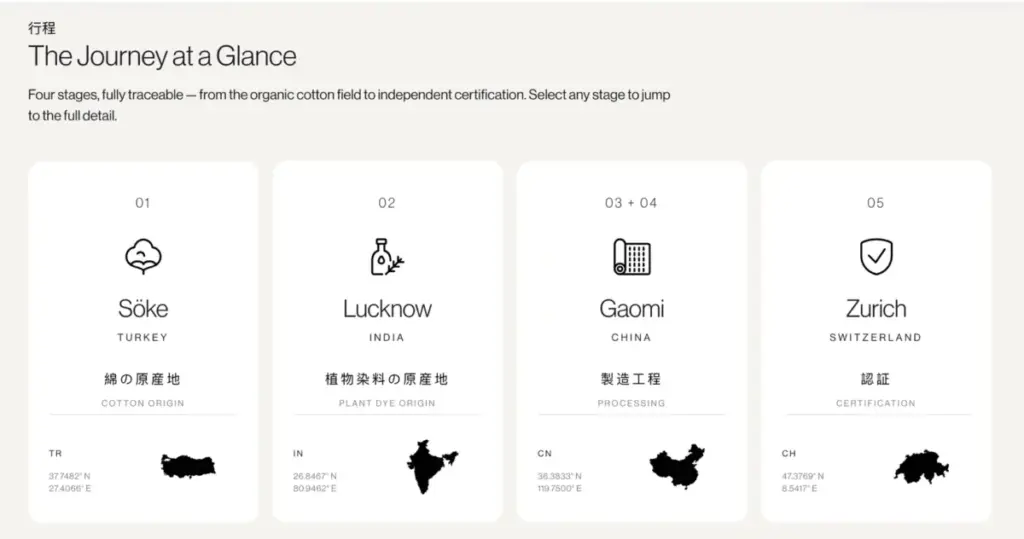
- Highlight Traceability and Certifications: Creating an unbroken chain of custody that connects a finished retail product back to the agricultural or industrial source of its raw materials.
- Empower Informed Autonomy: Rather than offering medical diagnoses or empty corporate marketing claims, these labels are designed to foster consumer literacy and drive higher standards across the broader fashion industry.
Future Outlook: Rebuilding a Circular, Plant-Based Textile Economy
Addressing the pervasive crisis of synthetic textile pollution requires a return to foundational, regenerative principles. The path forward centers on the revival and scaling of natural, plant-based fibers such as organic cotton, European flax linen, and industrial hemp.

The Advantages of Natural Fibers
Shifting the global textile baseline toward natural fibers yields compounding systemic benefits:
- Renewable, Plant-Based Origins: Sourced from agricultural systems that capture carbon during growth, rather than extracting finite fossil fuels from subterranean reserves.
- Zero Microplastic Shedding: Natural cellulose and protein fibers do not fragment into persistent plastic particles during the laundering process, safeguarding freshwater and marine habitats.
- Plant-Based Dye Compatibility: Natural fibers readily accept botanical and low-impact dyes, drastically reducing the industry’s reliance on toxic synthetic chemical colorants.
- End-of-Life Biodegradability: At the end of their useful lifespans, untreated natural fibers safely return to the earth as organic matter, perfectly aligning with closed-loop circular economy models.
Extending Product Lifecycles through Repair and Care
A truly sustainable textile future requires reimagining our relationship with clothing consumption. Natural-fiber garments, when built with durable craftsmanship and treated with care, can last for decades. When wear and tear inevitably occurs, consumers can embrace traditional repair techniques such as sashiko (visible mending) and creative patch embroidery, or utilize professional repair services to extend the garment’s operational lifespan.
Ultimately, the conversation surrounding plastic pollution must expand beyond single-use packaging to encompass our daily wardrobes. The transition toward a cleaner, safer textile economy requires a collective demand for transparency, accountability, and material integrity. By dismantling our reliance on petrochemical garments and embracing a transparent, circular future, we can ensure that what we wear nurtures—rather than compromises—both human health and the natural world.