

Executive Overview
Silicosis, one of the oldest and most thoroughly understood occupational hazards known to public health, is carving a destructive new path across America’s working class. Despite decades of clear medical guidance on how to prevent exposure to crystalline silica, a fresh wave of vulnerability is striking workers in two distinct yet equally hazardous sectors: Appalachian coal miners and Latino stone-countertop fabricators.
Rather than fading into history, advanced forms of the disease are surging, striking workers at younger ages and with unprecedented aggression. While public health officials warn that the current regulatory framework is failing to protect vulnerable populations, powerful industry trade associations and manufacturing giants continue to mount aggressive legal and political challenges. They argue against rigorous oversight, citing compliance burdens and economic feasibility.
The human toll of this regulatory paralysis is laid bare in recent epidemiological data. In central Appalachia, as many as one in three coal miners now show signs of debilitating black lung disease. Simultaneously, a modern epidemic of acute silicosis is ravaging countertop fabrication shops, driven by the widespread cutting of engineered stone slabs containing up to 90% crystalline silica. As courts issue stays on federal protections and legislative subcommittees debate shielding manufacturers from liability rather than protecting workers from harm, medical professionals and advocates issue a stark warning: the tools to eradicate silicosis have existed for generations, but the political and industrial will to deploy them remains fatally absent.
Detailed Chronology of a Public Health Failure
The resurgence of silicosis is not an overnight anomaly; it is the culmination of decades of delayed regulatory action, shifting industrial practices, and intense corporate opposition.
- 1995: The National Institute for Occupational Safety and Health (NIOSH) officially recommends the implementation of a comprehensive silica dust exposure rule specifically tailored for coal miners. This foundational warning is subsequently shelved or stalled for decades amid intense pushback from the coal industry.
- 2009–2017: David Michaels serves as the assistant secretary of labor for the Occupational Safety and Health Administration (OSHA). During his tenure, research solidifies around the dangers of fine particulate dust, culminating in efforts to overhaul outdated industrial safety standards.
- 2016: OSHA institutes a modernized silica dust rule aimed at protecting general industry workers, including stone cutters. The regulation faces immediate legal pushback from industry coalitions—such as the National Stone, Sand & Gravel Association (NSSGA)—which argue that the stricter exposure limits lack "sound science."
- c. 2018: Doctors across the United States begin documenting alarming new clusters of severe lung disease among young countertop fabrication workers. Notable outbreaks emerge in Colorado (seven cases) and Texas (12 cases). In California, a 38-year-old Hispanic stone-grinding worker tragically dies of respiratory failure.
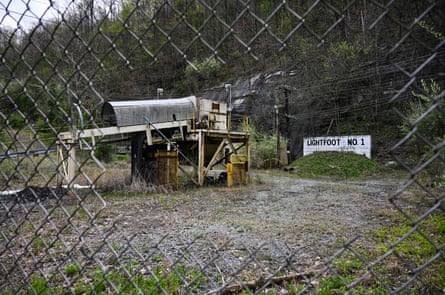
- 2024: After years of development, the Mine Safety and Health Administration (MSHA) finalizes a landmark rule lowering the permissible exposure limit (PEL) for respirable crystalline silica for miners. However, within months, industry groups petition the Eighth Circuit Court of Appeals to overturn the rule.
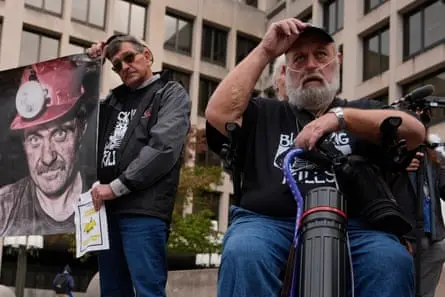
- October 2025: Black lung associations and union advocates stage high-profile rallies outside the Department of Labor in Washington, D.C., protesting governmental inaction and the stalling of critical mine safety protections.
- January 2026: Dr. David Michaels testifies before a congressional subcommittee hearing titled "Between Rock and Hard Place: Protecting American Stone Slab Industry." Rather than focusing on worker safety, the hearing centers heavily on defending manufacturers and big-box retailers from a rising tide of product liability lawsuits.
- May 2026: California’s occupational safety division (Cal/OSHA) initiates rulemaking to outright prohibit the fabrication and installation of artificial stone products containing more than 1% crystalline silica, drawing immediate corporate pushback from stone distributor Cosentino.
- Mid-2026: Landmark studies published in scientific journals confirm that nearly 600 silicosis cases exist among California countertop workers alone, while NIOSH reports that one in three central Appalachian coal miners suffer from black lung disease—the highest rates recorded in nearly half a century.
Supporting Context & Metrics: The Human and Statistical Toll
To understand the modern silicosis crisis, one must examine the physical reality of the dust itself. Respirable crystalline silica is a microscopic, toxic mineral particle generated when workers cut, crush, drill, or polish stone, concrete, brick, or mortar. When inhaled, these sharp particles become embedded deep within the lung tissue, triggering severe inflammation, irreversible scarring (fibrosis), and the formation of hard nodules. The condition—known as silicosis or, in the context of coal mining, complicated black lung—is entirely incurable, frequently progressive, and ultimately fatal.
Historically, black lung was viewed as a disease of old age, typically diagnosed after a lifetime of labor in deep underground mines. John Robinson, a former coal miner from southwest Virginia, shatters that historical baseline. While his grandfather spent decades in the mines before showing symptoms in his twilight years, Robinson was diagnosed with black lung at the startling age of 47.
"Now, honey, how are these men getting sick? Something’s causing it," Robinson remarked. "At one time, you didn’t say black lung around the coal site unless you wanted to lose a job. It’s such an outbreak right now they can’t hide it."
Parallel to the mining crisis is the explosive rise of engineered stone—commonly known as quartz countertops. Surpassing traditional laminate and natural granite in popularity over the past decade, engineered stone is manufactured by binding crushed quartz aggregates with polymer resins. Because these slabs can consist of up to 90% crystalline silica, they release a dense, highly toxic cloud of micro-particles during routine fabrication, grinding, and polishing.

Recent epidemiological findings published in the New England Journal of Medicine reveal the catastrophic dimensions of this trend:
- Nearly 600 cases of silicosis have been formally identified among countertop fabrication workers in California alone.
- Of those documented California cases, 65 workers have required major lung transplants to survive.
- At least 31 workers have died from acute respiratory failure.
Simultaneously, a separate NIOSH study published in late 2025 revealed that one in three coal miners in central Appalachia—spanning Kentucky, Virginia, and West Virginia—now suffers from black lung disease. Analysts reviewing MSHA sampling data from the first half of 2026 discovered that 17% of all sampled mining operations recorded silica dust concentrations exceeding the delayed 2024 federal limits, proving that these excessive exposures are actively occurring in real time rather than remaining confined to historical legacies.
Official Statements and Industry Friction
The battle over regulatory intervention has created a deep chasm between public health advocates, regulatory bodies, and corporate trade associations.
Industry groups maintain that they support worker safety in principle, but argue that rigid federal mandates are unworkable. Kerry Lynch, senior director of communications for the National Stone, Sand & Gravel Association (NSSGA)—which led the legal challenge against MSHA’s 2024 silica rule—noted that the organization did not inherently oppose lowering the permissible exposure limit from 100 micrograms per cubic meter down to 50 micrograms per eight-hour shift. However, NSSGA sharply objected to the rule’s frequent air sampling and medical surveillance mandates.
Mark Compton, executive director of the American Exploration & Mining Association (AEMA), defended his organization’s decision to join the legal petition against the 2024 rule, claiming the policy would inadvertently harm workers.
"We joined the petition challenging the 2024 silica rule because the rule would actually undermine miner safety and health due to the restrictions MSHA imposed on its implementation," Compton stated. He argued that MSHA’s framework relies on an "inflexible, cookie-cutter approach" that fails to account for geographic and operational variability, asserting that engineering controls are not always economically or technically feasible. Compton advocated for greater reliance on administrative controls, such as job rotations and personal protective respirators, to achieve compliance.
Public health veterans view these arguments through a more cynical lens. Dr. David Michaels, professor at the George Washington University Milken Institute School of Public Health and former OSHA head, has long documented how industries weaponize demands for "sound science" to stall public health rules—a strategy he detailed in his book Doubt Is Their Product.
According to Michaels, the nature of engineered stone makes safe fabrication nearly impossible under current shop-floor conditions. "It’s also often that many small employers are not in compliance," Michaels noted. "Pero even if they were in compliance, I think we would still have a silicosis problem. This product cannot be made in a way that’s both economic and safe."
When California’s occupational safety board initiated rulemaking in May 2026 to ban artificial stone containing more than 1% crystalline silica, major stone distributor Cosentino pushed back fiercely. In an official letter to Cal/OSHA, the company argued that the proposed state restriction relied on flawed data, was functionally unfeasible, and exceeded the board’s statutory authority—though the company declined to offer alternative regulatory solutions to protect vulnerable stone cutters.
Future Outlook: Litigation Versus Eradication
As courts deliberate the fate of federal protections and state agencies attempt to forge independent paths, the legislative branch has offered a starkly divided response.
During a January 2026 congressional subcommittee hearing led by California Congressman Darrell Issa, lawmakers focused not on expanding protections for dying laborers, but rather on curtailing what they termed "abusive litigation" against the stone slab industry. Rep. Issa is among a growing cohort of lawmakers co-sponsoring legislation designed to shield manufacturers and distributors of certain stone products from civil lawsuits brought by disabled workers.
Dr. Michaels, serving as the sole non-industry witness at the hearing, offered a radical counterproposal: rather than granting legal immunity to manufacturers, the federal government should follow the lead of jurisdictions looking to prohibit the sale of high-silica engineered stone entirely. "There are substitute products that are comparable in use and cost, but which do not kill workers," Michaels testified.
Meanwhile, grassroots advocates and medical professionals on the front lines express deep exhaustion with systemic delays. Dr. James Brandon Crum, an eastern Kentucky radiologist who helped expose the modern black lung epidemic by sounding alarms more than a decade ago, captures the pervasive despair shared by afflicted communities.
"We continue to show every single year just how bad this is and nothing ever gets done about it," Dr. Crum said. "The only thing higher than our black lung rates is the amount of excuses."
With the Eighth Circuit Court of Appeals maintaining a stay on federal miner protections, and MSHA signaling it will reconsider contested portions of its own regulations, the immediate future for American stone cutters and coal miners remains perilous. Unless federal regulators find the political fortitude to enforce strict exposure limits—or lawmakers summon the courage to restrict the circulation of high-silica engineered stone—thousands more workers will continue to contract a entirely preventable, fatal disease for the sake of corporate convenience.



