

Executive Overview
A sweeping survey of climate policy and economic indicators reveals a stark and defining paradox: even as the physical impacts of global climate change accelerate with alarming predictability, the institutional mechanisms designed to counter them are caught in a web of political friction, fatigue, and systemic contradictions. Across North America, the architecture of climate response is undergoing a profound stress test. Governments continue to spin up advisory panels and launch strategic frameworks, yet tangible execution routinely stalls. Meanwhile, advocacy groups are shuttering their doors as climate issues slide down national priority lists, and partisan rhetoric openly challenges long-standing environmental commitments.
Yet, away from the polarized theater of federal politics, a quiet revolution is taking shape on the ground. Communities, municipalities, and forward-thinking enterprises are recognizing that climate change is no longer a theoretical threat looming on the distant horizon; it is an active, daily disruption to critical infrastructure, supply chains, and economic stability. This realization is forcing a strategic pivot away from the intractable, globally fragmented debates over emissions mitigation and toward the hyper-localized, immediate imperatives of climate adaptation and resilience.
Far from being a concession of defeat in the war against global warming, this shift toward adaptation represents a massive economic opportunity. The global market for climate resilience is projected to balloon into a US$1.3-trillion-per-year commercial landscape, brimming with innovation, export potential, and tangible community benefits. By focusing capital on localized resilience—protecting power grids, fortifying water treatment systems, and expanding urban green spaces—policymakers and investors can bypass the frustrating cross-border "leakage" that has long plagued mitigation efforts.
Written by corporate governance and climate finance experts Gerry Rocchi and Ed Waitzer, this analysis examines the urgent need to dismantle institutional inertia, overcome the seductive trap of "implementation illusion," and redirect capital toward practical, high-yield adaptation strategies before escalating environmental events outpace our capacity to respond.
Detailed Chronology: Policy Paradoxes and Institutional Shifts in 2026
The current state of climate action is perhaps best understood through a series of striking temporal contradictions unfolding across North America. These events highlight the friction between high-level policy ambition and the messy, often contradictory realities of political implementation.
[Early 2026: Canada Announces New Taxonomy Council]
       │
       ▼
[Mid-Spring 2026: Investors for Paris Compliance Shuts Down]
       │
       ▼
[April 2026: U.S. Air Force Commits Billions to Tyndall Base Resilience]
       │
       ▼
[Present Day: The Shift to Localized Adaptation & Infrastructure Hardening]
The Canadian Taxonomy Saga Continues
In early 2026, the Canadian government announced yet another expert advisory group tasked with a familiar and urgent mission: finalizing a national taxonomy for green investing designed to accelerate the country’s transition to net-zero emissions. For financial institutions, asset managers, and industrial leaders, a standardized green taxonomy has long been framed as an indispensable policy priority—a foundational tool to eliminate greenwashing and channel billions of dollars into sustainable projects.
However, the announcement carries a heavy burden of déjà vu. The creation of this latest council follows more than a decade of governmental commitments, consultations, and stalled initiatives that have yet to yield a fully realized, operational framework. While policymakers continue to debate definitions and criteria in boardrooms, the capital markets are left navigating a fragmented landscape of voluntary standards.
The Retreat of Corporate Accountability Advocacy
As federal policy discussions drag on, the appetite for aggressive corporate climate advocacy is visibly waning in the private sector. In a sobering development, the prominent advocacy group Investors for Paris Compliance announced it is shutting its doors entirely. The organization cited a shifting political and economic climate in which institutional priorities have decisively pivoted away from aggressive decarbonization targets.
For years, the group tested the outer limits of voluntary net-zero pledges, holding major corporations accountable for their emissions profiles and transition plans. Its closure underscores a broader trend: as economic headwinds mount and political polarization hardens, climate considerations are steadily receding from the top of the national and corporate priority lists, replaced by short-term financial pressures and energy security concerns.
The Military Pragmatism of Climate Resilience
South of the border, the disconnect between partisan rhetoric and operational reality manifested in a striking juxtaposition. Despite aggressive political vows from high-ranking defense officials—including a newly minted "secretary of war" declaring a strict refusal to engage in "climate crap"—the United States Air Force quietly pledged billions of dollars to fortify Tyndall Air Force Base in Florida against future climate disasters.
Having been severely battered by catastrophic hurricanes in recent years, Tyndall’s multi-billion-dollar resurrection represents a blunt military reality: national security cannot afford ideological posturing. When multi-billion-dollar defense infrastructure is actively threatened by rising sea levels, intensifying storm surges, and high-velocity winds, institutional pragmatism must override political rhetoric. The U.S. military’s multi-billion-dollar adaptation expenditure demonstrates that when climate change transitions from a political talking point to an operational vulnerability, survival trumps skepticism.
Supporting Context & Metrics: Mitigation Versus Adaptation
For decades, the global climate discourse has been dominated by a false dichotomy, framing mitigation and adaptation as competing priorities vying for scarce financial resources.
- Mitigation encompasses actions aimed at preventing the worsening of climate change—primarily through reducing greenhouse gas emissions, transitioning to renewable energy, and protecting natural carbon sinks like forests and peatlands.
- Adaptation involves initiatives designed to adjust our natural and human environments to actual or expected climatic stimuli, minimizing damage and capitalizing on beneficial opportunities.
The Mitigation Dilemma
Historically, mitigation has claimed the lion’s share of global climate attention and capital. Yet, for middle-tier economies like Canada, mitigation efforts are plagued by a structural frustration: the atmospheric benefits of domestic emissions reductions do not respect national borders.
Because carbon emissions disperse globally, any emissions reductions achieved by Canada can be easily offset by surging emissions in jurisdictions with laxer regulations—particularly when major global emitters show little urgency to alter their trajectories. This dynamic creates a severe disincentive for local action, as taxpayers and corporations are asked to bear the immediate costs of decarbonization while reaping only a fraction of the localized atmospheric benefits.
The Economic Powerhouse of Adaptation
In stark contrast, adaptation and resilience initiatives yield immediate, localized dividends. When a municipality upgrades its storm sewers or a province hardens its electrical grid against wildfire smoke, the economic and social benefits accrue directly to the community that made the investment. There is virtually no "carbon leakage" in adaptation; every dollar spent protecting local infrastructure directly preserves local lives, property, and economic productivity.
This localized efficiency is driving a massive expansion in commercial opportunity. The global business of investing in climate resilience is currently projected to be a US$1.3-trillion-per-year global market, offering vast scope for technological innovation, engineering breakthroughs, and export-driven growth.
┌──────────────────────────────────────────────┐
│        GLOBAL CLIMATE RESILIENCE MARKET      │
│            (Projected Annually)              │
│                $1.3 TRILLION                 │
└──────────────────────┬───────────────────────┘
                       │
         ┌─────────────┴─────────────┐
         ▼                           ▼
┌─────────────────┐         ┌─────────────────┐
│ Infrastructure  │         │ Clean Tech &    │
│ Hardening       │         │ Decentralization│
│ (Roads, Grids)  │         │ (Microgrids)    │
└─────────────────┘         └─────────────────┘
The Dual-Benefit Sweet Spot
Crucially, many high-value adaptation investments are not mutually exclusive from emissions reduction; rather, they inherently achieve both goals simultaneously. Consider the following high-impact areas ripe for dual-purpose investment:
- Wildfire Suppression and Forest Management: Proactive thinning, controlled burns, and advanced early-warning sensor networks protect rural communities while drastically reducing the catastrophic carbon release associated with uncontrolled mega-fires.
- Climate-Smart Agriculture: Promoting sustainable land-use practices, precision farming, and regenerative soil management sequesters carbon while safeguarding food supply chains against droughts and floods.
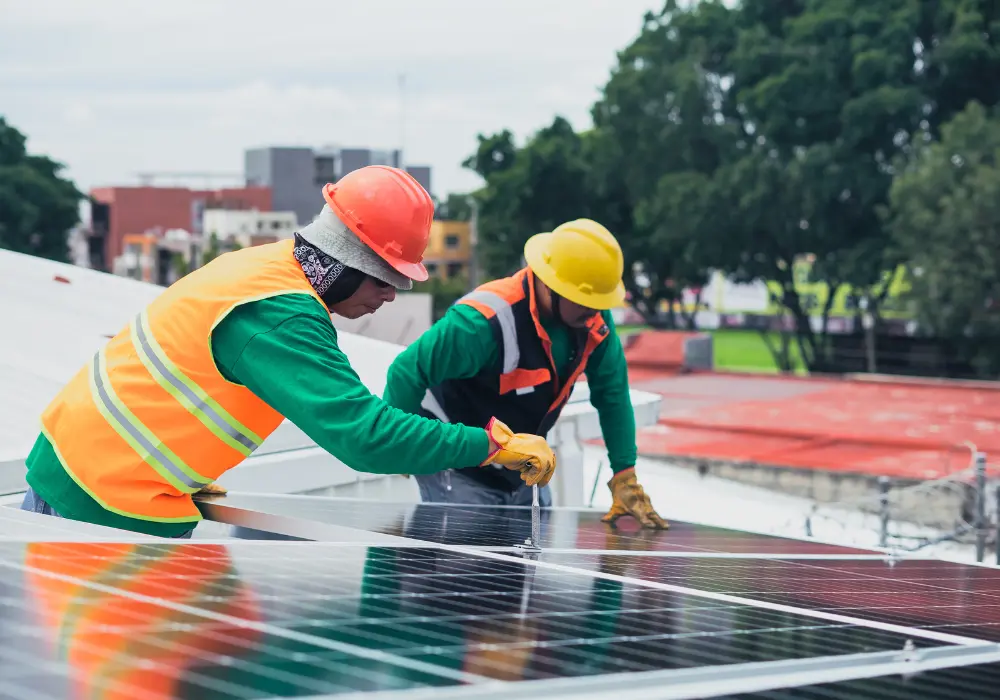
- Decentralized Renewable Grids: Traditional centralized electricity grids are notoriously vulnerable. A major accident or extreme weather event at any single point in a massive network can trigger cascading system failures. Shifting toward decentralized microgrids powered by local renewables (backed by traditional sources) simultaneously slashes transmission emissions and ensures communities can withstand prolonged grid outages.
- Coastal Wetland Protection: Restoring mangroves, salt marshes, and urban wetlands acts as a natural sponge against storm surges while creating powerful, permanent carbon sinks.
Official Statements and Institutional Insights
The challenges facing Canadian and global climate policy have drawn sharp critiques from financial and governance leaders who understand the mechanics of capital allocation and regulatory oversight.
"A practical agenda will require meaningful frameworks that define, measure, and communicate successful execution. We have witnessed decades of slow progress on climate change policy in Canada. Facing the reality of actual climate impacts, we now share a growing sense of urgency for moving toward thoughtful action before events take over."
— Gerry Rocchi & Ed Waitzer
The insights shared by Rocchi and Waitzer highlight the concept of the "implementation illusion"—a dangerous political phenomenon wherein governments generate immense amounts of political currency simply by announcing new climate strategies, reporting on aspirational targets, and launching advisory councils, while remaining completely unaccountable for the actual success or failure of implementation.
Overcoming Institutional Inertia
To break through this cycle of delay, policymakers must harness the natural economic returns inherent in resilient infrastructure. Unlike intangible emissions targets, infrastructure investments are politically palatable because they address immediate, visible community needs—potholes repaired, bridges reinforced, and water treatment plants secured against rising floodwaters.
However, careful planning remains paramount to avoid the insidious trap of "maladaptation." Maladaptation occurs when well-intentioned private or public actions inadvertently worsen climate vulnerabilities elsewhere. A classic example is property owners constructing high concrete sea walls to protect their specific waterfront homes, only to redirect high-energy wave action and floodwaters directly into neighboring properties.
Conversely, the inverse dynamic holds immense promise: actions that enhance local environmental capital—such as expanding urban green spaces, planting permeable native vegetation, and creating natural drainage basins—generate spillover benefits that elevate the climate resilience, ecological health, and property values of entire neighborhoods.
Future Outlook: A Pragmatic Agenda for Action
As Canada and the broader global community look toward the late 2020s, the imperative is clear: the era of endless climate debate must give way to immediate, disciplined execution.
1. Prioritize Infrastructure Resilience
According to a landmark report by the Canadian Climate Institute (Prepare or Repair: Canada’s Infrastructure), targeted investments in upgrading Canada’s roads, bridges, storm sewers, and water treatment facilities to withstand rising temperatures and heavier precipitation events could result in up to $9 billion in annual infrastructure savings. These early fiscal successes will be self-reinforcing, generating the public-sector momentum and community support needed to scale adaptation funding nationwide.
2. Eradicate the Implementation Illusion
Governments must abandon the practice of treating policy announcements as final victories. Accountability mechanisms must be hardwired into every climate initiative, tying public funding directly to measurable milestones in physical resilience and emissions reduction.
3. Capitalize on Commercial Innovation
Canadian enterprises possess world-class expertise in engineering, clean technology, and resource management. By fostering a domestic market for climate adaptation technology, Canada can position itself as a global exporter of resilience solutions—turning a domestic environmental necessity into an international economic powerhouse.
Conclusion
The contradictions of 2026 demonstrate that while political willpower may waver and international climate negotiations often stall, the physical reality of a changing climate cannot be negotiated away. By pivoting decisively toward localized adaptation, leveraging the immense economic potential of resilience infrastructure, and demanding rigorous accountability from our institutions, we can move from the paralyzing debates of the past into a secure, prosperous, and climate-ready future.



