

Executive Overview
The transformation of the modern electrical grid is accelerating, and the Commonwealth of Massachusetts has officially taken a monumental leap forward. In an ambitious effort to turn electric vehicles (EVs) from simple energy consumers into active grid assets, the Massachusetts Clean Energy Center (MassCEC) has announced the official participants for its groundbreaking Vehicle-to-Everything (V2X) demonstration program.
By providing free, bi-directional charging hardware and installation to a diverse cohort of school districts, municipal entities, and individual residential owners across the state, the initiative seeks to evaluate how large and small EV fleets can fortify local energy infrastructure. This pilot is more than a localized testing ground; it is a critical proving ground for Virtual Power Plants (VPPs)—decentralized networks of energy storage devices that can alleviate stress on the grid, provide emergency backup power during extreme weather events, and bypass the need for multi-million-dollar traditional infrastructure upgrades.
With a projected collective output of more than 1 megawatt (MW) of power sent back to the grid during peak demand response events, the pilot aims to prove the real-world viability of bi-directional energy flows. Scheduled to be fully operational by the summer of 2026, the program addresses financial barriers head-on by covering all equipment and installation costs. Furthermore, with a heavy emphasis on environmental justice communities, the initiative ensures that the economic and resilience benefits of the clean energy transition are distributed equitably across the Commonwealth.
Detailed Chronology: The Road to MassCEC’s V2X Milestone
The launch of the Massachusetts V2X demonstration program did not happen overnight; it represents the culmination of years of regulatory alignment, climate policy evolution, and technological maturation within the clean energy sector.
Laying the Regulatory Groundwork
For the past several years, energy regulators and state officials in Massachusetts have grappled with the dual challenges of rapidly rising electricity demand and the imperative to decarbonize the transportation sector. As electric vehicle adoption rates climbed, grid operators warned of potential capacity bottlenecks, particularly during peak heating and cooling seasons. Recognizing that traditional grid upgrades—such as building new substations or stringing high-voltage transmission lines—are both costly and time-consuming, the state began exploring software- and hardware-based alternatives.
Structuring the Demonstration Program
To tackle this, MassCEC conceptualized the Vehicle-to-Everything demonstration program as a tangible bridge between the transportation and utility sectors. The framework was specifically designed to eliminate the high upfront capital expenditures that typically deter consumers and small municipalities from adopting bi-directional chargers. By fully subsidizing the hardware and installation costs, MassCEC effectively removed the primary friction point preventing widespread V2X integration.
Selecting the Cohort
The selection process, finalized recently, brought together a carefully curated mix of public and private participants to ensure comprehensive data collection across varied use cases:
- Educational Sector: Five prominent school districts—Acton-Boxborough Regional, Arlington, Boston, Concord, and Lincoln—were selected, highlighting the massive potential of electrifying school bus fleets and utilizing their large-capacity batteries as stationary storage units when school is out of session.
- Municipal Infrastructure: Four municipal projects in Sterling, Needham, Plymouth, and Warwick were chosen to test V2X integration within local government operations, police fleets, and public facilities.
- Residential Integration: Thirty individual homeowners from diverse geographic and socioeconomic backgrounds were selected to test residential V2X capabilities. Crucially, more than one-third of the entire program’s funding has been earmarked to support participants living in designated environmental justice communities, ensuring equity is baked into the pilot’s foundation.
Implementation and the 2026 Roadmap
With participants now announced, the operational phase is fully underway. All bi-directional charging stations are slated for installation and full operational status by the summer of 2026. Data collection will run continuously throughout the year, culminating in the release of a comprehensive V2X guidebook in late 2026. This publication will serve as a blueprint for other states, detailing system design specifications, charging management protocols, cost analyses, and regulatory hurdles.
Supporting Context & Metrics: Decoding the Power of V2X
To fully grasp the significance of the Massachusetts V2X program, one must examine the mechanics of bi-directional charging and the specific metrics underpinning the initiative.
Understanding Bi-Directional Charging (V2G, V2H, and V2X)
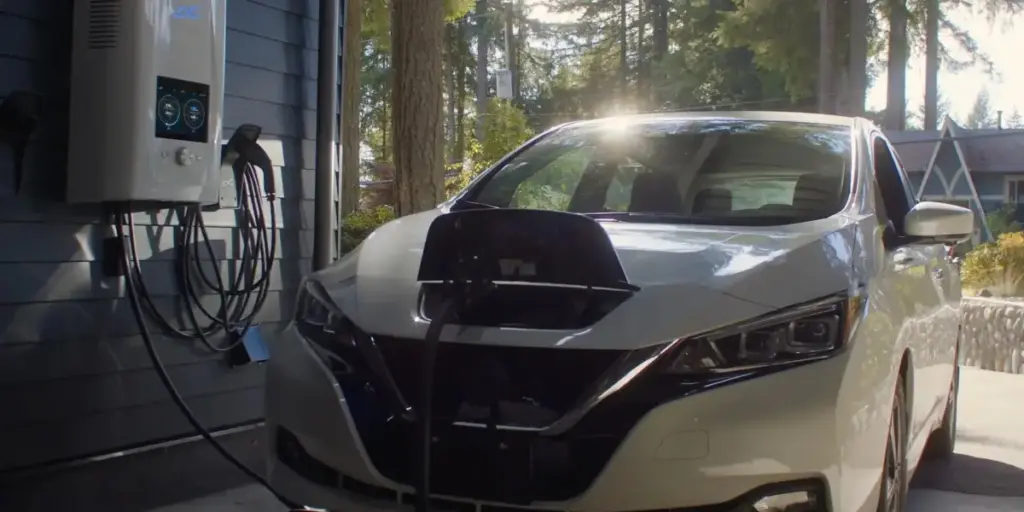
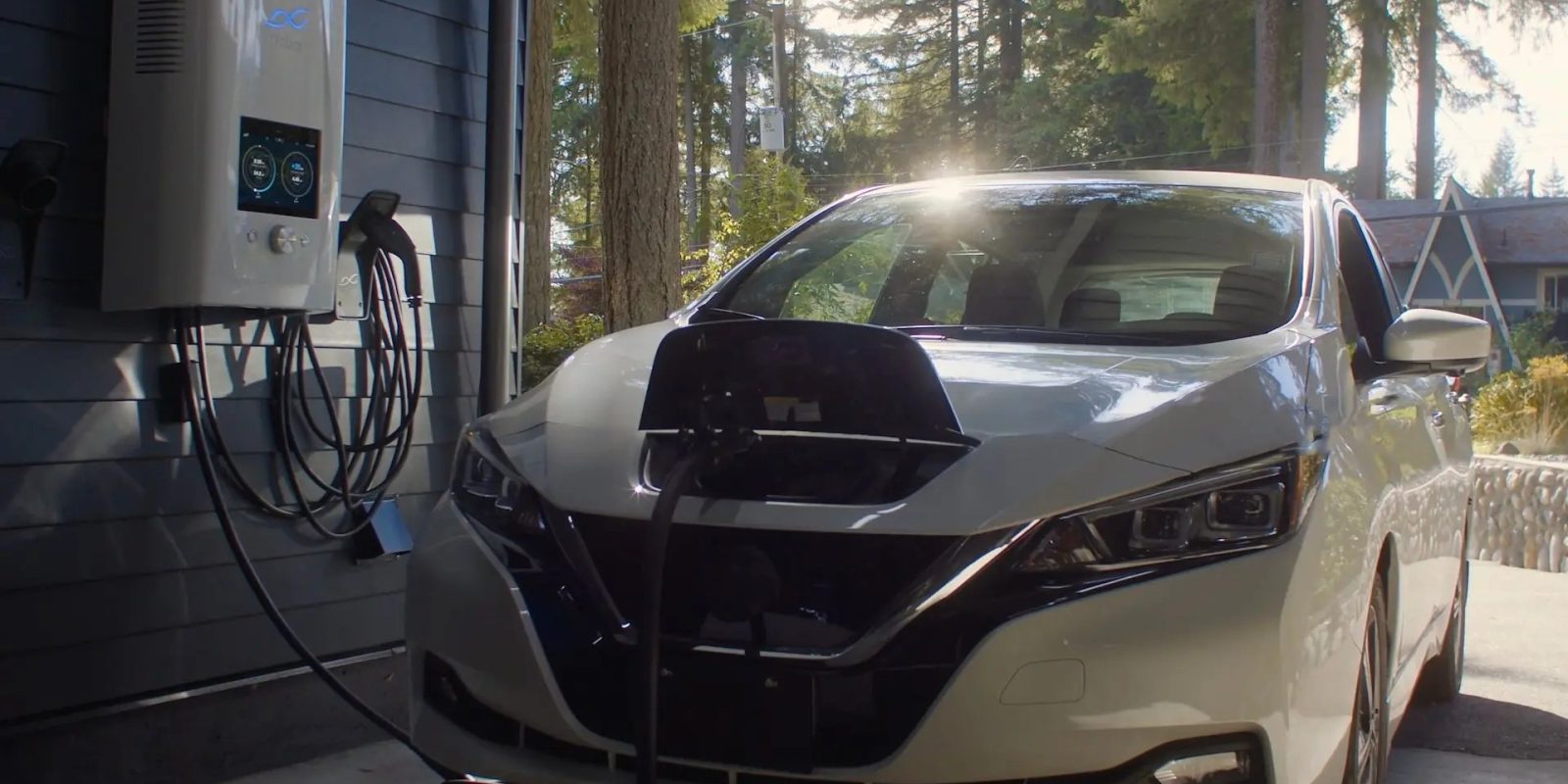
Traditional EV charging is a one-way street: electricity flows from the grid into the vehicle’s battery. Bi-directional charging introduces two-way capabilities, typically broken down into three categories:
- Vehicle-to-Home (V2H): Allows an EV to power a household during a blackout, acting essentially as a mobile generator.
- Vehicle-to-Building (V2B): Allows commercial or municipal EVs (like school buses) to power facilities, reducing peak facility demand charges.
- Vehicle-to-Grid (V2G): Allows vehicles to feed excess energy back into the broader electrical grid during periods of high demand.
Collectively referred to as V2X, this technology effectively turns idle vehicles—which sit parked roughly 95% of the time—into distributed energy resources (DERs).
Crunching the Numbers: What 1 Megawatt Means
MassCEC projects that the participating chargers in this pilot will collectively deliver more than 1 megawatt (MW) of power back to the grid during a demand response event. To put that figure into perspective:

- Home Equivalency: 1 MW of power is roughly equivalent to offsetting the instantaneous electricity consumption of about 300 average U.S. homes for an hour.
- Fleet Impact: When scaled across entire school bus fleets or municipal delivery vans, the energy storage capacity scales exponentially. A single electric school bus typically boasts a battery capacity between 150 kWh and 300 kWh—enough to power a typical American home for several days during an extended outage.
The Financial and Environmental Payoff
Beyond grid resilience, the program is designed to deliver direct financial benefits to participants. By integrating with existing utility demand-response programs, EV owners can be financially compensated for exporting power back to the utility during high-stress periods. This turns vehicle ownership from a depreciating asset cost into a revenue-generating asset, shortening the return on investment for clean tech adopters.
Official Statements and Leadership Perspectives
State officials and energy leaders have widely praised the initiative, emphasizing its alignment with broader climate goals and grid modernization strategies.
Highlighting the paradigm shift toward decentralized energy networks, Massachusetts Energy and Environmental Affairs Secretary Rebecca Tepper noted:
"Virtual power plants are the future of our electrical grid. Bi-directional charging unlocks new ways to protect communities from outages and lower costs for families and public fleets."
Secretary Tepper’s comments underscore the growing recognition among policymakers that the path to a 100% clean energy economy relies as much on software, smart infrastructure, and energy storage as it does on raw generation capacity from wind and solar farms.
Industry analysts and clean energy advocates have similarly lauded the program’s focus on removing financial and logistical barriers. By absorbing the hardware and installation costs—often totaling thousands of dollars per unit—MassCEC is effectively kickstarting a commercial market that might otherwise have taken a decade to organically scale. Furthermore, the inclusion of environmental justice communities ensures that low-income and historically overburdened populations, who often suffer disproportionately from grid unreliability and local air pollution, are the primary beneficiaries of this technological leap.

Future Outlook: Scaling the Virtual Power Plant Revolution
As Massachusetts races toward its 2026 milestones, the implications of this demonstration program stretch far beyond New England.
Overcoming Technical and Regulatory Hurdles
One of the primary objectives of the MassCEC pilot is to identify and document regulatory bottlenecks and interoperability challenges. While the technology exists—with select EV models from Ford, Nissan, Hyundai, and others offering varying degrees of bi-directional capabilities—standardization across automakers, charging hardware manufacturers, and utility interconnection protocols remains inconsistent. The V2X guidebook slated for release in late 2026 will provide invaluable data on how to streamline interconnection processes, standardize safety protocols, and build transparent compensation structures.
The Blueprint for National Replication
If the Massachusetts pilot successfully demonstrates that residential and municipal fleets can reliably inject 1 MW or more of synchronized power back into the grid without degrading battery health or compromising user mobility, it will serve as a template for other states. Utility commissions across the country are watching closely to see how effectively software platforms can aggregate hundreds of disparate vehicle batteries into a cohesive, responsive virtual power plant.
The Convergence of EVs and Home Energy Management
The broader macro trend points toward total home and vehicle energy integration. As consumers increasingly pair rooftop solar arrays with home battery systems and heat pumps (supported by programs like EnergySage), adding an EV with V2X capabilities closes the loop on domestic energy independence. Homeowners will no longer just consume power; they will manage micro-grids from their smartphones, trading energy seamlessly with their neighbors and local utilities.
Ultimately, the Massachusetts V2X demonstration program marks a fundamental pivot in how society views electric vehicles. No longer just a cleaner way to commute, the EV of the near future will be recognized for what it truly is: a powerhouse on wheels, driving the transition toward a resilient, decentralized, and sustainable electrical grid.



