

EXECUTIVE OVERVIEW
In the dense, regulatory labyrinth of New York City, installing a utility-scale energy storage system is an uphill battle against zoning boards, environmental reviews, and public skepticism. From the outside, the path toward a decarbonized grid seems clear: massive, multi-megawatt battery installations must be paired with wind and solar farms to store excess renewable energy and dispatch it when demand peaks. Yet, in practice, these mega-projects face immense friction—most notably community pushback fueled by rare, high-profile battery fires in densely populated areas.
To bypass these hurdles, an inventive wave of climate-tech startups is flipping the script on energy storage. Rather than waiting years for grid interconnections and heavy permits, these companies are scaling the energy transition from the ground up. By embedding compact batteries directly into everyday consumer goods—ranging from high-end induction stovetops and e-bike swapping cabinets to food truck generators, air conditioning units, and commercial appliances—entrepreneurs are bringing storage straight to the end-user.
While individual units are small, their cumulative impact is staggering. When aggregated via smart software, thousands of distributed micro-batteries can form virtual power plants (VPPs) capable of injecting gigawatts of flexibility back into a congested urban grid. This micro-storage movement offers an enticing value proposition: immediate cost savings, enhanced grid resilience, localized pollution reduction, and a frictionless path around the traditional bureaucratic bottlenecks plaguing municipal energy infrastructure.
1. The Urban Energy Gridlock: Why Large-Scale Storage Stalls in NYC
To understand the rise of micro-batteries, one must first examine the systemic roadblocks facing traditional energy storage in America’s largest metropolitan areas. New York City has set aggressive climate mandates under the Climate Leadership and Community Protection Act (CLCPA), aiming for a zero-emission electricity sector by 2440. Meeting these goals requires vast amounts of energy storage to balance the intermittent nature of wind and solar power.
However, translating these mandates into physical infrastructure on the ground in Manhattan, Brooklyn, or Queens is fraught with operational challenges. Large-scale centralized energy storage providers face a public relations and political dilemma. As David Hammer, co-founder of PopWheels, articulated during a New York Climate Week panel on September 24:
"The number-one challenge that large-scale centralized energy storage providers have is the fact that their benefits are abstract and their costs are concrete."
The benefits—cleaner air, carbon reduction, and grid stability—are shared broadly across society, while the perceived costs and risks—such as the fear of thermal runaway and battery fires—are borne directly by the local neighborhoods hosting the facilities. Even though battery fires in commercial installations are statistically rare, high-profile incidents globally have left urban communities hyper-vigilant. Consequently, local permitting agencies apply intense scrutiny, dragging out project timelines for years.
Furthermore, legacy transmission and distribution networks in cities like New York are severely congested. Upgrading substation transformers and high-voltage lines to accommodate utility-scale storage requires extensive capital expenditure and prolonged downtime. For agile startups looking to decarbonize urban spaces now, waiting on grid modernization is a non-starter.
2. Detailed Chronology: The Emergence of Distributed Consumer Batteries
The pivot toward micro-storage did not happen overnight; it is the culmination of dropping lithium-ion battery costs, advancements in power electronics, and the explosive growth of urban electrification.
- Early 2020s: The proliferation of delivery e-bikes across dense cities creates an acute infrastructure crisis. Delivery workers face charging bottlenecks and safety hazards from unregulated lithium-ion batteries charging inside residential apartments.
- 2023–2024: Startups like PopWheels pioneer shared battery-swapping networks, recognizing that infrastructure placed at the curb or in commercial hubs can solve logistical problems while simultaneously building a distributed network of energy storage.
- 2025: Innovators begin looking inside the home and small businesses. Companies focusing on smart appliances realize that integrating storage units directly into kitchen appliances or plug-in HVAC units can eliminate the need for costly residential electrical service upgrades.
- September 2024 (New York Climate Week): A critical turning point in public discourse. Founders from PopWheels, Copper, and David Energy converge to declare that distributed micro-storage is no longer a fringe experiment, but a structural shift in how power will be managed in the 21st century.
- Present Day: Plug-in micro-batteries gain momentum, mirroring the explosive regulatory-free growth of "balcony solar" models seen across Europe and parts of North America. Consumers plug appliances directly into standard outlets, automatically shaving peak demand and participating in grid-support programs without bureaucratic interference.
3. Supporting Context & Metrics: Case Studies in Micro-Innovation
The versatility of the micro-storage model is best illustrated by looking at how different companies are integrating batteries into unexpected, highly functional form factors.
PopWheels: E-Bike Swaps and Food Cart Electrification
PopWheels addresses one of New York’s most visible urban logistics challenges: the micro-mobility boom. By building an automated battery-swapping cabinet network, the company allows food delivery riders to pull up, swap a depleted e-bike battery for a fully charged one in seconds, and resume their routes without plugging into the grid during peak hours. Currently, PopWheels operates roughly 50 cabinets across New York City, keeping approximately 2,500 batteries in constant active circulation.
Recently, PopWheels expanded its footprint into street-level commerce by providing its battery packs to food cart operators. Traditionally, food carts rely heavily on noisy, highly polluting gasoline generators to power refrigeration, grills, and lighting. By deploying a cluster of roughly four PopWheels batteries—delivering a combined capacity of five kilowatt-hours—operators can run their carts cleanly and quietly for an entire day, directly eliminating localized air pollution and carbon emissions on crowded sidewalks.
+-------------------------------------------------------------+
|               POPWHEELS URBAN ECOSYSTEM                     |
|                                                             |
|  [ E-Bike Delivery Fleet ]  <--->  [ 50 Swapping Cabinets ] |
|                                             |               |
|                                             v               |
|  [ Food Cart Operators ]  <--->  [ 2,500 Active Batteries ] |
+-------------------------------------------------------------+
Copper: Reinventing the Kitchen Stove
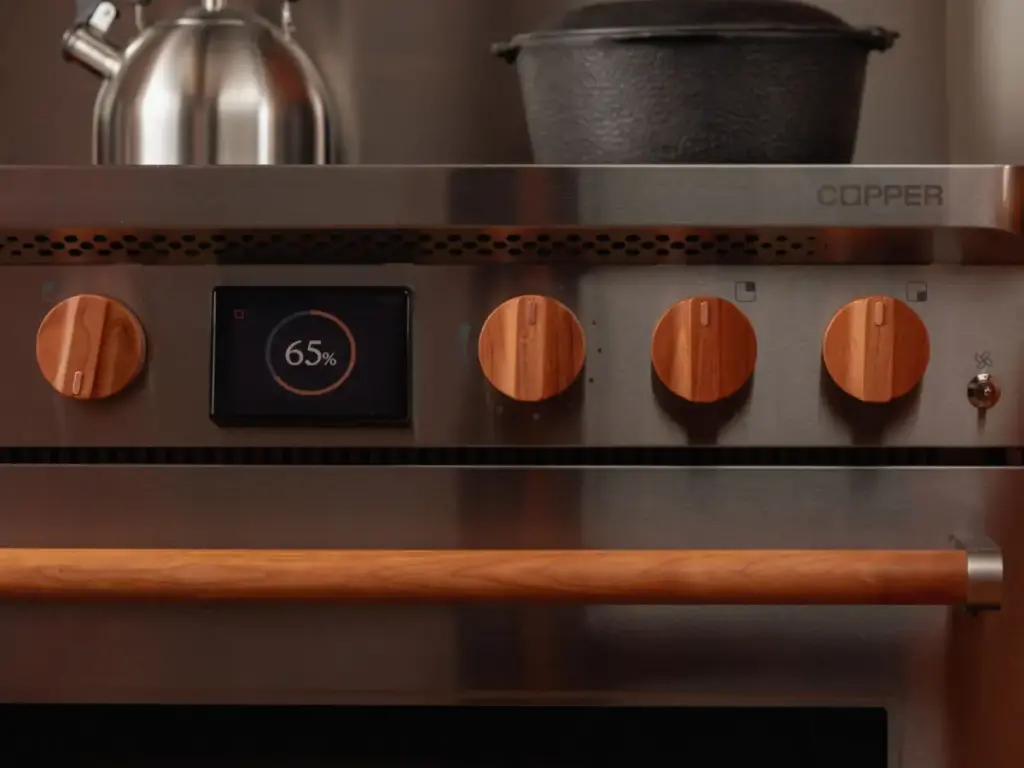
While mobility and street carts handle outdoor logistics, companies like Copper are moving directly into the heart of the home: the kitchen. Copper manufactures high-end induction stovetops with integrated, high-density battery storage.

This design solves a dual problem for homeowners. First, it provides uninterrupted cooking capabilities during grid blackouts—a crucial resilience feature as extreme weather events strain municipal grids. Second, and perhaps more importantly, it unlocks massive financial savings. Many older urban homes lack the electrical amperage required to support high-powered modern induction stoves without expensive panel upgrades and rewiring. Copper’s integrated battery supplements the home’s electrical service, drawing power steadily in the background and discharging it rapidly when the burners are cranked up.
Every Electric and David Energy: Plug-and-Play Flexibility
For residential and light commercial spaces, companies like Every Electric and David Energy are deploying plug-in storage solutions that bypass permitting entirely. Every Electric pairs its modular batteries directly with window air-conditioning units—the primary drivers of summer grid stress in New York City. The company supplies the hardware and financially compensates consumers who automatically dial back energy usage during high-stress grid events.
Similarly, David Energy targets commercial small-to-medium enterprises (SMEs) such as laundromats, neighborhood gyms, and parking garages. By installing intelligent plug-and-play storage units, these businesses can shave their peak demand charges—often the most punishing component of commercial electricity bills—without modifying their main electrical panels.
4. Official Statements & Industry Perspectives
The philosophy driving this decentralized movement challenges the traditional, centralized paradigm of electrical engineering. Industry leaders argue that aggregating millions of small, behind-the-meter devices creates a more robust, democratic power grid.
Sam Calisch, co-founder and CEO of Copper, emphasized the economic and scalability dimensions of appliance-integrated storage during his New York Climate Week presentation:
"We’re not just selling a battery for resilience—we’re selling it for cost savings. If every stove in America were shipped with a battery, it would add up to tens of gigawatts of power. That’s capacity that can be aggregated and tapped when the grid is stressed."
James McGinniss, co-founder and CEO of David Energy, went even further when evaluating the broader systemic implications of the movement:
"This is the biggest thing to happen in the power grid sector in the last 20 years."
By removing the friction of interconnection studies, local zoning boards, and heavy construction permits, these startups are democratizing energy participation. Consumers no longer need to be passive buyers of electricity; they become active nodes in a hyper-connected virtual power plant.
5. Future Outlook: The Symbiosis of Micro and Macro Storage
As battery chemistry continues to improve and manufacturing costs decline globally, micro-storage is destined to infiltrate deeper into our daily routines. The convergence of cleaner air, lower utility bills, and effortless installation makes this consumer-centric model exceptionally appealing.
However, energy experts emphasize that the rise of distributed micro-batteries does not render utility-scale storage obsolete. Both systems are necessary partners in the energy transition. Large installations will continue to perform the heavy lifting required to balance massive regional wind and solar farms, ensuring that intermittent renewable generation matches the rapid growth of nationwide electricity demand driven by data centers, electric vehicles, and industrial electrification.
Where micro-batteries truly shine is at the frayed edges of the grid—the congested urban corridors where building new substations is practically impossible. An aggregated horde of smart stoves, e-bike batteries, and window AC units can act as a shock absorber during blistering summer heatwaves, staving off blackouts when the grid is pushed to its absolute limits.
As cities like New York continue their march toward a sustainable future, the path forward may not be paved solely with towering industrial batteries. Instead, it will likely be woven quietly into the appliances we cook with, the vehicles we ride, and the air conditioning units that keep us cool—proving that sometimes, the most powerful solutions come in the smallest packages.



