

By Hans Nicholas Jong
Published by Mongabay Conservation News
Executive Overview
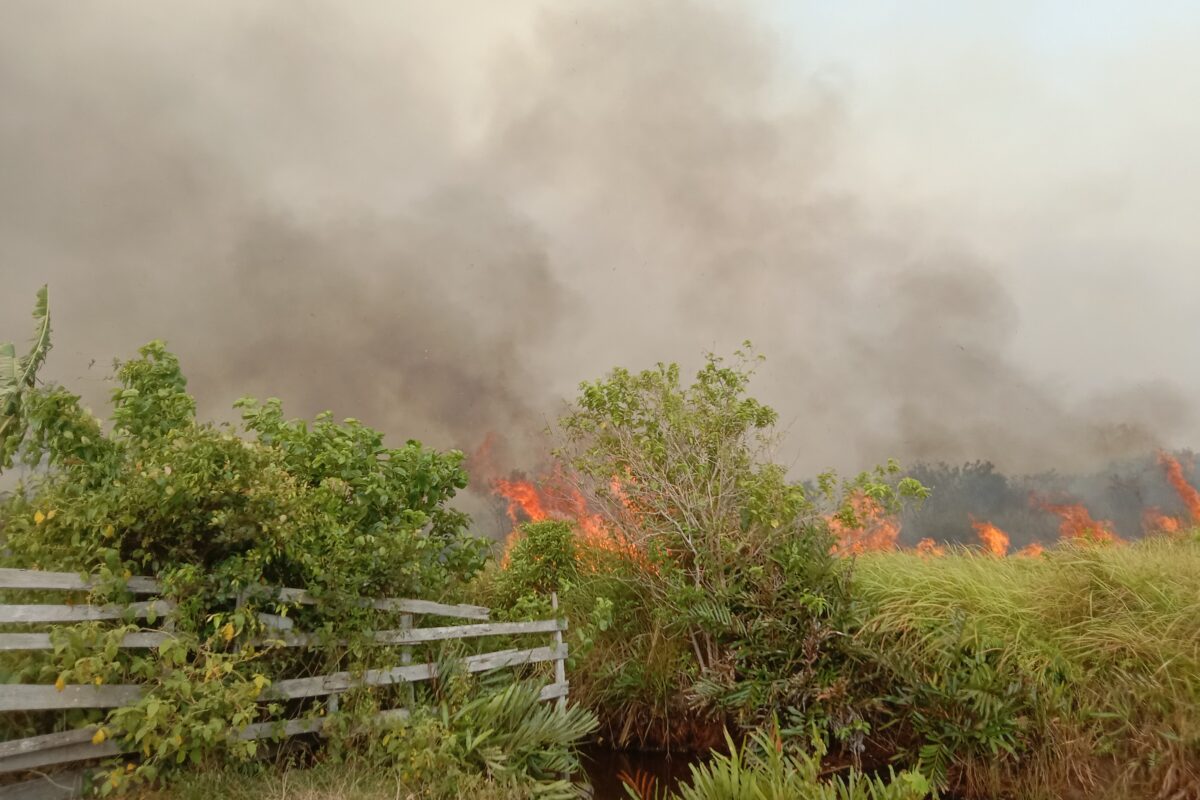
A severe El Niño-driven wildfire season is tearing through the rainforests of Indonesian Borneo, threatening the last strongholds of the critically endangered Bornean orangutan (Pongo pygmaeus). Fires are raging across habitats that support 13 of the 20 largest remaining populations of the species, destroying critical carbon-rich peat-swamp ecosystems and pushing conservationists to launch emergency rescue operations.
As of late September, government ministries and wildlife organizations have rescued scores of wild animals, including dozens of severely burned or smoke-inhibited orangutans. With blazes penetrating protected national parks, commercial forestry concessions, and active rehabilitation sites, experts are sounding the alarm. International primatologists, conservation groups, and local specialists warn that without immediate, coordinated international intervention and a pivot toward long-term peatland restoration, thousands of orangutans face injury, displacement, or death—raising the grim specter of local extinctions across fragmented jungle patches.
Detailed Chronology of the Crisis
The escalation of the 2026 wildfire season in Indonesia marks a harrowing chapter for the region’s biodiversity. The crisis began to peak mid-year as intense El Niño conditions triggered severe drought, turning dried peat-swamp forests and degraded landscapes into tinderboxes.
By July, flames had advanced dangerously close to human-managed conservation zones. In West Kalimantan, a major fire outbreak breached the perimeter, reaching within 100 meters of a facility operated by the Inisiasi Alam Rehabilitasi Indonesia (YIARI) foundation, which houses over 60 orangutans undergoing rehabilitation after being rescued from the illegal wildlife trade.
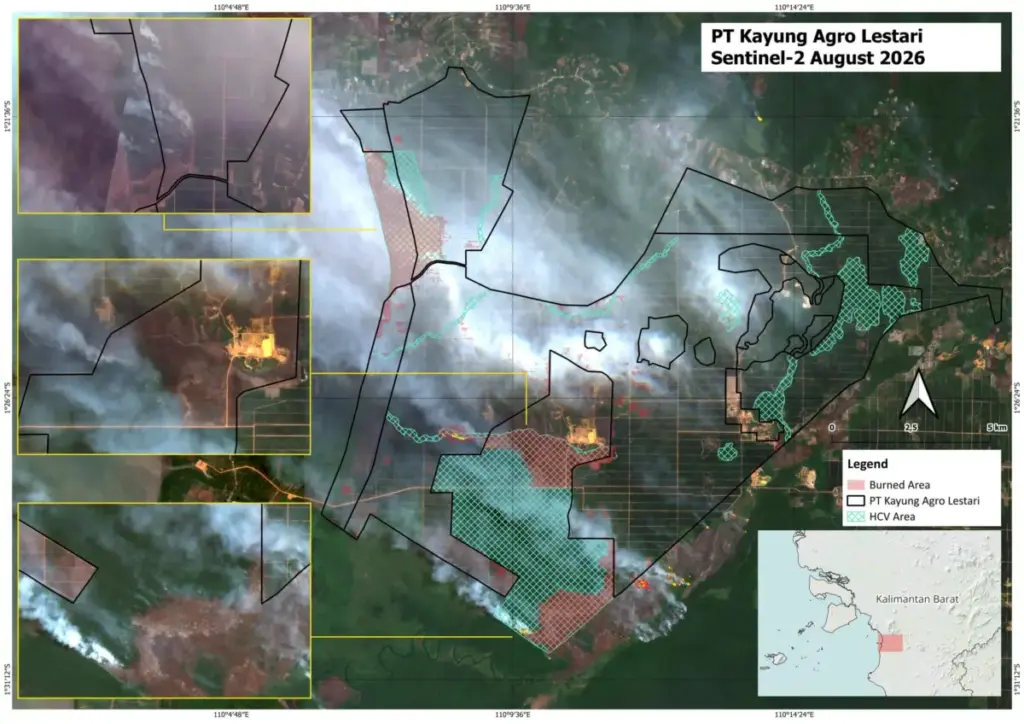
Throughout August and September, the situation deteriorated rapidly. Hotspots multiplied across commercial forestry and palm oil concessions. Satellite monitoring platforms like the Nusantara Atlas recorded at least 1,800 hectares burning inside the concession managed by forestry company PT Mohairson Pawan Khatulistiwa (Mopakha), a tract of land home to over 660 orangutans. In response to repeated burning, the Indonesian government suspended the company’s operating license. Simultaneously, fires ravaged peat-swamp forests inside the PT Kayung Agro Lestari (KAL) palm oil concession, which supports an estimated 60 orangutans.
Protected national parks have not been spared. By September, fires had punched deep into the heart of iconic reserves. In Tanjung Puting National Park, more than 4,500 hectares of vital peat-swamp forest were consumed by mid-September. Blazes also advanced perilously close to premier scientific infrastructure, creeping within 200 meters of the Rangkong Research Station in Gunung Palung National Park and 150 meters of the Tuanan Orangutan Research Station in Central Kalimantan.
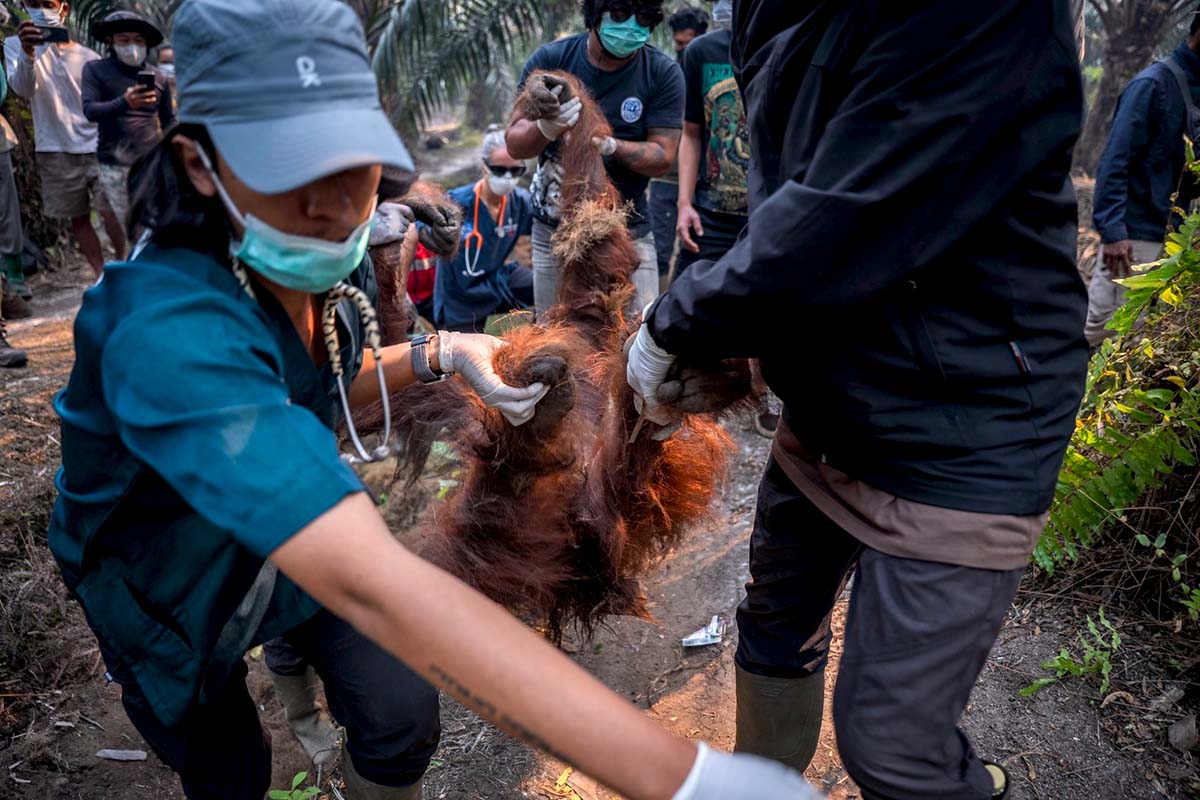
Amid this chaos, frontline rescuers have worked frantically to pull stranded animals from the infernos. In Central Kalimantan, a 4-year-old female orangutan named Novita was discovered near Sebangau National Park with catastrophic burns across all four hands and feet. In West Kalimantan, an adult male named Sampurna was found severely weakened from smoke inhalation inside an oil palm plantation; despite emergency veterinary intervention, he succumbed to acute oxygen deprivation. By September 22, the Ministry of Forestry reported that 100 wild animals, including 53 Bornean orangutans, had been successfully rescued.

Supporting Context & Metrics: Vulnerability and Ecological Fallout
The immediate loss of individual animals is only part of the catastrophe. Primatologists warn that the fires are systematically erasing the structural integrity of the Bornean orangutan’s remaining habitat. The situation is particularly grave for the Central Bornean orangutan subspecies (Pongo pygmaeus wurmbii), with fires burning across habitats that harbor 70% of its total population.
Reproductive Vulnerability and "Slow Extinction"
Orangutans are uniquely unequipped to survive rapid, landscape-scale disasters. Females possess one of the longest birth intervals of any mammal, giving birth only once every six to eight years, yielding as few as three to four offspring in a lifetime.
When fires sweep through established home ranges, females with dependent infants suffer disproportionately due to their lower mobility and reluctance to abandon familiar territories. Repeated fires create a cycle of habitat fragmentation that forces isolated subpopulations into disconnected forest patches—a trajectory toward what conservationists term "slow extinction." Recent field surveys have already found locations where historical metapopulations have vanished, leaving behind empty nests and silent canopies.
Physiological and Ecological Toll
The devastation extends far beyond direct thermal burns. Research indicates that wildfire smoke acts as a slow-acting killer and systemic stressor for surviving wildlife:

- Respiratory Damage and Pathogens: Smoke exposure has been directly linked to a 2.5-fold increase in hookworm infection intensity, alongside a higher prevalence of other intestinal parasites that cause severe anemia and weakness.
- Energy Crises: During heavy haze, orangutans alter their behavior to conserve energy—resting more and traveling less—yet they paradoxically exhibit signs of ketosis (increased fat breakdown) due to elevated metabolic demands driven by immune responses to smoke.
- Canopy Destruction: Burned forests experience a 58% to 98% drop in tree density and canopy cover. Navigating fire-damaged forests dramatically increases the daily energetic costs for arboreal primates, while the loss of food-producing trees suppresses reproductive rates.
- Forest Degradation Loops: Scientific studies show that while certain canopy heights may recover within a decade, tree diversity remains suppressed 12 years post-fire. Burned peat forests become increasingly dominated by fast-growing, fire-adapted vegetation, trapping ecosystems in a degraded state and rendering them vastly more susceptible to future blazes.
Official Statements and Responses
The scale of the disaster has prompted urgent appeals from the global and local conservation community.
Anton Nurcahyo, CEO of the Borneo Nature Foundation (BNF), emphasized the horrific reality on the ground:
"In locations where orangutans are surrounded by fire and have nowhere to go, they can literally burn alive… Without urgent action, thousands more orangutans could be killed, injured, or displaced."
Karmele Llano Sanchez, veterinarian and CEO of YIARI, echoed these concerns, stating:

"I believe that the toll on wild animals being burned, dead, because of the fires is huge. The concerns are that orangutans may die and those who survive have to leave their habitat. The short-term concern is that their shelter will be destroyed."
Ronna Saab, executive director of the Indonesian Orangutan Conservation Forum (FORINA), warned of the long-term demographic collapse:
"If this metapopulation continues to burn, there could be local extinction."
International networks have also stepped forward. The IUCN SSC Primate Specialist Group released an official statement highlighting that nearly half of all wild orangutans reside outside protected areas in timber extraction zones, restoration sites, and company concessions—landscapes experiencing severe, unmonitored fire outbreaks.

Caitlin O’Connell, deputy director of the Gunung Palung Orangutan Conservation Program, praised local efforts while underscoring resource deficits:
"The people on the ground are accomplishing an extraordinary amount with the resources they have. But they cannot fight fires of this scale alone. They urgently need greater assistance to stop these fires before even more irreplaceable rainforest and orangutan habitat is lost."
In response to the crisis, the Indonesian government deployed massive resources, mobilizing over 54,000 personnel and 64 aircraft across Central Kalimantan and South Sumatra since August. Furthermore, President Prabowo Subianto’s administration has initiated regulatory steps to establish a new national agency dedicated to peatland and mangrove restoration, echoing post-2015 institutional frameworks designed to tackle chronic peatland drainage and degradation.
Future Outlook and Strategic Recommendations
As Indonesia awaits the arrival of the wet season in late October or November, experts agree that emergency firefighting, while vital, is insufficient. Preventing future catastrophes requires a fundamental paradigm shift in how tropical ecosystems are managed.

1. Beyond Replanting: Building Resilience
Conservationists emphasize that planting trees is not enough if those trees are vulnerable to burning again within a few years. International funding must support holistic mitigation models, such as those pioneered by the Borneo Nature Foundation around Sebangau National Park. BNF’s community-based fire patrols—where local teams monitor hotspots and clear firebreaks for 16 days a month—have proven successful at suppressing total burned areas compared to unmonitored villages.
2. Rewetting Peatlands and Reversing Drainage
The root causes of catastrophic peat fires—industrial drainage canals, agricultural land-clearing, and illegal mining—must be systematically addressed. Rewetting drained peat-swamp forests is essential, as saturated peat is exponentially less likely to burn.
3. Strengthening Unprotected and Concession Lands
Because a vast majority of orangutans live outside national parks, stricter enforcement, robust corporate accountability, and transparent land-use monitoring (such as utilizing platforms like Nusantara Atlas and TheTreeMap) are non-negotiable. Companies operating in high-risk conservation zones must be held strictly accountable for maintaining integrated fire-management systems and protecting High Conservation Value (HCV) forests.
As Anton Nurcahyo concluded:
"Protecting Indonesia’s forests and peatlands protects both apes and the people who share these landscapes. Climate change is here, and we will face more devastating fires in the future. We must build resilience and have effective systems in place to prevent further forest loss."
Cite This Article
Hans Nicholas Jong (2026). “There could be local extinction”: The fight to protect Indonesia’s orangutans as El Niño fuels fires. Mongabay Conservation News. DOI: 10.66709/news-331642



