

Executive Overview
The automotive landscape in the United States is undergoing a quiet yet seismic structural shift. For years, the narrative surrounding electric vehicles (EVs) has been anchored by a persistent roadblock: prohibitive upfront costs. Consumers drawn to the environmental and operational benefits of zero-emission driving frequently found themselves priced out of the market when comparing window stickers against traditional internal combustion engine (ICE) vehicles.
However, newly released data from Kelley Blue Book (KBB) signals that this defining barrier is eroding faster than anticipated.
In March, the average transaction price (ATP) for a new electric vehicle dropped to $54,508. This figure represents a 2.8% decrease year-over-year and marks the third consecutive month of declining EV price tags. When compared directly to February—a month that saw downward revisions of its own—prices slipped an additional 0.7%.
Crucially, this sustained downward trajectory has compressed the price gap between electric and gas-powered vehicles to roughly $5,800, the narrowest margin ever recorded by KBB.
This transformation is not happening in a vacuum. It is the result of aggressive manufacturer discounting, a sharp spike in consumer incentives—which are now climbing to more than double the wider automotive industry average—and strategic price-correction maneuvers by market leaders like Tesla. Yet, as this report will explore, lower prices are a double-edged sword. While they stimulate month-over-month sales recovery, they also reflect a transitioning market grappling with shifting regulatory landscapes, evolving consumer expectations, and complex demand dynamics.
Detailed Chronology: Tracking the 2026 Price Correction
To fully understand how the electric vehicle market arrived at this historical juncture, it is necessary to examine the immediate timeline leading up to the most recent automotive market reports.
January: The Foundation of Decline
The downward pressure on EV pricing began in earnest at the turn of the year. Following a holiday season defined by aggressive year-end inventory clearing, manufacturers opted not to bounce prices back up to previous norms. Instead, automakers recognized that maintaining high transaction prices in the face of cooling early-year demand would stall momentum completely. January set a precedent of modest, month-over-month price erosions that caught industry analysts by surprise, effectively setting the stage for what would become a sustained pricing correction.
February: Revisions and Deepening Discounts
By the end of February, initial estimates of EV pricing proved to be overly conservative. Subsequent market data revisions revealed that prices had slipped further than initially projected. During this period, automotive conglomerates began leaning heavily into promotional strategies. Average incentives in February climbed to 14.2% of the total transaction price, signaling to prospective buyers that automakers were willing to compress their profit margins to keep factory lines moving and showroom floors active.
March: Striking New Lows and Record-Narrow Gaps
March data cemented the ongoing trend. The average transaction price for a new EV dropped to $54,508, continuing a three-month streak of consecutive declines. More importantly, the convergence of falling EV prices and relatively stable gas-car pricing caused the affordability gap to shrink to approximately $5,800. For the first time, the psychological and financial barrier separating electrification from mainstream automotive adoption has been reduced to a single-digit thousands figure, fundamentally altering the calculus for budget-conscious car buyers.
Supporting Context & Metrics: The Mechanics of Affordability
A closer inspection of the data compiled by Kelley Blue Book and Cox Automotive reveals the complex economic machinery driving these changes. Two primary factors are responsible for the compressed price gap: aggressive incentive spending and strategic pricing adjustments by legacy and native EV manufacturers alike.
The Heavy Lifting: Record Incentive Spending
Automakers are currently utilizing incentives as their primary tool to stimulate demand. In March, the average incentive package for a new electric vehicle reached an astounding 14.6% of the transaction price. In monetary terms, this translates to nearly $8,000 in direct savings, manufacturer rebates, or promotional financing discounts per vehicle.
To put this figure into perspective:
- EV incentives are now more than double the industry average for all vehicle types.
- This represents a notable escalation from the 14.2% seen in February.
- It stands even higher when compared to the 12.9% average recorded during the same period in the previous year.
This surge in promotional spending is particularly noteworthy given the shifting legislative and regulatory framework surrounding federal tax credits. Even as direct federal incentives face changing eligibility criteria and political headwinds, manufacturers are stepping in to bridge the gap out of their own balance sheets, effectively subsidizing the consumer adoption curve to maintain volume.
Tesla’s Pivot: Lower Prices, Shifting Sales
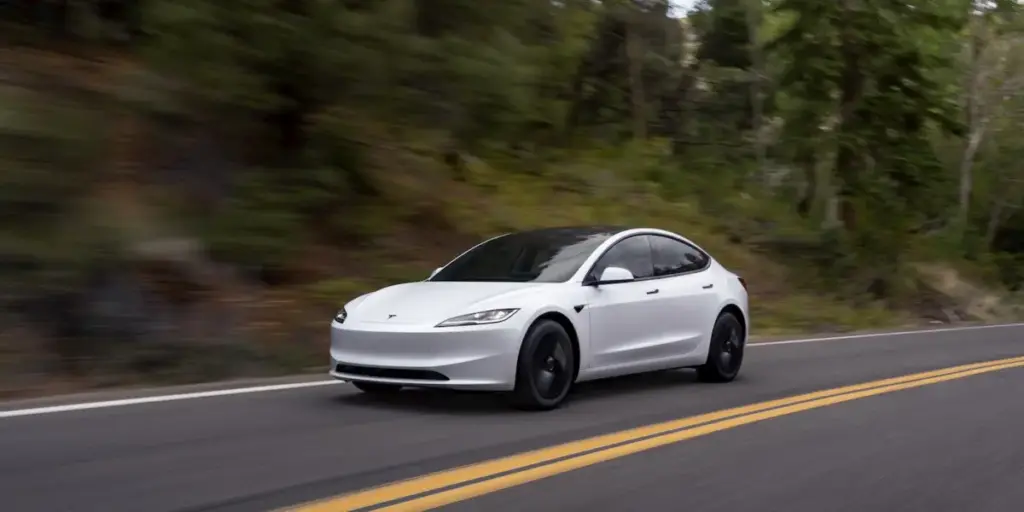
No discussion of the EV market is complete without examining Tesla, the undisputed bellwether of the industry. Tesla has played a pivotal, hands-on role in dragging market-wide transaction prices downward through a series of calculated price adjustments and increased promotional spending.

According to the latest metrics:
- Tesla’s average transaction price in March stood at $53,421.
- This represents a 2.6% decrease compared to March of the previous year.
- It also marks a 1.2% reduction compared to February figures.
- Tesla actively amplified its incentive spending, raising it to 12.3% of its average transaction price.
However, Tesla’s aggressive pricing strategy has yielded a complex, bifurcated sales picture. Data from Cox Automotive estimates that Tesla’s year-over-year US sales volume fell by 8.4% in March. This annual contraction highlights the intense competitive pressures Tesla faces from traditional automakers flooding the market with new electric offerings, as well as the maturation of a customer base that now has alternative options.
Conversely, looking at sequential performance paints a more optimistic short-term picture. Tesla deliveries rose by 6.1% in March compared to February, marking the company’s second consecutive month of sequential sales growth. This suggests that while year-over-year comparisons remain challenging, the recent price cuts and incentive offerings are successfully pulling buyers back into Tesla showrooms on a month-to-month basis.
Official Statements and Industry Insights
Industry analysts and automotive economists have been quick to weigh in on what these March figures mean for the broader trajectory of personal mobility.
Market researchers at Cox Automotive note that the market is entering a "normalization phase." For years, EVs were treated as luxury, bleeding-edge tech commodities capable of commanding a substantial pricing premium. As production scales and supply chains stabilize, the market is reverting to traditional economic principles where supply must meet demand at a realistic price point.
"The narrative that electric vehicles are inherently out of reach for the average household is rapidly losing its factual basis," notes a senior automotive analyst. "When you factor in an average incentive package approaching $8,000, the effective cost of ownership—especially when accounting for dramatically lower refueling and maintenance expenses—makes EVs a compelling financial proposition for a much larger segment of the car-buying public."
Furthermore, representatives from major dealer networks have observed that foot traffic for electric models increases exponentially whenever localized incentives cross the 14% threshold. Consumers who were previously "EV-curious" but hesitant due to upfront costs are finding that promotional lease deals and zero-percent financing offers effectively neutralize the traditional price premium.

Future Outlook: What Lies Ahead for EV Affordability
As the automotive industry looks past the first quarter and toward the remainder of the year, several critical questions remain regarding the sustainability of these pricing trends.
1. Can Manufacturers Sustain Current Incentive Levels?
An incentive rate averaging nearly 15% of a vehicle’s transaction price represents a significant margin sacrifice for automakers. While these discounts are necessary right now to clear inventory and stimulate demand in a transitioning market, they cannot expand indefinitely without impacting corporate profitability. The central question for the rest of the year is whether battery cost reductions and manufacturing efficiencies (such as gigacasting and improved cell chemistries) can advance quickly enough to allow automakers to maintain lower baseline prices without relying permanently on heavy incentive spending.
2. The $5,800 Threshold and Mass Adoption
With the price gap between EVs and internal combustion engine vehicles narrowing to $5,800, the market is entering a critical tipping point. Economists generally agree that once the upfront cost parity gap closes entirely—or becomes negligible when factoring in total cost of ownership (TCO)—mass adoption accelerates exponentially. As more automakers introduce sub-$40,000 electric models throughout the year, this remaining $5,800 buffer is expected to shrink even further.
3. The Regulatory and Tax Credit Landscape
Changes to federal and state-level EV tax credits will continue to play a wildcard role. As eligibility rules fluctuate, manufacturers will likely continue adjusting their regional pricing strategies and lease loopholes (which often bypass strict sourcing rules for commercial vehicles) to keep monthly payments attractive to consumers.
The Bottom Line
EV prices are actively easing, manufacturer incentives are reaching historic highs despite regulatory headwinds, and the historical affordability gap separating electric cars from gas-powered vehicles is finally narrowing to historic lows. For consumers who have been patiently waiting on the sidelines for the economics of electrification to make sense, the window of opportunity has never looked more inviting.
If you’ve ever considered going solar to offset your electric vehicle’s charging costs, make it easy by finding a trusted, reliable solar installer near you that offers competitive pricing by checking out EnergySage.
EnergySage features hundreds of pre-vetted solar installers competing for your business, ensuring you get high-quality solutions and save 20–30% compared to going it alone. Best of all, it’s entirely free to use, and you won’t receive unsolicited sales calls until you explicitly select an installer and share your contact information. Compare personalized solar quotes online and leverage unbiased Energy Advisors every step of the way. Get started here.



