

Executive Overview
KUTZTOWN, PENN. — In an agricultural landscape increasingly battered by extreme weather, resource scarcity, and fragile supply chains, innovation often blooms in the most unexpected places. This Earth Day, the Davines Group and the Rodale Institute proudly announced Rachel Kulchin, founder of Blue Heron Farm in Bishop, California, as the second annual recipient of The Good Farmer Award U.S.
The prestigious national honor recognizes agricultural pioneers who demonstrate exceptional environmental stewardship, community leadership, and social impact through regenerative organic practices. Kulchin, operating in the arid high desert of California’s Eastern Sierra, was selected from a competitive pool of 118 applicants spanning 25 states. Her achievement underscores a paradigm shift in modern agriculture: the proof that regenerative, localized food systems can flourish even in the most challenging and isolated climates.
In just a single operating season, Kulchin transformed a 10-acre plot into a thriving polyculture engine. Producing over 47,000 pounds of nutrient-dense food and connecting directly with more than 3,000 customers, Blue Heron Farm has rapidly become the largest diversified fruit and vegetable producer in the region. By marrying ecological restoration with community accessibility, Kulchin’s work serves as a blueprint for rural food sovereignty.
Detailed Chronology & Background
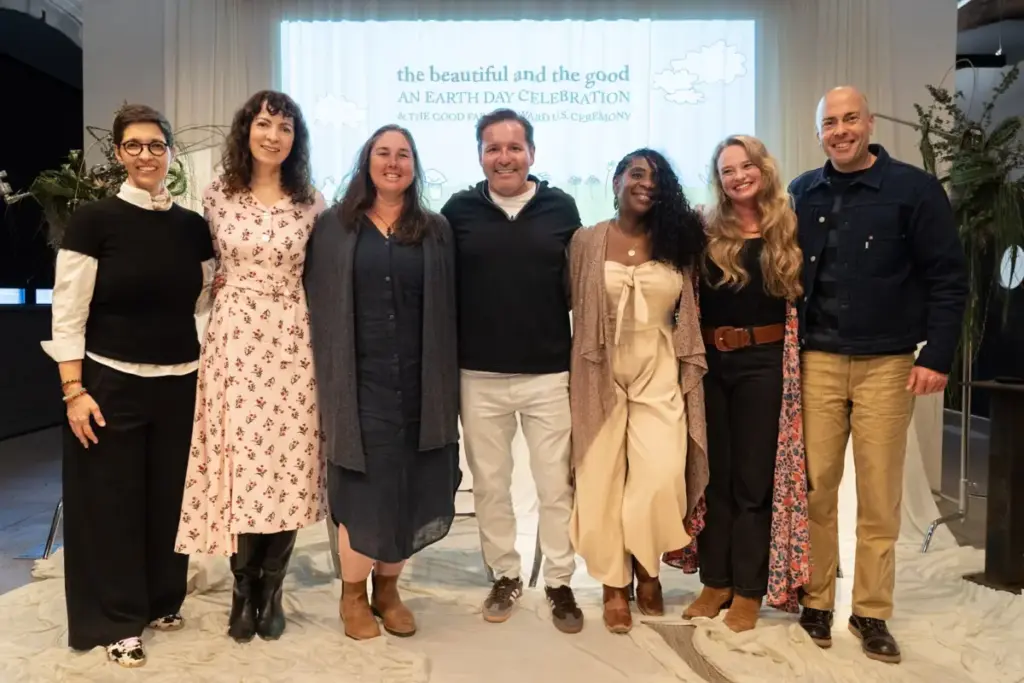
April 22, 2026: Earth Day Celebration in Brooklyn
The announcement culminated on Earth Day, April 22, 2026, during a high-profile celebration hosted at the Davines Group House in Brooklyn, New York. The event brought together leaders in sustainable agriculture, environmental advocacy, and ethical beauty to honor Kulchin alongside the second- and third-place national finalists, Nia Kiara Cole of North Carolina and Nailah Marie Ellis of Georgia.
The Birth of Blue Heron Farm: Defying the Desert
The journey to this national recognition began years prior to the farm’s official launch. Operating in Bishop, California, Kulchin faced an environment defined by extreme aridity, fragile agricultural infrastructure, and a heavy reliance on imported food. Recognizing the systemic vulnerability of her community, she established Blue Heron Farm to tackle food insecurity head-on.
Rather than relying on intensive, resource-draining industrial farming methods, Kulchin anchored her enterprise in regenerative organic principles. She planted over 1,000 fruit trees alongside diversified vegetable crops, designing a multi-tiered mixed orchard and vegetable operation. To bridge the gap between producer and consumer, she instituted a vibrant U-Pick model, inviting local residents to harvest directly from the land. This hands-on approach did more than distribute fresh food; it re-anchored the community in the rhythms of local agriculture.
The Evolution of the Good Farmer Award
Launched in 2025 by the Davines Group and the Rodale Institute, the U.S. Good Farmer Award was designed to spotlight early-career farmers—those working the land for 10 years or less—who transcend traditional notions of soil health and crop yields. The award seeks out visionaries who actively forge systemic, community-level change.
Meanwhile, its European counterpart, launched in 2024 in partnership with the Sustainable Development Foundation, is already in its third edition in Italy. This transatlantic initiative highlights a shared corporate and institutional commitment to championing grassroots agricultural pioneers whose practices heal the planet while nourishing human communities.
Supporting Context & Metrics
By the Numbers: The 2026 Selection Process
- 118: Total applications received from farmers across 25 U.S. states.
- 10: Acreage of Blue Heron Farm, demonstrating high-yield efficiency on a compact footprint.
- 1,000+: Fruit trees cultivated alongside diverse annual vegetable crops.
- 47,000+: Pounds of fresh, nutrient-dense food produced in Kulchin’s inaugural season.
- 3,000+: Community members engaged through direct-to-consumer and U-Pick models in year one.
- $10,000: Financial grant awarded to Blue Heron Farm to bolster vital water and educational infrastructure.
The Finalists: A Tapestry of Regional Impact
The 2026 award cycle celebrated diverse models of agricultural resilience through its distinguished runners-up:
- Nia Kiara Cole (Kin & Flo Farm, North Carolina – 2nd Place): Cole was recognized for her profound work in reclaiming ancestral family land. By utilizing Afro and Indigenous restorative land practices, she trains the next generation of BIPOC farmers, actively advancing food sovereignty and cooperative food systems for Black and Brown communities across the North Carolina Piedmont.
- Nailah Marie Ellis (Blessed Up Blooms, Georgia – 3rd Place): Ellis was honored for establishing a soil-first, community-centered agricultural enterprise. Utilizing regenerative techniques and direct-to-consumer models, she successfully brings fresh, nutrient-dense food and botanical beauty to urban and underserved areas across Atlanta, stretching from Bankhead to Buckhead.
The Rigorous Judging Panel
Candidates were evaluated by an interdisciplinary panel of experts encompassing sustainable agriculture, environmental science, and ethical consumer goods. The 2026 panel included:
- Renée Baran: Dean of Education, Rodale Institute
- Dario Fornara: Research Director, European Regenerative Organic Center (EROC)
- Kegan Hilaire: Farmer/Owner of Blackbird Farms and Small Farms & Diversified Vegetable Consultant, Rodale Institute
- Hayley and Stephanie Painter: Co-Founders, Painterland Sisters (Icelandic Style Skyr Yogurt)
Official Statements & Leadership Perspectives
The recognition of Rachel Kulchin drew widespread praise from international leaders in regenerative business and agricultural science, emphasizing the deep intersection between planetary health, community resilience, and corporate responsibility.
"Rachel embodies the resilient, systems approach that regenerative organic agriculture demands. In just one year, she has built a thriving 10-acre operation that is not only producing nutrient-dense food and restoring soil health, but also inspiring an entire community to reimagine what’s possible for local food security. Her work proves that small farms can be economically viable and ecologically sound, even in the most challenging climates."
— Jeff Tkach, CEO of Rodale Institute
For Kulchin, the national recognition serves as both validation and fuel for her ongoing mission in the Eastern Sierra:
"I am standing behind a belief that feels both stubborn and bold. The recognition through the Good Farmer Award affirms the work we are doing to build something different in Eastern Sierra. Our goal is not just to grow food, but to demonstrate that regenerative agriculture can thrive in challenging climates and build the resilience our valley desperately needs. This award will be transformational for Blue Heron Farm and for our community."
— Rachel Kulchin, Founder of Blue Heron Farm
Davines Group Chairman Davide Bollati emphasized the strategic importance of supporting grassroots innovators as part of a broader corporate commitment to sustainability and biodiversity:
"We are delighted to welcome Rachel to Italy and to guide her through our European Regenerative Organic Center. This year’s award demonstrates why Davines continues to partner with Rodale Institute — not only to source regenerative organic ingredients for our products, but to learn from the Institute’s rigorous research and farmer-first expertise. Rachel’s farm is a living example of building resilient systems with regenerative organic agriculture. By supporting farmers like Rachel, we invest in the future of beauty, agriculture and the planet."
— Davide Bollati, Chairman of the Davines Group
Future Outlook & Next Steps
The $10,000 grand prize will act as a vital catalyst for the next phase of Blue Heron Farm’s development. Capital allocation has been strategically mapped out to maximize long-term ecological and educational impact:
- 90% of Funds: Directed toward vital infrastructure upgrades centered on water conservation and advanced orchard irrigation systems—an absolute necessity in the high-desert climate.
- 10% of Funds: Allocated for educational signage and demonstration infrastructure, ensuring that visiting community members and aspiring growers can learn hands-on regenerative methodologies.
In addition to financial backing, Kulchin will embark on an all-expenses-paid international educational exchange. She will visit the European Regenerative Organic Center (EROC), situated on a 17-hectare site adjacent to the Davines Group Village in Parma, Italy. Established in 2021 through the partnership of Davines Group and Rodale Institute, EROC stands as Europe’s premier research and training center dedicated entirely to advancing regenerative organic agriculture.
This exchange bridges the high desert of California with cutting-edge European agricultural science, offering Kulchin a global platform to share her findings while importing new ecological frameworks back to the Eastern Sierra. As climatic volatility intensifies worldwide, models like Blue Heron Farm—forged in adversity and sustained by community—illuminate the path toward a secure, regenerative agricultural future.



