Executive Overview
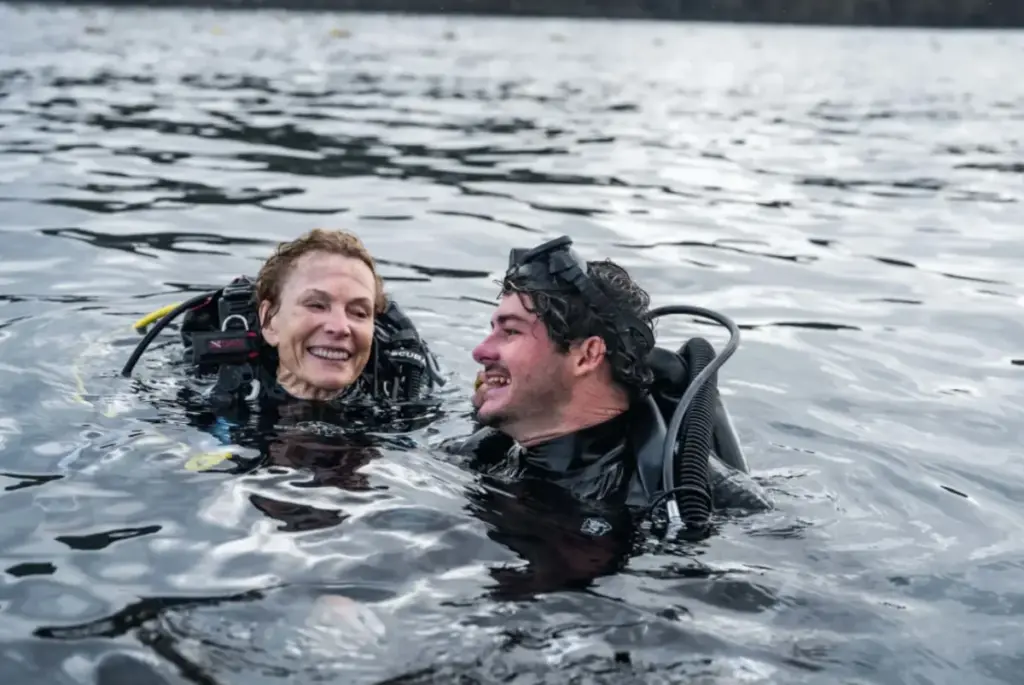
As the global community confronts the accelerating impacts of climate change, the health of the world’s oceans remains one of the most critical yet under-resourced frontiers in environmental science. In a landmark collaboration featured on CNN’s Call to Earth, legendary oceanographer Dr. Sylvia Earle and Titouan Bernicot, founder of the grassroots restoration enterprise Coral Gardeners, have united two distinct generations of marine conservation leadership.
This partnership transcends a symbolic meeting of minds; it establishes a pragmatic, multi-layered framework designed to combat the systemic degradation of marine ecosystems. Earle, often referred to as "Her Deepness," brings decades of institutional wisdom, policy advocacy, and global ocean exploration to the table. Bernicot, representing a tech-savvy, digitally native vanguard, infuses the movement with rapid-deployment coral restoration techniques, community mobilization, and viral advocacy.
Together, Earle and Bernicot have articulated five foundational pillars for turning the tide on ocean degradation. Their thesis is direct and urgent: the preservation of marine ecosystems is not merely an environmental crusade, but an absolute prerequisite for human survival. This article provides an in-depth investigation into their collaborative framework, analyzing the ecological realities of modern oceans, the mechanics of their proposed solutions, and the broader geopolitical and socioeconomic implications of failing to act.
Detailed Chronology: The Evolution of Marine Conservation
To understand the weight of the Earle-Bernicot collaboration, one must examine the historical trajectory of marine conservation over the past half-century—a timeline marked by shifting paradigms from passive protection to aggressive, tech-driven restoration.
The Era of Exploration and Discovery (1970s–1990s)
When Dr. Sylvia Earle began her pioneering work in marine biology, the prevailing human attitude toward the ocean was one of infinite resource extraction. Oceans were viewed as bottomless disposal sites for industrial waste and inexhaustible fisheries. Earle’s early career—highlighted by her record-setting 1,000-foot solo dive in 1979 and her tenure as Chief Scientist of the National Oceanic and Atmospheric Administration (NOAA) in the early 1990s—focused on changing this narrative. Through meticulous documentation of marine life, Earle and her contemporaries proved that human activity was fundamentally altering deep-sea and coastal ecosystems. However, institutional inertia and a lack of real-time public communication tools limited the scale of conservation responses.
The Rise of Grassroots Activism and Digital Mobilization (2010s–Present)
Fast forward to the founding of Coral Gardeners in French Polynesia by Titouan Bernicot in 2017. Growing up in the islands, Bernicot witnessed firsthand the catastrophic coral bleaching events driven by rising sea temperatures. Eschewing traditional, slow-moving academic bureaucracy, Bernicot utilized social media, crowdfunding, and direct-action volunteering to build a global community of ocean stewards. Coral Gardeners transformed the coral restoration landscape by utilizing heat-resistant coral strains, gamifying public participation, and deploying proprietary monitoring technologies.
The CNN Call to Earth Convergence
The convergence of Earle and Bernicot on CNN’s Call to Earth platform represents a crucial bridging of these eras. By pairing Earle’s macro-level vision—such as her global "Hope Spots" initiative through Mission Blue—with Bernicot’s micro-level execution on coral reefs, the conservation movement has achieved a rare synthesis. This alliance acknowledges that neither pure academic research nor localized activism alone can reverse planetary-scale marine decline; both must operate in tandem.
Supporting Context & Metrics: The State of the Global Ocean
To fully grasp the urgency behind the five solutions proposed by Earle and Bernicot, one must confront the empirical realities facing marine environments today. The numbers paint a grim picture of systemic collapse, while highlighting the narrow window remaining for intervention.
The Coral Crisis
Coral reefs cover less than 0.1% of the ocean floor, yet they support an estimated 25% of all marine life and sustain the livelihoods of over half a billion people worldwide. According to data from the Intergovernmental Panel on Climate Change (IPCC):
- Global Bleaching Events: Over the past decade, more than 90% of tropical coral reefs have experienced severe bleaching events due to sustained marine heatwaves.
- Projected Loss: Climate models indicate that if global warming reaches 1.5°C to 2°C above pre-industrial levels, up to 90% of warm-water coral reefs could disappear entirely by mid-century.
Overfishing and Industrial Exploitation
The industrialization of the high seas has decimated pelagic and benthic populations. The Food and Agriculture Organization (FAO) estimates that:
- Over 34% of global fish stocks are currently fished at biologically unsustainable levels.
- Bycatch—the unintended capture of non-target species such as sharks, turtles, and marine mammals—remains largely unregulated across vast swaths of international waters.
Ocean Acidification and Carbon Sequestration
The ocean acts as Earth’s primary carbon sink, absorbing approximately 25% of all human-generated carbon dioxide emissions and capturing over 90% of the excess heat generated by global warming. This monumental buffering service comes at a catastrophic cost:
- pH Decline: Surface ocean pH has dropped by 0.1 units since the industrial revolution, representing a 30% increase in acidity. This shift prevents calcifying organisms, including corals, clams, and microscopic plankton, from building their shells and skeletons.
- The Blue Carbon Economy: Coastal ecosystems such as mangroves, salt marshes, and seagrass meadows sequester carbon up to 10 times faster per hectare than tropical rainforests. Yet, these habitats are being destroyed at rates up to four times faster than terrestrial forests.
The Five Solutions for Ocean Recovery
Drawing from their respective domains of expertise, Dr. Sylvia Earle and Titouan Bernicot outline five actionable, scalable solutions designed to reverse these alarming trajectories.
1. Supporting and Empowering Local Leaders
Conservation cannot succeed as a top-down imposition from distant capitals or international bodies. Earle and Bernicot emphasize that indigenous communities and local coastal populations are the most effective stewards of marine ecosystems.
- Implementation: Financial resources, legal authority, and capacity-building programs must be channeled directly to local communities who possess generational knowledge of their coastal waters.
- Impact: When local populations are empowered to manage their marine resources, compliance with protective measures increases dramatically, transforming poachers into protectors.
2. Expanding Opportunities for Public Participation
The scale of the ocean crisis requires a mass mobilization of global citizenry. Conservation must transition from an exclusive domain of marine biologists to an inclusive movement open to everyone.
- Implementation: Organizations like Coral Gardeners utilize citizen science platforms, volunteer dive programs, and digital adoption models (such as symbolically "adopting" a coral) to give the public a direct stake in restoration. Similarly, Mission Blue enables everyday citizens to advocate for local Hope Spots.
- Impact: Democratizing conservation fosters psychological ownership over the health of the sea, driving political will and sustained behavioral changes in daily consumption habits.
3. Harnessing Technology and Innovation
Traditional conservation methods—though foundational—are too slow to keep pace with the accelerating velocity of climate change. Technology must be leveraged to scale interventions exponentially.
- Implementation: Bernicot’s Coral Gardeners utilize advanced monitoring tools, artificial intelligence, and machine learning to track coral health, identify heat-resilient genotypes, and optimize outplanting locations. In parallel, Earle champions satellite monitoring, acoustic oceanography, and autonomous underwater vehicles (AUVs) to patrol marine protected areas (MPAs) and combat illegal, unreported, and unregulated (IUU) fishing.
- Impact: Technology bridges the resource gap, allowing conservationists to monitor vast, remote expanses of ocean that were previously impossible to police or study effectively.
4. Protecting Whole Ecosystems (Mission Blue Hope Spots)
Fragmented, piecemeal conservation—such as protecting a single fish species while allowing destructive trawling in the same area—is fundamentally flawed. Conservation must be holistic.
- Implementation: Dr. Sylvia Earle’s flagship initiative, Mission Blue, focuses on identifying and designating "Hope Spots"—special places that are scientifically identified as critical to the health of the ocean. These sites often combine coral reefs, mangrove forests, and deep-sea trenches into cohesive, protected ecological networks.
- Impact: Protecting whole ecosystems preserves complex trophic webs, genetic diversity, and natural resilience, giving marine life a fighting chance to adapt to shifting climatic conditions.
5. Recognizing Ocean Health as Human Survival
The most profound paradigm shift advocated by Earle and Bernicot is psychological and philosophical: humanity must stop viewing the ocean as a separate, external entity.
- Implementation: Policy frameworks must integrate ocean health into global economic models, public health directives, and climate change agreements. The narrative must shift from "saving the fish and corals" to "saving ourselves."
- Impact: As Earle frequently asserts, "With every drop of water you drink, every breath you take, you’re connected to the sea. No blue, no green. No ocean, no life." Acknowledging this physiological reality realigns global economic priorities toward immediate, aggressive marine decarbonization and protection.
Official Statements and Expert Analysis
The collaboration between Earle and Bernicot has garnered widespread acclaim from the international scientific and environmental policy communities.
Dr. Sylvia Earle underscored the urgency of cross-generational synergy during their joint feature:
"We are the first generation with full knowledge of what is happening to the ocean, and we are the last generation with a window of time to do anything about it. Working with young leaders like Titouan gives me immense hope. We are not just passing the torch; we are igniting a wildfire of collective action."
Titouan Bernicot highlighted the pragmatic, forward-looking nature of their alliance:
"For too long, conservation has been bogged down by pessimism and bureaucracy. Our generation doesn’t have time for despair. By combining Sylvia’s lifetime of scientific validation with our digital speed and restoration technology, we are proving that reef restoration and ocean recovery are not impossible pipe dreams—they are happening right now."
Independent marine economists and policy analysts have echoed these sentiments, noting that investing in marine ecosystem restoration yields high economic dividends. According to a report by the High Level Panel for a Sustainable Ocean Economy, every $1 invested in sustainable ocean management yields an average return of $5 across economic, social, and environmental benefits.
Future Outlook: The Road Ahead
As the international community looks toward upcoming global climate summits and the implementation of the UN High Seas Treaty, the blueprint articulated by Dr. Sylvia Earle and Titouan Bernicot serves as an invaluable strategic roadmap.
The challenges remain monumental. Geopolitical tensions, short-term economic pressures, and the sheer velocity of climate-driven ocean warming threaten to outpace conservation efforts. However, the synthesis of institutional wisdom and youthful innovation demonstrated in this Call to Earth feature proves that humanity possesses the tools, the science, and the passion required to turn the tide.
Ultimately, the message from Earle and Bernicot is clear: the health of the ocean is not a peripheral environmental issue. It is the ultimate barometer of life on Earth. Whether humanity chooses to heed this warning will determine not only the future of marine biodiversity, but the viability of human civilization itself.