

This coverage is made possible through a collaborative partnership between Grist and Verite News, a nonprofit news organization dedicated to producing in-depth journalism in underserved communities across the greater New Orleans area.
Executive Overview
For Louisiana’s burgeoning offshore wind industry, every calendar day is marked by a single, high-stakes countdown: January 21, 2029.
This date holds profound symbolic and practical weight for the region’s renewable energy stakeholders—it is the first day following the conclusion of Donald Trump’s current presidential term. Across the United States, executive directives and aggressive administrative policy changes have driven offshore wind development to a near-complete standstill. Rather than letting protracted legal battles drain corporate treasuries indefinitely, the federal government has deployed a multi-billion-dollar buyout strategy, paying developers roughly $4 billion to relinquish their federal leases and walk away from massive generation portfolios.
Yet, deep in the heart of America’s oil and gas country, a different kind of resilience is taking shape. Louisiana’s marine engineers, naval architects, fabrication yards, and renewable supply chain businesses are refusing to shutter entirely. Instead, leadership across the state’s industrial and political spectrum has embraced a pragmatic, if tense, strategy: preserve critical expertise, pivot temporary operations to defense or aerospace, and wait for the political clock to run out.
Detailed Chronology: From Bureaucratic Momentum to Federal Roadblocks
The Rise of Gulf-Based Wind Supply (2016–2024)
Long before utility-scale wind farms began dotting the horizon off the Atlantic Seaboard, Louisiana companies—steeped in decades of heavy offshore oil and gas engineering—played an instrumental role in pioneering America’s offshore wind sector.
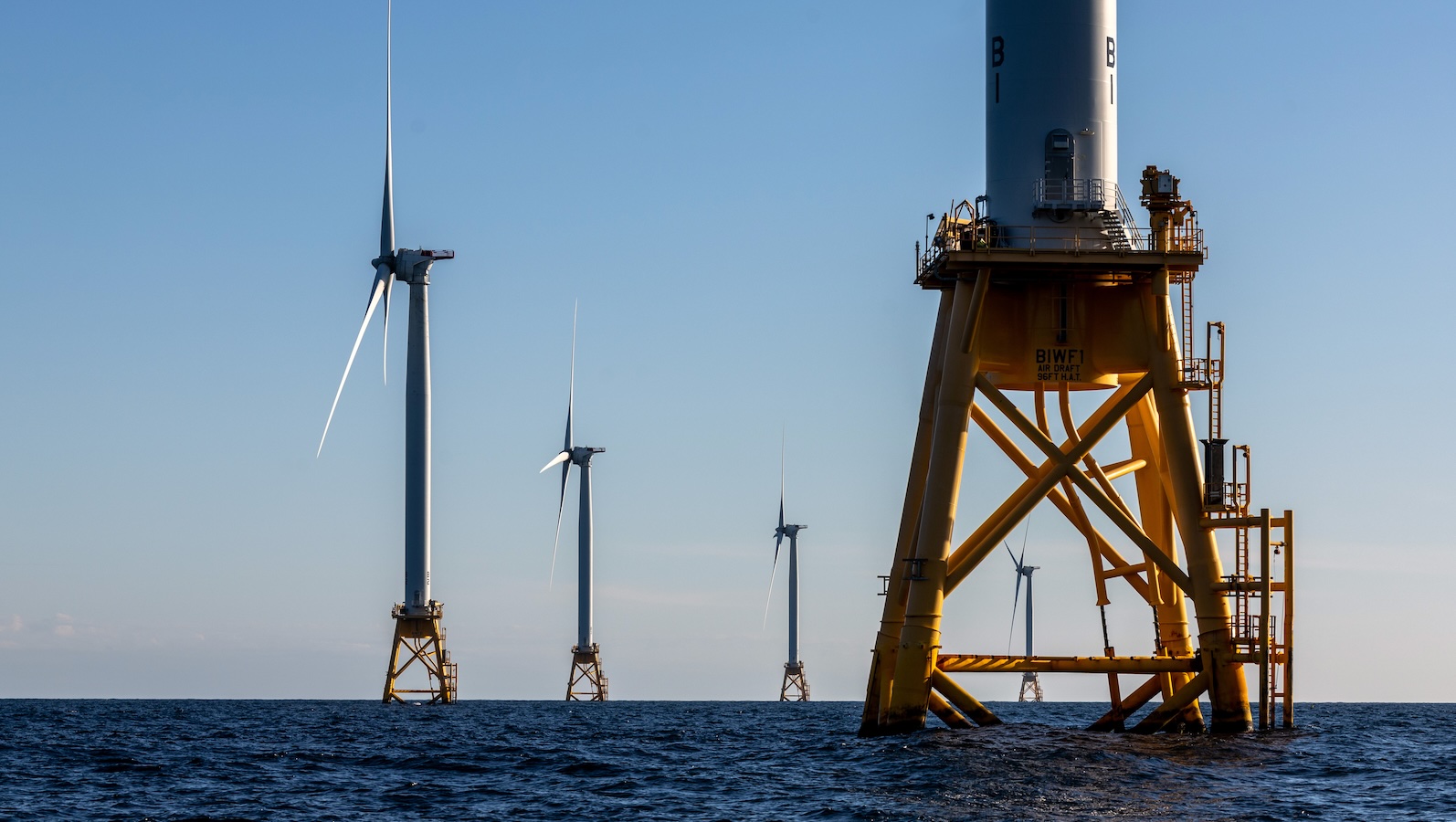
- 2016: Louisiana-based marine operators, engineers, and metal fabricators—including family-owned supply boat businesses like those belonging to state Representative Joe Orgeron—helped construct the nation’s very first commercial offshore wind farm near Block Island, Rhode Island.
- 2024: Momentum peaked under the Biden administration. By 2024, nearly a quarter of all offshore wind construction and supply contracts nationwide had been secured by Gulf-based firms. According to the Oceantic Network, an industry trade group, roughly $1 billion in capital investments had flooded regional shipyards and heavy manufacturing yards, sparking a major economic diversification trend.
- Academic Pivots: Higher education institutions across the Bayou State restructured to supply a green workforce. Nunez Community College in Chalmette introduced a specialized two-year turbine technician program, while the University of New Orleans launched its Wind Energy Hub, supplying student engineering scholarships and corporate internships.
The Second-Term Crackdown (January 2025–Present)
The landscape shifted dramatically on January 20, 2025, when President Trump commenced his second term by immediately enacting aggressive anti-wind executive orders.
- Day One Executive Actions: The administration formally withdrew vast federal waters from future leasing consideration and suspended all active environmental permitting for pending infrastructure projects.
- Stop-Work Orders: Federal agencies issued immediate stop-work mandates across all offshore wind projects currently under construction nationwide.
- The Buyout Strategy: When developers and environmental coalitions responded with immediate federal lawsuits, the administration pivoted tactics. Rather than engaging in endless litigation, the federal government offered lucrative cash settlements to developers willing to surrender their leases entirely.
Supporting Context & Metrics: The Human and Economic Toll
The administration’s buyout campaign has effectively dismantled major portions of the nation’s mid-term renewable pipeline. According to Madelyn Smith, a program manager with the Southeastern Wind Coalition, developers have already relinquished 12 major offshore wind leases back to the federal government.
- Capital Expenditure: Approximately $4 billion in taxpayer funds has been expended to clear these commercial leases from federal waters.
- Generation Capacity Lost: The terminated projects represented an aggregate 21 gigawatts of potential clean energy capacity—enough reliable electricity to power upwards of 5 million American homes.
- The Louisiana Casualties: Among the terminated assets was a major 2-gigawatt wind farm planned for the Gulf of Mexico, located approximately 44 miles south of Lake Charles, Louisiana. Spearheaded by the German energy giant RWE, the project had already secured a landmark power delivery deal with Entergy to supply electricity to roughly 350,000 households and industrial customers across Louisiana and Texas by 2035.
The localized impact on human capital has been severe. James Martin, CEO of Gulf Wind Technology—an Avondale-based enterprise specializing in the design and testing of next-generation wind turbine blades—noted that the policy shift has acted as a catastrophic "pause button" on a sleeping industrial giant.
While some specialized companies have managed to survive by temporarily pivoting their advanced engineering teams toward aerospace and defense sectors, others have been forced to implement deep corporate budget cuts and widespread layoffs.
"There’s huge layoffs in the wind space, and some of the best engineers on the planet—they’re simply giving up," Martin warned at a recent industry panel.
Official Statements and Industry Perspectives
The friction between Washington’s federal policy and Louisiana’s industrial ambitions was a primary focus at Tulane University’s annual Future of Energy Forum. Panelists and regional leaders offered blunt assessments of the current regulatory climate.
"Come January 21st, 2029, we all get to wave goodbye," said state Representative Joe Orgeron, a Republican from southeastern Louisiana and former offshore wind industry worker. "The current administration has been a one-man stopping show. I’m pretty confident, and I’m hopeful that it’ll change. Our strategy right now is simple: just wait for the clock to run out."
Madelyn Smith of the Southeastern Wind Coalition reinforced this sentiment, explaining why corporate developers found the federal buyout offers impossible to ignore:
"For many reasons, it’s very compelling," Smith noted regarding the multi-billion-dollar payouts. "There’s no real pathway for progress in the next two to three years, and some of these leases are quite expensive to hold onto while paying carrying costs with zero permitting horizons."
This political opposition is deeply rooted in personal history. Donald Trump’s public hostility toward wind energy spans two decades, tracing back to a bitter, decade-long legal battle with the Scottish government beginning in 2006 over an offshore wind farm constructed near his Aberdeenshire golf course. Over the years, the president’s rhetoric has frequently characterized wind turbines as visual blights, threats to local marine wildlife, and improbable vectors for everything from diminished property values to inflated food prices and debunked health hazards.
Future Outlook: Preservation Over Expansion
With large-scale construction frozen and federal leasing pools temporarily depleted, Louisiana’s offshore wind ecosystem has shifted entirely from expansion mode to survival mode.
Industry leaders emphasize that the primary objective between now and 2029 is institutional memory and supply-chain preservation. Shipyards that invested millions in heavy-lift vessel adaptations, engineering firms that refined foundation installation techniques, and community colleges training the next generation of technicians are all attempting to keep their infrastructure intact.
Whether these institutional investments can be safely held in stasis for the remainder of the decade remains an open question. However, for a state whose economic identity has always been forged in the crucible of offshore energy extraction—first oil and gas, and momentarily wind—the consensus in the Gulf is clear: the technology works, the talent exists, and the industry is simply holding its breath until the political winds inevitably shift once more.



