

Executive Overview
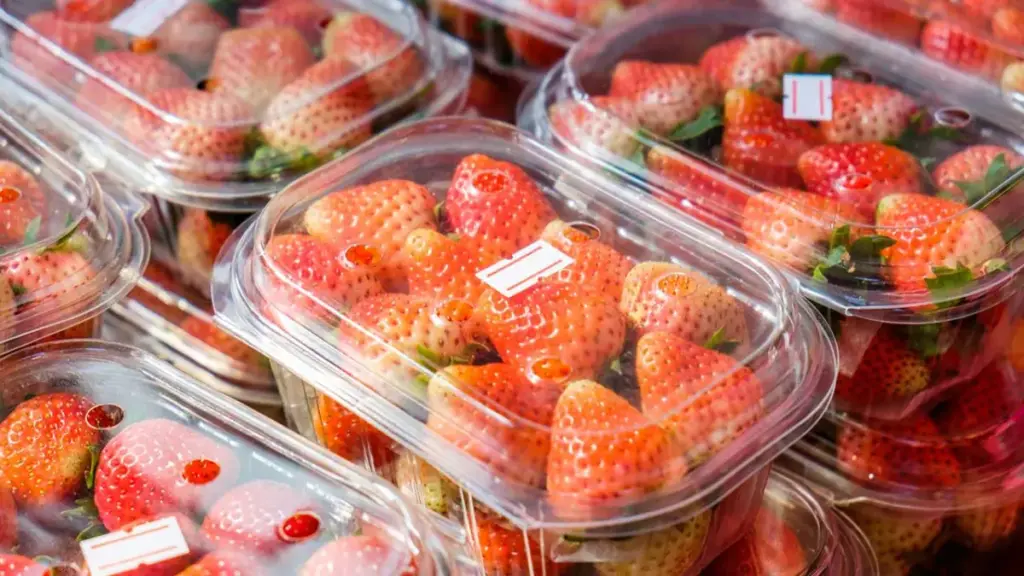
By 2028, consumers across the United States will begin noticing subtle but systemic changes during their routine grocery runs. Blueberries and strawberries once sold in clear plastic clamshells will sit in ventilated cardboard boxes. Takeout salads will be served in molded fiber bowls, and microwaveable ready-meals will transition from black plastic trays to clear or white alternatives.
These shifts are not merely voluntary corporate sustainability gestures; they are the direct consequence of California’s landmark Plastic Pollution Prevention and Packaging Producer Responsibility Act, widely known as Senate Bill 54 (SB 54). Passed in 2022, the law’s finalized, permanent regulations took effect in May 2026, triggering a massive wave of industrial redesign.
Because California represents the world’s fifth-largest economy, its regulatory standards inevitably dictate national manufacturing standards. Rather than maintaining dual packaging pipelines—one for California and another for the rest of the country—major consumer packaged goods (CPG) companies are reformulating their packaging nationwide.
However, the implementation of this sweeping legislation is not without friction. On June 2, 2026, a coalition of environmental advocacy groups—including Oceana, the Natural Resources Defense Council (NRDC), and the Californians Against Waste Foundation—filed a major lawsuit in the San Francisco Superior Court. The plaintiffs argue that the state’s finalized regulatory framework contains industry-friendly loopholes, grants indefinite exemptions, and fails to curb the very technologies the law was explicitly designed to restrict.
As California goes, so goes the nation. SB 54 represents the most aggressive regulatory assault on single-use plastics in U.S. history, fundamentally altering the economics of packaging and shifting the financial burden of waste management from local taxpayers directly to global producers.
Detailed Chronology
The implementation of SB 54 is structured as a multi-year, phased roadmap designed to give manufacturers, waste haulers, and municipalities sufficient time to transition. The law operates under an Extended Producer Responsibility (EPR) model, which legally obligates packaging producers to join a Producer Responsibility Organization (PRO)—the designated entity being the industry-led Circular Action Alliance (CAA)—or operate under an individually approved compliance plan.
Below is the statutory timeline governing the roll-out of SB 54, charting the path from regulatory activation to full circular integration.
SB 54 Regulatory and Compliance Timeline
| Date | Statutory Requirement | Anticipated Marketplace & Consumer Impact |
|---|---|---|
| January 1, 2025 | Expanded Polystyrene (EPS) Ban takes effect after the industry failed to meet a state-mandated 25% recycling rate. | EPS foam takeout containers, cups, and coolers are phased out of California food service. |
| May 1, 2026 | Permanent Regulations Take Effect. Producers must register with the Circular Action Alliance (PRO) or CalRecycle, or claim small-producer exemptions. | Behind-the-scenes corporate restructuring; announcements of packaging redesigns and supply-chain audits. |
| January 1, 2027 | Full Program Implementation. Single-use plastic packaging must achieve a 10% reduction below the 2023 baseline. Plastic pollution mitigation fund payments ($500 million annually) begin. | Visible reduction in secondary packaging (e.g., plastic wrap sleeves, double-boxing, and window films on boxes). |
| January 1, 2028 | 30% Actual Recycling Rate must be achieved for all covered single-use plastic packaging and food service ware sold in the state. | Rapid phase-out of unrecyclable plastics. Shift toward clear PET, aluminum, molded fiber, and cardboard. |
| January 1, 2030 | 40% Recycling Rate and 20% Source Reduction targets become legally binding. | In-store refill stations, concentrate pods, and reusable/returnable container networks transition from pilots to mainstream retail. |
| January 1, 2032 | Final Statutory Targets: 25% source reduction, a 65% actual recycling rate, and 100% of covered packaging must be fully recyclable or compostable. | Complete overhaul of retail shelves. Non-compliant packaging is entirely banned from sale in California, establishing a de facto national standard. |
Supporting Context & Metrics
To comprehend the scale of the disruption SB 54 represents, one must examine the crisis it aims to mitigate. For more than half a century, synthetic plastics have reigned supreme in global supply chains due to their low cost, durability, water resistance, and lightweight nature. However, this material efficiency has triggered an unprecedented ecological crisis.
The Scale of the Waste Crisis
Data from the U.S. Environmental Protection Agency (EPA) illustrates the exponential trajectory of plastic waste generation. In 1960, plastic accounted for a mere 0.4% of the total municipal solid waste stream in the United States. By 2018, that figure had ballooned to 12.2%, representing tens of millions of tons of non-biodegradable material accumulating in landfills and marine ecosystems annually.
U.S. Municipal Solid Waste Composition (Plastic % of Total)
1960: [0.4%]
1980: [##### 5.0%]
2000: [########## 10.3%]
2018: [############ 12.2%]
Packaging is the single largest driver of this crisis. According to industrial data compiled by Greenprint, approximately 36% of all manufactured plastic is destined for single-use packaging applications. Crucially, 85% of those materials bypass recycling systems entirely, ending up buried in landfills, incinerated, or discarded directly into the environment.
The Chemistry of Targeted Materials: Why They Are Being Phased Out
SB 54 does not merely set broad reduction targets; its regulatory framework places intense economic pressure on specific, highly problematic polymer groups and packaging designs.
       [Problematic Materials Targeted by SB 54]
                          |
     +--------------------+--------------------+
     |                                         |
[Polystyrene Foam]                       [Black Plastics]
- Air-heavy; costly to transport.        - Carbon black absorbs NIR light.
- Styrene is a suspected carcinogen.     - Sorters cannot identify/categorize.
     |                                         |
     +--------------------+--------------------+
     |                                         |
[PVC Clamshells]                         [Oxo-Degradable Plastics]
- Contaminates PET recycling streams.    - Fragments into microplastics.
- Phthalate additives leach out.         - Exacerbates marine toxicity.
1. Expanded Polystyrene (EPS)
Popularly known as Styrofoam, EPS is highly efficient at thermal insulation but ecologically disastrous. Because EPS is composed of up to 95% air, it is economically unviable to transport for recycling. In sorting facilities, it easily fractures into tiny, static-charged beads that contaminate other recyclable streams like paper and glass.
Furthermore, toxicological research indicates that exposure to styrene—the chemical monomer of EPS—is associated with elevated risks of leukemia, lymphoma, and other chronic health conditions.
2. Carbon Black and Dark-Colored Plastics
Commonly used in microwaveable meal trays and takeout containers, black plastic is chemically recyclable but practically unrecoverable. Modern Material Recovery Facilities (MRFs) rely on automated near-infrared (NIR) optical sorters to identify polymers by reading the light spectrum reflected off the plastic.
Because the carbon black pigment absorbs NIR light completely, the sorting machines fail to recognize the material, automatically routing it to the residue bin destined for landfills. SB 54’s recyclability mandates are forcing a transition to clear or light-colored polyethylene terephthalate (PET), which is highly valued by recyclers.
3. Polyvinyl Chloride (PVC) Clamshells and Blister Packs
PVC is a rigid, transparent polymer used for heavy-duty retail packaging and clear berry clamshells. However, PVC is a severe contaminant in the PET recycling stream; as little as one PVC bottle in a batch of 10,000 PET bottles can ruin the entire recycling run by degrading the PET polymer chains during thermal processing.
Additionally, PVC requires plasticizing additives, such as phthalates, which are known endocrine disruptors linked to reproductive issues, diabetes, and developmental delays. Under SB 54, brands are rapidly shifting to recycled PET (rPET) or molded pulp.
4. Oxo-Degradable Plastics
Often marketed under greenwashed labels such as "biodegradable" or "eco-friendly," oxo-degradable plastics are conventional polyolefins blended with transition metal salts. These additives accelerate the fragmentation of the plastic when exposed to UV radiation and heat.
However, instead of undergoing true biological assimilation, the material simply breaks down into trillions of invisible microplastics. SB 54 directly targets these materials, requiring strict adherence to scientific compostability standards (such as ASTM D6400).
Official Statements & Legal Friction
The implementation of SB 54 has laid bare the deep divide between regulatory agencies, the corporate packaging sector, and environmental watchdogs. While the law is celebrated as a legislative triumph, the battle over its final administrative rules reveals significant systemic tension.
The Environmental Coalition’s Legal Challenge
The lawsuit filed in San Francisco Superior Court on June 2, 2026, by Oceana, the NRDC, and the Californians Against Waste Foundation represents a critical challenge to the law’s execution. The plaintiffs argue that CalRecycle, the state agency charged with enforcing SB 54, diluted the law’s original intent during the rulemaking process.
In an official statement, representatives from the environmental coalition warned:
"The final regulations approved by CalRecycle create dangerous loopholes that threaten to undermine the entire architecture of SB 54. By inserting unlegislated exemptions for massive categories of plastic packaging and allowing producers to claim indefinite compliance extensions, the agency has prioritized corporate convenience over ecological necessity. Furthermore, the rules fail to restrict chemical recycling technologies, which are highly polluting and run counter to the core tenets of true circularity."
The Regulatory and Industry Defense
In response, CalRecycle and industry groups represented by the Circular Action Alliance (CAA) maintain that the regulations are both practical and legally robust. Supporters argue that a degree of regulatory flexibility is necessary to prevent widespread supply-chain disruptions and potential food security issues, particularly in the preservation of fresh produce.
CPG conglomerates are moving forward with major compliance initiatives. Packaging manufacturer Faerch recently launched a line of crystallized PET (CPET) trays for ready-meals containing a minimum of 40% recycled tray content, explicitly designed to meet California’s post-consumer material standards.
Similarly, consumer goods giant Unilever has publicly committed to a comprehensive "less plastic, better plastic, no plastic" framework, aiming to restructure its packaging portfolio to comply with emerging EPR laws across North America.
Future Outlook
As the deadlines of SB 54 draw closer, the law will drive a profound transformation in infrastructure, corporate strategy, and consumer behavior.
       [The Circular Economy Loop under SB 54]
                          |
   +----------------------+----------------------+
   |                                             |
[EPR Funding Engine]                     [MRF Upgrades]
Producers pay fees based                 Capital injected into optical
on packaging footprint.                  sorters and advanced robotics.
   |                                             |
   +----------------------+----------------------+
   |                                             |
[Retail Transformation]                  [Consumer Habit Shifts]
Refill stations, pod systems,            Widespread adoption of reuse
and fiber-based packaging.               and standardized sorting habits.
The EPR Funding Engine
The primary driver of this transformation is the funding mechanism embedded within the EPR model. Under SB 54, producers must collectively pay $500 million annually for ten years into a state-managed plastic pollution mitigation fund.
This capital injection will be used to upgrade municipal MRFs across California. Funding will go toward installing state-of-the-art optical sorters, robotic sorting arms powered by artificial intelligence, and expanding commercial composting infrastructure to process the influx of certified compostable fiber and PLA packaging.
The Shift to Reuse and Refill Economies
While recycling is a core component of the law, the ultimate goal of SB 54 is source reduction. To achieve the mandated 25% reduction in single-use plastics by 2032, brands must move beyond material substitution and invest in reuse systems.
- Personal Care & Home Goods: Consumers will see a shift away from purchasing new plastic bottles for hand soaps, detergents, and shampoos. Instead, brands will offer ultra-concentrated pods packaged in dissolvable or paper membranes, designed to be mixed with tap water in durable, reusable glass or aluminum bottles at home.
- Food Service & Delivery: Closed-loop container networks will emerge in urban centers. In these systems, takeout food is delivered in durable stainless-steel or heavy-duty polypropylene containers. After use, consumers return these containers to neighborhood drop-boxes, where they are collected, professionally sanitized, and reintroduced into the food service supply chain.
The National Domino Effect
The legislative ripple effect of SB 54 is already being felt across the United States. In the absence of federal action on plastic pollution, states are building a patchwork of regional standards.
Oregon’s Recycling Modernization Act is currently rolling out, and Colorado, Maine, Maryland, and Vermont have passed similar EPR frameworks. On the East Coast, New York is advancing proposed legislation that would establish an equally rigorous EPR system.
For national and global brands, navigating multiple, conflicting state packaging laws is an operational and logistical nightmare. Consequently, the highly stringent "West Coast Standard" established by California, Oregon, and Washington is rapidly becoming the default manufacturing standard for the entire North American market.
By forcing producers to internalize the true ecological cost of their packaging, SB 54 is successfully dismantling the single-use plastic paradigm and laying the foundation for a genuinely circular economy.



