

Executive Overview
In a decision that has sent shockwaves through the international development community and diplomatic corridors, Prime Minister Andy Burnham’s government has announced a sweeping restructuring of the United Kingdom’s international climate finance architecture. Under the new policy directive, HM Treasury will significantly reduce the proportion of non-repayable grant funding allocated to overseas climate initiatives, replacing these allocations with sovereign loan instruments.
The political motivation behind this strategic shift is explicitly domestic. By converting £400 million of direct climate grants into repayable financial capital, Downing Street intends to harvest immediate budgetary savings to permanently subsidize and cap domestic public transit fares across the UK.
While the administration frames the policy as a masterclass in fiscal pragmatism—simultaneously lowering the cost of living for British commuters and maintaining international capital deployment—the global development sector has reacted with sharp condemnation. Leaders of non-governmental organizations, climate economists, and policy analysts from the Center for Global Development (CGD) argue that the maneuver undermines international trust and directly targets the world’s most climate-vulnerable nations. Opponents assert that the policy effectively forces nations in the Global South to bear the financial burden of domestic transit subsidies in the UK.
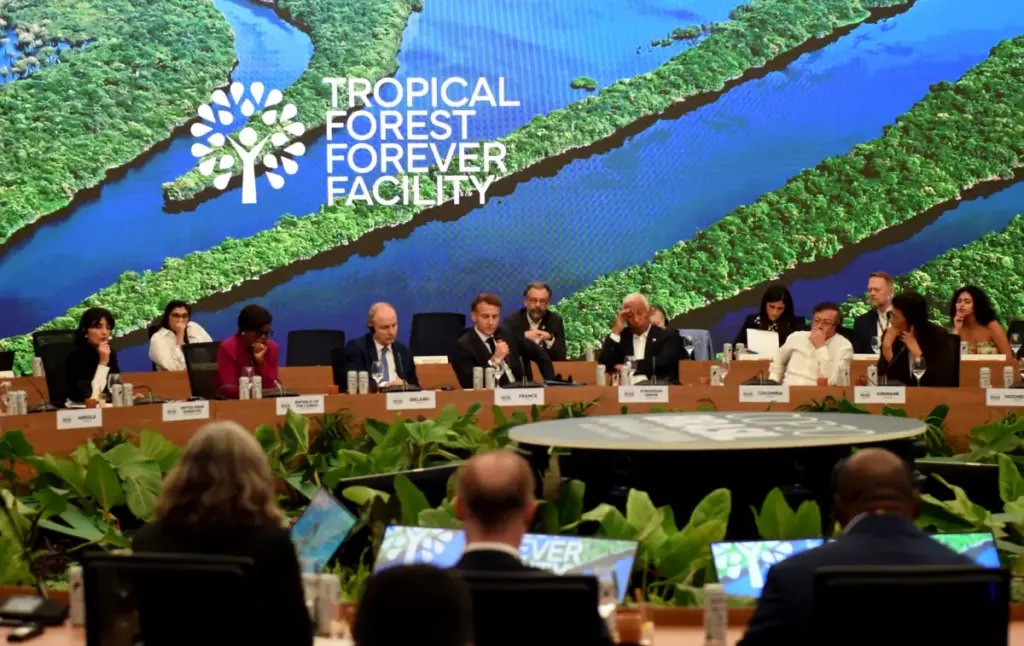
Central to this financial engineering is the redirection of repayable capital toward emerging international instruments, most notably the Tropical Forest Forever Facility (TFFF). By substituting direct grant aid with sovereign loans, the UK government is altering the risk profile of its foreign assistance, raising pressing questions regarding debt sustainability, climate equity, and the future of Western diplomatic leadership on global environmental governance.
Detailed Chronology of the Policy Shift
1. The Domestic Imperative and Cabinet Deliberations
The policy trace originates from escalating domestic pressures on the government to deliver tangible economic relief amid persistent inflationary pressures. Public transport costs, particularly regional bus routes outside Greater London, had emerged as a key voter concern. Facing demands to make low-cost transit caps permanent across England, HM Treasury was tasked with identifying non-tax revenue offsets within existing departmental expenditure limits.
Confidential reviews within the Foreign, Commonwealth & Development Office (FCDO) and the Department for Energy Security and Net Zero (DESNZ) highlighted the UK’s substantial commitments to international climate finance. Historically, a major share of these commitments was delivered as direct, non-repayable grants aimed at climate adaptation and mitigation in developing economies.
2. The Restructuring Plan Takes Shape
Treasury strategists identified a loophole within international accounting frameworks: by substituting direct grant allocations with concessional sovereign loans and financial investments, the net fiscal outlay on the government’s balance sheet for the current funding cycle could be written down by £400 million while still technically claiming compliance with headline climate finance totals.
Under Prime Minister Andy Burnham’s direction, the decision was finalized to carve out £400 million from the grant-making arm of the UK’s climate aid budget. This reclaimed capital was earmarked to underwrite a long-term nationwide cap on bus fares, guaranteeing low-cost local travel across the country.
       [ UK Climate Aid Budget ]
                 │
                 ▼
       ┌──────────────────┐
       │ £400M Reallocated│
       └─────────┬────────┘
                 │
      ┌──────────┴──────────┐
      ▼                     ▼
[ Grant-to-Loan Pivot ]  [ Domestic Bus Fare Cap ]
 (e.g., TFFF Loans)       (Subsidized UK Transit)
3. The Announcement and Immediate Backlash
When the policy details leaked ahead of the formal fiscal statement, the backlash from international partners and non-governmental organizations was immediate. Development advocates pointed out the deep irony of utilizing funds intended for vulnerable communities facing severe climate impacts—such as droughts, rising sea levels, and extreme weather—to fund low-cost bus rides for citizens in one of the world’s wealthiest economies.
Supporting Context & Financial Metrics
The Economics of Grants vs. Loans in Climate Finance
To understand the friction caused by this policy shift, one must analyze the structural mechanics of international climate finance.
- Direct Grants: Non-repayable transfers of funds specifically designated for projects that yield high public good but zero direct financial revenue, such as coastal sea wall construction, early-warning weather systems, and community resilience building.
- Concessional Loans: Debt instruments provided at below-market interest rates with extended grace periods. While useful for revenue-generating green infrastructure (such as solar farms or hydroelectric plants), loans create future debt-service obligations for the recipient nation.
+-----------------------------------------------------------------------------------+
|                        FINANCIAL INSTRUMENT COMPARISON                            |
+----------------------+-----------------------------------+------------------------+
| Feature              | Climate Grants                    | Concessional Loans     |
+----------------------+-----------------------------------+------------------------+
| Repayment            | None                              | Sovereign Debt Burden  |
| Primary Application  | Adaptation, Flood Defences, Relief| Infrastructure, Energy |
| Financial Return     | Zero Direct Fiscal Return         | Interest + Principal   |
| Fiscal Impact on Donor| Net Expenditure                   | Asset on Balance Sheet |
+----------------------+-----------------------------------+------------------------+
As Euan Ritchie, a senior research associate in the Europe programme at the Center for Global Development (CGD), has highlighted in his analysis of development finance, substituting grants with loans fundamentally alters the nature of aid. For countries facing severe fiscal constraints and sovereign debt vulnerabilities, accepting climate assistance in the form of debt—even on soft terms—compounds existing economic distress.
Capitalizing the Tropical Forest Forever Facility (TFFF)
A primary destination for the UK’s newly structured climate loans is the Tropical Forest Forever Facility (TFFF).
The TFFF is an international initiative designed to provide long-term, predictable funding for the preservation of tropical rainforests across South America, Southeast Asia, and Sub-Saharan Africa. The facility operates by pooling capital into a sovereign wealth-style investment framework, where returns generated on the capital assets are distributed to tropical forest nations based on performance metrics (e.g., hectares of standing forest preserved).
                      +---------------------------------------+
                      | UK Treasury Capital Allocation        |
                      | (Concessional Loan / Investment Capital)|
                      +----------------───┬───────────────────+
                                          │
                                          ▼
                      +---------------------------------------+
                      | Tropical Forest Forever Facility      |
                      | (TFFF Sovereign Investment Capital)   |
                      +----------------───┬───────────────────+
                                          │
                  ┌───────────────────────┴───────────────────────┐
                  ▼                                               ▼
+-----------------------------------+           +-----------------------------------+
| Market Investment Returns Generated|           | Preserved Rainforest Performance |
+----------------─┬────────────────-+           +----------------─┬────────────────-+
                  │                                               │
                  └───────────────────────┬───────────────────────┘
                                          │
                                          ▼
                      +---------------------------------------+
                      | Performance Payments to Forest Nations |
                      | (e.g., Brazil, DRC, Indonesia)        |
                      +---------------------------------------+
While the TFFF is designed to accept repayable capital investments, substituting pure grant funding with return-seeking loan allocations shifts significant financial risk. If investment returns underperform, or if sovereign debt terms tighten, recipient nations bear the systemic consequences.
Key Policy Metrics
- Direct Reallocation Value: £400 million transferred from direct grant accounts.
- Domestic Destination: Funding nationwide bus fare caps across the United Kingdom.
- Target International Mechanism: Concessional loan obligations redirected toward entities like the Tropical Forest Forever Facility (TFFF).
- Historical Context: Follows previous UK aid target reductions from 0.7% to 0.5% of Gross National Income (GNI), further narrowing the pool of available grant-based official development assistance (ODA).
Official Statements & Stakeholder Reactions
The Government’s Defense
Defending the decision, administration representatives argued that the UK must adapt its financial strategies to align with domestic fiscal realities while maintaining international commitments through modern financial engineering.
A government spokesperson stated:
"Our commitment to international environmental stewardship remains resolute. By utilizing innovative financial structures, including concessional loans and investments in mechanisms like the Tropical Forest Forever Facility, we are maximizing the efficiency of every pound spent. This restructuring allows us to maintain our global leadership in climate finance while simultaneously meeting urgent domestic priorities by keeping public transport affordable for working families across Britain."
Criticisms from the Development Sector
The reaction from international aid agencies, climate economists, and policy experts was overwhelmingly critical. Commentators pointed out the stark moral and economic imbalance of drawing funds away from vulnerable developing nations to subsidize domestic infrastructure.
Euan Ritchie and fellow researchers at the Center for Global Development (CGD) warned that financial maneuverings of this nature undermine the credibility of donor countries:
"Replacing climate grants with loans is not a neutral financial adjustment—it transfers risk and financial strain onto nations that contributed least to historic emissions. Using international development savings to fund domestic transit policy sets a troubling precedent for international climate equity."
Prominent figures within humanitarian non-governmental organizations expressed similar outrage. A leading advocate from a major UK development coalition issued a sharp rebuke:
"This policy literally and figuratively throws Global South countries under the bus. Decoupling grant promises to fund domestic policy shortfalls erodes global trust at a moment when frontline climate adaptation requires unconditional funding, not more debt."
Diplomatic Backlash from the Global South
Diplomats from climate-vulnerable nations and tropical forest states expressed deep frustration over the unilateral nature of the change. Representatives at international climate negotiations noted that developing nations are being pushed deeper into debt cycles to repair environmental damage caused primarily by industrialized economies.
A representative from a coalition of small island states commented:
"Climate finance is not charity, nor is it a discretionary piggy bank to be tapped whenever a Western government faces domestic political pressure. Converting grant commitments into debt burdens is fundamentally contrary to the principle of common but differentiated responsibilities."
Future Outlook & Geopolitical Implications
Diplomatic Fallout at Upcoming Climate Summits
The UK’s decision to substitute climate grants with loans threatens to complicate its standing at upcoming United Nations Framework Convention on Climate Change (UNFCCC) summits. As recipient nations demand greater transparency and accountability regarding financial flows from the Global North, the UK may face coordinated opposition from major diplomatic blocs, including the G77 and the Alliance of Small Island States (AOSIS).
                      GLOBAL GEOPOLITICAL IMPACT
                                   │
         ┌─────────────────────────┴─────────────────────────┐
         ▼                                                   ▼
[ Institutional Trust Risk ]                       [ Sovereign Debt Burden ]
• Erode donor credibility at UN Summits            • Accelerates fiscal strain in Global South
• Risk of reciprocal policy shifts by OECD allies  • Shifts adaptation risk to vulnerable states
Risk of Setting a Dangerous Precedent
Policy analysts worry that the UK’s strategy could provide a blueprint for other Western nations experiencing tight domestic budgets. If other G7 economies follow suit by substituting grant aid with capital loans to fund internal domestic expenditures, total non-repayable adaptation funds worldwide could contract significantly, exacerbating financial instability in vulnerable regions.
Long-Term Viability of the TFFF Mechanism
While the Tropical Forest Forever Facility (TFFF) benefits from capital injections, its reliance on debt-based capital structures could alter its intended impact. If capital commitments are tied to strict repayment regimes rather than enduring grant equity, forest preservation efforts could become vulnerable to global financial market volatility.
Conclusion
Prime Minister Andy Burnham’s £400 million budget pivot highlights the growing tension between domestic political demands and international climate commitments. While capping bus fares provides immediate relief to British commuters, executing this policy by scaling back grant funding for climate resilience in the Global South highlights a fundamental reallocation of priorities. As international pressure mounts, the UK government faces a critical question: can short-term domestic gains justify the long-term erosion of international trust and climate stability?



