Executive Overview
Over the past two decades, the global adventure travel sector has experienced an unprecedented surge. Valued at more than $11 billion in 2024, the global hiking industry continues to expand at a breakneck pace. For rural communities, this influx of outdoor enthusiasts serves as a powerful economic engine, injecting vital revenue into remote regions. However, this growth has come at a steep environmental cost.
Without structured management, rising foot traffic accelerates trail erosion, damages fragile alpine and cloud forest ecosystems, and degrades historic pathways that were never engineered to withstand modern mass tourism. To combat this deterioration, governments, park authorities, and conservationists are increasingly turning to a polarizing tool: the mandatory hiking permit.
Far from being mere bureaucratic gatekeeping designed to stifle adventure, modern permit systems are critical mechanisms for environmental conservation, structural preservation, and risk mitigation. From the high-altitude passes of the Himalayas to the ancient stone staircases of the Andes and the volcanic slopes of Japan, regulated trail access is rapidly transforming from the exception into the global standard. This article examines the catalysts behind this shift, the mechanics of modern permit systems, their economic and environmental impacts, and what the future holds for the world’s most iconic trekking routes.
Detailed Chronology: The Evolution of Trail Regulation
The transition from open-access wilderness to tightly managed corridors did not happen overnight. It is a reaction to decades of compounding environmental degradation and shifting global tourism paradigms.
- Pre-2000s (The Era of Open Access): For generations, most of the world’s legendary hiking routes operated on an open-door policy. Trekkers could arrive at a trailhead, pay a nominal park fee, and embark into the backcountry. As global wealth rose and international travel became more accessible, the sheer volume of visitors began to overwhelm traditional infrastructure.
- 2002 (The Turning Point for Peru): Recognizing the severe wear and tear on the classic Inca Trail—where an estimated 1,500 people plus porters trekked daily—the Peruvian government instituted a hard cap of 500 permits per day. This watershed moment marked one of the first major structural interventions on a historic route, proving that limits could protect heritage assets without completely shutting down tourism.
- 2021 (Nepal Shifts Focus to Safety and Control): In an effort to curb rising search-and-rescue costs and protect remote ecosystems, Nepal introduced restricted area permits alongside a mandatory licensed guide requirement for specific trekking regions, effectively banning solo trekking in designated zones.
- 2023 (The Overtourism Tipping Point & Global Policy Shifts): Global media outlets reported that excessive visitor numbers were straining destinations worldwide. Mountains felt the pressure acutely. Japan introduced groundbreaking regulations on the Yoshida Route of Mount Fuji, implementing a small entry fee and a daily climber cap. Simultaneously, the Pacific Crest Trail (PCT) in the United States tightened its long-distance permit quotas, restricting northbound thru-hikers to 50 per day during peak season to mitigate wilderness degradation in the Sierra Nevada.
- 2024–Present (Consolidation of Regulated Access): Permit systems are now a standard fixture of adventure travel planning. Advance booking windows, digital lottery systems, and mandatory checkpoints have become routine for anyone looking to tackle the world’s premier trails, signaling a permanent cultural shift toward regulated stewardship.
Supporting Context & Metrics: Why Permits Are Required
To understand why authorities are aggressively clamping down on open access, one must examine the specific pressures facing modern trails. Park rangers and environmental scientists point to four primary drivers behind the implementation of hiking permits.
1. Preventing Environmental Degradation
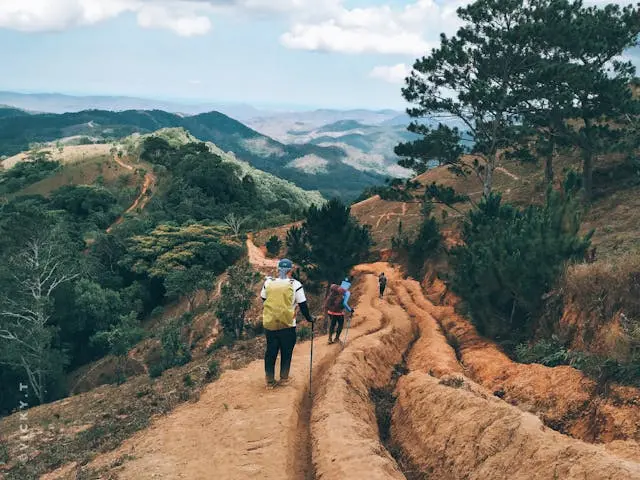
Trails are not indestructible. Every footstep compacts soil, breaks down root systems, and strips away vegetative cover. When precipitation hits compacted, denuded trails, it creates rapid runoff, leading to severe gully erosion and the failure of drainage systems.
Before visitor restrictions were introduced, the classical Inca Trail was literally crumbling under the weight of thousands of daily boots. By capping access at 500 daily permits—roughly 200 for trekkers and the rest reserved for essential support staff like guides, porters, and cooks—Peru dramatically reduced daily environmental impact while keeping the local tourism economy viable. Unmanaged traffic can permanently alter, fragment, and destroy sensitive habitats; permits act as a buffer against ecological collapse.
2. Protecting Cultural and Historic Sites
Many of the world’s legendary trails are not merely scenic footpaths; they are living archaeological corridors embedded with cultural heritage. At the ancient citadel of Machu Picchu, authorities enforce strict daily visitor caps: 5,600 during peak season and 4,500 in the low season. Furthermore, all visitors must follow designated, one-way circuits through the ruins.
Without these structural controls, constant foot traffic accelerates the deterioration of ancient stonework, polished granite staircases, and sensitive masonry. Hiking permits ensure that these non-renewable cultural landmarks remain intact for future generations to study and appreciate.
3. Managing Global Overtourism
Overtourism has defined the contemporary travel landscape. When Mount Fuji introduced a climber cap and a modest entry fee on the Yoshida Route in 2023, the results were immediate and quantifiable. Within a single season, climber numbers dropped by 14 percent. This reduction translated to thousands fewer bodies crowding the narrow volcanic paths, a dramatic decrease in trailside waste, and vastly improved sanitation and waste management outcomes.
4. Improving Search and Rescue Safety
Permit systems are equally vital for risk management and emergency response. High-altitude environments and remote wilderness areas are inherently volatile; weather can turn deadly in minutes, and terrain can disorient even experienced hikers.
When Nepal mandated licensed guides and restricted area permits, the primary goal was to drastically reduce search-and-rescue incidents involving lost, ill, or injured solo trekkers. When permits are tied to registered operators, park authorities possess an accurate roster of who is on the mountain, enabling faster, more efficient deployment of emergency services when crises arise.
Official Statements and Industry Perspectives
The rapid expansion of permit regimes has sparked intense debate within the outdoor community, drawing commentary from conservationists, tourism boards, and frustrated travelers.
Dr. Elena Vance, a senior researcher in sustainable tourism management, emphasizes the necessity of shifting mindsets:
"We must move away from the nineteenth-century romantic notion of the wilderness as an infinite, untamable frontier. The modern reality is that our planet’s most breathtaking landscapes are finite resources. If we do not actively manage access through science-backed quotas, we are essentially loving these places to death until nothing is left to explore."
Conversely, grassroots adventure advocacy groups often raise concerns regarding accessibility and equity. As permits for elite trails require booking many months—and sometimes a full year—in advance, spontaneous travel is becoming a relic of the past.
A spokesperson for an international backpacking coalition noted:
"While we fully support conservation, we must ensure that permit systems do not inadvertently price out everyday adventurers or create bureaucratic mazes that favor those with flexible schedules and deep pockets. Transparency in the lottery and booking processes is critical to maintaining public trust."
Park administrators maintain that the alternative to permits is far worse. Unchecked crowds inevitably lead to environmental degradation so severe that authorities are forced to close trails indefinitely. In this light, a managed permit system is viewed not as a barrier, but as a guarantee that the trail will remain open for years to come.
How Hiking Permit Systems Work in Practice
Although implementation varies dramatically depending on the jurisdiction, geography, and cultural context, modern hiking permit systems typically share several operational pillars:
- Science-Based Daily Caps: Park authorities establish maximum daily visitor numbers determined by rigorous ecological carrying-capacity studies, infrastructure limits (such as toilet facilities and water sources), and search-and-rescue risk assessments.
- Advance Booking and Lotteries: Because demand vastly outstrips supply, permits for routes like the Pacific Crest Trail or Peru’s Inca Trail sell out months in advance. Many jurisdictions utilize computerized lottery systems to ensure fair allocation.
- Mandatory Licensed Operators: On sensitive heritage routes, permits cannot be acquired independently. They must be secured through government-certified tour operators, ensuring that environmental regulations and local labor laws are strictly observed.
- Checkpoints and Digital Monitoring: Trailheads increasingly feature official ranger checkpoints where physical permits or digital QR codes are scanned. Some advanced systems even allocate specific entry time slots to prevent bottlenecks at sensitive bottlenecks or narrow mountain passes.
Future Outlook: The Next Decade of Trail Management
As global populations grow and urbanization drives an even greater desire for nature-based tourism, the expansion of hiking permits is an inevitability rather than a possibility. Over the next ten years, several key trends are expected to define the evolution of trail management:
- Technological Integration: Expect to see the rise of real-time digital tracking, geofenced permits, and AI-driven crowd forecasting. Parks will likely utilize dynamic pricing and variable quotas based on weather conditions, seasonal wildlife breeding patterns, and trail maintenance schedules.
- Expansion into Secondary and Tertiary Routes: As primary routes (such as the Inca Trail or Mount Fuji) hit strict capacity ceilings, adventure travelers will spill over into lesser-known trails. In response, governments will proactively implement permit systems on these secondary routes before severe environmental degradation occurs, shifting management from reactive repair to proactive preservation.
- Stricter Leave-No-Trace Enforcement: Permits will increasingly be tied to mandatory educational modules or digital ethics quizzes. Hikers may be required to acknowledge strict waste-pack-out policies and human waste disposal protocols before their permit is finalized.
- Balancing Economic Equity and Conservation: Future permit frameworks will face mounting pressure to address socioeconomic equity, potentially setting aside specific blocks of permits for local residents, youth groups, or lower-income travelers to ensure that wilderness access remains inclusive.
Conclusion: Redefining Responsible Adventure
The proliferation of hiking permits represents a profound philosophical shift in how humanity interacts with the natural world. Iconic trails—from the jagged granite spires of Torres del Paine in Chile to the volcanic slopes of Mount Fuji and the historic pathways of Machu Picchu—are finite, fragile resources. Once damaged beyond repair, they cannot simply be rebuilt.
Viewing hiking permits as an impediment to adventure misunderstands the fundamental contract of modern travel. Requiring permits is not about locking nature away; it is about ensuring that adventure remains possible for decades and generations to come.
For the modern traveler, responsible planning is no longer an optional courtesy—it is an ethical imperative. If your bucket list includes a world-famous trekking route, the most important gear you can pack is foresight. Research the permit requirements early, respect the ecological boundaries set by local stewards, and recognize that sometimes, the ultimate expression of love for the wilderness is stepping aside so it can heal, endure, and thrive.