

Executive Overview
In the heart of Hamburg, Germany, a methodical operation is underway inside a heavily secured, five-story computing facility. Technicians are installing rows of gray metal server racks—dense casings packed with enterprise-grade hardware—along the dimly lit corridors of the German Climate Computing Center (DKRZ). This expansion is not merely routine upgrading. These systems are slated to absorb roughly 5 petabytes of fresh storage capacity, supplementing a staggering repository that already holds 254 petabytes of critical climate simulation data.
To contextualize the scale, a single petabyte can accommodate approximately 200 million high-resolution images. While the DKRZ’s primary mandate has historically been to power Germany’s domestic climate research community, these new server racks serve a far more geopolitically sensitive objective: housing secure off-site backups of climate simulations generated across the Atlantic.
This multi-million-dollar international rescue mission has been mobilized to ensure that foundational scientific research, slated for inclusion in the United Nations’ upcoming major climate assessment in 2029, remains untampered with and immune to political sabotage. The intervention comes in direct response to actions taken by the administration of U.S. President Donald Trump, which has systematically slashed research budgets, suppressed scientific findings, scrubbed explicit references to human-caused global heating from federal web domains, and attempted to curtail the orbital collection of atmospheric data.
As trust in U.S. federal scientific integrity plummets across Europe, international funding bodies and data repositories are racing to build digital lifeboats. What began as a localized administrative precaution has evolved into a global movement to decentralize, protect, and future-proof the empirical foundation of earth sciences against the dual threats of authoritarian political interference and armed conflict.
Detailed Chronology: The Erosion of U.S. Environmental Data Integrity
The rapid unravelling of cooperative climate science between the United States and the international community did not happen overnight; it represents a calculated escalation of anti-science policy initiatives.
- January: The U.S. federal government officially withdrew from both the United Nations Framework Convention on Climate Change (UNFCCC) and the Intergovernmental Panel on Climate Change (IPCC). Despite this formal disengagement, American researchers continued their empirical work independently, often at great professional risk.
- Early April: A profound structural shock hit the data science community when the Department of Government Efficiency (DOGE) team, led by Elon Musk, executed sweeping purges across federal data architectures. Among the casualties were 300 federally funded datasets meticulously compiled over decades by NASA’s Socioeconomic Data and Applications Center (SEDAC). Alex de Sherbinin, former manager of SEDAC, discovered that these assets—which bridged the gap between remote-sensing earth observations and human socioeconomic variables like poverty and infrastructure—had been abruptly deleted from active servers.
- Mid-2025: In response to the disappearance of SEDAC files, international academic networks engaged in emergency digital triage. Institutional web-scrapers pulled data from live servers just before total erasure, successfully migrating the endangered information to the Harvard Dataverse Repository. Simultaneously, the German Research Foundation (DFG) established a $35 million emergency funding program dubbed "Data Resilience" to back up open-source U.S. public domain data in European facilities.
- Summer 2025: The American Geophysical Union (AGU) launched its global Data Resilience Project, recognizing that standard institutional data hoarding was obsolete. When the White House refused to dispatch official U.S. scientific delegates to IPCC planning conventions, the AGU bypassed federal channels by forming the U.S. Academic Alliance for the IPCC, nominating nearly 300 independent American scientists directly to authorship roles.
- Late 2025: DKRZ launched its flagship preservation initiative, designated CMIP7-ark, alongside six complementary data resilience projects—including initiatives like SHIELD and SEND (Secure Endangered Earth Data)—to serve as secure, permanent arks for endangered U.S. datasets.
- March (Berlin Convening): Nearly 100 prominent Earth and space scientists from the United States and Europe gathered in Berlin under the auspices of the AGU. The summit served as a strategic turning point, resulting in a formal coalition of German national research centers dedicated to offering safe, long-term, public-domain storage for marginalized researchers worldwide.
Supporting Context & Metrics: The Fragility of Digital Infrastructure
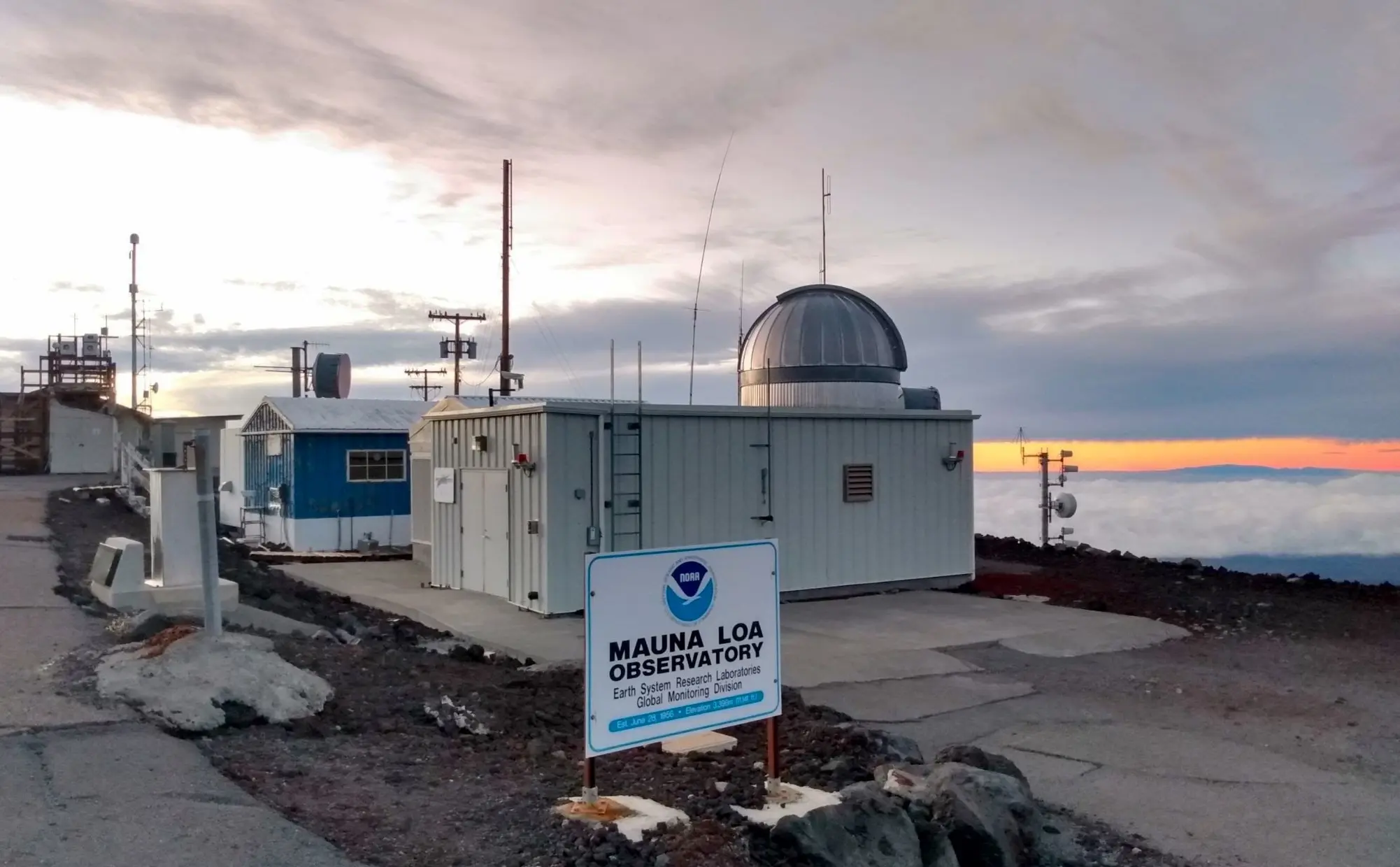
To understand why international scientists are resorting to physical and digital data smuggling, one must examine the precarious mechanics of modern scientific record-keeping. Empirical research relies on uninterrupted historical time series. One of the most prominent examples is the Keeling Curve—the continuous record of atmospheric carbon dioxide concentrations initiated at the Mauna Loa Observatory in Hawaiʻi. When the Trump administration attempted to defund and shutter the observatory, only last-minute congressional intervention prevented its closure.

Historically, scientific datasets have suffered from a glaring vulnerability: single-point storage. Until recently, the global scientific consensus operated under the assumption that institutional stability was guaranteed. Datasets generated by universities or federal laboratories were stored locally on hard drives or magnetic tapes.
Moving petabytes of data across international borders is a staggering logistical challenge. Transmitting petabytes over standard internet infrastructure can take months, while leasing dedicated, high-speed fiber-optic lines is prohibitively expensive. Consequently, the most cost-effective method of transferring massive archival volumes remains the time-tested "sneakernet"—physically packing high-capacity hard drives or cheap magnetic tapes into luggage and transporting them via commercial aircraft, cargo ships, or automobiles.
This vulnerability extends far beyond political censorship. Modern data repositories face threats from sophisticated ransomware cyberattacks—such as those that recently crippled multidisciplinary research hubs in Croatia and industrial engineering centers in Germany—as well as the catastrophic physical destruction of war.
In Ukraine, the devastating impacts of Russian military bombardments have highlighted the physical fragility of scientific infrastructure. Anastasiia Lutsenko, a Ukrainian researcher at the Max Planck Institute for Innovation and Competition in Munich, notes that Russian forces have deliberately targeted universities and research institutes.
"The Russians know how much lasting harm they can inflict by attacking science," Lutsenko explains.
Before the full-scale 2022 invasion, a tripartite German-Polish-Ukrainian collaboration successfully digitized early meteorological records spanning from 1808 to 1880, originating from eight Ukrainian weather stations. By transferring these fragile records to a server at the University of Giessen in Germany, the team saved irreplaceable historical data from destruction. A similar rescue operation was executed when missiles struck near servers housing Ukraine’s national contributions to the Global Biodiversity Information Facility in Kharkiv.
Official Statements and Expert Perspectives
The paradigm shift in how the global scientific community views data security has prompted frank assessments from leading figures in academia and data infrastructure.
Kathrin Winkler, Program Manager at the German Research Foundation (DFG):
"The deletion of data has also become a possibility, and there is a risk that [data] could be manipulated to skew findings in a desired direction." Winkler emphasized that fear of losing access to primary research and having historical baselines altered drove the creation of Europe’s multi-million-dollar data resilience programs.
Ben Zaitchik, President-Elect of the American Geophysical Union (AGU):
"We have engaged in triage efforts to ensure data remains usable and accessible," Zaitchik remarked during the Berlin convening. "But we clearly now have arrived at a moment where we must fundamentally reimagine data organization and maintenance for long-term viability and growth."
Christopher Kadow, Head of Data Analysis at DKRZ:
"We cannot simply accept that important contributions might be lost for technical or political reasons." Looking forward, Kadow envisions a deeply integrated network: "It would be ideal if, in the future, all climate data worldwide were connected via digital pipelines. That way, in the event of a threat, we could simply flip a switch to secure it elsewhere." Kadow also issued a sobering warning regarding the rise of far-right climate denialism in Europe, noting that the Alternative for Germany (AfD) party’s recent electoral victories mean Germany is not entirely immune to domestic political shifts.
Frank Oliver Glöckner, Professor of Earth Systems Data Science at the University of Bremen:
"President Trump has, to a certain extent, done science a favor by making it clear how important it is to not just hoard data in one place, but to truly share it with the global scientific community." Glöckner, who also heads the Pangaea data repository run by the Alfred Wegener Institute, stresses that preserving data requires capturing both the raw numbers and the specialized software environments required to interpret them indefinitely.
Future Outlook: Reimagining Global Data Resilience
The ongoing migration of U.S. climate data to European digital arks marks a permanent transition in how humanity protects its collective knowledge base. No longer can institutional scientists rely on the assumption that public-domain environmental datasets will remain safe within their country of origin.
As institutions like the Senckenberg Natural History Museum in Frankfurt expand their safety protocols—backing up wildlife trail camera feeds from Ukraine and biodiversity metrics from war-torn Yemen—the global infrastructure of science is undergoing a forced decentralization.
The lessons learned from the defense of American climate models and Ukrainian meteorological records are crystallizing into new global standards. Future climate assessments, beginning with the IPCC’s seventh evaluation cycle, will increasingly rely on distributed, multi-jurisdictional redundancy. By decoupling critical environmental data from the political volatility of any single administration, the international scientific community is ensuring that the historical record of our changing planet remains intact, transparent, and impervious to censorship.



