

Executive Overview
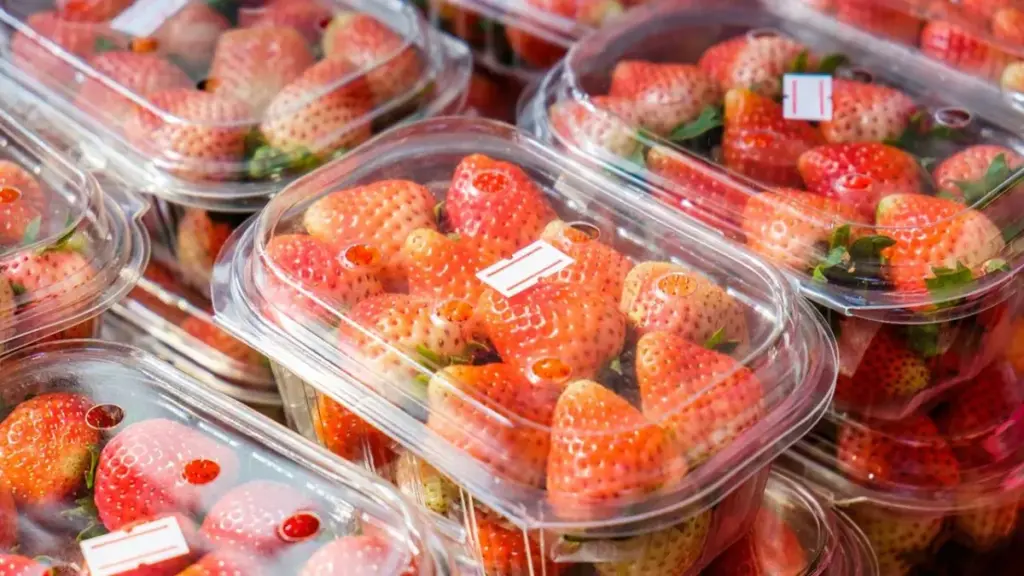
By 2028, consumers across the United States will begin noticing subtle but systemic changes during their routine grocery runs. Blueberries and strawberries, once encased in rigid, clear plastic clamshells, will increasingly sit in ventilated cardboard boxes or molded fiber punnets. Takeout salads will arrive in unlined fiber bowls, and microwaveable convenience meals will be cradled in clear or white plastic trays rather than the ubiquitous, near-indestructible black plastic containers of the past decade.
These quiet but monumental shifts on retail shelves are the direct result of California’s landmark packaging law, Senate Bill 54 (SB 54)—officially known as the Plastic Pollution Prevention and Packaging Producer Responsibility Act. With its finalized permanent regulations taking effect in May 2026, SB 54 represents the most aggressive regulatory intervention into the single-use plastic supply chain in U.S. history.
Because California represents the world’s fifth-largest economy, its domestic policies rarely remain localized. To avoid the logistical nightmare of maintaining dual manufacturing and distribution pipelines, major multinational brands are reformulating their packaging systems globally. Consequently, California’s state-level mandate is effectively establishing a de facto national standard for consumer packaging.
                  ┌─────────────────────────────────────────┐
                  │          CALIFORNIA'S SB 54             │
                  │   De Facto National Packaging Standard  │
                  └────────────────────┬────────────────────┘
                                       │
            ┌──────────────────────────┴──────────────────────────┐
            ▼                                                     ▼
┌───────────────────────┐                               ┌───────────────────────┐
│  SUPPLY CHAIN IMPACT  │                               │    LEGAL CHALLENGE    │
│ • Single-use plastic  │                               │ • Filed June 2, 2026  │
│   cut 25% by 2032     │                               │ • San Francisco       │
│ • All packaging must  │                               │   Superior Court      │
│   be recyclable or    │                               │ • NRDC, Oceana, CAW   │
│   compostable         │                               │ • Opposing corporate  │
│ • EPR cost shift      │                               │   exemptions & tech   │
└───────────────────────┘                               └───────────────────────┘
However, the path to a plastic-free future is fraught with legal, economic, and environmental friction. On June 2, 2026, a coalition of prominent environmental advocacy groups—including Oceana, the Natural Resources Defense Council (NRDC), and the Californians Against Waste Foundation—filed a high-profile lawsuit in the San Francisco Superior Court.
The petitioners argue that CalRecycle’s finalized regulations contain industry-friendly loopholes, such as broad exclusions for major categories of plastic packaging, provisions for indefinite producer exemptions, and a failure to restrict controversial chemical recycling technologies. This litigation underscores a bitter truth: while SB 54 is a transformative framework, the battle over how it is executed will shape the global circular economy for decades.
Detailed Chronology: The Regulatory Roadmap (2025–2032)
SB 54 does not demand immediate, overnight compliance; instead, it establishes a rigorous, multi-year progression designed to allow producers to re-engineer their supply chains while building out the necessary municipal recovery infrastructure. The following timeline outlines the statutory milestones and the corresponding shifts consumers will observe on retail shelves.
  2025          2026          2027          2028          2030          2032
   │             │             │             │             │             │
   ├───[EPS]     │             │             │             │             │  ◄── EPS Food Service Ban
   │             │             │             │             │             │      (Jan 1, 2025)
   │             └───[REG]     │             │             │             │  ◄── Regs Active / CAA Register
   │                           │             │             │             │      (May/Jun 2026)
   │                           └───[10%]     │             │             │  ◄── 10% Plastic Reduction
   │                                         │             │             │      (Jan 1, 2027)
   │                                         └───[30%]     │             │  ◄── 30% Actual Recycled Rate
   │                                                       │             │      (Jan 1, 2028)
   │                                                       └───[40%]     │  ◄── 40% Recycled / 20% Source Red.
   │                                                                     │      (Jan 1, 2030)
   │                                                                     └────  25% Source Red. / 65% Recycled
                                                                                (Jan 1, 2032)
January 1, 2025: The Expanded Polystyrene (EPS) Precipice
The first major casualty of the SB 54 era was expanded polystyrene (commonly referred to by the brand name Styrofoam). Under the law, EPS food service ware was banned from sale, distribution, and import in California on this date. The ban was triggered automatically after the plastics industry failed to demonstrate that EPS had achieved a 25% recycling rate statewide—a near-impossible benchmark for a material that is 95% air and highly susceptible to food contamination.
May 1, 2026: The Regulatory Bedrock
CalRecycle’s permanent regulations officially took effect. By June 1, 2026, all covered producers were legally required to either register with the approved Producer Responsibility Organization (PRO)—currently the industry-led Circular Action Alliance (CAA)—register with CalRecycle as independent operators, or prove eligibility for a small-producer exemption. At this stage, changes remained largely administrative, confined to corporate boardrooms and supply-chain audits.
January 1, 2027: The First Reduction Target
Full programmatic implementation begins. On this date, single-use plastic packaging sold in California must be reduced by 10% below a 2023 baseline. Additionally, producers who have not joined an approved compliance plan are barred from selling covered materials in the state.
This date also marks the commencement of mitigation fund payments, under which producers must collectively pay $500 million annually into an environmental mitigation fund. Consumers will begin noticing thinner, lighter packaging, along with the elimination of secondary packaging elements like plastic window films, outer sleeves, and oversized boxes.
January 1, 2028: True Recyclability Mandate
By 2028, the law transitions from theoretical recyclability to demonstrated performance. At least 30% of covered single-use plastic packaging and plastic food service ware sold in California must be actively recycled.
This target will force brands to abandon complex, multi-material plastics in favor of highly recyclable resins. Clear or light-colored polyethylene terephthalate (PET), molded fiber, aluminum, and cardboard will dominate store shelves.
January 1, 2030: Accelerated Source Reduction
The statutory recycling rate target climbs to 40%, while the source reduction target jumps to 20%. At this juncture, retail environments will undergo visible structural changes. Refill stations, concentrated product pods, and returnable container systems will transition from niche, eco-conscious pilot programs into standard, everyday offerings in major supermarkets.
January 1, 2032: The Circular Economy Deadline
The culmination of SB 54’s first decade. All covered packaging must meet three final, legally binding targets:
- A minimum 25% source reduction of single-use plastic packaging.
- A 65% actual recycling rate for all remaining single-use plastic packaging.
- 100% of all covered packaging sold in the state must be fully recyclable or compostable in practice.
At this stage, regulators will evaluate the program’s efficacy and determine whether to institute even more stringent targets for the post-2032 era.
Supporting Context & Metrics: The Crisis and the Materials Under Fire
The Scale of the Waste Crisis
To appreciate the disruptive force of SB 54, one must examine the systemic market failures of the modern plastics economy. For more than half a century, cheap, lightweight, and durable fossil-fuel-derived polymers have been the default medium for consumer packaging. However, this convenience has come at an unsustainable ecological cost.
U.S. Municipal Plastic Waste Share (1960 vs. 2018)
==================================================
1960: █ 0.4%
2018: ██████████████████████████████ 12.2%
==================================================
Source: U.S. Environmental Protection Agency (EPA)
According to data compiled by the U.S. Environmental Protection Agency (EPA), plastic waste accounted for a mere 0.4% of all municipal solid waste generated in the United States in 1960. By 2018, that figure had skyrocketed to 12.2%.
Packaging is the primary driver of this trend. Data from Greenprint reveals that approximately 36% of all manufactured plastic is destined for packaging applications—and a staggering 85% of that single-use material ends up directly in landfills, incinerators, or marine environments.
Extended Producer Responsibility (EPR): Shifting the Financial Burden
Historically, the financial costs of managing plastic waste—ranging from municipal collection and sorting to landfill maintenance and litter cleanup—have been externalized onto taxpayers and local governments. SB 54 fundamentally upends this economic model through Extended Producer Responsibility (EPR).
By shifting these costs directly to the companies that manufacture and profit from single-use packaging, the law establishes a direct financial penalty for wasteful design. Companies are charged fees based on the volume and environmental impact of the packaging they introduce to the market.
Highly recyclable, lightweight materials incur lower fees, while complex, non-recyclable materials are hit with steep, cost-prohibitive surcharges. This market-based mechanism leverages corporate self-interest to drive eco-friendly design.
  TRADITIONAL WASTE MODEL                   EXTENDED PRODUCER RESPONSIBILITY (EPR)
┌───────────────────────────┐               ┌───────────────────────────┐
│     Plastic Producer      │               │     Plastic Producer      │
└─────────────┬─────────────┘               └─────────────┬─────────────┘
              │ (Profits)                                 │ (Pays Fee Based on Design)
              ▼                                           ▼
┌───────────────────────────┐               ┌───────────────────────────┐
│    Taxpayers & Cities     │               │   EPR Infrastructure Fund │
└─────────────┬─────────────┘               └─────────────┬─────────────┘
              │ (Pays for Waste)                          │ (Upgrades Recycling Systems)
              ▼                                           ▼
┌───────────────────────────┐               ┌───────────────────────────┐
│    Landfill / Pollution   │               │     Circular Economy      │
└───────────────────────────┘               └───────────────────────────┘
Four High-Risk Packaging Materials Set for Elimination
Under the pressure of SB 54’s strict recyclability metrics, four common packaging materials are facing rapid phase-outs or complete redesigns:
1. Expanded Polystyrene (EPS) Foam
Commonly known as Styrofoam, EPS is highly problematic for recycling facilities. Because it is mostly air, it is economically unviable to transport for processing.
Furthermore, it easily fragments into microscopic, static-charged beads that contaminate other, more valuable recycling streams like paper and glass. Beyond its physical limitations, EPS carries human health risks. Styrene, the chemical backbone of polystyrene, is classified as a probable human carcinogen, with epidemiological studies linking occupational exposure to elevated risks of leukemia and lymphoma.
2. Carbon Black and Dark-Colored Plastics
Used heavily in microwaveable food trays, takeout containers, and produce packaging, black plastic is structurally unrecyclable in modern Materials Recovery Facilities (MRFs). These facilities rely on near-infrared (NIR) optical sorting technology to identify and categorize polymer types.
Because the carbon black pigment absorbs NIR light, the sorting sensors cannot read the material’s chemical signature. Consequently, black plastic is routed as "unidentified" and sent straight to landfills.
Under SB 54, brands must transition to clear or light-colored PET or high-density polyethylene (HDPE), which are highly visible to optical sorters and command premium prices in the post-consumer resin market.
Near-Infrared (NIR) Optical Sorting Failure
─────────────────────────────────────────────────────────────────────────────
[Light/Clear PET]  ──► [NIR Light Reflects] ──► [Sensor Identifies] ──► Recycled ✅
[Carbon Black PET] ──► [NIR Light Absorbed] ──► [Sensor Blind]      ──► Landfill ❌
─────────────────────────────────────────────────────────────────────────────
3. Polyvinyl Chloride (PVC) Clamshells and Blister Packs
PVC, or vinyl, is widely used for clear retail packaging, battery blister packs, and toy covers. However, PVC is a major contaminant in the PET recycling stream; even a minute concentration of PVC can degrade a large batch of recycled PET, rendering it brittle and yellow.
Additionally, PVC production and disposal release highly toxic dioxins, and the material frequently incorporates plasticizers like phthalates, which are known endocrine disruptors associated with reproductive toxicity and metabolic disorders.
4. Oxo-Degradable Plastics
Often marketed as "eco-friendly," "degradable," or "oxo-biodegradable," these conventional polyolefin plastics are embedded with chemical additives (typically transition metal salts) that accelerate their fragmentation when exposed to heat or UV radiation.
Rather than truly biodegrade—which requires microorganisms to metabolize the material into carbon dioxide, water, and biomass—oxo-degradable plastics simply fragment into billions of microscopic plastic particles. This creates a highly pervasive, virtually un-recoverable form of microplastic pollution in soil and aquatic ecosystems. SB 54’s anti-greenwashing provisions strictly regulate these materials, requiring any "degradable" claim to meet rigorous, scientifically validated performance standards.
Official Statements & Industry Friction
The path toward finalized regulations has exposed deep ideological rifts between state regulators, industrial producers, and environmental watchdogs.
In a public statement defending the finalized regulations, CalRecycle emphasized the historic nature of the policy:
"California’s SB 54 is the most comprehensive plastic pollution prevention policy in the nation. By establishing a clear, multi-year roadmap and holding producers financially responsible for the lifecycle of their packaging, we are not just correcting a market failure—we are building a robust, self-sustaining circular economy that protects our public health and our environment."
However, environmental groups argue that CalRecycle capitulated to intense lobbying from the petrochemical and consumer goods industries during the final rulemaking phase. The lawsuit filed on June 2, 2026, by Oceana, the NRDC, and the Californians Against Waste Foundation targets these concessions directly.
A spokesperson for the coalition stated:
"We fought for years to pass a strong, uncompromising law to curb the plastic crisis. Unfortunately, the finalized regulations issued by CalRecycle introduce dangerous loopholes that threaten to undermine the entire program. By carving out broad exclusions for major categories of plastic packaging and allowing producers to claim indefinite exemptions, these regulations fail to protect Californians. Furthermore, they leave the door wide open for unproven, highly polluting chemical recycling technologies that the legislature specifically intended to restrict. We are asking the court to compel CalRecycle to rewrite these regulations in alignment with the true intent of the law."
On the corporate side, major industry players are taking divergent approaches. While some trade associations have quietly supported legal efforts to delay implementation, progressive multinational corporations are moving aggressively to adapt.
Unilever, which has restructured its global packaging strategy around reduction and post-consumer recycled (PCR) integration, noted:
"We recognize that regulatory landscapes are shifting permanently. Our focus is on redesigning our portfolio for circularity. By reducing our absolute use of virgin plastic and transitioning to refillable formats and highly recyclable materials, we are not only ensuring compliance with pioneering frameworks like California’s SB 54, but we are also future-proofing our business against resource scarcity and volatile petrochemical markets."
Similarly, specialized packaging manufacturers are capitalizing on the regulatory shift. European packaging giant Faerch recently launched a line of circular mono-PET trays designed specifically for chilled ready-meals, boasting a minimum of 40% post-consumer tray-to-tray recycled content.
This move directly addresses the anticipated demise of black plastic food trays, positioning the company to capture market share as U.S. brands scramble to find compliant alternatives.
Future Outlook: The Circular Economy and Greenwashing Minefields
The Long-Term Vision of a Circular Economy
If SB 54 achieves its stated objectives, it will fundamentally redefine the relationship between production, consumption, and waste. By 2032, the concept of "single-use" packaging will be largely obsolete.
The $500 million annual mitigation fees paid by producers will yield a multi-billion-dollar war chest dedicated to upgrading municipal waste infrastructure. Materials Recovery Facilities (MRFs) will be retrofitted with state-of-the-art robotic sorting arms, advanced artificial intelligence-driven optical sorters, and expanded organic waste processing systems. This infrastructure buildout is critical: currently, plastic recycling rates hover in the single digits, primarily due to contamination, sorting inefficiencies, and a lack of domestic end-markets.
       ┌──────────────────────────────────────────────────┐
       ▼                                                  │
┌──────────────┐       ┌──────────────┐            ┌──────┴───────┐
│ Packaged     │ ───►  │ Materials    │ ──(Sort)─► │ High-Value   │
│ Consumer     │       │ Recovery     │            │ Post-Consumer│
│ Goods (PCGs) │       │ Facility     │ ◄──(Fees)─ │ Resins       │
└──────────────┘       └──────────────┘            └──────────────┘
       │                      │                           │
       │                      ▼                           │
       │               ┌──────────────┐                   │
       └─(EPR Fund)──► │ Upgraded     │ ◄─────────────────┘
                       │ Robotics &   │
                       │ Composting   │
                       └──────────────┘
Ultimately, success looks like a fully circular economy where materials are kept at their highest utility for as long as possible. Rather than extracting virgin fossil fuels to manufacture packaging that is discarded after a single use, the economy will rely on a closed-loop system where packaging is either continuously recycled back into identical packaging or returned safely to nature via industrial composting.
Navigating the Greenwashing Minefield
As corporations pivot to comply with SB 54, consumers must navigate a highly sophisticated landscape of environmental marketing. With "green" claims serving as a potent sales driver, the potential for greenwashing is immense.
                     GREENWASHING DETECTOR GUIDE
┌───────────────────────────────┬────────────────────────────────────────┐
│ Claim                         │ Reality / Verification Metric          │
├───────────────────────────────┼────────────────────────────────────────┤
│ "Biodegradable" /             │ • Often meaningless in oxygen-deprived │
│ "Eco-Friendly"                │   landfills.                           │
│                               │ • Look for ASTM D6400 certification.   │
├───────────────────────────────┼────────────────────────────────────────┤
│ Paper Cups /                  │ • Often lined with hidden plastic films│
│ Soup Containers               │   (polyethylene).                      │
│                               │ • Unrecyclable at standard paper mills.│
├───────────────────────────────┼────────────────────────────────────────┤
│ "Plant-Based" Bioplastics     │ • May contain toxic chemical additives.│
│                               │ • Requires commercial high-heat        │
│                               │   composting facilities to degrade.    │
└───────────────────────────────┴────────────────────────────────────────┘
The most prominent greenwashing risk involves the rise of bioplastics, such as Polylactic Acid (PLA). While derived from renewable resources like cornstarch or sugarcane rather than petroleum, these materials carry significant ecological trade-offs.
A landmark scientific study published in Science of the Total Environment revealed that some certified compostable bags actually contain higher concentrations of toxic chemical additives than conventional polyethylene bags, displaying moderate-to-high toxicity to marine organisms.
Furthermore, most bioplastics require the highly controlled, high-heat environment of an industrial composting facility to degrade; if they end up in a standard landfill, they will remain intact for decades, and if they enter the plastic recycling stream, they act as severe contaminants.
To cut through this marketing noise, consumers should look for independent, rigorous third-party certifications:
- BPI (Biodegradable Products Institute) Logo: This serves as the gold standard in North America, verifying that a product will safely biodegrade within the operating parameters of a commercial composting facility.
- ASTM D6400 Standard: This scientific designation guarantees that the plastic is formulated to biodegrade completely under municipal composting conditions without leaving toxic residues.
- How2Recycle Label: This standardized labeling system provides clear, localized instructions on whether a package is widely recyclable, requires special store drop-off, or must be discarded in the trash.
Practical Shopping Guide
To navigate this transition and help drive the packaging market toward genuine sustainability, consumers can adopt several strategic shopping habits:
1. Interrogate Packaging Materials
- Prioritize glass, aluminum, and unlined paper/cardboard over plastics. Aluminum, in particular, is infinitely recyclable, and its recovery is highly economically viable.
- Avoid dark-colored or black plastic trays.
- Check the resin identification code on plastic packaging; favor PET (#1) and HDPE (#2), as they have the most robust and stable recycling markets.
2. Spot Hidden Plastic Linings
- Be skeptical of paper-based takeout packaging that holds liquids. If a paper container does not leak, it is almost certainly lined with a hidden plastic film (such as polyethylene) or treated with per- and polyfluoroalkyl substances (PFAS) for grease resistance.
- Look for certified PFAS-free and commercially compostable labels.
3. Embrace Refill and Concentrate Systems
- Transition away from buying new plastic bottles for personal care and household cleaning products.
- Seek out brands that sell ultra-concentrated formulas in small, recyclable paper pods or aluminum cartridges that can be diluted with tap water in a single, durable, reusable spray bottle at home.
4. Verify Local Waste Acceptance
- Understand that "recyclable" is a local definition. A package may bear a recycling symbol, but if your local MRF lacks the optical sorting or market demand for that specific polymer, it will be landfilled.
- Consult your local waste management municipality’s website annually to stay updated on accepted materials.
5. Engage in Civic Advocacy
- Support municipal investments in advanced composting and recycling infrastructure.
- Participate in CalRecycle’s public comment periods to advocate for strict enforcement of SB 54’s provisions, ensuring that industry-led compliance schemes remain transparent and accountable.
Comprehensive Policy & Industry Resource Directory
For researchers, policymakers, and consumers seeking to monitor the implementation of SB 54 and the broader evolution of extended producer responsibility, the following directory highlights key regulatory bodies, legal documents, and industry frameworks:
Regulatory & Statutory Portals
- CalRecycle SB 54 Homepage: The official state portal hosting finalized text, regulatory updates, producer registration lists, and schedules for public hearings.
- California Legislative Information (SB 54 Full Text): The complete, unedited statutory text of the Plastic Pollution Prevention and Packaging Producer Responsibility Act, detailing the original legislative intent, fee structures, and enforcement mechanisms.
Advocacy & Oversight Organizations
- Californians Against Waste (CAW): A leading environmental advocacy group tracking the implementation of SB 54, providing detailed policy briefs, and advocating for robust enforcement.
- Upstream: A public-interest organization focused on the transition from single-use to reuse, offering comprehensive resources on reuse systems, policy design, and circular economy metrics.
Industry Compliance & Standards
- Circular Action Alliance (CAA): The approved Producer Responsibility Organization (PRO) tasked with administering compliance plans, collecting producer fees, and coordinating infrastructure investments under SB 54.
- The Association of Plastic Recyclers (APR): An international trade association representing the plastics recycling industry, offering technical design guides for packaging circularity and post-consumer resin certification standards.



