Executive Overview
In an era defined by climate anxiety and unprecedented global mobility, the tourism industry stands at a profound ideological and operational crossroads. Travelers are increasingly conscious of their ecological footprints, prompting a critical, widespread reckoning with the destinations they consume. Enter ecotourism—a paradigm long touted as the panacea for the ecological and social degradation wrought by mass tourism. Defined theoretically as purposeful travel to natural areas that safeguards the environment, upholds the well-being of local populations, and fosters interpretive education, ecotourism promises a symbiotic relationship between humans and the natural world.
However, the chasm between the marketing buzzword "eco-friendly" and the gritty reality of on-the-ground execution remains wide. The industry is continuously threatened by "greenwashing"—a sophisticated marketing veneer designed to obscure ecologically damaging operations behind picturesque imagery and superficial sustainability pledges.
To bridge this gap, this investigation examines the seven foundational principles of authentic ecotourism. Through a granular analysis of real-world deployments—spanning the volcanic isolation of the Galápagos, the high-altitude trails of Patagonia, the misty volcanic slopes of Rwanda, and the indigenous cooperatives of the Amazon—we decode what true ecotourism looks like in practice. By scrutinizing how these principles operate under the pressures of overtourism, community displacement, and climate change, this report serves as an authoritative blueprint for travelers seeking authenticity, operators striving for integrity, and destinations safeguarding their futures.
Detailed Chronology & Historical Evolution of Ecotourism
The trajectory of ecotourism has evolved from a niche counter-cultural movement into a sophisticated, highly regulated global framework. Understanding its modern implementation requires a backward glance at the milestones that shaped its governance and ethical boundaries.
- The Late 20th Century (The Genesis): As mass commercial aviation democratized global travel in the 1970s and 80s, pristine wilderness areas experienced unprecedented degradation. Conservationists and academics began conceptualizing a form of tourism that could generate revenue for protection while curbing the worst impacts of mass visitation. The term "ecotourism" began circulating in environmental literature around 1983, credited widely to environmentalist Héctor Ceballos-Lascuráin.
- 1998 (The Institutional Turning Point): Recognizing the existential threat posed by unchecked maritime traffic to its isolated ecosystems, the Ecuadorian government enacted the Special Law for the Province of Galápagos. This landmark legislation capped cruise tourism numbers, officially establishing a precedent for carrying-capacity limits that would influence island nations globally.
- The 2000s (Rise of Community-Based Frameworks): The paradigm shifted from purely conservation-centric models to socio-centric approaches. Programs like Mexico’s Sian Ka’an Biosphere Reserve cooperatives (established and expanded throughout this decade) and Bolivia’s Chalalán Ecolodge (founded in the late 1990s and matured in the 2000s) proved that indigenous populations could manage high-yield tourism independently, shifting the locus of control from external NGOs to local stewards.
- The 2010s to Present (Data-Driven Adaptive Management & Anti-Greenwashing): In response to acute overtourism crises in destinations like Sedona, Arizona, and Torres del Paine, Chile, destinations abandoned passive marketing in favor of active, data-informed visitor management. Concurrently, international certification bodies, such as the Global Sustainable Tourism Council (GSTC), established rigorous criteria to combat pervasive greenwashing, setting the stage for modern, transparent ecotourism metrics.
The Seven Core Principles of Authentic Ecotourism
Principle #1: Minimize Negative Environmental and Wildlife Impacts
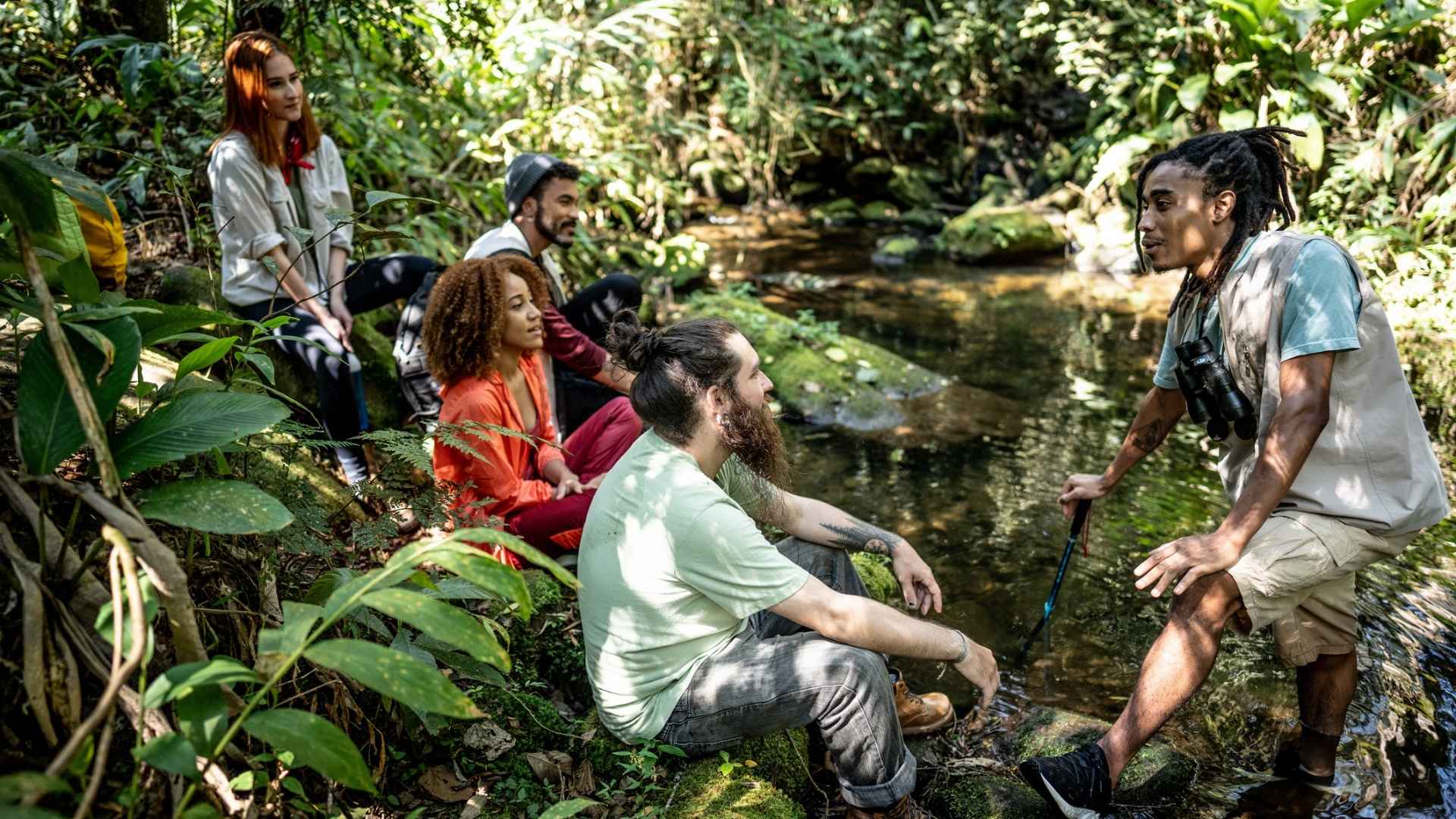
Nature-based tourism frequently funnels travelers into fragile ecosystems where soil erosion, habitat fragmentation, pollution, and behavioral stress on wildlife are constant hazards. Authentic ecotourism demands intentional practices designed to reduce ecological disruption while enhancing ecosystem resilience. This involves low-impact infrastructure, rigorous waste reduction, and strict adherence to responsible wildlife viewing guidelines. Crucially, it relies on adaptive visitor management—monitoring ecological conditions in real-time and dynamically adjusting access, routes, and visitor caps to prevent overtourism.
Global Case Studies in Environmental Mitigation:
- The Galápagos Islands, Ecuador: Home to endemic species that evolved without natural predators, this archipelago exemplifies why rigorous environmental management is non-negotiable. Ninety-seven percent of the landmass is designated as a national park, ringed by a heavily protected marine reserve. Since 1998, cruise tourism has been strictly capped. Visitors are legally required to travel exclusively with licensed naturalist guides and remain on designated trails. Furthermore, modern renewable energy initiatives have minimized the catastrophic risk of fuel spills—a vital safeguard following historical tanker accidents that decimated local marine iguana populations.
- Svalbard, Norway: In the high-Arctic wilderness, minor disturbances produce outsized ecological consequences. Svalbard Wildlife Expeditions centers its operational model entirely around non-motorized transit—exploring via foot, kayak, or skis. This eliminates engine noise emissions, curbs carbon outputs, and preserves fragile permafrost terrain and sensitive wildlife populations from unnecessary stress.
Principle #2: Minimize Negative Impacts on Communities and Cultures
Nature is rarely a sterile backdrop; it is inextricably linked to the identity, cultural heritage, and daily survival of local populations. Unchecked nature-based tourism can degrade sacred sites, crowd public recreation areas, and sever indigenous access to traditional forests and fishing grounds. Furthermore, it places severe strain on finite resources, particularly water in arid regions. Facilities marketed as "eco-lodges" that maintain sprawling swimming pools or manicured lawns often spark intense socio-economic friction with neighboring households and agriculturalists.
Destinations Responding to Community Strain:
- Sedona, Arizona: As the desert town experienced a staggering surge in visitation drawn by its iconic red rock landscapes, resident pushback against traffic congestion, noise pollution, and trail overcrowding reached a boiling point. Sedona pivoted away from traditional volume-driven destination marketing toward a progressive, community-informed management strategy. The town invested heavily in multi-modal transit solutions, diverted foot traffic away from ecologically compromised trails, increased trail maintenance funding, and implemented strict limits on commercial helicopter flight paths over residential zones to restore acoustic tranquility.
Principle #3: Provide Financial Benefits for Conservation
True ecotourism transcends mere impact mitigation; it operates as an economic engine designed to fund the active preservation and restoration of natural habitats. Financial inputs—ranging from park entry fees and trekking permits to conservation levies and direct operator donations—are funneled straight back into the field.
Financial Conservation Models:

- Torres del Paine National Park, Chile: Attracting upwards of 350,000 annual hikers to its jagged granite spires and glacial lakes, the park utilizes the Legacy Fund. This mechanism channels contributions from conscious tour operators, lodges, and travelers into priority projects, including heavily eroded trail restoration, the installation of protective boardwalks, large-scale reforestation in wildfire-scarred valleys, and the preservation of the endangered huemul deer.
- Volcanoes National Park, Rwanda: Few conservation stories match the dramatic recovery of Rwanda’s mountain gorillas, whose population has rebounded from near-extinction to roughly 600 individuals today. Underpinning this success is a high-yield permit model: gorilla trekking permits cost USD $1,500 per visitor. This revenue directly finances dedicated tracking teams, anti-poaching snare-removal operations, and specialized veterinary care, proving that high-cost, low-volume tourism can successfully bankroll complex wildlife preservation.
Principle #4: Provide Economic Benefits for Local Communities
Ecotourism must ensure that those living adjacent to protected environments—who have historically acted as their primary stewards—reap tangible economic rewards. By generating local employment, fostering community-owned enterprises, and capitalizing on indigenous knowledge, tourism revenue stays local, reinforcing the financial incentive to protect surrounding ecosystems.
Community-Driven Economic Models:
- Sian Ka’an Biosphere Reserve, Mexico: A Maya-run cooperative offers low-impact nature tours managed entirely by local residents. Offering small-group lagoon excursions, mangrove kayaking, and traditional culinary experiences, the cooperative ensures that 100% of the income stays within the community. Participating families have documented household income increases of approximately 30%, creating a viable, sustainable alternative to environmentally destructive activities like illegal logging and poaching.
- Rural Nepal: The Community Homestay Network (CHN) blends immersive cultural exchanges with nature exploration, allowing travelers to hike forested hills, participate in artisan workshops, and lodge with local families. By training local hosts—predominantly women—in business administration and hospitality, the initiative has generated over USD $139,000 in direct value across 28 distinct rural communities.
Principle #5: Empower Indigenous and Local Communities as Equal Partners
Historically, indigenous populations have been relegated to the periphery of the tourism industry—utilized merely as service providers or exotic cultural window-dressing. This dynamic has frequently fueled cultural commodification, land dispossession, and social disenfranchisement. Authentic ecotourism dismantles this extractive dynamic through structural collaboration, elevating local populations from passive participants to sovereign decision-makers who dictate how tourism operates on their ancestral territories.
Indigenous Sovereignty in Practice:
- The Paiter Suruí People, Brazilian Amazon: Breaking away from reliance on external operators, the indigenous Paiter Suruí founded their own independent tourism agency to govern visitor access to their sovereign territory. Community members act as hosts, leading forest treks, medicinal plant workshops, and storytelling sessions. By managing the program end-to-end—including a community-run restaurant and handicraft cooperative—the Suruí ensure that tourism strictly aligns with their cultural preservation and environmental protection priorities.
Principle #6: Build Awareness and Respect
Education forms the intellectual and ethical core of ecotourism. This principle ensures that travelers depart a destination transformed—not merely with photographs, but with a profound, critical understanding of local ecosystems, cultural histories, and their own ecological footprints.

Immersive Environmental Education:
- Pacuare Reserve, Costa Rica: Operating as a dynamic outdoor classroom, the reserve engages visitors in guided nocturnal sea turtle nesting patrols. Working alongside field researchers, travelers assist in non-invasive data collection, gaining first-hand insight into leatherback biology, rainforest ecology, and coastal threats. These interpretive encounters bridge the gap between abstract conservation theory and visceral personal responsibility.
Principle #7: Create Positive Experiences for Both Visitors and Hosts
The ultimate benchmark of sustainable tourism is reciprocity: creating deeply enriching, high-quality experiences for travelers while actively elevating the quality of life for resident hosts.
Holistic Reciprocity:
- Madidi National Park, Bolivia: The Chalalán Ecolodge stands as a stellar global model of community-owned tourism. Fully owned and operated by the indigenous Tacana people of San José de Uchupiamonas, the lodge was built to safeguard their ancestral rainforest and lift living standards. Ecotourism revenues are systematically reinvested into vital community infrastructure, including potable water systems, local health clinics, school construction, and emergency micro-loans. Visitors, meanwhile, experience unmatched wildlife encounters—spotting spider monkeys in the canopy and caimans along the riverbanks—leaving with a deep, reciprocal appreciation for the host community.
Supporting Context & Operational Metrics
To contextualize the scale and economic viability of authentic ecotourism, consider the following structural metrics compiled across global sustainable frameworks:
- Economic Retention: Traditional mass tourism leaks roughly 80% of every dollar spent out of the destination country through multinational airlines, hotel chains, and imported goods. Conversely, community-based ecotourism models (such as those in Sian Ka’an and Nepal) retain up to 70–90% of revenue directly within the local economy.
- Carrying Capacity Thresholds: Studies in marine reserves like the Galápagos indicate that capping visitor growth while increasing per-visitor financial contributions (e.g., higher park fees) generates greater conservation revenue while reducing physical wear-and-tear on sensitive habitats by up to 40%.
- Greenwashing Prevalence: According to environmental watchdog assessments, over 50% of tourism operators utilizing terms like "eco" or "green" in their marketing lack third-party verification (such as GSTC-accredited certification), underscoring the vital need for traveler due diligence.
Official Statements & Expert Insights
Industry leaders emphasize that the future of travel hinges on moving away from passive consumption and toward active accountability.

"Ecotourism is no longer just a feel-good alternative for the ethically minded traveler; it is an absolute operational necessity for the survival of our planet’s most fragile environments. When communities hold the pen and write the rules of engagement, tourism transforms from an extractive burden into an enduring shield for conservation."
— Dr. Helen Vance, Senior Director of Global Sustainable Tourism Initiatives"The burden of proof rests on both the operator and the consumer. If a lodge claims to be ‘eco-friendly’ but cannot transparently demonstrate how its water usage, waste management, and community employment models directly benefit the surrounding ecosystem, it is simply greenwashing under a green canopy."
— Mateo Fernandez, Indigenous Tourism Rights Advocate, Amazon Basin
Future Outlook & Actionable Roadmap
Understanding the foundational pillars of ecotourism is merely the preliminary step; translating them into actionable travel habits is where systemic change occurs. Every journey presents an opportunity to vote with your wallet for a more resilient, equitable planet.
For Travelers: How to Spot and Avoid Greenwashing
- Demand Transparency: Scrutinize operator websites. Credible ecotourism providers are radically transparent about their sustainability metrics, waste systems, and community partnerships—even openly discussing areas where they are striving to improve.
- Verify Certifications: Look for operators certified by globally recognized bodies aligned with the Global Sustainable Tourism Council (GSTC) rather than relying on self-applied "green" labels.
- Prioritize Community Ownership: Choose tours, lodges, and excursions that are owned, operated, or deeply co-managed by local and indigenous communities.
For Tourism Businesses: A Call to Action
For hospitality providers and tour operators looking to elevate their standards, aligning with established networks—such as becoming a Sustainable Travel International member—provides access to critical auditing tools, peer exchanges, and rigorous training resources.
Ultimately, authentic ecotourism is a shared compact. It begins with deliberate awareness, is sustained through rigorous operational integrity, and is carried forward into the future through informed, respectful action by both travelers and hosts alike.