

Executive Overview
For decades, the promise of solar energy has carried a frustrating caveat: while the raw fuel of sunlight is entirely free and abundantly available, harnessing it at the residential level has remained stubbornly difficult, complex, and expensive. Even though the global cost of photovoltaic (PV) panels has plummeted by more than 90 percent over the last decade, transitioning a single-family home to solar power still requires thousands of dollars in upfront capital, rigorous structural engineering assessments, and, frequently, expensive electrical panel upgrades. Furthermore, this traditional model has systematically excluded the massive demographic of renters, apartment-dwellers, and individuals without access to a private, unshaded roof.
That paradigm is now undergoing a radical, grassroots transformation.
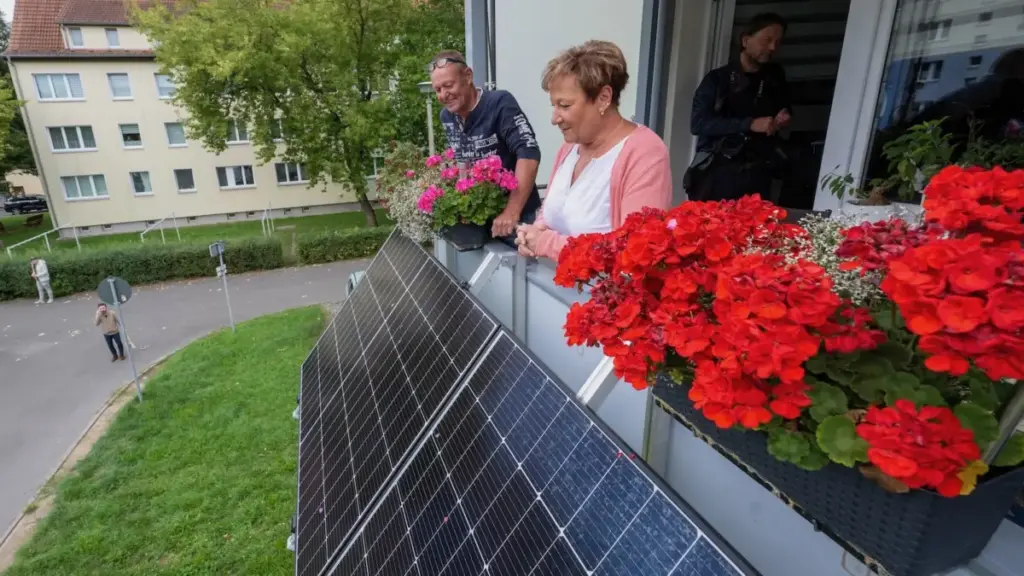
Enter "balcony solar"—also widely known as plug-in solar. This emerging clean-energy movement relies on smaller, portable, and dramatically cheaper solar arrays that can be mounted on an apartment balcony, patio, or backyard fence and plugged directly into a standard household electrical outlet. By offsetting a portion of a residence’s baseline energy draw, these micro-systems can save users hundreds of dollars a year while effectively opening up the renewable energy economy to millions of people who were previously locked out.
The movement achieved a watershed moment when California Governor Gavin Newsom signed a landmark bill legalizing and facilitating the use of plug-in solar across the nation’s most populous state. Joining a forward-thinking vanguard of states like Utah and Maine, California’s adoption of balcony solar signals more than just a localized policy shift; it represents a fundamental rethinking of how the modern electrical grid operates. By decentralizing power generation and turning everyday consumers into active participants in grid management, plug-in solar offers a remarkably immediate, affordable, and scalable weapon against rising utility bills, surging electricity demand, and the escalating threat of climate change.
Detailed Chronology: From European Innovation to American Legislative Breakthroughs
To understand the rapid ascent of plug-in solar in the United States, one must look across the Atlantic. For years, European nations—most notably Germany—have blazed the trail for localized, micro-scale renewables. Facing soaring energy costs and a cultural imperative to accelerate the green transition, Germany aggressively championed the proliferation of Balkonkraftwerke (balcony power plants). By cutting through bureaucratic red tape and allowing citizens to plug small panels directly into home outlets without prior utility approval, Germany successfully outfitted more than half a million balconies with solar arrays. This massive, decentralized deployment demonstrated to energy analysts worldwide that plug-in solar was not merely a novelty, but a viable, high-impact energy strategy.
The success of the European model quickly caught the attention of American energy advocates and state legislators looking for creative ways to lower consumer bills and hit aggressive carbon-reduction targets.
- The Early Pioneers: States like Utah and Maine became early domestic adopters, passing legislation designed to remove regulatory friction and establish portable, plug-in solar as a legal, accessible energy option for their residents. These early statutes proved that the technology could scale safely within the American electrical framework.
- The Legislative Battle in California: The true test of plug-in solar’s mainstream viability, however, always lay in California—a state known both for its ambitious climate goals and its notoriously complex, highly regulated energy markets. Spearheaded by state Senator Scott Wiener, the push to bring balcony solar to the Golden State culminated in the introduction and passage of Senate Bill 868.
- The Gubernatorial Signature: On a pivotal Wednesday, Governor Gavin Newsom officially signed the bill into law, sweeping away decades-old regulatory hurdles that had previously kept micro-solar in legal limbo.
- The Aftermath and Press Rollout: During a press conference held the following Thursday, Senator Wiener underscored the core achievement of the legislation: it permanently eliminated the most massive, discouraging barrier to everyday solar adoption—the requirement that individual citizens negotiate complex, time-consuming interconnection agreements with major investor-owned utilities like Pacific Gas and Electric Company (PG&E), Southern California Edison, or San Diego Gas & Electric.
By removing the legal and administrative red tape, California’s new law effectively greenlights a frictionless consumer experience: buy a panel, mount it to your balcony, plug it into the wall, and immediately begin generating clean electricity.
Supporting Context & Metrics: Economics, Grid Mechanics, and the "Twofer" Benefit
To fully grasp the disruptive nature of plug-in solar, one must examine the intersection of modern grid economics, structural changes in electricity consumption, and the hard metrics driving consumer adoption.
The Changing Anatomy of the Electrical Grid
Historically, the electrical grid has operated on a rigidly centralized, top-down model. Giant utilities generated electricity by burning fossil fuels—primarily coal and natural gas—in massive, distant power plants. When demand spiked—such as at the end of the day when millions of Americans returned home, switched on appliances, cranked up air conditioning units, and charged electric vehicles—utilities simply ramped up fossil fuel production to match. This kept the system in a delicate, constant equilibrium of supply and demand.
The massive influx of modern renewables—utility-scale wind and solar farms—has upended this traditional balancing act. Unlike coal or gas plants, which can be dialed up on demand, renewables are inherently intermittent. If the sun sets or storm clouds roll in, solar generation drops off a cliff. If the wind suddenly stops blowing, wind turbines stall.
To prevent blackouts, utilities have been forced to deploy billions of dollars into massive grid-scale battery storage systems, capturing surplus energy during peak production hours and releasing it when the sun goes down or the air goes still.
The Consumer as a Distributed Power Plant
Plug-in solar introduces an entirely new layer of flexibility to this equation by transforming consumers from passive ratepayers into active, distributed nodes within a vast virtual power plant.
While a balcony solar array generates only a fraction of the electricity produced by a full rooftop solar installation, its cumulative impact across a dense urban environment is profound. Rather than feeding surplus energy back into the grid—which often triggers contentious billing battles over net metering rates—plug-in solar systems operate on a "behind-the-meter" basis. They directly reduce the amount of electricity a household has to pull from the centralized grid in the first place.
When scaled across an entire city or state, these thousands of small, localized reductions add up significantly. They help offset the explosive growth in baseline electricity demand driven by modern digital infrastructure, including power-hungry artificial intelligence (AI) data centers, as well as the broader electrification movement—such as homeowners trading in natural gas lines for induction stoves and plugging in electric vehicles.
The Economics: ROI and Rising Utility Bills
This transformation arrives at a precarious time for American consumers. Utility bills across the United States have skyrocketed over the last several years, driven by grid hardening against climate disasters, inflation, and infrastructure upgrades.
Basic plug-in solar systems—which typically include one or two photovoltaic panels and a specialized microinverter that converts DC solar power into household-compatible AC power—generally cost a few hundred dollars to purchase. Depending on local electricity rates and regional insolation levels, consumers can recoup that initial investment entirely through energy bill savings in roughly four years. In states with exceptionally high electricity prices, that return on investment (ROI) is realized even faster.
Official Statements: Perspectives from Policy, Science, and Advocacy
The transition toward plug-in solar has united an unusual coalition of state lawmakers, climate scientists, and consumer advocates, all of whom view the technology as a rare convergence of economic relief and ecological progress.
During the landmark Sacramento press conference celebrating the signing of California’s new legislation, state Senator Scott Wiener emphasized the profound democratization of energy that the law represents:
"This technology is very important and very powerful. And what this bill does is eliminate the massive barrier to people using plug-in solar, which is that you’d have to go and negotiate an interconnection agreement with PG&E or the other utility."
Bernadette Del Chiaro, senior vice president for California at the nonprofit Environmental Working Group, highlighted the dual benefit of affordability and environmental stewardship, characterizing the policy win as an undeniable victory for the working class:
"This is one of the most immediate, concrete, tangible, real, and affordable things that we can do to start to get control of our high energy costs, but also save our planet. So it’s really a twofer."
From a technical and ecological standpoint, researchers stress the unmatched efficiency of generating power precisely where it is consumed. Amanda Smith, a senior scientist focusing on the built environment at the climate solutions nonprofit Project Drawdown, noted the fundamental efficiency gains of localized generation:
"It’s really ideal to use renewable electricity exactly where it’s generated. The big reason this is a big deal really is because it’s the most affordable way for people to actually participate with solar PV. Whatever happens in California is going to influence, I think, a lot of other future state markets. So it’s going to be a key one to watch."
Future Outlook: The Path Ahead for Distributed Renewables
As California joins the growing roster of states embracing plug-in solar, energy analysts anticipate a decisive domino effect across the national landscape. State legislatures nationwide are already fielding inquiries from constituents demanding similar access to low-cost, portable clean energy.
However, realizing the full potential of balcony solar will require overcoming several remaining hurdles. Chief among these is consumer education and financial accessibility. While a few hundred dollars is vastly cheaper than a $20,000 rooftop solar installation, it still represents a notable upfront investment for low-income households and renters living paycheck to paycheck. To ensure equitable access, energy experts argue that state governments and municipal utilities must pair legalization with targeted financial rebates and low-interest micro-loans for plug-in hardware.
Additionally, apartment building owners and landlords will need to develop clear, standardized guidelines regarding balcony safety, aesthetic uniformity, and proper mounting procedures to prevent structural hazards or property damage.
Despite these challenges, the trajectory is clear. By bypassing bureaucratic utility gatekeepers, taming runaway electricity bills, and easing the strain on overburdened grids during scorching summer heatwaves, plug-in solar is proving that the future of clean energy doesn’t just rest on massive, multi-million-dollar solar farms or expensive rooftop retrofits. Sometimes, the most powerful energy revolution is the one you can plug right into your living room wall.



