

Executive Overview
In the complex and often polarized landscape of American energy policy, a striking paradox has emerged: the states that voted most overwhelmingly for Donald Trump—a political figure whose administrations have historically championed fossil fuels, restricted renewable energy development on federal lands, and scaled back federal green-energy tax incentives—are currently leading the nation in solar energy adoption.
According to a comprehensive Q3 2026 market insight report published by the Solar Energy Industries Association (SEIA), states that supported Donald Trump in the last presidential election accounted for an astounding eight out of the top ten solar-building states nationwide during the first half of the year. Far from shunning renewable technology on ideological grounds, conservative-led and Republican-governed states are actively embracing solar installations at a historic pace.
This unexpected alignment between conservative political leadership and rapid green-energy deployment is fueling an unprecedented national surge. In the second quarter of 2026 alone, the United States integrated more than 11 gigawatts of solar power capacity into its electrical grid—representing a staggering 45 percent increase compared to the exact same period in 2025. Trump-supporting states were responsible for close to three-quarters of this national growth, proving that market forces, industrial power demands, and pro-development regulatory frameworks can frequently transcend national partisan divides.
However, this boom arrives at a precarious political and economic crossroads. Recent federal legislative maneuvers, including the passage of the One Big Beautiful Bill Act, have prematurely phased out critical federal tax credits that previously supercharged the industry. With federal incentives largely expiring for new utility-scale solar farms, developers and policymakers are left questioning whether red-state market momentum will be sufficient to sustain this unprecedented trajectory. As the industry navigates the post-subsidy era, the future of American solar power will depend heavily on localized economic demands, state-level renewable mandates, and the sheer speed with which solar infrastructure can be brought online.
Detailed Chronology
Understanding the current landscape of American solar adoption requires examining the intricate timeline of policy shifts, legislative battles, and market reactions that have shaped the energy sector over the past decade.
The Federal Push and Legislative Inflection Points (2022–2025)
- August 2022: Congress passes the landmark Inflation Reduction Act (IRA), injecting billions of dollars into the clean energy economy. The legislation introduces and extends lucrative federal tax credits for utility-scale solar investments, commercial installations, and residential rooftop systems, triggering an immediate wave of capital deployment across the country.
- 2024: Despite vocal opposition from conservative federal lawmakers and the Trump administration’s previous hurdles regarding renewable development on federal lands, state-level markets accelerate. Texas cements its status as an undisputed solar titan, capturing the number one spot for solar construction nationwide. Meanwhile, swing and red-leaning states like Michigan begin climbing the adoption ladder from the mid-twenties.
- 2025: National solar deployment continues its upward trajectory. Red states, capitalizing on abundant land availability and streamlined local permitting processes, dominate the top ten rankings compiled by the SEIA, led consistently by Sun Belt giants like Texas and Florida.
The Policy Pivot and the 2026 Surge
- Early 2026: Congressional opposition to federal green subsidies culminates in the passage of the One Big Beautiful Bill Act, which alters the legislative landscape by bringing an early termination to the clean energy tax credits established under the IRA.
- July 4, 2026: The statutory deadline arrives. Federal tax credits for most uninitiated solar farms officially expire, creating a high-stakes cliff for developers nationwide.
- Q2 2026: Facing the imminent expiration of financial incentives, the American solar industry experiences a massive, frantic rush to break ground and secure grandfathered status for projects. The United States adds a historic 11 gigawatts of solar power during the second quarter alone—a 45 percent year-over-year surge. Conservative-voting states account for nearly 75 percent of this dramatic expansion, utilizing their pro-business infrastructure to push projects across the finish line ahead of the deadline.
- Late 2026 and Beyond: With tax credits officially elapsed, the solar sector enters uncharted territory. While utility-scale projects in high-resource regions continue to find economic viability, residential rooftop sectors face immediate headwinds and declining installation rates, forcing a pivot toward state-level mandates and localized energy demands to sustain future growth.
Supporting Context & Metrics
The dominance of Republican-leaning states in the solar sector is not an accidental anomaly; it is the direct result of distinct economic, geographic, and structural advantages inherent to these regions.
The Anatomy of Red-State Solar Dominance
An analysis of the top ten solar-building states reveals a heavy concentration of conservative governance and red-state electorates. Texas and Florida—the two most populous states in the Trump-supporting coalition—captured the first and third positions nationwide, respectively. They are consistently joined in the top tier by states such as Indiana, Ohio, and Arizona, with Missouri, Arkansas, Michigan, and Utah frequently securing positions in the upper echelons.
+-----------------------------------------------------------------+
|               TOP SOLAR-BUILDING STATES (2026)                  |
+-------------------+--------------------+------------------------+
| Rank & State      | Political Lean     | Key Growth Driver      |
+-------------------+--------------------+------------------------+
| 1. Texas          | Republican         | Land, Tech/Data Demands|
| 3. Florida        | Republican         | Sun Belt Geography     |
| 4. Michigan       | Mixed / Red (2024) | 50% RPS Mandate, Data  |
| Other Top 10      | Predominantly Red  | Pro-Business Permitting|
+-------------------+--------------------+------------------------+
Why Conservative States Embrace Solar
While voters and politicians in blue states often champion solar energy through the lens of climate change mitigation and carbon reduction, red states approach the technology through an economic and industrial lens.
- The "Pro-Build" Mentality: Conservative-leaning states typically foster cultural and regulatory environments that favor commercial development, industrial expansion, and infrastructure construction.
- Streamlined Permitting: Compared to heavily regulated coastal states, red states frequently maintain less cumbersome bureaucratic hurdles and more efficient local permitting processes for energy infrastructure projects.
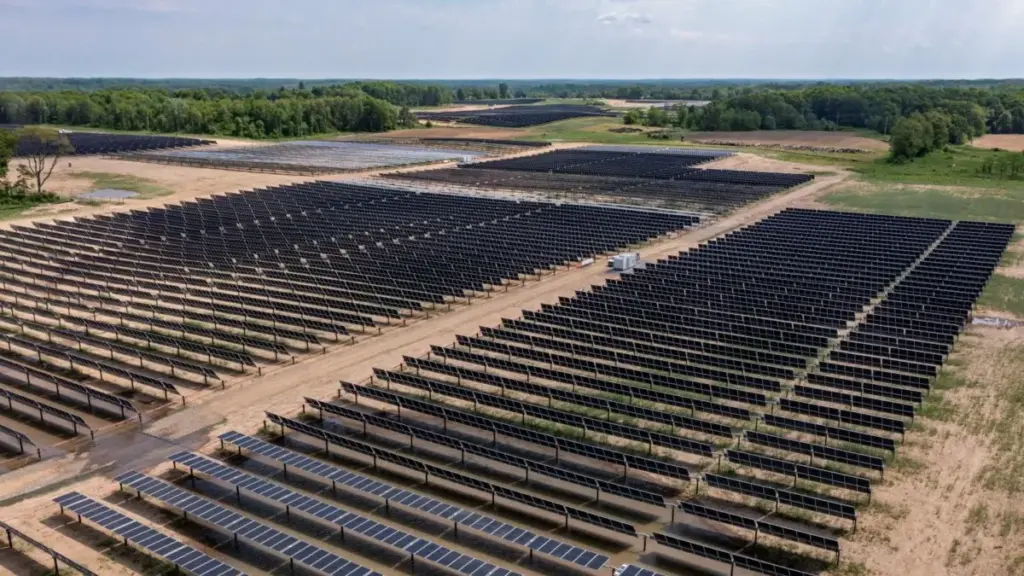
- Abundant Land Availability: Utility-scale solar installations require vast expanses of flat, unobstructed land—a resource that is readily available and relatively inexpensive across the American South, Midwest, and Intermountain West.
- The Industrial Energy Crunch: The explosive growth of electricity-hungry industries—most notably advanced manufacturing facilities, semiconductor plants, and power-dense artificial intelligence data centers—has created an urgent, insatiable demand for new electricity generation. Because solar farms can be planned, financed, and constructed at speeds that far outpace traditional natural gas or nuclear facilities, corporations looking for rapid energy deployment have driven massive investments into red-state solar markets.
Official Statements & Expert Analysis
Industry leaders, political figures, and academic researchers offer nuanced perspectives on the intersection of conservative politics and renewable energy adoption.
-
Tim Pawlenty, CEO of the Solar Energy Industries Association (SEIA) and former Republican Governor of Minnesota:
Addressing the macro-level reality of the energy transition, Pawlenty noted:"At least at the macro level, Republican-led and governed states are not only open to but embracing solar energy as a technology… Red states, as a general proposition, have sort of a pro-build mentality. They want to build things."
Pawlenty further emphasized that the structural business climate of these states—characterized by available land and efficient regulatory frameworks—naturally attracts modern, electricity-intensive industries that require rapid energy solutions. -
Michael Craig, Associate Professor at the University of Michigan’s School for Environment and Sustainability:
Analyzing the differential impact of the federal tax credit expirations across various geographic regions, Craig highlighted the importance of localized weather patterns and state-level policy:"The economics of solar largely depends on your solar resource. The better the resource, I’d say the less important the tax credits are."
Commenting on Michigan’s surprising ascent to fourth place nationally in the first half of 2026 despite its less intense year-round sunlight, Craig pointed to the state’s legislative framework:
"The state established a law that utilities must generate 50 percent of their power from renewables by 2030. That requirement, in combination with data center electricity demand, is likely a large factor in the state’s rapid solar rise." -
Rachel Skaar, Communications Director for the Solar Energy Industries Association (SEIA):
Skaar underscored that regardless of shifting federal subsidies, geographic limitations, or partisan policy fights, the fundamental operational advantage of solar power remains its unmatched deployment speed:"Solar and storage can deploy so much faster than other technologies. So when we talk about the need for energy right now, solar and storage can provide it."
Future Outlook
As the American energy sector moves past the expiration of federal tax credits, the trajectory of solar adoption faces both unprecedented opportunities and significant uncertainties. The market divergence between different types of solar projects and geographic regions is expected to widen significantly in the coming years.
Utility-Scale Resilience vs. Rooftop Vulnerability
The elimination of federal tax incentives under the One Big Beautiful Bill Act will not impact all sectors of the solar industry equally. Utility-scale solar farms—particularly those situated in high-insolation Sun Belt states like Texas, Arizona, and Florida—are well-positioned to absorb the loss of subsidies. Because these large-scale projects benefit from economies of scale and exceptional natural solar resources, their financial viability remains relatively robust even without federal backing.
Conversely, the residential rooftop solar market is facing severe headwinds. Having already experienced noticeable declines throughout 2026, home rooftop installations rely heavily on upfront tax credits to offset high initial capital costs for consumers. Without federal incentives, individual homeowners may find the return on investment too protracted, leading to a prolonged cool-down in the residential sector.
The Role of State Mandates and Corporate Demand
In states lacking the year-round solar intensity of the Southwest—such as Michigan, Ohio, and Indiana—the future of solar growth will increasingly rely on state-level clean energy standards and corporate sustainability mandates. For example, Michigan’s statutory requirement for utilities to source 50 percent of their electricity from renewables by 2030 provides a guaranteed, legally mandated market for utility-scale solar buildouts, insulating the sector from federal policy shifts.
Furthermore, the relentless expansion of the digital economy—driven by energy-intensive data centers and cloud computing infrastructure—guarantees that commercial demand for cheap, rapidly deployable electricity will not abate. Because tech giants and industrial manufacturers require immediate power solutions to meet operational targets, the structural speed of solar deployment will continue to serve as its strongest advocate.
Ultimately, the red-state solar boom demonstrates that market realities and industrial necessity can successfully override ideological opposition. Whether fostered by conservative pro-business climates, state renewable mandates, or the sheer velocity of modern infrastructure construction, the march of solar energy across America’s heartland appears poised to endure long after the federal tax credits have faded into history.



