

Executive Overview
Despite overwhelming scientific consensus, the availability of highly cost-effective clean energy technologies, and the visible escalation of extreme weather events, the global climate movement faces a critical bottleneck: a profound failure of public communication. While clean energy options have become the cheapest forms of power on Earth, and the tangible impacts of global warming—ranging from catastrophic wildfires to skyrocketing insurance premiums—are increasingly impossible to ignore, public engagement remains dangerously low.
According to data compiled by the Yale Program on Climate Change Communication, approximately 80 million Americans are classified as "alarmed" about climate change. Of those, roughly 40 million express a desire to become politically active on the issue. Yet, only about 3 million are actually engaged. When researchers asked the remaining 37 million why they have remained on the sidelines, the most common response was as simple as it is indicting: nobody has asked them.
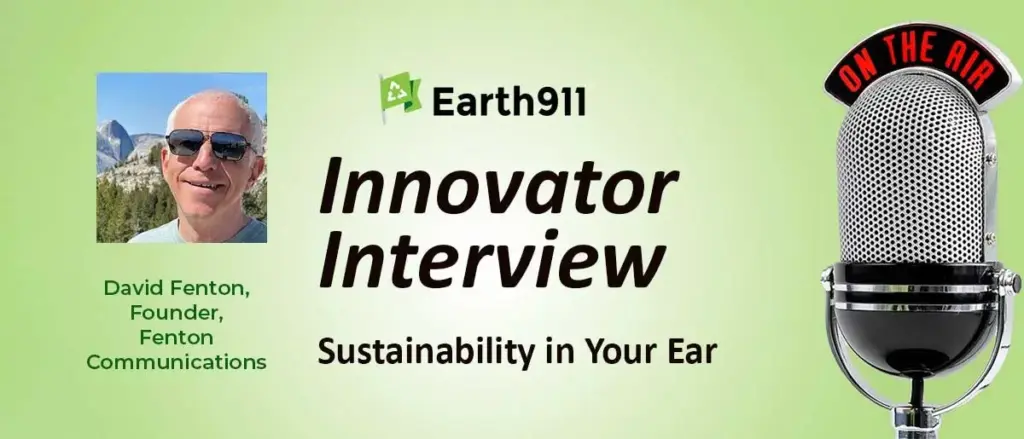
This paradox is the focal point of a revealing discussion on the Sustainability In Your Ear podcast, hosted by Mitch Ratcliffe, featuring guest David Fenton. Fenton, a legendary public relations pioneer and the founder of Fenton Communications, argues that the climate movement has engaged in "unilateral disarmament" in a high-stakes propaganda war. While the fossil fuel industry treats public persuasion as a core business operation—spending millions to build networks of online influencers and manufacture doubt—the environmental NGO and philanthropic sectors remain trapped in what cognitive linguist George Lakoff terms the "Enlightenment fallacy." This is the mistaken belief that facts and scientific truths will naturally propagate and persuade on their own merits, without the need for sophisticated, aggressive marketing.
The consequences of this communication gap are politically devastating. Major legislative milestones, such as the Inflation Reduction Act (IRA), have passed by razor-thin margins—vulnerable to being dismantled or neutralized by a single vote. As Fenton famously notes, "A bill you win by a single vote is a bill you never really won." To secure permanent, systemic decarbonization, the climate movement must shift its strategy from policy writing and academic reporting to mass-market public persuasion, simplified vocabulary, and organized grassroots mobilization.
Detailed Chronology: Five Decades of Progressive Agitation
To understand David Fenton’s critique of the modern environmental movement is to understand a lifetime spent at the intersection of media, activism, and public consciousness. Fenton’s career serves as a blueprint for how public relations can be leveraged to shift cultural and political paradigms.
[1960s] High school dropout; underground press photographer (Anti-War & Black Panthers)
   │
[1979] Co-produces "No Nukes" concerts at Madison Square Garden
   │
[1982] Founds Fenton Communications (First progressive PR firm in the US)
   │
[1990s] Leads global anti-apartheid campaigns; coordinates with Nelson Mandela
   │
[2012] Orchestrates New York anti-fracking campaign (Yoko Ono billboard)
   │
[2014] Launches fossil fuel divestment movement with Rockefeller heirs
   │
[Present] Publishes "The Activist’s Media Handbook"; hosts "The Fenton Forecast"
The Early Years: Underground Media and Cultural Mobilization
Fenton’s journey began in the turbulent 1960s. A high school dropout, he began his career taking photographs for the underground press, documenting the anti-war movement and the Black Panther Party. This early exposure to grassroots activism taught him that political power is intrinsically tied to media visibility. In 1979, Fenton co-produced the historic "No Nukes" concerts at Madison Square Garden, bringing together prominent musicians like Bruce Springsteen, Bonnie Raitt, and Jackson Browne to channel cultural energy into a potent political statement against nuclear proliferation.
The Founding of Fenton Communications (1982)
Recognizing that progressive causes lacked the sophisticated public relations apparatus enjoyed by multinational corporations, Fenton founded Fenton Communications in 1982. It was the first public relations firm in the United States dedicated exclusively to progressive social issues. Over the next four decades, the firm became a vital engine for global change.
- Ending Apartheid: Fenton’s campaigns helped raise international awareness of the horrors of South African apartheid, facilitating media access for Nelson Mandela and coordinating public pressure that ultimately helped dismantle the regime.
- The New York Fracking Ban (2012): Fenton engineered a highly localized, high-impact campaign to ban hydraulic fracturing (fracking) in New York State. Understanding the power of targeted messaging, he collaborated with Yoko Ono and Sean Lennon to erect a massive billboard reading "Imagine There’s No Fracking" directly along Governor Andrew Cuomo’s daily commute. This creative disruption, combined with relentless grassroots organizing, culminated in New York’s historic 2014 ban on high-volume fracking.
- Fossil Fuel Divestment (2014): In one of his most strategically ironic campaigns, Fenton helped launch the fossil fuel divestment movement by utilizing the heirs to the Standard Oil fortune—the Rockefellers—as the primary messengers. By having the descendants of America’s original oil monopoly announce they were divesting their philanthropic funds from fossil fuels, Fenton created a narrative paradox that the mainstream media could not ignore, triggering a global divestment movement that has since captured trillions of dollars in assets.
Today, Fenton has distilled these lessons into his book, The Activist’s Media Handbook: Lessons from Fifty Years as a Progressive Agitator, featuring a foreword by renowned cognitive linguist George Lakoff. Through his new podcast, The Fenton Forecast, Fenton continues to analyze the intersections of climate change, artificial intelligence, public health, and the preservation of democracy.
Supporting Context & Metrics: The Scale of the Information Deficit
The climate crisis is as much an information crisis as it is an environmental one. Despite the catastrophic physical realities of a warming planet, the transmission of this reality to the public is severely blocked.
The Social Media Blackout and Public Silence
According to data cited by Fenton and Ratcliffe:
- 12% of Americans report ever seeing anything related to climate change on social media—the primary news source for an increasingly large portion of the population.
- Two-thirds (66%) of Americans state they rarely or never hear about climate change from their friends, family, or in the mainstream media.
- Only 25% of Americans are deeply engaged with the urgency of climate action, while barely half express general concern.
This silence is not accidental. Major social media algorithms quietly deprioritize content containing terms like "climate change" or "global warming," categorizing them as controversial or political, thereby burying them from general feeds and showing them only to self-contained echo chambers of existing activists.
The Human and Political Toll
The lack of public urgency stands in stark contrast to the actual lethality of fossil fuel pollution. To illustrate this disparity, Ratcliffe draws a comparison to one of the most politically mobilizing events in modern American history: the Vietnam War.
| Crisis Event | Annual/Total US Deaths | Public/Political Response |
|---|---|---|
| Vietnam War | ~58,220 (Total) | Triggered nationwide protests, draft resistance, and systemic foreign policy shifts. |
| Fossil Fuel Air Pollution | ~91,000 (Annual) | Met with widespread public silence and regulatory rollback. |
| Wildfire Smoke Particulates | ~15,000 (Annual) | Treated largely as an unavoidable seasonal natural disaster. |
Despite fossil fuel pollution causing nearly double the total casualties of the entire Vietnam War every single year in the United States alone, there is no equivalent public rage. This is because the connection between the source (oil, coal, and gas emissions) and the effect (premature deaths, respiratory illnesses, and climate-induced disasters) is rarely made clear to the public.
Official Statements and Strategic Critiques
In their candid dialogue, Mitch Ratcliffe and David Fenton dissect the structural, psychological, and linguistic failures that have hindered the environmental movement’s success.
The "Enlightenment Fallacy" in Philanthropy
Fenton places the blame for the communication deficit squarely on the funding models of major climate philanthropies and NGOs.
"The environmental groups do a lot of great things: policy, law, science. But they don’t communicate. They don’t spend money on communicating, by and large, even though they’re very wealthy… They only go out to communicate with their members to raise money, not to educate or get people involved in action."
— David Fenton
Fenton traces this systemic neglect to George Lakoff’s concept of the Enlightenment fallacy—the naive belief that because an idea is scientifically sound or ethically correct, it will automatically win in the marketplace of ideas.
Furthermore, a prevalent attitude exists within academic and scientific circles that "selling" ideas is inherently manipulative and beneath the dignity of serious researchers. In contrast, corporate executives and fossil fuel interests are trained in marketing and cognitive science, viewing public persuasion as an essential tool for protecting their balance sheets and securing lucrative tax subsidies.
Traditional Scientific View:
[Scientific Discovery] ──> [Peer-Reviewed Publication] ──> (Assumption: Public Automatically Adopts Truth)

Modern Cognitive/PR View:
[Scientific Discovery] ──> [Strategic Framing] ──> [Repetitive Mass Media Campaigns] ──> [Public Adoption]
Linguistic Failures: Jargon vs. Cognitive Frames
A key focus of Fenton’s critique is the vocabulary utilized by the climate movement, which he argues actively alienates the general public.
- "Net Zero by 2050": Fenton dismisses this phrase as completely meaningless to the average citizen. It is an abstract, bureaucratic target that fails to evoke any emotional resonance or sense of urgency.
- "Carbon": To most people, carbon is an abstract scientific element, not a tangible pollutant.
- "Climate Justice": While culturally prominent within progressive circles, cognitive linguistic research reveals that the word "justice" primarily activates mental frames associated with the police, courts, and the criminal legal system—not fairness, equity, or a shared environmental mission.
The Solution: Simple, Visual Framing
To bridge this gap, Fenton advocates for a return to simple, universally understood vocabulary. He strongly recommends prioritizing the word "pollution."
"Pollution is a word nobody defends. Pollution is never good. No one ever likes it… The best language and imagery to explain what we’re doing to the Earth to people is that we have put a blanket of pollution around the Earth that’s trapping heat that used to go back out to space. Everybody can see that. That activates existing mental frames."
— David Fenton
By framing global warming as a "blanket of pollution," communicators can leverage existing, universally understood concepts (blankets and heat) rather than abstract chemical formulas.
Future Outlook: Reclaiming the Narrative and Rebuilding Democracy
As the physical impacts of climate change accelerate, the path forward requires a structural overhaul of how environmental advocacy is funded, organized, and communicated.
Embracing the "Biconceptual" Voter
Drawing again on the work of George Lakoff, Fenton explains that political audiences are not strictly divided into binary categories. While there are hardline conservatives (who operate under a "strict father" moral worldview) and progressive liberals (who operate under a "nurturing parent" worldview), a vast portion of the electorate consists of biconceptuals. These individuals possess both cognitive frameworks within their brains, and either can be activated depending on the language and framing used.
To build an enduring majority, the climate movement must speak to these biconceptuals. Fenton has proven through target-market testing that running digital advertisements featuring conservative messengers explaining how global warming threatens traditional conservative values—such as home security, economic stability, and localized stewardship—is highly effective. Yet, major climate funds rarely allocate capital to these targeted persuasion campaigns.
Investing in Messengers
In the modern digital landscape, trust has shifted away from traditional institutions and toward individual, relatable voices. Fenton highlights the tragic underfunding of highly effective, authentic climate messengers.
A prime example is Dr. Katharine Hayhoe, an evangelical Christian climate scientist at Texas Tech University.
"She’s amazingly talented, and she has no help online, none. She has no video team, no social media team, no PR firm, no strategist. She does it all by herself. And because she’s so good, she has a million followers. She’d have 15 or 20 million, in my opinion, if she had help."
— David Fenton
To counter the fossil fuel industry’s heavy investment in digital influencers, climate philanthropy must establish a permanent media infrastructure to support and amplify trusted voices, including scientists, meteorologists, and community leaders.
Emerging Solutions and Structural Shifts
There are promising signs of adaptation within the movement:
- Amped (amped.org): Launched in May of this year under the leadership of Steve McBee, this new advocacy platform seeks to equip the clean energy industry with sophisticated, proactive political and communications strategies, moving past the defensive posture that has left it vulnerable to disinformation (such as the false narrative that offshore wind turbines are responsible for whale mortalities).
- GoodPower: Led by Leah Qusba, this organization is leveraging artificial intelligence and advanced digital monitoring tools to quickly identify anti-renewable disinformation campaigns and deploy rapid-response, pocketbook-focused messaging directly to affected communities.
- Regulatory Reform for Social Media: Fenton anticipates that the United States will eventually have to follow the European Union’s lead in regulating social media platforms to combat unchecked demagoguery and foreign bot interference, potentially requiring content-labeling for AI-generated media and human-verification protocols.
The $300 Million Rumor and the Call to Action
The ultimate metric of success will be whether major climate funders shift their resources from low-yield, direct-mail fundraising lists into massive, permanent public persuasion campaigns. Ratcliffe notes industry rumors of at least one major climate funder preparing to launch a $300 million public communications campaign.
Until such institutional shifts occur, Fenton’s advice for individuals is direct and actionable:
- Talk about it constantly: Break the climate silence by discussing the issue with friends, family, and colleagues.
- Post strategically: Share clear, accessible content on social media, focusing on the tangible impacts of "pollution" and the economic benefits of clean energy.
- Pressure the funders: Urge any philanthropists, foundations, or NGOs within your network to stop spending exclusively on policy and science, and start investing heavily in generating public demand.
The solutions to the climate crisis are already here, and they are economically superior to the status quo. The final, critical task is to build the public demand necessary to make those solutions politically unstoppable.



