


Executive Overview
As consumers increasingly pivot away from refined sugars in pursuit of better health, metabolic wellness, and weight management, zero-calorie artificial sweeteners have embedded themselves into the modern diet. Among them, sucralose—widely recognized by its ubiquitous yellow-packet brand name, Splenda—stands out as one of the most heavily consumed sugar substitutes on the globe. Boasting a sweetness profile roughly 600 times that of traditional table sugar without the caloric payload, it appears to be the ultimate dietary hack.
Yet, as its popularity surges, so does a wave of public scrutiny. Headlines across health and wellness platforms routinely question whether sucralose is quietly undermining our wellbeing. From unproven cancer rumors to newly emerging data regarding gut microbiome disruptions and glycemic variability, consumers are left asking a critical question: Is sucralose bad for you?
This investigative deep dive separates nutritional science from internet fearmongering. By analyzing the structural nature of sucralose, official regulatory standards, recent clinical trials from 2022 through 2026, and the hidden impact of commercial fillers, we will provide an authoritative framework to help you decide how alternative sweeteners fit into your personal health journey.
Detailed Chronology & Scientific Evolution
To understand the modern debate surrounding sucralose, it is essential to trace its journey from laboratory discovery to mass commercialization and the subsequent waves of clinical re-evaluation.

1. The Discovery and Chemical Genesis (1976)
Sucralose was discovered accidentally in 1976 by researchers at Tate & Lyle collaborating with Queen Elizabeth College scientists. While researching the potential uses of chlorinated sugar derivatives as chemical intermediates, a researcher misheard an instruction to "test" a compound and instead tasted it, discovering its intense sweetness.
Chemically speaking, sucralose is a chlorinated form of sucrose (table sugar). Manufacturers substitute three specific hydroxyl groups on the sucrose molecule with chlorine atoms. This precise structural alteration prevents human digestive enzymes from breaking it down. Consequently, the body passes the compound largely unmetabolized, yielding zero calories.
2. Regulatory Approvals and Mass Market Penetration (1990s–2000s)
Following more than a decade of rigorous safety assessments, regulatory bodies began approving sucralose for consumption. The U.S. Food and Drug Administration (FDA) approved it as a general-purpose sweetener in 1998, backed by over 100 safety studies. Shortly after, the European Food Safety Authority (EFSA) and international bodies followed suit. Splenda became a household staple, marketed as a clean-tasting alternative that could withstand heat better than aspartame, making it a favorite for baking and hot beverages.
3. The 2016 Rodent Study Backlash
For years, public perception remained largely favorable. However, a major turning point occurred in 2016 when the Ramazzini Institute published a rodent study linking sucralose consumption to leukemia and other malignancies. This triggered global panic and cemented the persistent myth that sucralose causes cancer.

However, the scientific community rapidly pushed back. Independent toxicologists and regulatory agencies scrutinized the study’s methodology, citing flawed animal care protocols, misclassified tumor types, and dosage levels far exceeding realistic human consumption. Subsequent reviews reaffirmed that the data did not support a direct carcinogenic link in humans.
4. The Microbiome Revolution and Recent Clinical Findings (2022–2026)
While cancer fears were largely debunked, the narrative shifted toward gut health and metabolic responses.
- The 2022 Cell Study: A landmark clinical trial demonstrated that non-nutritive sweeteners (NNS), including sucralose, are not entirely inert. Participants consuming moderate doses experienced altered gut microbiome compositions and impaired glycemic responses.
- The 2025 Clinical Insights: A 2025 trial evaluating healthy, lean individuals consuming 30% of the FDA’s Acceptable Daily Intake (ADI) over 30 days noted a 20.3% decrease in insulin sensitivity, along with reduced gut bacteria diversity and increased pro-inflammatory markers. Additional studies published in 2025 and 2026 continued to map out how chronic low-dose exposure interacts with varying baseline health statuses, particularly among those with prediabetes and type 2 diabetes.
Supporting Context & Metrics: Decoding the Numbers
When assessing the toxicity or safety of any food additive, regulatory bodies rely on the concept of the Acceptable Daily Intake (ADI)—the estimated amount of a substance that can be consumed safely over a lifetime without appreciable health risks.
Regulatory Thresholds: FDA vs. EFSA
The FDA sets the ADI for sucralose at 5 milligrams per kilogram (mg/kg) of body weight per day. Meanwhile, the EFSA maintains a higher ADI threshold of 15 mg/kg of body weight.
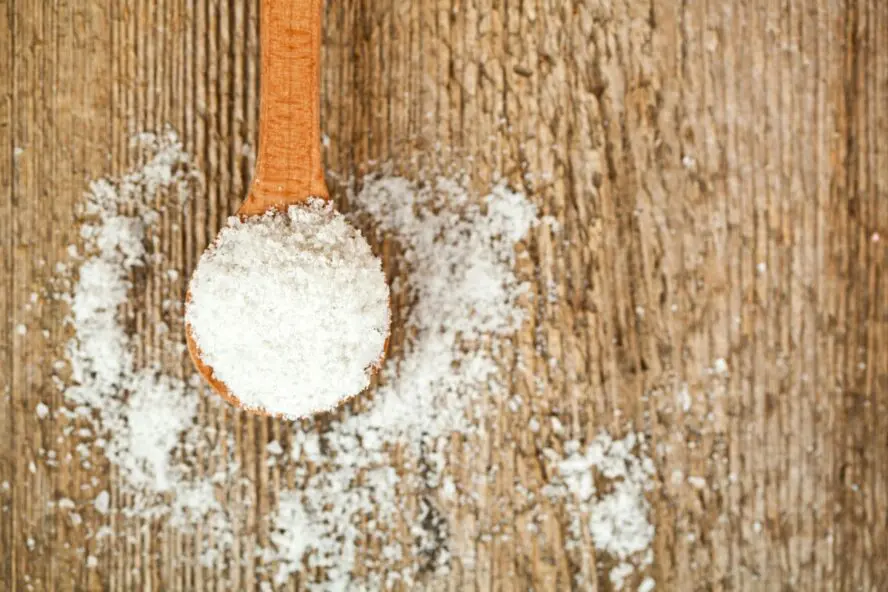
To put these figures into perspective, commercial sweeteners like Splenda are not pure sucralose. Pure sucralose is so intensely sweet that it comprises only about 1% of a standard yellow packet; the remaining 99% consists of bulking agents, primarily dextrose and maltodextrin.
The following table illustrates how many packets an individual must consume daily to reach the maximum ADI limits established by global authorities:
| Population Weight Baseline | Packets to Hit FDA ADI (5 mg/kg) | Packets to Hit EFSA ADI (15 mg/kg) |
|---|---|---|
| FDA Reference Adult (132 lbs / 60 kg) | ~22.5 packets | ~67.6 packets |
| Average American Adult (185.4 lbs / 84.1 kg) | ~31.6 packets | ~94.8 packets |
While these numbers demonstrate that an average consumer would need to ingest an astronomically high volume of packets daily to breach official safety thresholds, recent studies suggest that subtle metabolic or microbiome shifts can occur at fractions (e.g., 25% to 30%) of these maximum limits.
Official Statements and Institutional Positions
Major health organizations maintain nuanced stances on non-nutritive sweeteners, balancing historical safety approvals against modern emerging cautions.
- The U.S. Food and Drug Administration (FDA): Maintains its stance that sucralose is safe as a general-purpose sweetening agent, citing exhaustive toxicological reviews. The agency emphasizes that post-market surveillance and decades of use support its safety profile within established ADI boundaries.
- The World Health Organization (WHO): Released a definitive and widely publicized guideline advising against the use of non-sugar sweeteners (NNS) for weight control or the reduction of non-communicable diseases in the long term. The WHO recommends looking toward natural alternatives, such as unsweetened beverages or whole fruits, to manage caloric intake rather than relying on chemical substitutes.
- The European Food Safety Authority (EFSA): Continues to re-evaluate food additives periodically. While the EFSA upholds sucralose’s safety within its authorized limits, recent evaluations underscore that extending its use to broader industrial applications requires continuous oversight regarding thermal stability and byproduct formation.
Deep Dive: Beyond the Molecule – Fillers, Heat, and Metabolic Impact
To fully grasp how sucralose affects the body, we must look beyond pure chemical structure and examine real-world consumption habits.
The Problem with Fillers: Splenda vs. Pure Sucralose
As noted, tabletop packets contain 99% fillers (dextrose and maltodextrin). While sucralose itself is not metabolized, these bulking agents are carbohydrates that carry their own glycemic footprint. Furthermore, emerging nutritional science indicates that while sucralose can suppress beneficial gut bacteria, the maltodextrin and dextrose fillers act as a direct fuel source for opportunistic, "bad" gut bacteria. This combination can trigger gas, bloating, and microbiome imbalances.
The Thermal Caveat: Baking with Sucralose
While manufacturers successfully utilize sucralose in high-heat industrial processing, home baking presents a different challenge. Research indicates that exposing sucralose to temperatures exceeding 248°F (120°C) for extended periods can cause the molecule to break down, potentially forming chlorinated organic compounds of concern.
Beyond safety, sucralose lacks the bulk, moisture-retaining properties, and caramelization capabilities of real sugar. Culinary experts recommend blending sucralose 50-50 with regular sugar when baking to preserve texture and prevent thermal degradation.
Glycemic Response and Weight Management
While sucralose is calorie-free, clinical reviews show mixed results regarding insulin responses. Roughly half of studied populations exhibit a measurable insulin response when consuming sucralose. For insulin-resistant individuals or those managing type 2 diabetes, even minor glycemic fluctuations can hinder weight loss goals and trigger appetite stimulation.
Future Outlook: Where Do We Go From Here?
As nutritional science transitions from broad epidemiological observations to deep, personalized microbiome mapping, our understanding of artificial sweeteners will continue to evolve.
Future research will likely focus on precision nutrition—identifying why certain individuals experience adverse gut and glycemic shifts from artificial sweeteners while others remain entirely unaffected. Until personalized data becomes widely accessible, consumer strategy should center on moderation and mindfulness.
Strategic Recommendations by Population
- Healthy Adults: Occasional consumption of sucralose within normal dietary limits poses little to no threat and can assist with short-term calorie reduction. However, choosing products with minimal fillers is ideal.
- Individuals with Diabetes or Insulin Resistance: Because emerging data highlights potential glycemic and insulin sensitivity impacts, alternative sweeteners or whole-food options may be preferable.
- Pregnant Individuals: Out of an abundance of caution due to limited long-term generational safety data, many integrative dietitians recommend minimizing all non-nutritive sweeteners during pregnancy.
Sweetener Alternatives Ranked
If you decide to step away from sucralose, several alternative options exist across the market:

- Stevia & Monk Fruit: Natural, plant-derived, zero-calorie options that generally have a milder impact on the gut microbiome, though purity varies by brand.
- Allulose: A rare sugar that mimics the taste and texture of table sugar, bakes exceptionally well, and passes through the body unabsorbed without spiking blood sugar.
- Erythritol & Xylitol: Sugar alcohols that work well in low-carb baking, though high doses can cause gastrointestinal distress in sensitive individuals.
Frequently Asked Questions
Why is sucralose considered bad for you in online discussions?
Public concern is primarily driven by recent human studies highlighting gut microbiome shifts, older high-dose rodent cancer data (which has been largely debunked for humans), and the inflammatory potential of the carbohydrate fillers found in commercial tabletop packets.
Is sucralose carcinogenic?
Current human clinical evidence does not support a link between sucralose and cancer. The primary cancer concerns originated from flawed, high-dose animal studies that regulatory bodies have repeatedly dismissed as irrelevant to normal human consumption patterns.
Is Splenda® identical to pure sucralose?
No. While sucralose is the active sweetening agent, commercial Splenda is 99% bulking agents—specifically dextrose and maltodextrin. These fillers carry a caloric and glycemic impact and can influence gut bacteria differently than pure sucralose.
Is sucralose worse for you than standard table sugar?
In standard, moderate amounts, sucralose carries fewer direct metabolic risks (like obesity and severe tooth decay) than refined added sugar. However, "better than sugar" does not equate to "biologically inert," particularly regarding gut health and metabolic signaling.

Can consuming sucralose cause weight gain?
Directly, no, because it contains zero calories. Indirectly, however, emerging research suggests that artificial sweeteners can alter appetite cues, trigger insulin responses in susceptible individuals, and fail to support sustainable, long-term weight management.
Disclaimer: When implementing any dietary, lifestyle, or health modifications, always consult with your primary care physician or a registered dietitian. The views and opinions expressed in this article are those of the authors and do not necessarily reflect the official policy or position of any publishing organization.



