

Executive Overview
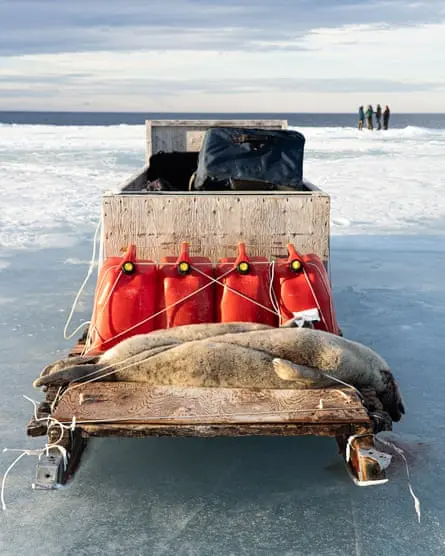
Across the unforgiving expanse of the Canadian High Arctic, a quiet technological and ecological revolution is taking place. In Grise Fiord, Nunavut—Canada’s northernmost public community, a hamlet of just 144 residents located closer to Murmansk, Russia, than to Toronto—Terry Noah throttles his snowmobile across the sea ice. Electric-blue meltwater sprays into the crisp air as he navigates toward towering coastal cliffs that loom like stone icebergs.
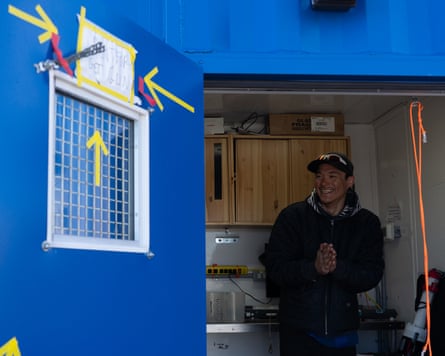
Noah’s mission is not strictly traditional, though it is deeply rooted in a lifetime of living off the land. Carefully positioning his sled over a seal’s breathing hole—an opening roughly the circumference of a basketball—he uses a custom-built winch to lower a submersible data-logging instrument deep into the icy brine below. Moments later, he packs the unit away, returns to his mobile laboratory housed inside a repurposed shipping container, and beams the telemetry south to his collaborator, research scientist Andrew Hamilton at the University of Alberta.
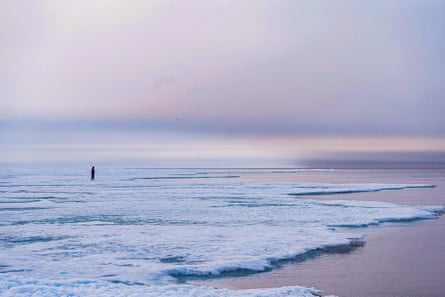
This cross-continental partnership is emblematic of a broader scientific and geopolitical awakening. Noah and Hamilton are working to document and understand dramatic ecological shifts occurring within Jones Sound and the broader Baffin Bay ecosystem. At the center of their focus is the North Water Polynya—known to 19th-century whalers as the North Water, to the Kalaallit (Greenlandic Inuit) as Pikialasorsuaq ("the great upwelling"), and to the Inuit of Nunavut as Sarvarjuaq ("the place that never freezes").
Spanning an 85,000-square-kilometer region larger than Austria, this massive expanse of year-round open water is a lifeline for Arctic biodiversity, supporting everything from foundational summer algae blooms to migrating whales, walruses, and millions of seabirds. Yet, this vital oasis is undergoing rapid upheaval. Driven by climate change and shifting physical dynamics, the fragile balance of the polynya is threatened by a paradox of the warming world: the destabilization of the very mechanisms that keep the water open.
As Canada and Greenland grapple with how to manage and protect this transboundary marine zone, Indigenous knowledge keepers like Terry Noah are stepping forward. Armed with everything from high-tech submersibles and satellite-linked smart glasses to millennia-old survival skills, they are building a grassroots network of climate surveillance. This network seeks not only to track environmental collapse, but to ensure that the future of the Arctic is charted by those who call it home.

Detailed Chronology: The Evolution of the North Water Polynya
To understand the stakes of the current scientific push in Baffin Bay, one must trace the natural and human history of the region—a timeline defined by delicate balances, shifting geopolitical frameworks, and accelerating climatic disruption.
Pre-Colonial Era to the 19th Century: The Ancient Oasis
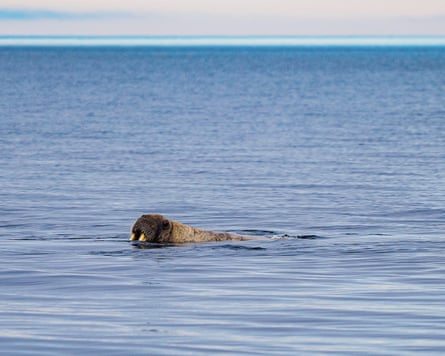
For millennia, Sarvarjuaq / Pikialasorsuaq served as the cultural and ecological heartland for Inuit populations migrating across the Canadian Arctic and Greenland. Because the water remains ice-free year-round, it reliably drew an immense concentration of marine mammals—including bowhead whales, narwhals, bearded seals, and thousands of walruses—providing Indigenous hunters with a predictable and reliable food source during the harshest months of the dark polar winter. 19th-century European whalers quickly recognized the region’s unmatched biological productivity, dubbing it the "North Water" and exploiting its rich populations of whales and walruses.
2014–2017: The Call for Indigenous Management
As modern climate change began to drastically alter Arctic ice patterns, international scientific and Indigenous bodies sounded the alarm over the vulnerability of the polynya. In 2014, landmark biological surveys estimated that over 2,500 walruses, alongside massive populations of narwhals and seals, relied on the polynya to overwinter.
Recognizing that top-down conservation models often infringed upon Indigenous rights, the Pikialasorsuaq Commission released a definitive report in November 2017. The commission recommended that Canada and Greenland jointly establish an Inuit-managed protected area across the entire zone, ensuring that local communities retained primary stewardship over their ancestral waters.
Late 2024–March 2026: Divergent Political Paths
Following years of advocacy, the political response to the commission’s recommendations fractured. In December 2024, Canadian regulatory bodies laid the groundwork for formal protection, culminating in March 2026 when the Government of Canada and the Qikiqtani Inuit Association officially celebrated the designation of the Sarvarjuaq Marine Protected Area. Spanning a staggering 1,000 kilometers from just south of the open Arctic Ocean down to northern Baffin Island, Canada’s half of the zone established a massive legal framework for conservation.
However, corresponding efforts on the Greenlandic side faced delays and administrative caution. Negotiations slowed as lawmakers and Indigenous leaders questioned whether rushing into international conservation frameworks might inadvertently compromise local hunting rights and self-determination.
Autumn 2025: The Nuuk Observatories Summit
Against the backdrop of stalled political negotiations, the scientific community accelerated grassroots action. In the autumn of 2025, researchers and Indigenous knowledge keepers convened in Nuuk, Greenland, to lay the groundwork for an ambitious new trans-Arctic "observatory" network. Designed to monitor the polynya from all sides, this initiative sought to bridge the data gap between Canadian and Greenlandic communities. However, logistical hurdles—such as the lack of passports among many remote Inuit hunters—highlighted the ongoing challenges of unifying populations separated by colonial borders but linked by a shared ocean.
Supporting Context & Metrics: The Science of the Polynya
The physical persistence of the North Water Polynya relies on a delicate meteorological and oceanographic mechanism known as the ice arch.
The Mechanics of the Ice Arch
The size and shape of the polynya ebb and flow seasonally, regulated primarily by a crescent-shaped bridge of thick sea ice that historically jams across the northern tip of the polynya in Nares Strait. This massive ice arch acts as a dam, preventing multi-year sea ice from the high Arctic Ocean from blowing southward into Baffin Bay.
By blocking the influx of pack ice, the arch keeps the southern waters clear of heavy surface cover. This openness allows sunlight to penetrate the water column during spring and summer, triggering massive blooms of microscopic algae. These algae form the base of a rich marine food web that sustains fish, diving seabirds, seals, walruses, and apex predators like polar bears.
The Perverse Paradox of Warming
Nearly two decades ago, scientists observed an unprecedented event: the Nares Strait ice arch failed to form. In the years since, the failure of the ice arch has become increasingly frequent.
When the arch fails to lock into place, sea ice drifts down unobstructed from the north, blanketing the surface of the polynya during critical spring months. This creates a counterintuitive ecological crisis driven by global heating: rather than suffering from a lack of ice, parts of the Arctic are experiencing episodes where too much drifting ice chokes off the open water, starving the ecosystem of sunlight and air.
"I would say that at some point, when the ice bridge disappears, you’re probably going to have a drastic reduction in productivity—a collapse of the polynya," warns David Harning, a climate scientist at the University of Colorado, Boulder.
Key Ecological Metrics
- Total Area: Approximately 85,000 square kilometers (33,000 square miles)—an area larger than Austria.
- Geographic Span: Canada’s newly designated Sarvarjuaq Marine Protected Area stretches 1,000 kilometers from the southern edge of the open Arctic Ocean to northern Baffin Island.
- Wildlife Concentration: Historical and contemporary surveys indicate thousands of walruses, alongside substantial populations of narwhals, bowhead whales, bearded seals, and millions of migratory seabirds, depend on the polynya annually.
- Community Scale: Grise Fiord, Nunavut, hosts a resilient population of just 144 residents.
Official Statements and Stakeholder Perspectives
The future of the North Water Polynya sits at a complex intersection of rigorous marine science, geopolitical policy, and Indigenous self-determination. Key leaders have articulated the vital stakes of this transition:
-
Terry Noah, Citizen Scientist and Grise Fiord Resident:
Emphasizing the immediate necessity of local monitoring, Noah notes: "This science work, it’s the first step to preparing… I get to take my friends out here, and while we’re hunting, we’re collecting data." Describing the synergy between traditional subsistence practices and modern data collection, he adds: "The hunting and the science are all part of the same reconnection to the land."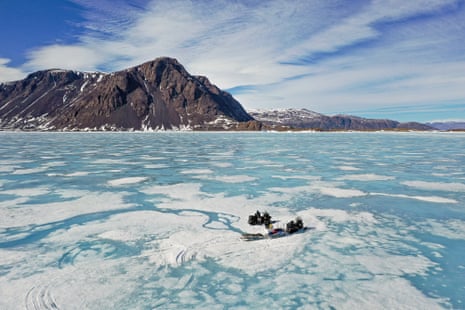
-
Andrew Hamilton, Research Scientist at the University of Alberta:
Highlighting the imperative of cross-border Indigenous collaboration, Hamilton states: "Being able to connect the knowledge of these communities between Canada and Greenland is super important in order to really understand how that environment is changing, because they’re the ones that are there every day of the year, all year long." On the necessity of specialized sub-surface monitoring, he observes: "The scientific aspect is important because it’s very difficult to understand how the ocean temperature is changing 300 metres below the surface unless you have particular instruments that you can deploy to measure those changes. But there are many other observations that I think are super critical to understand holistically what’s happening there." -
Sara Olsvig, Member of the Greenlandic Parliament and Chair of the Inuit Circumpolar Council:
Addressing the delays in Greenland’s conservation rollout, Olsvig urges caution to protect fundamental cultural rights: "Some of the very good initiatives within conservation and nature preservation, and so forth, have unfortunately also resulted in violations of the rights of Indigenous peoples." She stresses that rushing international frameworks without securing local governance structures risks repeating historical harms.
Future Outlook: A Globally Connected High Arctic
As climate change accelerates its transformation of the polar regions, the traditional knowledge passed down through generations in hamlets like Grise Fiord is merging with cutting-edge environmental monitoring tools.
Terry Noah represents a new generation of Arctic inhabitants. Out on the sea ice, he is just as comfortable deploying customwinch submersibles and wearing smart glasses that beam field imagery to social media via portable satellite internet as his ancestors were navigating by the stars and reading pressure ridges in the pack ice. This digital fluency allows a globally connected cohort of Inuk hunters to share data with the same collaborative spirit they once used to share hunting reports on Facebook.
Looking ahead, discussions between Noah and researchers like Andrew Hamilton aim to scale this localized model into a comprehensive High Arctic observation network. Plans are underway to establish training protocols that will empower residents in neighboring communities—from Pond Inlet and Resolute to Arctic Bay—to routinely monitor their local marine environments.
Ultimately, the effort to save and understand Sarvarjuaq and Pikialasorsuaq transcends academic curiosity. It is a race against time to document an ecosystem on the precipice of systemic transformation. By uniting the deep, generational wisdom of the Inuit who have inhabited these shores for millennia with the quantitative rigor of modern oceanography, this partnership offers a blueprint for how remote northern communities can face a rapidly warming future—turning local adaptation into global insight.



