

Executive Overview
Ask a commercial artificial intelligence chatbot a straightforward, single-sentence question, and the physical cost is negligible: the transaction consumes roughly the same amount of electricity required to run a household microwave for one second.
However, the technology landscape has shifted. Today, the tech industry is moving away from simple query-and-response interfaces toward autonomous "agents." These advanced AI systems operate independently—planning multi-step workflows, scouring the web, debugging code, and executing continuous feedback loops until they deem a task complete. This operational shift transforms the energy math. A single, complex task assigned to an AI agent can consume as much electricity as running a personal laptop for nearly six hours.
[Single AI Query] ────> Electricity equivalent to a microwave running for 1 second
[AI Agent Workflow] ──> Electricity equivalent to a laptop running for 6 hours
This massive surge in energy demand is reshaping the debate over the environmental footprint of AI. While early academic literature suggested that AI was a highly sustainable alternative to human labor, recent investigations and peer-reviewed studies reveal a far more complex reality.
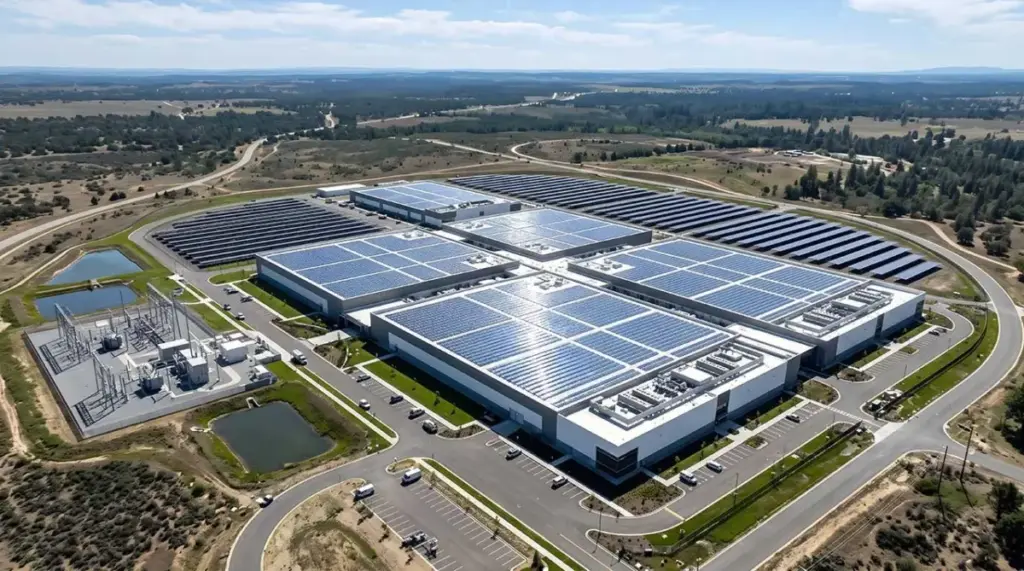
The true cost of the AI revolution is not confined to remote server racks. It is actively spilling over into municipal water supplies, driving up residential electricity bills, and sparking intense land-use battles in local zoning boards across the United States. Far from a purely digital transition, the expansion of AI is a physical resource conflict, forcing communities to decide who pays for the infrastructure of the future.
Detailed Chronology: The Evolution of AI Resource Metrics
To understand how the public understanding of AI’s environmental impact has shifted, we must trace the academic and technological milestones of the last two years.
  Feb 2024                Nov 2025                Early 2026
┌──────────────┐        ┌──────────────┐        ┌──────────────┐
│  Scientific  │        │  Nolan Woo   │        │  KAIST Agent │
│ Reports Vol1 │        │  Rebuttal    │        │  Energy Study│
│ (AI Wins by  │───────>│ (Factoring   │───────>│  (136x Power │
│  1000x Myth) │        │  Accuracy)   │        │   Increase)  │
└──────────────┘        └──────────────┘        └──────────────┘
February 2024: The "AI Wins by a Mile" Myth
In early 2024, researchers from three prominent universities published a comparative analysis in the journal Scientific Reports. The study concluded that an AI model generating a single page of text emitted between 130 and 1,500 times less carbon dioxide than a human writer producing the same page.
The researchers calculated that an AI query generates roughly 2 grams of $CO_2$ (accounting for its share of both operational energy and historical training cycles), whereas a human writer produces approximately 1,400 grams.
However, critics quickly identified a fundamental flaw in the study’s methodology. To calculate the human carbon footprint, the researchers took the average American’s total annual carbon footprint (roughly 15 tons of $CO_2$) and divided it by the number of hours in a year, yielding about 1.7 kilograms of $CO_2$ per hour. They then billed the human writer for the 48 minutes spent writing the page.
This calculation ignored a basic ecological reality: humans emit carbon whether they are writing or not. A writer does not cease to exist when replaced by an AI; they still heat their homes, consume food, and drive cars. The actual net change in carbon emissions when a human writes a document is limited to the electricity consumed by their laptop and monitor—which, over a multi-day project, accounts for roughly 2 kilograms of $CO_2$, not the 36 kilograms implied by the study’s methodology.
November 2025: The Rebuttal and the Cost of Error Correction
In November 2025, Scientific Reports published a direct response by researcher Nolan Woo. Woo argued that the initial study ignored a critical variable: accuracy. If an AI produces inaccurate or buggy output, the energy expended to generate that output is wasted, and additional energy must be spent on correction.
To test this, Woo designed an experiment using programming challenges from a national high school computing contest, which featured automated pass-or-fail grading. He tested four different AI models, feeding errors back into the systems and allowing them up to 100 iterations to find the correct solution.
The findings revealed that carbon emissions were driven not by the raw size or nominal cost of the AI model, but by the number of iterations required to achieve a passing grade:
- High-capability models often solved problems in fewer turns, but their massive size meant each attempt carried a heavy energy penalty.
- Smaller, optimized models drew less power per run but frequently fell into repetitive error loops, ultimately consuming more total energy over dozens of failed attempts.
Woo’s study also highlighted a deeper limitation of the technology at the time: across four years of contest problems, the tested AI models were only able to solve every problem in a single year’s set. For the rest, they cycled endlessly without finding a solution.
While Stanford University’s 2026 AI Index Report notes that the latest generation of models has achieved coding accuracy rates above 95%, the study established a vital principle: errors carry an environmental premium.
Early 2026: The Rise of the Autonomous Agent
By 2026, the paradigm of the single query-and-response had been largely replaced by autonomous AI agents.
A research team at KAIST, South Korea’s premier engineering and science university, set out to measure the "hidden energy" of these agentic workflows. Utilizing an AI model comparable in scale to leading commercial systems, the KAIST team discovered that a single-agent task consumed an average of 348 watt-hours of electricity. This represents a 136-fold increase over the energy required by the same model to answer a single, direct question.
┌─────────────────────────────────────────────────────────┐
│ KAIST Energy Consumption Study (2026)                   │
├───────────────────────────────┬─────────────────────────┤
│ Operational Mode              │ Average Energy Consumed │
├───────────────────────────────┼─────────────────────────┤
│ Single Direct Query           │ ~2.56 Watt-hours        │
│ Autonomous Agentic Workflow   │ 348.00 Watt-hours       │
└───────────────────────────────┴─────────────────────────┘
This surge in power consumption is driven by two main factors:
- Extended Execution Times: Agentic tasks take up to 154 times longer to complete as they coordinate multiple sub-models, execute code, and analyze web search results.
- Hardware Inefficiency: The KAIST team noted that the specialized graphics processing units (GPUs) handling these tasks sat idle for over 50% of the run time—still drawing baseline power while waiting for slow external processes, such as web page retrievals or program executions, to finish.
Supporting Context & Metrics: Environmental & Infrastructure Impacts
To evaluate the true footprint of AI, we must look beyond carbon dioxide to the physical resources that sustain the digital cloud.
The Carbon Break-Even Point
By combining the energy profiles of human workers and AI agents, we can calculate the exact point at which utilizing AI ceases to be the lower-emission choice.
Consider a research project requiring 20 hours of human labor, involving the review of 40 distinct sources and the generation of a 5,000-word report. If we count only the marginal emissions added by this activity—the electricity consumed by the human’s laptop and external monitor, alongside their share of manufacturing emissions—the project generates approximately 2 kilograms of $CO_2$.
The number of AI agent requests required to surpass this 2-kilogram threshold depends heavily on the carbon intensity of the local electrical grid supplying the data center:
                  CARBON BREAK-EVEN THRESHOLD
   Number of AI agent requests equal to 20 hours of human research

   Clean Power Purchase Agreement ─── 46 requests

   Average U.S. Grid Mix ───────────── 15 requests

   Dirty Grid (Data Center Hubs) ───── 11 requests
Data center operators often build their facilities in regions with cheap land and access to high-voltage transmission lines, even if those grids rely heavily on fossil fuels. A 2026 study published on arXiv found that the electricity powering major U.S. data center hubs runs approximately 48% dirtier than the national average. In these regions, an AI agent workflow will exceed the carbon footprint of a human worker in just 11 requests.
Jevons’ Paradox and the Fallacy of Human Displacement
Proponents of AI integration often assume that automating tasks directly offsets human labor, thereby reducing human-associated emissions. However, historical and contemporary evidence suggests the opposite.
In 1865, English economist William Stanley Jevons observed that the introduction of James Watt’s highly efficient steam engine did not decrease coal consumption in Britain. Instead, by making coal-driven energy cheaper and more accessible, it unlocked a wave of new industrial applications, causing overall coal consumption to soar.
[Increased Efficiency] ──> [Lower Unit Cost] ──> [Massive Demand Spike] ──> [Higher Total Resource Use]This phenomenon, known as Jevons’ Paradox, is actively repeating in the AI era:
- A working paper from the National Bureau of Economic Research (NBER) found that employees with high exposure to AI tools at work did not work fewer hours; instead, they logged an average of 3.5 additional hours per week.
- Corporate surveys conducted by major staffing and consulting firms indicate that only 25% of employees use AI-driven time savings to reduce their working hours. The remaining 75% use that reclaimed time to take on more projects, draft more documents, and execute more queries.
By making digital content generation and data analysis cheap and fast, AI has dramatically increased the total volume of work being processed, resulting in a net increase in energy demand.
The Dual Water Footprint: Direct vs. Indirect Consumption
Water has emerged as one of the most contentious issues in local data center developments. However, public debates often focus on the wrong metric.
                       U.S. DATA CENTER WATER FOOTPRINT

   Direct On-Site Cooling ─── 17.4 Billion Gallons (2023)

   Indirect Power Generation ─ 211.0 Billion Gallons (2023)
In 2023, the Lawrence Berkeley National Laboratory calculated that U.S. data centers directly consumed 17.4 billion gallons of water for on-site evaporative cooling. While this figure is relatively small on a national scale (less than a single day’s water use for irrigating the nation’s corn crops), analysts at Orennia project that this direct usage could double or quadruple by 2028.
However, the far larger issue is the indirect water footprint. Generating the massive amounts of electricity required to run these data centers consumed an estimated 211 billion gallons of water in 2023—roughly 12 times the amount used on-site for cooling. Thermoelectric power plants remain the largest consumers of freshwater in the United States, and every megawatt-hour drawn by a data center carries a significant upstream water cost.
While a data center operator can transition to closed-loop air cooling and claim "near-zero" water use on-site, its total water footprint remains unchanged if it continues to draw power from a water-intensive regional grid.
Official Statements and Stakeholder Perspectives
As these resource strains intensify, the debate has moved from academic journals to statehouses and local town halls.
The Grid Strain: Ratepayers Footing the Bill
The financial impact of this energy demand is already appearing on residential utility bills.
PJM Interconnection, which manages the electrical grid for 65 million people across 13 states and Washington, D.C., holds an annual capacity auction to secure power guarantees for peak demand periods. In its auction for the 2026–2027 delivery year, the capacity price surged from $29 per megawatt-day to $329 per megawatt-day—a tenfold increase.
An independent market monitor concluded that data centers were responsible for 63% of this price spike, translating to $9.3 billion in added capacity costs. The Natural Resources Defense Council (NRDC) projects that these capacity charges will add an average of $70 per month to household electricity bills in the PJM territory by 2028.
       PJM GRID CAPACITY AUCTION PRICES

       2024-2025:  $29 / megawatt-day

       2026-2027:  $329 / megawatt-day  <-- [63% of this jump driven by data centers]
Similar cost increases are appearing elsewhere:
- Washington, D.C.: Pepco customers saw rate adjustments averaging an additional $21 per month.
- Midwest: Residential electricity rates in Ohio and Pennsylvania rose by 9% and 14%, respectively, over the past year, driven by grid upgrades to accommodate new data centers.
In response, industry advocates point to the economic benefits of these facilities. A study by Virginia’s Joint Legislative Audit and Review Commission (JLARC) found that data centers support approximately 74,000 jobs and generate $9.1 billion annually for the state’s economy. However, the report also noted that the vast majority of these jobs are temporary positions created during the construction phase, rather than long-term operational roles.
Local Resistance: The Battle for Land and Autonomy
According to tracking by Data Center Watch, at least 75 data center projects worth an estimated $130 billion were blocked, delayed, or canceled by local opposition in the first three months of 2026 alone—a figure that matches the total for all of 2025. The number of active grassroots opposition groups has more than doubled to 833 across 49 states.
This resistance cuts across traditional political lines, uniting diverse coalitions of local residents:
- Tucson, Arizona (Project Blue): In 2023, Amazon sought to build a 290-acre, 10-building data center campus under a strict non-disclosure agreement with Pima County officials. After county supervisors approved the land sale in June 2025, details of the project’s massive water requirements leaked. Over 1,000 residents attended subsequent public hearings, prompting the Tucson City Council to vote unanimously in August 2025 to deny the project annexation and municipal water services. However, the developer bypassed the decision by purchasing unincorporated land just outside city limits, where municipal zoning laws did not apply.
- Saline Township, Michigan: In September 2025, the local planning commission and township board rejected a rezoning request for a 575-acre, $16 billion data center project linked to OpenAI and Oracle. Two days later, the developer sued the township, alleging that because the municipality lacked designated industrial zoning districts, it was illegally restricting commerce. Unable to afford a prolonged legal battle, the small township of 2,900 residents settled within weeks, allowing construction to begin in November in exchange for $14 million in community benefits.
┌──────────────────────────────────────────────────────────────────────────┐
│ Case Studies in Local Resistance (2025-2026)                             │
├──────────────────┬──────────────────────┬────────────────────────────────┤
│ Location         │ Project Details      │ Outcome                        │
├──────────────────┼──────────────────────┼────────────────────────────────┤
│ Tucson, AZ       │ 290-acre Amazon site │ Council rejected; developer    │
│                  │                      │ bypassed via unincorporated land│
├──────────────────┼──────────────────────┼────────────────────────────────┤
│ Saline Twp, MI   │ $16B OpenAI/Oracle   │ Board rejected; sued by developer;│
│                  │ site                 │ settled due to legal costs     │
└──────────────────┴──────────────────────┴────────────────────────────────┘
Future Outlook
The trajectory of AI resource consumption will be shaped by a race between rapid efficiency gains and exponential demand growth.
On the efficiency front, the International Energy Agency (IEA) reported in April 2026 that "measured per individual task, the energy efficiency of AI is improving at a rate unprecedented in energy history." Hardware manufacturers are quickly designing chips optimized for low-power idle states, and software developers are refining algorithms to run on smaller, specialized models rather than massive, general-purpose systems.
However, if history is any guide, these efficiency gains are likely to trigger Jevons’ Paradox, lowering the cost of AI tasks and encouraging even wider adoption.
Emerging Regulatory and Political Fronts
Governments are beginning to intervene to protect utility ratepayers and natural resources:
- State-Level Moratoriums: New York recently became the first state to pass a temporary ban on new large-scale data center construction pending a comprehensive grid-impact study. Following the Saline Township settlement, at least 19 municipalities in Michigan passed local building freezes.
- Utility Rate Restructuring: Regulators are moving to isolate residential ratepayers from data center grid costs. Virginia has introduced a distinct rate class for data centers, while Ohio approved a tariff requiring large-scale digital users to sign 12-year power contracts with guaranteed minimum payments to cover upfront grid upgrades.
- Federal Lobbying: The political stakes are rising rapidly. A pro-AI lobbying group, Leading the Future, launched with $140 million in funding—including $50 million contributions from major venture capital firms and OpenAI’s leadership—to back candidates supportive of rapid data center development. In response, tech workers formed the Guardrails Alliance, raising grassroots funds to lobby for stricter environmental standards and grid transparency.
Practical Consumer Recommendations
While large-scale infrastructure decisions are made by utilities and governments, individual users can take practical steps to manage their digital footprint:
- Evaluate Task Complexity: Use standard search engines or simple, non-agentic queries for straightforward information retrieval. Reserve autonomous AI agents for complex, multi-step workflows where they offer clear, substantial time savings.
- Schedule Non-Urgent Workloads: Run large, batch-processed agentic tasks during off-peak hours when regional electrical grids are more likely to have surplus renewable energy (such as midday for solar or late night for wind).
- Support Grid Separation Policies: Advocate for local and state utility regulations that require data center operators to fund their own clean energy generation, preventing infrastructure costs from being passed on to residential utility bills.
- Inquire About Data Center Power Sources: When choosing enterprise AI vendors, prioritize companies that provide clear, third-party verified data on their carbon intensity and water consumption. Look for those committed to sourcing 100% of their power from new, local renewable projects rather than existing regional grids.



