

Executive Overview
The debate over the future of coal power in the United States has reached a critical inflection point, characterized by regulatory whiplash, shifting economic paradigms, and an unprecedented surge in electricity demand. Coal remains by far the dirtiest of the world’s major energy sources. Accounting for almost half of cumulative global carbon emissions since the dawn of the industrial era—a staggering total on par with oil and natural gas combined—it generates substantially more carbon dioxide per unit of energy than either of its fossil fuel counterparts. For this reason, a broad consensus among climate scientists and energy experts dictates that phasing out coal-fired electricity generation is the single most impactful step the global community can take to mitigate the accelerating trajectories of global warming.
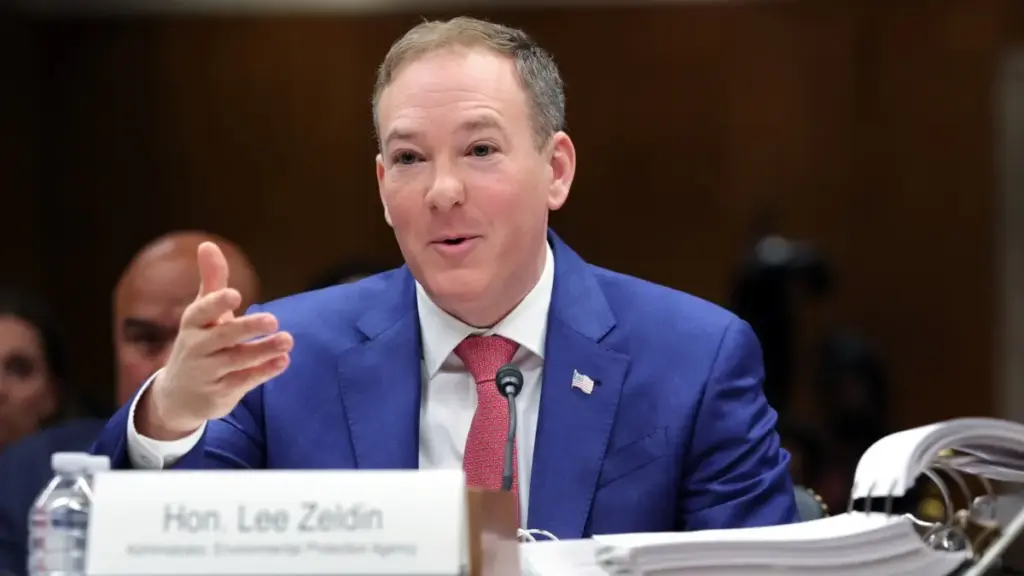
Yet, for nearly two decades, the United States federal government has lurched unpredictably between aggressive regulatory intervention and sweeping deregulation. The latest chapter in this saga unfolded when the Environmental Protection Agency (EPA), under the leadership of Trump-appointed Administrator Lee Zeldin, announced a comprehensive plan to repeal all federal carbon emissions regulations governing the power sector. This sweeping rollback effectively dismantles the carefully crafted framework established by the Biden administration in 2024, which sought to nudge utilities toward decarbonization by offering a bifurcated compliance path: retire coal plants in the 2030s or deploy unproven carbon-capture technology.
Simultaneously, the landscape of American energy demand is undergoing a seismic transformation. The explosive growth of artificial intelligence and its insatiable appetite for computational power—manifested through the rapid proliferation of massive data centers—has breathed unexpected life into aging fossil fuel assets. Utilities across the country are delaying retirements, keeping legacy coal plants online to feed power-hungry server farms.
This article explores the multi-faceted collision between federal regulatory policy, public health imperatives, market economics, and the digital revolution. It provides an in-depth chronological examination of regulatory efforts, analyzes the stark tradeoffs between economic policy and environmental health, highlights official statements from key stakeholders, and maps out the long-term outlook for the nation’s power grid.
Detailed Chronology: Two Decades of Regulatory Whiplash
To understand the current dismantling of federal climate rules, one must trace the twenty-year trajectory of executive attempts to regulate the power sector. The modern era of federal carbon constraints began in earnest following the legislative stalls of the mid-2000s, when cap-and-trade legislation failed to clear Congress.
The Obama Administration and the Clean Power Plan
Facing legislative gridlock, the Barack Obama administration sought executive solutions through the Clean Air Act. The result was the Clean Power Plan (CPP), drafted by the EPA. The CPP aimed to force electric utilities to structurally cut their carbon emissions by shifting generation away from coal and toward cleaner alternatives.
However, the rule faced immediate and ferocious legal opposition from coal-dependent states and industry trade groups. Before the CPP could fully take effect, the Supreme Court took the unprecedented step of staying the rule. This set up a protracted legal battle that fundamentally questioned the boundaries of executive authority under the Clean Air Act—specifically whether an agency could independently compel systemic fuel-switching across the national grid.
The Trump First-Term Repeal and Judicial Guardrails
Upon taking office, President Donald Trump moved swiftly to fulfill campaign promises regarding the fossil fuel industry. During his first term, the EPA formally repealed the Clean Power Plan, replacing it with the much weaker Affordable Clean Energy (ACE) rule, which focused on minor efficiency upgrades at individual plants rather than systemic emissions reductions.
The legal saga reached a watershed moment when the Supreme Court ruled on West Virginia v. EPA. The conservative majority invoked the "major questions doctrine," asserting that Congress had not explicitly granted the EPA the sweeping authority to force utilities to abandon coal. This ruling erected a formidable legal barrier, effectively tying the hands of future regulators seeking to mandate fuel transitions via executive fiat.
The Biden Administration’s 2024 Workaround
Recognizing the constraints imposed by the Supreme Court, the Biden administration crafted a more legally resilient rule in 2024. Rather than directly ordering utilities to abandon coal, the EPA structured the regulation around a choice-based compliance mechanism.
Under the 2024 standards, utilities were given two viable pathways:
- Commit to retiring their coal-fired generating units sometime in the 2030s.
- Equip their smokestacks with advanced carbon capture and sequestration (CCS) technology designed to capture nearly all carbon dioxide emissions.
The Biden EPA projected that either path would yield a precipitous drop in carbon pollution from the power sector, satisfying statutory obligations under the Clean Air Act while deftly navigating the Supreme Court’s major questions doctrine.
The Current Repeal and the Endangerment Paradigm
Now, the incoming administration is systematically unraveling the Biden framework. In a sweeping announcement, EPA Administrator Lee Zeldin declared that the agency plans to eliminate all federal carbon emissions regulations for the electricity sector.
This move mirrors the EPA’s concurrent efforts to dismantle motor vehicle greenhouse gas standards. To justify the wholesale rollback, the agency has leaned on the controversial legal argument that the science of climate change remains "uncertain," while asserting that deregulation is a necessary measure to lower consumer power bills and stimulate economic growth.
Supporting Context & Metrics: Economics, Public Health, and the AI Boom
While federal regulations have swung wildly between administrations, the actual composition of the American power grid has been dictated primarily by market forces, technological innovation, and, most recently, surging digital infrastructure demands.
The Shale Fracking Boom and Natural Gas
Despite the paralyzing political whiplash between Democratic and Republican administrations, coal power in the United States has experienced a dramatic, twenty-year decline. The primary driver of this decline was not federal regulation, but the shale fracking boom.
The sudden abundance of domestic shale gas drove natural gas prices to historic lows. For electric utilities, natural gas became a cheap, flexible alternative to coal. When burned for electricity, natural gas emits roughly half the carbon dioxide of coal and produces far fewer toxic particulates. This economic shift triggered a massive wave of voluntary coal plant retirements, causing overall power sector emissions in the U.S. to fall by nearly 50% over two decades.
Public Health Impacts and the Cost of Inaction
The retreat of coal is not merely a climate issue; it is a profound public health imperative. Coal-fired power plants are notorious for releasing dangerous neurotoxins and pollutants into the atmosphere, including:
- Mercury: A heavy metal that bioaccumulates in aquatic food chains, posing severe risks to neurological development in children.
- Sulfur Dioxide ($SO_2$) and Nitrogen Oxides ($NO_x$): Precursors to acid rain and ground-level ozone that trigger chronic respiratory illnesses.
- Fine Particulate Matter ($PM_2.5$): Microscopic soot particles that penetrate deep into human lungs and cardiovascular systems.
According to EPA impact assessments, the Biden administration’s 2024 rule—had it been allowed to accelerate the phaseout of coal—would have prevented approximately $370 billion in health damages stemming from climate change and air pollution. Projections indicated the rule would have averted hundreds of thousands of asthma flare-ups, reduced emergency room visits, and prevented more than 1,200 premature deaths annually by 2035. The current repeal leaves these public health protections unrealized.
The Artificial Intelligence Energy Crunch
Complicating the long-term outlook for coal is an entirely new macroeconomic variable: the artificial intelligence boom.
For years, energy modelers operated under the assumption that electricity demand would remain relatively flat or grow sluggishly, driven by energy efficiency gains in appliances and industrial processes. The rapid scaling of generative AI, however, has required the construction of vast arrays of energy-intensive data centers, primarily clustered in regions served by wholesale electricity markets like the Midwest (PJM) and the Mid-Atlantic.
This sudden surge in power demand has reversed retirement timelines for numerous legacy coal assets. Utilities that had planned to shutter coal plants within the decade are now extending their operational lives. For instance, Southern Company—a massive utility serving Georgia and Mississippi—had originally slated its major Mississippi coal plant for retirement by 2028. However, citing the ballooning power requirements of new data centers, Southern announced plans to keep the facility operating well into the 2030s.
Concurrently, attempts to make these legacy plants compliant through carbon capture have encountered severe economic and engineering hurdles. Most notably, Southern Company’s high-profile venture into carbon capture at the Kemper County energy facility collapsed after billions of dollars in cost overruns, serving as a cautionary tale for the commercial viability of CCS on coal. Despite these failures, the Trump administration has actively encouraged utilities to keep coal plants online, even issuing emergency orders—some of which have faced immediate challenges and setbacks in federal courts.
Official Statements and Expert Perspectives
The ideological battle over the future of coal highlights deep divisions between free-market deregulation proponents and environmental economists who advocate for structural policy guidance.
The Trump Administration Perspective
At an international energy summit in Texas, EPA Administrator Lee Zeldin framed the regulatory rollback as a liberation of American enterprise:
"For over 15 years, the Obama and Biden administrations implemented a war on coal to destroy reliable and affordable energy. We are working to go even further so that American energy can be fully unleashed. Realizing the full potential of American energy means more jobs, lower prices, and a more prosperous America."
Proponents of this view argue that artificially suppressing fossil fuels drives up electricity costs for American households and compromises grid reliability, particularly at a time when baseload power is desperately needed to support industrial expansion and technological innovation.
The Economic Policy Perspective
Conversely, economists who study environmental policy argue that eliminating federal performance standards removes critical market signals, creating uncertainty for long-term capital investments.
Kenneth Gillingham, a professor of environmental economics at Yale University and a former economic adviser to the Obama administration who helped draft the Clean Power Plan, emphasized the necessity of regulatory anchors:
"The reason to have a target is that it sends a clear signal to decision-makers in companies. If you’re on the fence between choosing two things, you might as well choose the one that’s in line with the target. That’s been undermined. There has to be some teeth behind it."
However, Gillingham also notes that regulatory rollbacks cannot entirely reverse structural economic realities. While higher electricity demand makes it marginally easier for a coal plant to remain online, the underlying economics of aging infrastructure and cheap competing fuels present formidable barriers to a coal renaissance.
"We have more electricity demand than we did before, which is, on the margins, going to make it easier for a coal plant to stay on. But the trend is pretty clear, and you can only fight markets so much."
Future Outlook: Is Coal on Its Last Legs?
As the dust settles on the EPA’s sweeping repeal, energy analysts are left evaluating the long-term trajectory of the American power sector. The immediate future undoubtedly points to a temporary reprieve for coal. High wholesale electricity prices, driven by data center expansions and industrial electrification, have made operating older coal units temporarily profitable.
Yet, most energy economists and grid operators agree that this resurgence is likely a dying gasp rather than a permanent resurrection. Several structural headwinds continue to buffet the coal industry:
- Aging Infrastructure: The average American coal plant is well over 40 years old. Operating these facilities past their designed engineering lifespans requires capital-intensive maintenance, retrofitting, and repairs that many utilities find economically unviable when weighed against cheaper renewable and natural gas alternatives.
- Financial and Insurance Pressures: Wall Street banks, institutional investors, and corporate insurers increasingly factor environmental, social, and governance (ESG) metrics into their portfolios. Securing financing for coal-fired generation remains exceptionally difficult compared to wind, solar, and battery storage projects, which continue to benefit from structural subsidies under federal legislation like the Inflation Reduction Act.
- The Inevitability of Market Economics: While regulatory "sticks" like the Clean Power Plan or the Biden 2024 rule provide explicit timelines, market forces—specifically the low cost of natural gas and the plunging cost of utility-scale solar and wind—remain the dominant drivers of the energy transition.
When the next presidential administration assumes office, it will inherit a familiar structural dilemma: how to accelerate the phaseout of a fuel that is steadily declining, but proving remarkably stubborn in its exit. While short-term political interventions and artificial intelligence demands have bought coal a temporary lease on life, the fundamental physics and economics of the modern grid suggest that the nation’s coal fleet is indeed on its last legs. Regulators can alter the rules of the road, but they cannot permanently arrest the inexorable march of technological and economic evolution.



