

Executive Overview
The humble t-shirt is the undisputed heavy-weight champion of the modern wardrobe. As the ultimate layerable basic, it forms the foundational building block for millions of daily outfits across the globe. Whether styled casually with vintage denim, layered underneath a structured jumpsuit, or juxtaposed against an elegant slip dress, the t-shirt transitions seamlessly across seasons, genders, and subcultures. It is the quintessential starting point for anyone looking to execute a complete ethical wardrobe overhaul or curate a minimalist capsule collection.
However, beneath the deceptive simplicity of this everyday garment lies a complex, resource-intensive global supply chain. For generations, fast fashion has normalized the disposable t-shirt—churning out cheap, petroleum-derived synthetics and conventionally farmed cotton that exact a devastating toll on our planet and its people. As conscious consumerism transitions from a niche lifestyle choice to a global imperative, a critical shift is underway. Today’s discerning buyers are looking past the point-of-sale price tag and confronting the structural realities of their clothing. They are asking the pivotal questions that the fashion industry has long avoided: Who made my t-shirt? Were they compensated with a genuine living wage? Is this garment constructed from lower-impact, regenerative, or circular fabrics?
To answer these questions, our editorial team has conducted a rigorous assessment of the global apparel landscape. Using our comprehensive sustainability evaluation framework—which measures brand impact across people, the planet, and animal welfare—we have curated a definitive directory of ethical t-shirt brands rated "Good" or "Great." Spanning North America, Europe, Australia, New Zealand, and Asia, this meticulously vetted list highlights trailblazing designers who are proving that style, ethics, and environmental stewardship can coexist.
Detailed Chronology: The Evolution of the Ethical T-Shirt Movement
To understand where sustainable fashion stands today, it is essential to trace the historical arc that brought us from mass-market exploitation to the rise of conscious consumer alternatives.
- The Mid-20th Century (The Rise of the Synthetic Standard): Following its military adoption in World War II, the t-shirt transitioned into a mainstream casualwear staple. The subsequent decades saw the rapid industrialization of textile manufacturing, characterized by a heavy reliance on synthetic fibers like polyester and nylon, alongside chemically intensive industrial agriculture.
- The Late 1990s to Early 2000s (The Fast Fashion Explosion): The turn of the century accelerated the race to the bottom. Globalization allowed brands to outsource manufacturing to developing nations with lax labor laws and environmental regulations. The "ultra-fast-fashion" model transformed the t-shirt into a disposable commodity, often retailing for less than the price of a cup of coffee.
- The 2013 Rana Plaza Tragedy (A Global Awakening): On April 24, 2013, the Rana Plaza garment factory collapse in Bangladesh claimed the lives of 1,132 workers and injured over 2,500 more. This catastrophic event served as an industry-wide reckoning, sparking global outrage and catapulting the issues of supply chain transparency, living wages, and worker safety into mainstream consciousness.
- The Mid-2010s (The Rise of Conscious Brands): In the wake of Rana Plaza, a new wave of independent apparel companies emerged. Rejecting the seasonal, trend-driven treadmill of fast fashion, these early pioneers began championing organic cotton, localized supply chains, and radical transparency.
- The Present Day (Mainstream Accountability and Regenerative Fashion): Today, sustainability is no longer a mere marketing buzzword; it is a measurable metric demanded by consumers. Brands are increasingly adopting regenerative agriculture, closed-loop recycling, and innovative fibers (such as hemp and cactus leather) to future-proof their operations against climate change and resource depletion.
Supporting Context & Metrics: The True Cost of a Cotton Tee
The fashion industry is one of the most polluting sectors in the global economy, and the standard t-shirt is a major contributor to this environmental footprint.
The Environmental Toll of Conventional Cotton
Cotton is often lauded as a natural, breathable fiber, but conventional cotton farming is notoriously resource-intensive. According to international environmental assessments, conventional cotton cultivation accounts for a disproportionate share of global insecticide and pesticide use. These toxic chemicals degrade soil health, poison local water tables, and threaten biodiversity. Furthermore, producing a single conventional cotton t-shirt requires an estimated 2,700 liters of fresh water—equivalent to one person’s drinking water needs for nearly three years.
The Social Crisis in Garment Manufacturing
Beyond environmental degradation, the human cost of cheap clothing remains staggering. Millions of garment workers—predominantly women in the Global South—face systemic exploitation, working excessive hours in unsafe facilities for wages that fall well below the poverty line. The lack of supply chain visibility among legacy fashion brands shields them from accountability, allowing labor abuses to persist unchecked.
The Power of Lower-Impact Alternatives
Transitioning to certified organic cotton, European flax linen, industrial hemp, and recycled textiles drastically reduces these impacts. For instance:
- GOTS-Certified Organic Cotton: Grown without synthetic pesticides or fertilizers, organic cotton preserves soil microbiome integrity and consumes significantly less blue water.
- Regenerative Agriculture: Pioneered by forward-thinking agricultural collectives, regenerative farming practices actively draw carbon out of the atmosphere and lock it back into the soil, transforming fashion from a net-contributor to greenhouse gas emissions into a tool for climate mitigation.
- Hemp: Requiring minimal water and virtually no chemical inputs, hemp produces exceptionally durable, high-performance fibers while naturally regenerating the soil in which it grows.
Global Directory: Sustainable T-Shirt Brands Rated "Good" or "Great"
To simplify your journey toward a more conscious wardrobe, our editors have organized our top-rated sustainable t-shirt brands by geographic region. Each of these brands meets our stringent assessment criteria for environmental management, labor standards, and animal welfare.
1. The USA & Canada
FM 669
- Location: United States (Ships Internationally)
- Overview: FM 669 is a pioneering American apparel brand dedicated to localized manufacturing and domestic agricultural supply chains. Specializing in essential tees, tank tops, and long-sleeve basics, the brand sources its Global Organic Textile Standard (GOTS)-certified cotton exclusively from a cooperative of Texas farms utilizing regenerative agricultural practices. Their limited-production runs utilize lower-impact dyes, ensuring minimal chemical runoff.
- Size Range: XS–L
- Highlight Piece: T102 Little T-Shirt (Black) — A boxy, short-cut organic US cotton tee that exemplifies effortless, low-impact style.
Toad&Co
- Location: United States
- Overview: Bridging the gap between outdoor performance wear and urban casualness, Toad&Co creates socially and environmentally progressive apparel. Their versatile garments are engineered to withstand the rigors of a wilderness trail while maintaining a refined aesthetic suitable for daily wear.
- Size Range: XS–2XL
Neococo
- Location: United States (Ships Internationally)
- Overview: Neococo is a mission-driven enterprise founded with a singular, transformative purpose: to create dignified employment opportunities for women refugees through the traditional art of hand embroidery. By providing a supportive community, safety, and pathways to financial independence, Neococo empowers artisans adjusting to new cultural landscapes.
- Size Range: XS–3XL
- Highlight Piece: Formation Tee (White) — A beautifully crafted piece featuring hand-embroidered artwork celebrating women’s empowerment.
2. Europe
Colorful Standard
- Location: Denmark (Ships Internationally)
- Overview: Rejecting the fast-paced, trend-driven calendar of traditional fashion, Danish label Colorful Standard focuses exclusively on timeless, long-lasting organic fashion essentials. By prioritizing durability and classic color palettes over seasonal turnover, the brand actively combats the cultural cycle of over-consumption.
- Size Range: XS–2XL
- Highlight Piece: Classic Organic Tee — An expertly tailored staple available in a vast array of vibrant, eco-dyed hues.
CAES
- Location: Netherlands (Ships Internationally)
- Overview: "Fashion does not have to be fast or seasonal," asserts the founding team behind CAES. Based in the Netherlands, this minimalist brand crafts sophisticated, timeless garments using innovative lower-impact materials, including Desserto cactus leather, recycled cotton, and Tencel Lyocell. CAES maintains partial supply chain traceability and enforces a strict code of conduct aligned with International Labour Organization (ILO) principles.
- Size Range: Standard minimalist sizing
NIKIN
- Location: Switzerland (Ships Internationally)
- Overview: For consumers who want their apparel to reflect their environmental ethics, Swiss brand NIKIN offers a powerful solution. Operating under a reforestation pledge, NIKIN plants a tree for every single product purchased, allowing wearers to visibly champion conservationism.
- Size Range: XS–2XL
THTC
- Location: United Kingdom (Ships Internationally)
- Overview: The Hemp Trading Company (THTC) is a recognized industry leader in eco-friendly streetwear, specializing in organic hemp t-shirts, hoodies, and caps. Beyond retail, THTC produces white-label sustainable apparel ranges for prominent charities and NGOs.
- Special Offer: Readers can enjoy an automatic 10% discount at checkout using affiliated partner links.
3. Australia & New Zealand
Elk
- Location: Australia
- Overview: Founded in Melbourne in 2004, Elk is an independent Australian design pioneer. The brand releases bi-annual collections governed by a foundational design philosophy where simplicity, longevity, and environmental innovation intersect.
- Size Range: AU 6–18
Etiko
- Location: Australia
- Overview: Etiko is a trailblazing Australian designer of certified organic, fair-trade clothing and footwear. The brand continuously sets the industry benchmark for aggressively campaigning for and upholding the human rights of marginalized workers trapped within historically exploitative supply chains.
- Size Range: Clothing in AU sizes 8–20; Footwear in UK sizes 3–13.
Kowtow
- Location: New Zealand (Ships Internationally)
- Overview: New Zealand-based Kowtow produces elegant, architectural womenswear using 100% fair-trade certified organic cotton and non-toxic, biodegradable dyes. Every garment is designed with circularity in mind, ensuring it can safely return to the earth at the end of its lifecycle.
- Size Range: XS–L
- Highlight Piece: Classic Building Block T-Shirt (White) — The epitome of clean-lined, ethical tailoring.
STAPLE Co
- Location: Australia
- Overview: STAPLE Co is an Australian specialist label dedicated entirely to crafting premium, long-lasting organic cotton essentials designed to anchor any sustainable capsule wardrobe.
4. Asia
SeamsFriendly
- Location: India (Ships Internationally)
- Overview: Addressing one of the fashion industry’s most significant inefficiencies—mass overproduction and ill-fitting ready-to-wear clothing—SeamsFriendly crafts made-to-order, highly customizable clothing for women, men, and children of all body types, heights, and proportions. By manufacturing only when an order is placed, they eliminate excess inventory waste.
- Custom Sizing Range:
- Womenswear: Bust 26"–70", Waist 19"–63" (Petite, Regular, and Tall heights available).
- Menswear: Chest 34"–76" and above, with complimentary custom tailoring.
- Children’s Range: Bust 18"–28", Waist 19"–26".
- Exclusive Offer: Take 10% off your order using checkout code SF-GY10.
Official Statements & Industry Insights
As the demand for transparency accelerates, industry leaders and sustainability experts continue to emphasize the urgent need for systemic reform in apparel manufacturing.
"The most sustainable garment is the one already hanging in your closet—followed closely by garments that are ethically made, built to last, and produced without exploiting human or natural capital," notes our lead editorial panel at Good On You. "When consumers demand living wages and regenerative agriculture, they send an unmistakable signal to the global market that the era of disposable fashion is over."
Furthermore, trade organizations and labor advocates underscore that fair-trade certification and organic standards are no longer optional extras; they are foundational baselines for any brand claiming ethical integrity. The integration of localized supply chains, as demonstrated by brands like FM 669 and SeamsFriendly, points toward a future where fashion operates within planetary boundaries while remaining deeply responsive to individual human needs.
Future Outlook: What Lies Ahead for Sustainable Apparel?
Looking toward the horizon, the sustainable t-shirt market is poised for transformative technological and structural advancements. Several key trends are set to define the next decade of ethical fashion:
- Digital Product Passports (DPPs): Regulatory pressures, particularly within the European Union, are pushing brands toward total supply chain visibility. Soon, scanning a t-shirt’s QR code will reveal its complete journey—from the specific farm where the cotton was harvested to the carbon footprint generated during dyeing and the exact wages paid to the sewing floor operator.
- Circular Economy Integration: The concept of end-of-life management is shifting from a theoretical ideal to a commercial reality. More brands are designing mono-material t-shirts (100% organic cotton or 100% hemp) that can be easily broken down and spun into new yarns, eliminating textile waste entirely.
- Mainstream Adoption of Regenerative Fibers: As soil degradation threatens global food and fiber security, brands will increasingly pivot away from conventional agriculture toward regenerative farming models that actively restore ecosystems.
- Rise of On-Demand Manufacturing: Moving away from predictive mass manufacturing, made-to-order models championed by innovators like SeamsFriendly will mitigate deadstock, reduce warehouse emissions, and provide garments tailored precisely to the wearer’s body, drastically reducing return rates.
By making informed purchasing decisions today, consumers hold the ultimate voting power. Every ethical t-shirt purchased is a vote for cleaner water, healthier soil, and fair, dignified livelihoods for the millions of people who stitch our world together.
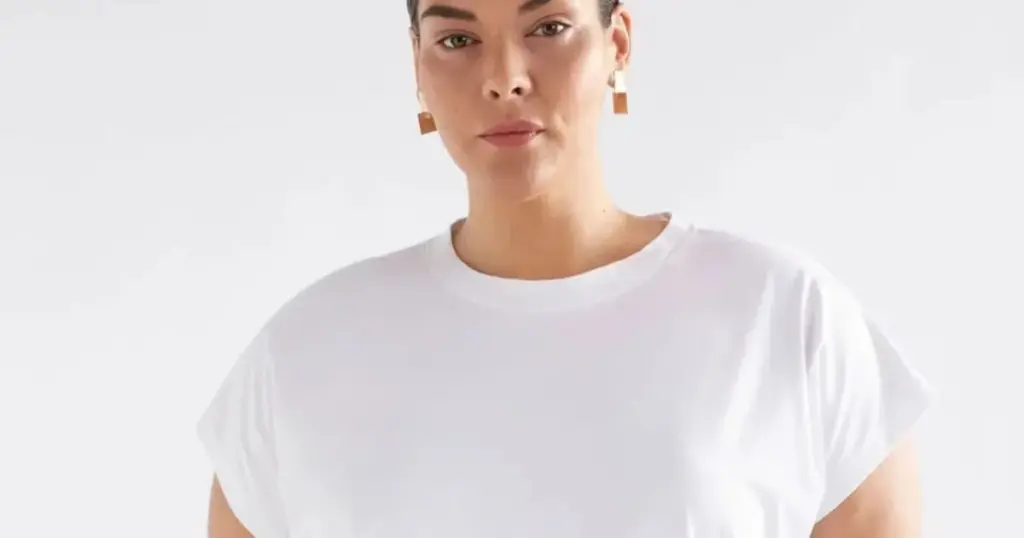
Editor’s Note: Feature imagery via Elk; all other supporting visuals provided courtesy of the respective brands. Good On You publishes the world’s most comprehensive independent ratings evaluating fashion and beauty brands based on their impact on people, the planet, and animals. Explore thousands of rated brands via our official directory.



