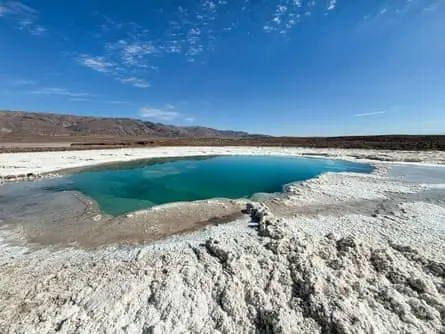
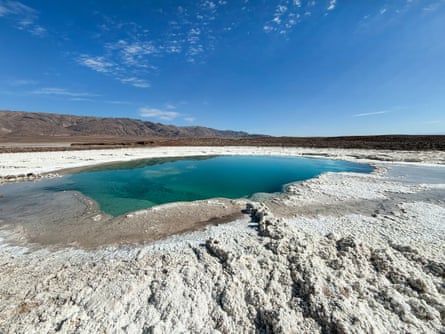
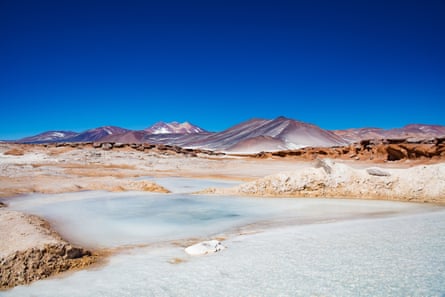
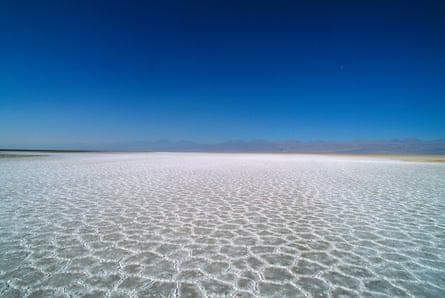
High above sea level, traversing the borderlands of Argentina, Bolivia, and Chile, lies one of the most visually stunning and geographically extreme high-altitude desert plateaus on Earth. On the Chilean side of this majestic expanse, beneath a blinding sun and thin, brisk air, researchers navigate the rugged terrain aboard all-terrain vehicles, moving past sweeping basins, near-vertical ascents, and the towering silhouette of the Licancabur volcano.
Yet, this stark and breathtaking landscape—home to vibrant pink flamingos, ancient Indigenous communities, and glittering expanses of salt—faces a profound and counterintuitive threat. Tucked just beneath the surface of the Atacama salt flats (Salar de Atacama) is nearly one-quarter of the world’s entire reserves of lithium. Suspended within subterranean brine far saltier than the ocean, this volatile alkaline metal has become the ultimate currency of the 21st century.
Lithium is the indispensable cornerstone of the global green energy transition. As the key ingredient in high-density rechargeable batteries, it powers the electric vehicles (EVs) and grid-scale storage systems designed to eliminate carbon emissions from transportation and energy generation—the two largest-emitting sectors of the global economy. However, harvesting this "white gold" carries escalating ecological, social, and cultural costs. The extraction process pits global climate action against local environmental preservation, turning the Atacama Desert into a glaring microcosm of green capitalism’s dark side.
This investigative report examines how the relentless global demand for decarbonization threatens a fragile polyextreme ecosystem, disrupts delicate biological food webs, and places marginalized indigenous populations on the front lines of a planetary crisis.
Detailed Chronology & Geographical Mechanics
To understand the lithium crisis in northern Chile, one must first understand the extraordinary geological and climatic accidents that created the Salar de Atacama. Enclosed by the towering Andean mountains to the east and the coastal Domeyko range to the west, the Atacama sits within an "endorheic" basin—derived from Greek roots meaning "inside" and "flow." Water can enter the basin via runoff and subterranean springs, but it cannot escape through surface drainage. It can only leave through one mechanism: evaporation.
The chronology of lithium enrichment is a delicate, centuries-old dance between violent weather and prolonged drought:
The Bolivian Winter (Invierno Boliviano): Despite being known as the driest desert on Earth, the Atacama experiences catastrophic, hyper-intense deluges during the southern hemisphere’s summer. Weather fronts originating in the Amazon basin climb the steep slopes of the Andes. High-altitude winds drive these moisture-laden clouds over the mountain ridges, unleashing torrential downpours onto the Chilean high plateau.
Surface Leaching and Transport: Following these floods, massive volumes of water rush down the surrounding mountainsides. During the long, dry spells between storms, water trickles down ravines from precious, high-altitude mountain springs. As this water flows, it leeches lithium from volcanic rock and picks up wind-scoured lithium dust, depositing both into the central nucleus of the salar.
Solar Concentration: Pooled surface water evaporates rapidly under the relentless, sun-blasted Atacama sky. With every evaporating water droplet, the concentration of lithium in the remaining brine spikes. Without this extreme aridity and high solar radiation, lithium concentrations would never reach the "economical" grades required by commercial mining operations.
Subsurface Hydrothermal Cycling: Out of sight, water seeps deep into the earth, forming underground wells of lithium-rich brine linked to complex hydrothermal systems. Magma heat, supercharged by active Andean fault lines, drives the circulation of subsurface brine through geological fissures and porous strata, dissolving even more lithium from the underlying rock.
Industrial Extraction Cycles: Today, mining corporations tap these subterranean reserves—located anywhere from 4 to 200 feet beneath the crust—pumping the brine into vast surface evaporation ponds. Over a cycle lasting between 10 to 24 months, natural evaporation multiplies the lithium concentration 40-fold, raising it from roughly 0.15% to an industrial grade of 6%.
Supporting Context & Metrics: The Ecology of Extremes
Ecologists frequently characterize the Atacama Desert as a "polyextreme" environment. Defined by extreme altitude, intense direct solar radiation, severe aridity, massive diurnal temperature swings, and hypersaline lakes, the desert appears at first glance to be entirely lifeless. Yet, beneath this barren exterior lies a biological web shaped by evolutionary resilience.
The Biological Web of the Salar
Artemia (Brine Shrimp): These microscopic crustaceans thrive in hypersaline waters that would prove instantly fatal to most aquatic life forms. They represent a crucial foundational node in the plateau’s food chain, feeding on abundant bacteria and phytoplankton.
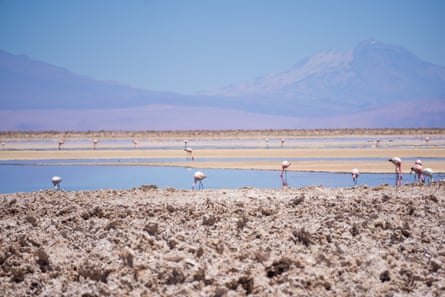
Chilean Flamingos: Relying on the brine shrimp and phytoplankton for sustenance, native flamingo species have evolved specialized biological filters in their bills—similar to the lamellar membranes of whales—allowing them to strain nutrients directly from the heavy brine.
Endemic Vulnerability: Flamingos act as the ultimate barometers of wetland health. As they travel across the salt flats in synchronized courtship dances, they connect disparate saline lagoons into a unified habitat. Today, all three of the Atacama’s endemic flamingo populations are in rapid decline.
Quantitative Metrics of the Crisis
Global Reserves: The Atacama salt flat alone holds approximately 25% of the world’s total known lithium reserves.
Evaporation Amplification: Industrial solar ponds increase the concentration of lithium from an initial subterranean grade of 0.15% to roughly 6%.
Production Timeline: A single batch of brine requires between 10 and 24 months of continuous evaporation under desert sun before it is ready for chemical processing.
Water Consumption: Pumping subsurface brine accelerates the depletion of fragile freshwater aquifers, with extraction rates frequently outstripping natural replenishment through Andean precipitation.
Official Statements and Stakeholder Perspectives
The friction between global climate mandates and local environmental preservation has drawn sharp divisions among mining conglomerates, government regulators, scientific researchers, and Indigenous communities.
The Corporate and Industrial Perspective
Mining executives and proponents of green energy argue that the extraction methods utilized in the Atacama are relatively low-tech, relying primarily on solar energy rather than intensive chemical processing in the initial stages. Industry representatives emphasize that without the rapid scaling of Atacama lithium, global automakers cannot meet electric vehicle adoption targets, delaying the global transition away from fossil fuels.
"We are operating under the imperative of a planetary climate emergency," notes a representative from a major lithium extraction firm operating in northern Chile. "The decarbonization of the global transport sector is non-negotiable. Every industry has an environmental footprint, but our work here directly enables the global reduction of carbon emissions on a massive scale."
Indigenous and Community Resistance
Local Indigenous communities, including the Colla and Lickanantay peoples, view the expansion of mining operations through the lens of historical dispossession and resource colonisation. Community leaders argue that "green" capitalism is simply a rebranded iteration of traditional extractivism, where the Global North sacrifices Southern ecosystems for clean air in metropolitan centers.
"The source of all life is here," asserts a local Indigenous leader from a community bordering the salt flat. "For generations, our ancestors have lived in harmony with the springs and the wetlands. When the corporations pump out the brine, they pull down the water tables. They are trading our ancestral waters for batteries that will run cars in cities thousands of miles away."
Scientific and Ecological Warnings
Hydrogeologists and ecologists warn that industrial operators drastically underestimate the interconnectedness of subterranean brine reservoirs and the freshwater aquifers relied upon by local flora, fauna, and human settlements. Because scientific documentation often lags years behind industrial expansion, researchers caution that the degradation of the Atacama represents a slow-motion disaster whose full ecological ramifications remain poorly understood.
Future Outlook: Reimagining the Green Transition
The predicament of the Atacama Desert forces humanity to confront an uncomfortable truth: the transition away from fossil-fuel dependency is not impact-free. Every wind turbine, solar farm, and electric vehicle battery relies on raw materials extracted from specific geographic locations—locations that frequently bear the brunt of ecological degradation while contributing the least to global carbon emissions.
To resolve the paradox of the Atacama, policymakers, engineers, and environmental justice advocates must fundamentally restructure how green supply chains are conceptualized and executed.
Pathways to a Just Transition
Demand-Side Reductions: Addressing the climate crisis cannot rely solely on swapping internal combustion engines for electric cars. Urban planning policies that promote robust public transit, reduce urban sprawl, and prioritize active mobility will inherently lower the sheer volume of raw materials required.
Technological Innovation: Investing aggressively in battery chemistry research—such as solid-state batteries, sodium-ion alternatives, and designs that require drastically lower quantities of lithium—will relieve pressure on fragile ecosystems.
Mandatory Circular Economies: Global supply chains must transition from a linear "extract-use-dispose" model to a circular framework. Enforcing rigorous, universal recycling standards for electronic waste and vehicle batteries will recover significant quantities of secondary lithium, reducing the need for new mining frontiers.
Indigenous Sovereignty and Consent: True environmental justice requires restructuring supply chains around the principle of Free, Prior, and Informed Consent (FPIC). Indigenous communities must hold genuine veto power over extractive projects and share equitably in the economic benefits generated by regional resources.
Conclusion
The Atacama salt flat is much more than a geographical curiosity or a lucrative mining concession; it is a portal into our planetary future. It is a place where global decarbonization intersects directly with local survival, where the webs of economic production collide with the delicate webs of life.
Just as any industrial mine is simultaneously a site of corporate extraction and a potential focal point for community resistance, the supply chains of green technology represent both a mechanism of ecological domination and fertile ground for forging a more equitable world. By understanding supply chains in reverse—working backward from consumer products to their material inputs and extraction sites—society can build a zero-carbon future that respects, rather than destroys, the fragile landscapes that sustain us.