Executive Overview
For decades, marine biologists have faced a frustrating data void regarding one of the most vulnerable stages in a sea turtle’s life cycle. When newly hatched loggerhead sea turtles (Caretta caretta) frantically scramble across South African beaches and slip into the churning surf of the Indian Ocean, they seemingly vanish. This enigmatic period—often spanning a decade or more—is known to marine scientists simply as the "lost years." During this time, juveniles ride the turbulent, open-ocean currents, living a pelagic existence far from the watchful eyes of researchers, conservationists, and coastal monitors.
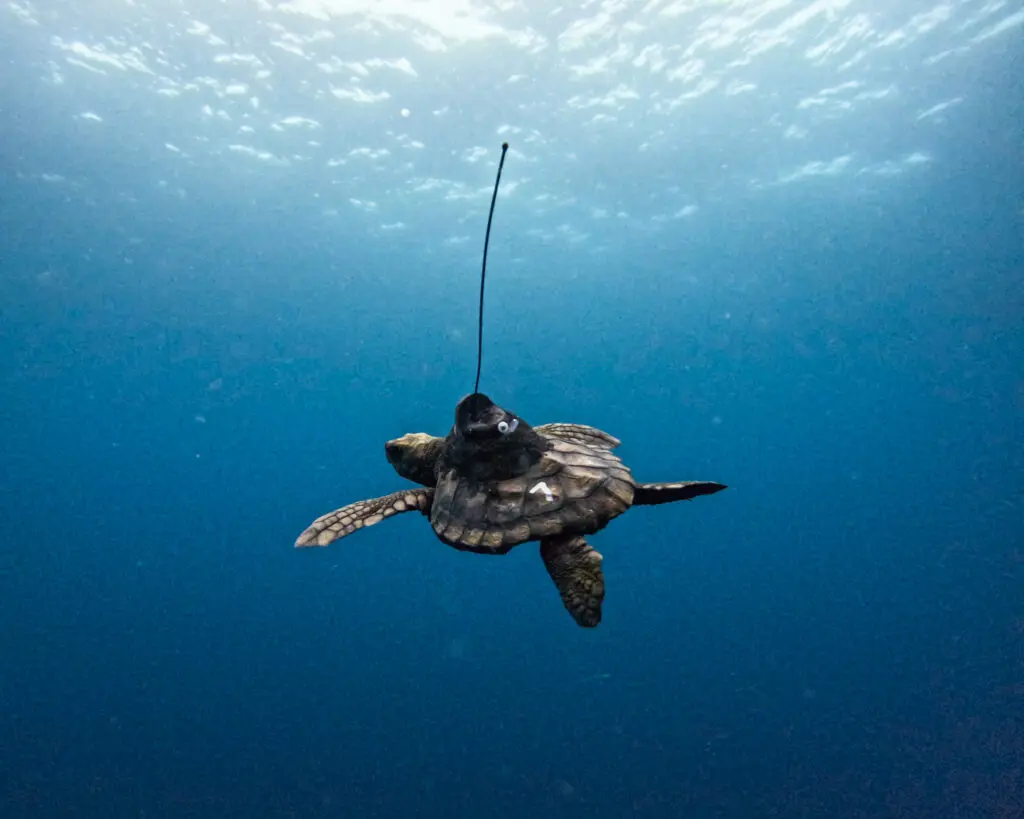
Now, a pioneering collaborative initiative is finally lifting the veil on this mysterious chapter of marine ecology. Through an innovative partnership between the Two Oceans Aquarium Turtle Conservation Centre, Upwell Turtles, and Dr. Sylvia Earle’s marine conservation foundation, Mission Blue, a new frontier in marine conservation has been unlocked. By outfitting rescued, rehabilitated, and released juvenile loggerhead turtles—such as individuals affectionately named Tolkien and Mpho—with cutting-edge, miniature satellite tags, scientists are charting their exact journeys in real-time.
This initiative is far more than an exercise in tracking individual animals; it is a critical data-gathering mission. As these turtles navigate South Africa’s ecologically vital "Hope Spots" and venture out into the high seas, their movements are transmitting invaluable telemetry data. This information is shedding unprecedented light on oceanic navigation, helping marine biologists pinpoint critical juvenile habitats, and identifying specific zones where heightened oceanic protections are urgently required.
This special report explores the mechanics of this groundbreaking tracking project, examines the biology of the "lost years," details the harrowing rehabilitation process, and highlights the broader implications of this research for global marine policy and open-ocean conservation.
Detailed Chronology: From Rescue and Rehabilitation to Satellite Release
To understand the magnitude of the data currently being transmitted from the open ocean, one must first trace the arduous journeys of the turtles themselves. Long before they become ambassadors for open-ocean conservation, individuals like Tolkien and Mpho begin their lives as vulnerable patients fighting for survival against the anthropogenic and natural hazards of the South African coastline.
Phase 1: The Stranding Crisis Along the South African Coast
Every year, thousands of marine turtle hatchlings and juveniles face treacherous conditions along the southern and eastern coasts of South Africa. Driven by powerful oceanic gyres and seasonal storms, weakened, sick, or injured turtles frequently wash ashore. Many suffer from "cold-stunning"—a hypothermic reaction to sudden drops in water temperature—while others are found entangled in marine debris, suffering from boat-strike trauma, or severely debilitated by the ingestion of microplastics.
Without human intervention, the vast majority of these stranded juveniles would perish. Enter the Two Oceans Aquarium Turtle Conservation Centre, situated in the heart of Cape Town. The facility operates as a specialized intensive care unit for marine reptiles, receiving hundreds of distressed turtles annually.
Phase 2: Medical Stabilization and Long-Term Rehabilitation
When a juvenile loggerhead like Tolkien or Mpho arrives at the centre, the prognosis is often precarious. The rehabilitation process is both art and science, requiring round-the-clock veterinary care:
- Thermal Regulation: Patients are initially placed in temperature-controlled medical tanks to gradually raise their core body temperatures without inducing physiological shock.
- Fluid and Nutritional Therapy: Dehydrated and emaciated turtles receive targeted subcutaneous fluids, vitamins, and specialized diets designed to jump-start their sluggish digestive tracts.
- Wound Care and Debris Removal: Veterinary surgeons meticulously remove ingested plastics, treat deep lacerations caused by ghost gear (abandoned fishing nets), and clear respiratory infections.
For young turtles, this rehabilitation period can last anywhere from several months to over a year. The ultimate goal is not merely survival, but the complete restoration of natural behaviors, diving reflexes, and foraging instincts. Once a turtle reaches an optimal weight, demonstrates robust health, and exhibits the physical vigor required to face the open ocean, the release protocols are initiated.
Phase 3: The Technological Integration – Fitting the Satellite Tags
Before these rehabilitated loggerheads are returned to the wild, researchers from Upwell Turtles and the Two Oceans Aquarium perform a delicate, non-invasive procedure: attaching miniature satellite transmitters.
These devices are marvels of modern engineering. Designed to be hydrodynamically streamlined to minimize drag as the turtle swims, the transmitters are affixed to the center of the carapace (top shell) using specialized, marine-grade epoxy. The process is entirely painless, as the turtle’s shell lacks nerve endings.
Crucially, the transmitters are programmed to communicate with Argos satellite constellations. Every time the turtle surfaces to breathe, the antenna breaks the water’s surface for a fraction of a second, transmitting a precise GPS coordinate, sea surface temperature data, and dive-durability metrics.
Phase 4: Return to the Wild and Real-Time Tracking
The moment of release is a triumphant culmination of months of intensive veterinary labor. When Tolkien, Mpho, and their cohort are reintroduced to the coastal waters of South Africa, they do not simply swim away; they become active data-gathering nodes in a vast marine network.
Through the newly launched StoryMap—developed collaboratively by Mission Blue, Upwell Turtles, and the Two Oceans Aquarium—the public and scientific communities alike can follow these remarkable journeys. The platform maps their precise trajectories as they transition from coastal rehabilitation sites, navigate through designated Hope Spots, and plunge headfirst into the unpredictable, deep-water expanses of the open ocean.
Supporting Context & Metrics: Unraveling the "Lost Years"
The term "lost years" has long been a staple in marine biology textbooks. Coined to describe the elusive phase between a sea turtle’s emergence from its natal nest and its eventual return to coastal waters as a sub-adult, this period has historically defied scientific observation.
The Oceanographic Highway: Riding the Agulhas Current
South Africa’s coastal waters are defined by one of the most dynamic oceanographic features on the planet: the Agulhas Current. This western boundary current sweeps warm, subtropical water down the east coast of Africa before retroflecting back into the Indian Ocean or spinning off massive eddies into the Atlantic.
For juvenile loggerheads, the Agulhas Current acts as both an express highway and a perilous trap. Historical hypotheses suggested that young turtles simply drifted passively with these currents, trapped within oceanic gyres until they grew large enough to swim against the flow. However, recent telemetry data from projects like the one spearheaded by Upwell Turtles and the Two Oceans Aquarium are challenging this passive-drift theory.
The satellite tracks of Tolkien and Mpho indicate that juvenile loggerheads actively orient themselves within current systems. They do not merely float; they make calculated behavioral decisions regarding depth, orientation, and energy conservation, utilizing thermal fronts and nutrient-rich upwellings to forage while they travel.
Hope Spots and High-Seas Vulnerabilities
A cornerstone of the current tracking initiative is monitoring how these rehabilitated juveniles interact with designated "Hope Spots"—special, scientifically identified areas of the ocean that are critical to the health of marine ecosystems. Championed globally by Mission Blue, Hope Spots are chosen for their unique biodiversity, abundance of threatened species, or critical ecological functions.
By observing how turtles navigate these protected zones versus open-ocean industrial shipping lanes and commercial longline fisheries, researchers are uncovering critical ecological bottlenecks. The data reveals that juvenile loggerheads frequently transit through dynamic pelagic zones where anthropogenic pressures—such as industrial bycatch, plastic accumulation, and seismic testing—are concentrated.
Key Metrics of the Tracking Initiative
- Species Monitored: Primarily juvenile loggerhead sea turtles (Caretta caretta), a species listed as Vulnerable globally and facing severe localized threats.
- Geographic Scope: Spanning the coastal waters of South Africa, stretching across designated Hope Spots, and extending into the open expanses of the Indian and Atlantic Oceans.
- Technological Payload: Miniature, low-drag Argos satellite transmitters capable of relaying real-time positional fixes and environmental telemetry over extended operational lifespans.
- Collaborative Network: A tripartite conservation coalition uniting Mission Blue, Upwell Turtles, and the Two Oceans Aquarium Turtle Conservation Centre.
Official Statements and Expert Insights
The convergence of veterinary medicine, satellite telemetry, and marine conservation has generated profound enthusiasm among the scientists leading the charge.
Dr. Sylvia Earle, legendary oceanographer and founder of Mission Blue, has repeatedly emphasized the existential importance of understanding pelagic ecosystems. In statements surrounding the launch of the tracking StoryMap, Dr. Earle noted:
"The open ocean is not an empty desert; it is a vibrant, interconnected highway that sustains countless migratory species. Yet, because these waters lie far from our shores, they are often out of sight and out of mind. By following the remarkable journeys of Tolkien, Mpho, and other young loggerheads, we are given a rare, intimate window into the ‘lost years.’ These turtles are teaching us where the ocean is most vulnerable—and crucially, where we must draw the line and establish robust protections."
Marine conservationists and veterinary specialists at the Two Oceans Aquarium Turtle Conservation Centre have also underscored the transformative impact of merging rehabilitation with high-tech research. A senior veterinarian at the centre remarked:
"Our primary duty is always to the individual animal—to heal their wounds, restore their health, and give them a second chance at life in the wild. But every time we successfully rehabilitate and release a turtle, we have a unique scientific opportunity. The satellite tags do not just tell us where the turtle goes; they validate our entire rehabilitation protocol. When we see a rehabilitated loggerhead successfully navigating complex ocean currents and foraging in the open sea, it proves that our intensive care units are not just keeping animals alive—they are restoring functional, wild-ready members of the marine ecosystem."
Representatives from Upwell Turtles, an organization dedicated to the conservation of sea turtles throughout their oceanic life stages, highlighted the policy implications of the telemetry data:
"For too long, marine conservation has suffered from a terrestrial bias. We protect beaches where turtles nest, but we largely ignore the pelagic zones where they spend the vast majority of their lives. The data streaming in from these juvenile loggers is changing the conversation. We are no longer guessing where juveniles spend their formative years; we have the GPS coordinates. This empowers governments, international bodies, and conservationists to design dynamic, ocean-scale management frameworks that protect migratory corridors from high-seas industrial threats."
Future Outlook: Implications for Global Marine Conservation
As the miniature satellite tags continue to ping their signals across the globe, charting the winding paths of Tolkien, Mpho, and their peers, the horizon of marine conservation is shifting. What began as localized rescue work in Cape Town has evolved into a globally significant telemetry study with far-reaching implications.
1. Transitioning from Static to Dynamic Ocean Management
Traditional marine protected areas (MPAs) are static—drawn as boxes on a map with fixed geographic coordinates. However, the open ocean is fluid, shifting, and constantly changing. The telemetry data collected from juvenile loggerheads provides a blueprint for dynamic ocean management. By understanding the migratory routes and temporal usage patterns of these turtles, conservationists can advocate for mobile, time-bound protections that shift in accordance with oceanic currents and seasonal turtle migrations.
2. Informing International High-Seas Treaties
A significant portion of a juvenile sea turtle’s "lost years" is spent in Areas Beyond National Jurisdiction (ABNJ)—the high seas, which historically lacked comprehensive legal frameworks for environmental protection. As projects like this one generate empirical data proving the ecological importance of these high-seas corridors, the findings are directly feeding into international policy discussions, including the implementation of the United Nations Biodiversity Beyond National Jurisdiction (BBNJ) Treaty.
3. Inspiring the Next Generation of Ocean Stewards
Beyond the realm of hard science and policy, human engagement remains a vital pillar of marine conservation. By utilizing interactive digital tools like the ArcGIS StoryMap, the project bridges the gap between complex scientific data and public consciousness. Thousands of students, educators, and ocean enthusiasts around the world can log online, track an individual turtle’s progress in real-time, and emotionally connect with the realities of open-ocean conservation.
Call to Action
The story of the juvenile loggerheads is far from over. As Tolkien, Mpho, and their cohort continue to brave the vast, blue unknown, they carry with them the hopes of a global conservation community. Their journeys remind us that the health of the open ocean is intimately linked to the health of our local coastlines.
To follow the ongoing journeys of these remarkable young turtles, explore the interactive telemetry maps, and discover firsthand what they are teaching humanity about protecting the high seas, visit the official project portal at storymaps.arcgis.com.