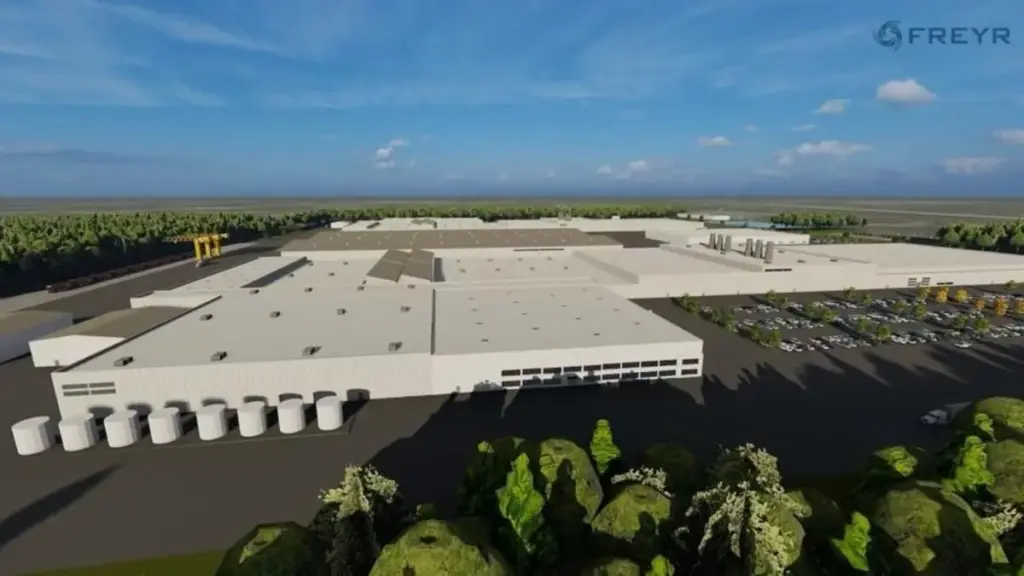
The American clean energy transition, once experiencing an unprecedented boom fueled by historic federal investments, is hitting severe headwinds. According to a comprehensive new report released today by the nonpartisan business group E2 (Environmental Entrepreneurs) and analyzed by the BW Research Partnership, the Trump administration’s sweeping rollback of clean energy policies has exacted a devastating economic toll.
The data is stark: federal policy shifts and the dismantling of crucial tax incentives have cost the United States nearly 470,000 jobs and a staggering $68.2 billion in private capital investment.
While renewable energy generation continues to expand—recently hitting a milestone by accounting for 30% of total US electricity generation—the new analysis reveals the immense scale of growth that has been deliberately stifled. Examining 216 large-scale clean energy manufacturing, solar, wind, and battery storage projects that have been canceled, closed, or significantly scaled back since January 2025, the report paints a picture of squandered economic potential.
Beyond the headline figures of lost jobs and capital, the scrapped initiatives represent a massive blow to broader economic health:
$90+ billion in lost US Gross Domestic Product (GDP) growth during the construction phase alone.
$55 billion in annual GDP growth that would have been injected into the economy once these projects became operational.
$48.4 billion in annual operational spending lost to local economies.
$84 billion in total lost wages ($53 billion during construction and $31 billion annually post-launch).
Nearly $32 billion in combined federal, state, and local government tax revenue lost across construction and ongoing operations.
As electricity demand surges nationwide—driven by the rapid proliferation of energy-hungry AI data centers, large-scale industrial electrification, and domestic manufacturing reshoring—the rollback of these vital projects threatens not only national climate goals, but the stability and reliability of the American power grid.
Detailed Chronology: The Shift in Federal Policy and Project Cancellations
The deceleration of the US renewables sector did not happen in a vacuum. It represents the culmination of a deliberate, systematic dismantling of the policy architecture established under previous legislative frameworks, most notably the clean energy incentives embedded in the landmark federal packages passed earlier in the decade.
January 2025: The Turning Point
The pivot point for the American clean energy landscape arrived sharply in January 2025. With a new administration taking the helm in Washington, federal priorities shifted away from green infrastructure, electric vehicle (EV) adoption, and carbon-reduction targets.
Almost immediately, signals from the executive branch and congressional allies pointed toward the rollback of clean energy tax credits, stricter environmental permitting reviews, and the suspension or termination of loan programs for domestic battery and manufacturing plants.
Spring to Late 2025: The First Wave of Retrenchment
As regulatory uncertainty mounted and the legislative timeline for tax credit rollbacks—often referred to in the E2 report as part of the administration’s sweeping tax and spending legislation—became clear, private developers and investors faced a grim calculus. Projects that relied on predictable long-term federal support suddenly faced severe financial headwinds.
During this period, early-stage manufacturing plants, particularly those geared toward lithium-ion battery production and electric vehicle supply chains, were the first to stall. Companies that had broken ground or announced multi-billion-dollar investments in states like Georgia, Michigan, and Arizona began pausing construction, reviewing timelines, or scrapping initiatives altogether.
2026: Accelerating Cancellations and Supply Chain Seizures
By mid-2026, the temporary pauses transformed into permanent cancellations. The E2 report highlights that the pace of project terminations has accelerated as the cumulative effect of federal obstruction takes hold.
Solar, wind, and battery storage developers found themselves unable to secure financing or navigate newly erected regulatory roadblocks. The ripple effects quickly cascaded down the supply chain, impacting domestic steel fabricators, electrical component manufacturers, logistics providers, and local engineering firms that had geared up for a decade of green infrastructure expansion.
Supporting Context & Metrics: Where the Losses Hit Hardest
To fully understand the scope of the E2 and BW Research findings, it is essential to examine how different sectors and regions absorbed the shock of these policy reversals. The economic damage was not distributed evenly; rather, certain sectors that were poised to anchor the next generation of American manufacturing bore the brunt of the cancellations.
Sector-by-Sector Job Losses
The report categorizes losses across two distinct phases: the immediate construction phase and the long-term operational phase once facilities come online.
1. Construction Phase Losses
Battery Storage: Accounted for the largest displacement of construction jobs, with more than 42,000 positions evaporating as grid-scale storage projects were shelved.
Solar Power: Nearly 33,000 construction jobs were lost due to stalled utility-scale solar farms and localized photovoltaic installations.
Electric Vehicles (EVs): Nearly 28,000 construction jobs vanished as manufacturing plants for EVs and their underlying components were delayed or canceled.
2. Long-Term Operational Phase Losses
While construction jobs represent temporary economic activity, the permanent operational jobs lost represent a generational setback for local manufacturing communities:
EV Manufacturing: Represents by far the largest long-term loss, with nearly 255,000 permanent jobs no longer expected to materialize. These were family-wage positions spanning assembly, engineering, quality control, and administration.
Battery Storage: Accounted for almost 64,000 permanent operational jobs that would have anchored high-tech manufacturing corridors.
Solar Energy: Nearly 19,000 permanent operational and maintenance jobs were lost.
Regional and Local Economic Ripples
The impact of these cancellations extends far beyond the corporate balance sheets of major energy developers. According to Michael Timberlake, E2’s director of research and publications, the methodology behind the report captures the entire economic ecosystem:
"The losses go far beyond the direct jobs announced by companies. Every canceled factory or power project means fewer construction workers on site, fewer suppliers filling orders, fewer dollars flowing through local economies, and fewer tax revenues for schools, fire departments, roads, and public services."
Local municipalities that had invested in infrastructure upgrades—such as expanded water mains, upgraded electrical substations, and workforce training programs tailored to advanced manufacturing—now face budget shortfalls and underutilized public investments. Tax revenues that would have funded local public education and emergency services have simply vanished.
The Grid Capacity Crisis
Perhaps most alarming in the context of modern American infrastructure is the sheer volume of power generation capacity that has been blocked.
The canceled or downsized projects cataloged in the report represent roughly:
10 Gigawatts (GW) of solar capacity
3.75 Gigawatts (GW) of wind capacity
9 Gigawatts (GW) of battery storage capacity
Combined, this represents enough clean energy capacity to power approximately 3 million homes—the exact equivalent of every household in the entire state of Massachusetts. This suppression of new supply comes at the worst possible historical moment, coinciding with a historic surge in electricity demand driven by power-hungry artificial intelligence data centers, widespread commercial electrification, and resurgent domestic manufacturing.
Official Statements & Industry Perspectives
The release of the E2 report has sparked intense debate among business leaders, labor advocates, and energy sector analysts, underscoring the deep divide between federal policy and private-sector economic reality.
Bob Keefe, Executive Director of E2:
"The numbers tell the story. Making it harder to build clean energy projects means lost jobs, lost investments, lost electricity supplies, and lost local tax revenues. Add it all up, and it’s clear that federal actions to stop clean energy are costing all of us—consumers, businesses, and our national economy—big time."
Keefe emphasized that while fossil fuels continue to play a role in the nation’s energy mix, artificial barriers placed specifically in the path of renewables and advanced manufacturing are actively harming American competitiveness on the global stage, ceding technological leadership to international rivals like China and European nations.
Phil Jordan, CEO of BW Research Partnership:
"Clean energy has been a major economic driver over the past decade, creating hundreds of thousands of jobs across a wide range of roles in manufacturing, construction, and professional services. Accurate, current information on jobs in the energy sector has never been more important."
Jordan pointed out that the data collected by BW Research reflects real-world shifts reported directly by regional economic development agencies, trade associations, and corporate filings. The methodology ensures that both direct employment metrics and indirect supplier-network effects are accurately accounted for, providing an authoritative baseline for policymakers and economists alike.
Future Outlook: Navigating Uncertainty in the American Energy Sector
As the United States moves through 2026 and looks toward the remainder of the decade, the findings of the E2 report serve as both a warning sign and a critical diagnostic of the American energy economy.
The Resilience of Renewables vs. Policy Headwinds
Despite the staggering loss of 470,000 jobs and $68 billion in investment, the underlying momentum of renewable energy cannot be entirely halted. Market forces, corporate sustainability commitments, and the sheer economic competitiveness of solar and wind generation continue to drive growth in states where local and regional leaders have stepped in to fill the policy vacuum left by the federal government.
As noted by recent data from the Energy Information Administration (EIA), renewable energy sources recently crossed a major threshold by generating 30% of total US electricity. This demonstrates that consumer and commercial demand for clean, cost-effective power remains robust, even in the face of federal headwinds.
The Looming Infrastructure Bottleneck
However, the loss of nearly 23 GW of combined solar, wind, and storage capacity through these 216 canceled projects cannot be easily replaced. Energy analysts warn that without a reversal in obstructive federal policies—or a massive surge in alternative grid infrastructure investments—American businesses and consumers could face increased grid instability, higher electricity prices, and constraints on economic growth.
The expansion of AI data centers alone requires predictable, scalable power sources. By blocking battery storage and utility-scale renewables, current federal policies risk creating energy bottlenecks that could constrain the broader American technology and manufacturing sectors.
Conclusion
The E2 report provides an undeniable accounting of the economic price paid when national policy clashes with technological and market evolution. For nearly 470,000 American workers and the dozens of communities counting on billions in private investment, the Trump administration’s clean energy rollbacks have translated directly into lost livelihoods, delayed infrastructure, and squandered economic opportunity. Whether policymakers will heed these warnings as electricity demand continues to soar remains one of the defining economic questions of our time.