Executive Overview
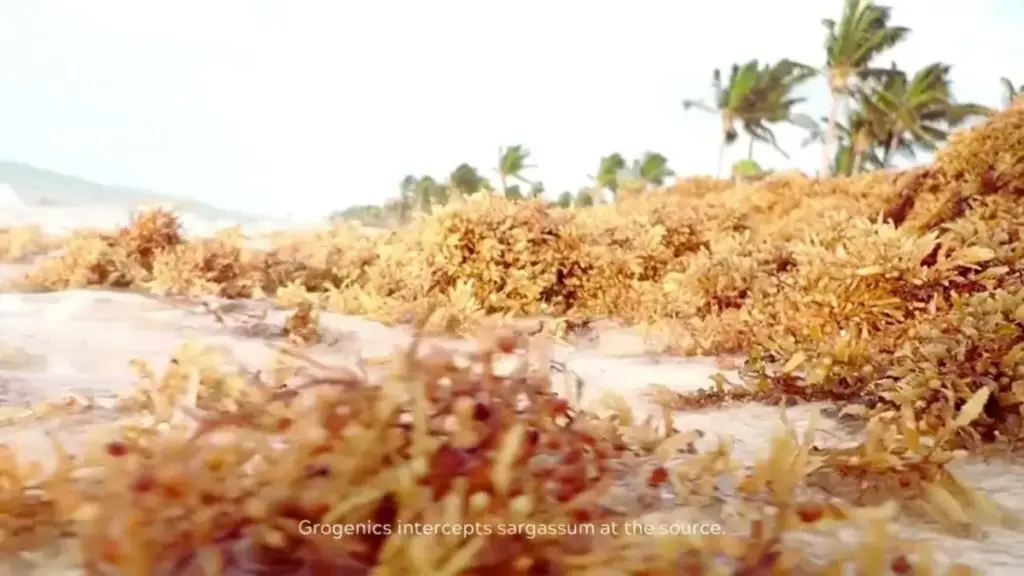
Along the sun-drenched coastlines of the Riviera Maya, a slow-moving ecological and economic crisis washes ashore with every incoming tide. Towering mounds of golden-brown macroalgae, known scientifically as sargassum, now routinely blanket pristine white-sand beaches in Mexico. What was once a minor environmental anomaly has transformed into a relentless, suffocating invasion, threatening marine ecosystems, stifling the multi-billion-dollar tourism industry, and releasing noxious, greenhouse-gas-emitting fumes as the seaweed rots under the tropical sun.
Yet, amid the environmental degradation, a pioneering paradigm shift is taking root. Rather than viewing the unprecedented sargassum influx purely as a catastrophic waste management failure, a coalition of environmental scientists, local communities, and forward-thinking organizations is rewriting the narrative. At the forefront of this movement is the Sargassum Recovery for Clean Coasts project—a flagship initiative featured within the Sustainable Travel International Climate Impact Portfolio.
By intercepting the seaweed offshore and along the shoreline before it begins its noxious decay, the project halts the massive release of methane—a potent greenhouse gas—into the atmosphere. Through an innovative process of local collection and advanced bioremediation, this toxic burden is systematically neutralized and transformed. The resulting end-product is a high-grade, biochar-enriched compost that serves a dual purpose: it revitalizes depleted agricultural soils to support local farmers, and it permanently sequesters carbon deep within the earth.
This comprehensive report examines the anatomy of Mexico’s sargassum emergency, details the operational mechanics of the recovery initiative, evaluates the broader economic and ecological implications of a burgeoning "blue economy," and outlines the strategic path forward for coastal resilience in the age of climate change.
Detailed Chronology: The Evolution of the Sargassum Inundation
To understand the magnitude of the Sargassum Recovery for Clean Coasts project, one must first trace the historical trajectory of how pelagic sargassum evolved from a beneficial open-ocean habitat into an overwhelming coastal menace.
The Pre-2011 Baseline: A Pelagic Sanctuary
Historically, pelagic species of sargassum (Sargassum natans and Sargassum fluitans) spent their entire life cycles floating freely in the open waters of the Atlantic Ocean, most notably within the Sargasso Sea. Far from being a nuisance, these drifting golden mats served as crucial floating ecosystems. They provided essential habitat, shelter, and foraging grounds for a diverse array of marine life, including endemic crabs, fish, sea turtles, and migratory birds. Occasionally, small, manageable amounts of sargassum would drift onto Caribbean and Mexican beaches, where it naturally integrated into coastal nutrient cycles without causing widespread disruption.
The 2011 Tipping Point and the Birth of the "Great Atlantic Sargassum Belt"
The ecological equilibrium shifted dramatically in 2011. Oceanographers and marine biologists registered an unprecedented explosion of sargassum growth stretching from the coast of West Africa all the way to the Gulf of Mexico—a phenomenon that would later be formally categorized as the Great Atlantic Sargassum Belt (GASB). By 2018, this colossal bloom had expanded to span over 5,000 miles, holding an estimated 20 million metric tons of seaweed.
Scientists attribute this massive proliferation to a complex confluence of anthropogenic climate factors:
- Rising Sea Surface Temperatures: Accelerated warming trends in the tropical Atlantic created optimal thermal conditions for rapid macroalgal reproduction.
- Agricultural Nutrient Runoff: Massive volumes of nitrogen- and phosphorus-rich fertilizers, discharged from major river basins such as the Amazon, Mississippi, and Orinoco, acted as high-octane fuel for algal blooms.
- Altered Ocean Circulation Patterns: Shifts in major oceanic currents and wind patterns steered these sprawling algal masses directly toward the Caribbean Basin and the eastern coastline of the Yucatán Peninsula.
The Operational Pivot: From Reactive Cleanups to Upstream Interception
Between 2015 and 2020, Mexican federal, state, and municipal authorities scrambled to manage the crisis using traditional, reactive measures. Heavy machinery scraped beaches clean, and temporary barriers were erected. However, these methods proved ecologically destructive, eroding vulnerable coastlines, crushing turtle nests, and costing tens of millions of dollars annually while failing to address the root of the problem.
Recognizing the unsustainability of reactive beach scraping, environmental engineers and sustainability advocates realized that a systemic intervention was required. This realization catalyzed the development of intercept-and-transform models. Rather than waiting for the seaweed to rot on the beach—where it releases toxic hydrogen sulfide gas and methane—initiatives like the Sargassum Recovery for Clean Coasts project established protocols to capture the biomass in situ or immediately upon landfall, initiating a controlled biochemical transformation that converts a biological hazard into a regenerative asset.
Supporting Context & Metrics: The Science of Bioremediation and Biochar
The transformation of sargassum from a rotting, acidic nuisance into a valuable agricultural amendment is governed by rigorous biochemical processes. Understanding the metrics of this transformation highlights why this intervention is gaining international acclaim.
The Biochemical Threat of Decaying Sargassum
When left unmanaged on beaches, sargassum undergoes rapid anaerobic decomposition. Because the seaweed absorbs heavy metals (such as arsenic, cadmium, and lead) from industrial pollution and shipping lanes as it traverses the ocean, its chemical composition poses distinct environmental hazards:
- Methane and Hydrogen Sulfide Generation: As the organic matter breaks down without oxygen, it emits foul-smelling hydrogen sulfide and methane—a greenhouse gas with a global warming potential significantly higher than carbon dioxide over a 20-horizon scale.
- Leaching into Coastal Aquifers: Rainwater washes decaying sargassum leachate through porous limestone coastal soils (cenotes and subterranean river systems in the Yucatán), threatening freshwater lenses and nearshore coral reefs with severe eutrophication and hypoxia (oxygen depletion).
The Interception and Bioremediation Workflow
The Sargassum Recovery for Clean Coasts project deploys a meticulous, multi-stage protocol to neutralize these threats:
[ Open Ocean Algal Bloom ]
         │
         ▼
[ Targeted Offshore/Nearshore Interception ] (Preventing beach decay)
         │
         ▼
[ Localized Collection & Transport ] (Minimizing carbon footprint)
         │
         ▼
[ Detoxification & Bioremediation ] (Neutralizing heavy metals & pathogens)
         │
         ▼
[ High-Temperature Pyrolysis ] (Producing stabilized Biochar)
         │
         ▼
[ Nutrient-Rich Soil Enrichment & Carbon Locking ] (Restoring agriculture & ecosystems)- Targeted Collection: Seaweed is harvested before it degrades, preserving its structural integrity and preventing the emission of volatile organic compounds.
- Detoxification and Bioremediation: Because raw sargassum can contain elevated levels of heavy metals absorbed during its oceanic journey, specialized bioremediation techniques—utilizing specific microbial strains and organic amendments—are applied. These processes break down toxins and neutralize salinity, rendering the biomass safe for agricultural application.
- Biochar Pyrolysis: A core component of the transformation involves pyrolyzing a portion of the processed sargassum—heating it in a low-oxygen environment. This converts the unstable organic carbon within the seaweed into stable biochar, a charcoal-like substance that possesses an extraordinarily high surface area and porous structure.
- Composting and Soil Restoration: The biochar is subsequently blended with organic compost materials. When applied to degraded agricultural soils in the region, this biochar-enriched compost acts as a sponge, significantly improving water retention, restoring vital microbial communities, locking carbon in the ground for centuries, and reducing farmers’ reliance on synthetic, petroleum-derived chemical fertilizers.
Official Statements and Project Integration
The success of the Sargassum Recovery for Clean Coasts project is deeply intertwined with broader international frameworks for voluntary climate action. By integrating carbon offset mechanisms with localized ecological restoration, the initiative bridges the gap between high-level climate finance and boots-on-the-ground execution.
The Role of the Climate Impact Portfolio
Managed through organizations like Sustainable Travel International, the Climate Impact Portfolio carefully vets and supports initiatives that deliver verifiable, co-beneficial environmental impacts. Projects are selected based on their capacity to address climate mitigation while simultaneously advancing community well-being and biodiversity conservation.
"We can no longer afford to treat waste and climate change as isolated silos," notes a senior program coordinator at Sustainable Travel International. "The sargassum influx in Mexico is an undeniable symptom of disrupted planetary systems. By supporting the Sargassum Recovery for Clean Coasts project through our Climate Impact Portfolio, we are demonstrating that nature-based solutions can simultaneously clean our shores, protect our atmosphere from fugitive methane, and empower local agricultural economies."
Technological Partnership: The Grogenics Contribution
Operational execution on the ground relies heavily on specialized technical partnerships. Video and field implementation documentation provided by Grogenics—a pioneering organization specializing in regenerative agriculture, waste upcycling, and carbon farming—highlight the practical realities of transforming tons of slimy seaweed into structured agricultural inputs.
Grogenics’ methodology emphasizes turning coastal liabilities into terrestrial assets. By converting coastal biomass into stable soil carbon sinks, the partnership directly addresses Article 5 of the Paris Agreement, which encourages parties to take action to conserve and enhance sinks and reservoirs of greenhouse gases.
Future Outlook: Scaling the Blue Economy Blueprint
As global temperatures continue to rise, scientific models project that massive sargassum blooms will remain a recurring, long-term reality for the wider Caribbean and Gulf of Mexico regions. Consequently, the lessons learned from the Sargassum Recovery for Clean Coasts project offer a vital blueprint for vulnerable coastal destinations worldwide.
Scaling Up Infrastructure
For this model to achieve regional impact, infrastructure must scale accordingly. Future milestones for the project include:
- Expanding Collection Capacity: Deploying larger networks of low-impact, community-managed collection barriers and manual harvesting teams to ensure zero lag time between seaweed arrival and interception.
- Industrializing Bioremediation Facilities: Establishing regional processing hubs equipped with advanced monitoring technology to guarantee that every metric of heavy metal detoxification and biochar quality meets rigorous international agricultural safety standards.
- Integrating Blockchain for Carbon Verification: Implementing transparent, verifiable carbon accounting protocols to track every ton of carbon sequestered via biochar application, thereby unlocking higher-tier carbon credit revenues to subsidize ongoing coastal cleanup operations.
Fostering a True Circular Blue Economy
Ultimately, the sargassum crisis serves as a stark reminder of the interconnectedness of global ecosystems. Agricultural runoff in the mid-West United States and South America fuels algal growth that devastates tourism economies in Mexico, which in turn impacts global climate stability.
By closing the loop—capturing the waste, neutralizing its toxins, enriching depleted soils, and locking carbon permanently beneath the earth—the Sargassum Recovery for Clean Coasts project transcends mere damage control. It pioneers a resilient, regenerative model where coastal ecosystems, thriving tourism industries, and empowered local communities can coexist and flourish within a sustainable blue economy.