

Executive Overview
The United States electric vehicle (EV) market experienced an unprecedented surge in August 2025, cementing what analysts project will be the most lucrative quarter in the history of the domestic clean transportation sector. According to comprehensive data released by Cox Automotive’s Kelley Blue Book, US consumers purchased an astonishing 146,332 electric vehicles during the month, breaking previous adoption ceilings and capturing a historic 9.9% share of total new car sales nationwide. This represents a marked increase from July’s already robust 9.1% market share.
This dramatic acceleration in battery-electric adoption is not merely a byproduct of organic market growth. Instead, it is being fueled by a potent cocktail of urgency, heavy dealer incentives, and accelerated product innovation. Most notably, consumers and dealerships alike are racing against the clock ahead of the impending September 30 expiration of the federal EV tax credit. As the current quarter hurtles toward its close, industry experts predict that Q3 2025 will comfortably eclipse the previous all-time quarterly record set in Q4 of 2024, when 365,824 EVs found new homes.
However, beneath the celebratory headline figures lies a landscape of intense transformation and fierce competition. While the broader market is expanding rapidly, pioneering brands are facing unprecedented pressure. Tesla—long the undisputed heavyweight champion of the American EV landscape—is seeing its dominance erode as legacy automakers and global competitors flood showroom floors with compelling alternatives. For decades, the narrative of the American EV market was synonymous with a single brand; today, it is defined by consumer choice, aggressive discounting, and a fundamental realignment of automotive market share.
Detailed Chronology: The Road to August 2025’s Sales Milestone
To truly understand the monumental shifts occurring in the US automotive sector, one must examine the timeline of events leading up to the late-summer surge of 2025.
The Post-Pandemic EV Gold Rush (2021–2023)
In the years immediately following the global health crisis, the EV market transitioned from a niche segment into a mainstream consumer movement. Propelled by the passage of major legislative packages—most notably the Inflation Reduction Act (IRA) of 2022—consumers grew accustomed to substantial federal incentives designed to make zero-emission vehicles financially accessible. During this window, production constraints and supply chain bottlenecks were the primary limiting factors for sales, rather than consumer demand.
The Correction and Price Wars (2024)
As supply chains normalized throughout 2024, the market encountered its first wave of consumer hesitation. Early adopters had largely purchased their vehicles, and crossing the chasm to the mass market required addressing consumer anxiety over pricing and charging infrastructure. This initiated a fierce price war, spearheaded largely by Tesla, which aggressively slashed prices to maintain volume. Despite these headwinds, Q4 2024 managed to set the all-time quarterly sales benchmark at 365,824 units, proving that demand remained elastic when prices dropped.

The Mid-2025 Inflection Point (July–August 2025)
The rhythm of the market shifted dramatically in the summer of 2025. In July, EV sales accounted for 9.1% of all new car transactions, supported by deep manufacturer discounts. Dealership lot incentives reached historic highs, with average discounts hovering around $9,000 per vehicle.
This momentum crescendoed in August 2025. With the writing clearly on the wall regarding the September 30 sunset of the federal EV tax credit, a massive wave of panic-buying and opportunistic purchasing swept the nation. Dealerships reported brisk foot traffic as buyers rushed to lock in federal subsidies before their expiration. By the end of August, sales volume reached 146,332 units, driving the monthly market share to a record-breaking 9.9% and setting the stage for a historic quarterly finish.
Supporting Context & Metrics: Pricing, Incentives, and Market Dynamics
A granular analysis of the Kelley Blue Book data reveals fascinating nuances regarding vehicle pricing, manufacturer incentives, and the shifting economic realities of purchasing an electric vehicle in the United States.
Average Transaction Prices (ATPs)
Despite widespread expectations that increased volume would drive prices down across the board, EV transaction prices actually ticked upward in the late-summer window.
- August 2025 Average Transaction Price: $57,245
- July 2025 Average Transaction Price: $55,562 (revised lower)
- Month-over-Month Increase: 3.1%
- Year-over-Year Variance: Down a negligible 0.1%, indicating long-term price stabilization.
The slight uptick in August pricing can be attributed to a shift in consumer preferences toward higher-trim SUVs, long-range configurations, and newly introduced models equipped with advanced driver-assistance systems and larger battery packs. Notably, the robust pricing of modern EVs also acted as an upward pull on the overall automotive market’s average transaction prices.
Manufacturer Incentives and Dealership Discounts
Automakers and dealerships leaned heavily into financial promotions to clear inventory and entice hesitant buyers. In August, the average EV incentive package exceeded $9,000 per vehicle, translating to roughly 16% of the average transaction price.

- To put this in perspective, EV discounts are currently more than double the incentive rate observed in the overall internal combustion engine (ICE) auto market.
- Compared to the same period in the previous year—when incentive rates sat at 13.6%—manufacturers are clearly willing to sacrifice immediate margin to secure long-term market share and comply with corporate average fuel economy (CAFE) standards.
The Tesla Paradox: Slower Sales Amid Rising Prices
While the broader market celebrated record numbers, the industry leader experienced a complex and challenging month. Tesla’s average transaction price rose 2.9% in August to $54,468. However, this figure remains down 5.5% on a year-over-year basis, reflecting the lingering effects of earlier price cuts.
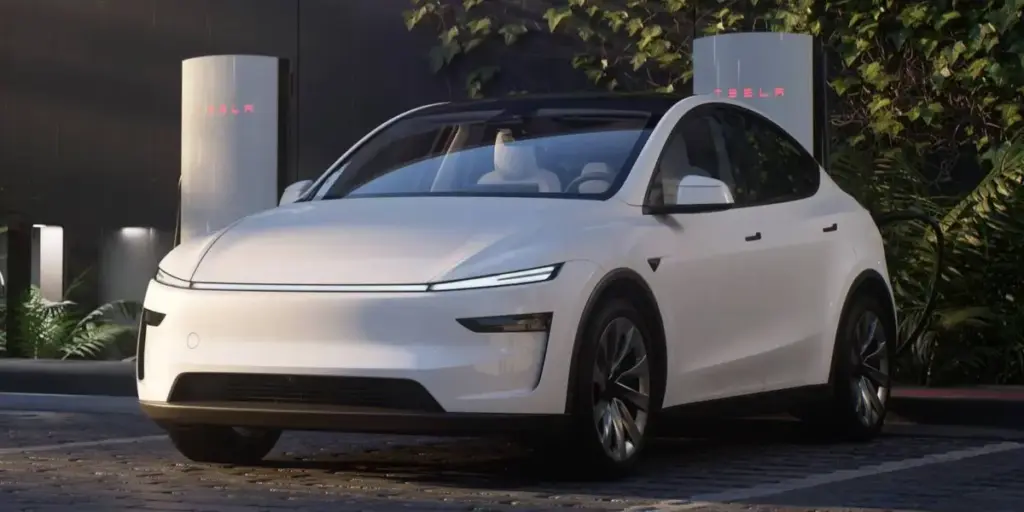
More critically, Tesla’s sales volumes dropped 6.7% year-over-year in August. Consequently, the company’s share of the domestic US EV market contracted to 38%—marking the lowest market share percentage in the company’s history. While Tesla’s refreshed Model Y update has successfully cushioned the blow and slowed the rate of its sales decline, the brand is no longer operating in a vacuum. The era of undisputed monopoly over the American electric vehicle landscape has officially drawn to a close.
Official Statements and Industry Analysis
The transformation of the US automotive sector is drawing profound commentary from leading financial and automotive analysts.
Stephanie Valdez Streaty, senior analyst at Cox Automotive, provided deep insight into the structural shifts occurring within the marketplace:
"The one constant in the automotive business is that fresh product sells well. While Tesla’s Model Y update has slowed the company’s sales decline, it’s not getting easier for the EV pioneer because the market is now flooded with all-new, fresh EVs from mainstream competitors — consumers have more choice than ever. The current surge in EV sales is being driven by product innovation, motivated dealers, and an urgency ahead of the IRA tax credit phase-out."
Valdez Streaty’s commentary underscores a fundamental truth of contemporary consumer behavior: brand loyalty in the automotive space is increasingly malleable. Where buyers once tolerated dated interiors or limited exterior choices simply to drive an electric powertrain, today’s consumers demand the fit, finish, design diversity, and technological integration offered by legacy giants like Ford, General Motors, Hyundai, Kia, and European luxury houses.

Furthermore, dealership networks—which initially approached the electrification transition with skepticism and hesitation—have become aggressively motivated partners. Armed with manufacturer subsidies and extensive marketing budgets, dealers are actively pushing EVs onto showroom floors, utilizing the looming expiration of federal subsidies as a powerful closing tool for hesitant buyers.
Future Outlook: Navigating Life After the Federal Tax Credit
As the American automotive industry looks beyond the record-shattering figures of August and Q3 2025, a complex and challenging horizon looms. The impending September 30 expiration of the federal EV tax credit introduces a massive economic variable that will permanently reshape the pricing strategies of every major manufacturer operating in the United States.
The Post-Subsidy Landscape
For the past three years, the $7,500 federal incentive has functioned as a critical psychological and financial crutch for the EV market, effectively bridging the price gap between internal combustion vehicles and battery-powered alternatives. When this credit vanishes on September 30, automakers will face an immediate strategic dilemma:
- Absorb the Cost: Manufacturers can cut their factory-gate vehicle prices by equivalent margins to maintain current sales volumes, absorbing the financial hit on their operating margins.
- Rely on Private Incentives: Companies can continue funding aggressive lease loopholes (such as the commercial lease provision workaround) and localized dealership discounts to soften the blow for consumers.
- Risk a Demand Slump: Brands that fail to adjust pricing may experience a sharp post-subsidy contraction in sales volume as consumer out-of-pocket costs jump overnight.
Product Cadence and Innovation
As Cox Automotive’s analysis highlights, product freshness remains the ultimate antidote to market stagnation. The coming quarters will test whether newer entrants can maintain their sales momentum without the aid of federal subsidies. Automakers are banking on the introduction of lower-cost battery chemistries (such as Lithium Iron Phosphate or LFP), next-generation solid-state research, and streamlined manufacturing techniques—like gigacasting and unibody architecture—to organically reduce production costs.
The Long-Term Trajectory
Despite the short-term turbulence expected in Q4 2025 following the tax credit’s expiration, the macro-trend toward vehicle electrification remains irreversible. August’s achievement of a 9.9% market share demonstrates that a critical mass of American consumers has experienced and embraced the benefits of electric mobility—including lower operating costs, instant torque, superior home-charging convenience, and reduced maintenance.
Ultimately, the record-breaking performance of August 2025 will be remembered not just as a peak of government-subsidized buying, but as the coming-of-age milestone for a truly competitive, mature, and diverse American electric vehicle market.



