

Executive Overview
For decades, the global blueprint for ocean conservation has relied heavily on a defensive strategy: drawing lines on a map to create Marine Protected Areas (MPAs). While establishing these underwater sanctuaries has successfully halted some of the most egregious forms of local habitat destruction and overfishing, scientists are increasingly realizing that drawing boundaries is no longer enough. Ocean ecosystems are currently buckling under an unprecedented convergence of systemic stressors—ranging from relentless overfishing and acidification to marine heatwaves and climate-driven warming.
In response to these compounding threats, a collective of marine biologists and ecologists is championing a paradigm shift. Moving past passive protection, researchers are advocating for active, dynamic ecological restoration known as marine rewilding.
Outlined in a groundbreaking perspective paper published in Conservation Science and Practice, this framework establishes eight core principles designed to guide the active recovery of degraded marine environments. Unlike terrestrial rewilding—which often seeks to fence off nature to let it heal in isolation—marine rewilding acknowledges a fundamental biological and social reality: humanity cannot be fenced out of the ocean. Coastal communities, indigenous groups, and maritime economies are inextricably linked to the health of marine biomes.
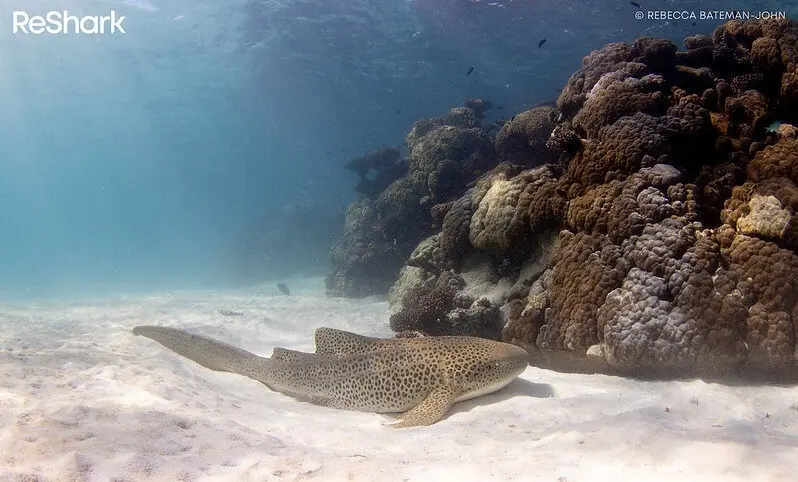
By prioritizing the restoration of complex food webs, reconnecting fragmented habitats, reintroducing apex predators like the endangered Indo-Pacific leopard shark (Stegostoma tigrinum), and managing human pressures hand-in-hand with conservation, marine rewilding offers a comprehensive blueprint. The ultimate goal is not to resurrect a pristine, idealized snapshot of the prehistoric past, but to foster resilient, self-sustaining ecosystems capable of adapting to a rapidly changing planet.
Detailed Chronology: The Evolution of Marine Rewilding
To understand how marine rewilding has emerged at the forefront of modern conservation science, it is vital to trace its conceptual roots and recent milestones.
From Land to Sea: Adapting the Rewilding Ethos
- Early 1990s–2000s: The term "rewilding" was originally coined within terrestrial conservation circles. Pioneered by conservation biologists like Michael Soulé and Reed Noss, terrestrial rewilding focused on the "Three Cs": Cores, Corridors, and Carnivores. The strategy sought to restore large wilderness areas, reintroduce apex predators (such as wolves in Yellowstone National Park), and minimize human interference to recreate self-sustaining ecosystems.
- The Marine Lag: For years, applying this concept to the ocean lagged behind. Marine systems were viewed as too vast, fluid, and interconnected to be managed via traditional rewilding frameworks. Conservationists largely defaulted to spatial protection—designating "no-take zones" and hoping nature would bounce back on its own.
The Shift Toward Active Recovery
- Late 2010s–Early 2020s: As climate change accelerated, scientists began documenting the widespread failure of passive protection alone. Coral bleaching events, marine heatwaves, and persistent overfishing demonstrated that even fully protected MPAs were suffering ecological degradation if the underlying ecological processes—such as nutrient cycling, top-down predator control, and habitat connectivity—were broken.
- April 2024 (A Major Milestone): A tangible example of marine rewilding captured global attention when international conservation projects began aggressively rebuilding depleted marine populations. Notably, a groundbreaking initiative reported by Mongabay involved shipping endangered Indo-Pacific leopard shark eggs raised in aquariums (such as in Las Vegas, Nevada) to specialized nurseries in Raja Ampat, Indonesia. This cross-continental effort aimed to reintroduce apex predators into depleted coral reef ecosystems.
- Present Day: Researchers led by scientists at the German Centre for Integrative Biodiversity Research (sDiv) formalized these scattered restoration efforts into a cohesive scientific framework. By publishing their eight-part perspective paper, they transitioned marine rewilding from an ad-hoc collection of aquarium-release projects into a rigorous, scientifically backed management strategy.
Supporting Context & Metrics: The State of Our Oceans and the 8-Principle Blueprint
To grasp the urgency of marine rewilding, one must examine the staggering pressures facing global ocean ecosystems, contrasted against the structural mechanics of the new conservation framework.
The Scale of Marine Stressors
- Overfishing: Industrial fishing fleets currently exploit more than 90% of the world’s fisheries to their maximum sustainable limits or beyond, severely depleting fish stocks and removing vital ecological links.
- Warming and Acidification: Ocean temperatures have reached record highs consecutively over the past several years, driving catastrophic coral bleaching events. Simultaneously, the absorption of roughly 30% of anthropogenic carbon dioxide emissions has increased ocean acidity by 30% since the Industrial Revolution, dissolving the calcium carbonate shells and skeletons of foundational marine species.
- Habitat Fragmentation: Coastal ecosystems—including mangroves, seagrass meadows, coral reefs, and kelp forests—have been heavily fragmented by coastal development, pollution, and destructive fishing practices. Much like deforested landscapes on land, fragmented marine habitats trap wildlife, isolate populations, and halt crucial genetic exchange.
The Eight Principles of Marine Rewilding
The perspective paper authored by Gavin Stark and his colleagues establishes a comprehensive blueprint consisting of eight foundational pillars:
- Inclusion of Human Communities: Acknowledging that humans cannot be fenced out of marine spaces. Successful rewilding must integrate local communities, fishers, and indigenous stewards into the management process.
- Food Web Restoration: Rebuilding collapsed trophic cascades by reintroducing key species—particularly apex predators like sharks—which naturally regulate mesopredators and maintain grazing herbivores that keep coral reefs free of smothering algae.
- Enhancing Ecological Connectivity: Safeguarding migration routes and ecological corridors that link distinct habitats (e.g., mangroves to coral reefs to deep-sea floors), ensuring gene flow and natural recolonization.
- Pollution Mitigation: Actively reducing nutrient runoff, plastic debris, and chemical pollutants that choke marine life and undermine recovery efforts.
- Invasive Species Management: Controlling or eradicating invasive, non-native species that outcompete indigenous marine life and disrupt native trophic balances.
- Adaptive Monitoring: Implementing rigorous, ongoing scientific monitoring to track ecological recovery and dynamically adjust management strategies as environmental conditions shift.
- Focus on Ecological Function Over Historical Fidelity: Directing efforts toward restoring the functions (such as carbon sequestration, nutrient cycling, and wave attenuation) that a healthy ecosystem provides, rather than trying to recreate an impossible historical replica of the past.
- Building Climate Resilience: Designing recovery interventions specifically engineered to withstand future climate anomalies, marine heatwaves, and sea-level rise.
Official Statements & Expert Insights
The conceptual shift from passive defense to active rewilding represents a fundamental evolution in conservation philosophy. Key researchers driving this movement emphasize that collaboration and realism are paramount.
Addressing the false dichotomy of separating humanity from nature, Dr. Gavin Stark, a post-doctoral researcher with the German Centre for Integrative Biodiversity Research (sDiv), explained the human dimension of marine ecosystems during an interview:
"You cannot really separate people from the rewilding process inside the marine ecosystems."
Stark elaborated that the ultimate objective is not nostalgic recreation, but future-proofing ocean life against impending environmental shocks:

"These guidelines are like a blueprint to just start something that maybe will allow this ecosystem to really flourish. But we need to actually start to implement it… The goal isn’t to recreate an ecosystem exactly as it existed in the past, but to improve the current ecosystems so they can be self-sustaining and better able to respond to future disturbances."
Highlighting the existential threat of habitat isolation, the authors of the perspective paper emphasized the necessity of ecological connectivity:
"Protecting migration routes and ecological corridors that link coral reefs, mangroves, seagrass meadows, and deep-sea habitats helps maintain gene flow, support recolonization, and secure the ecosystem services that underpin fisheries, tourism, and cultural identity."
Furthermore, Stark noted the compounding benefits of these interventions on global climate adaptation:
"Improving connectivity and marine biodiversity will create a resilient ecosystem that will be able to adapt to the environmental changes that we have in climate change and in pollution."
Practical applications of these principles are already underway globally. Commenting on the logistical triumph of shark reintroduction programs, such as the initiative shipping Indo-Pacific leopard shark (Stegostoma tigrinum) eggs from Las Vegas aquariums to protected marine nurseries in Raja Ampat, Indonesia, conservationists point to the successful release of more than 60 young sharks. These efforts prove that cross-border, institutional collaboration can successfully replenish top-tier predators and restore balance to depleted tropical reef systems.
Future Outlook: Implementing the Blue Blueprint
As the scientific community transitions from theoretical frameworks to practical implementation, the future of marine conservation hinges on scaling these eight principles across diverse global waters.
The road ahead is not without challenges. Implementing marine rewilding requires overcoming regulatory inertia, securing sustained funding for active interventions (such as captive breeding, habitat corridor mapping, and pollution control), and bridging the gap between local artisanal fishers and large-scale government policy.
However, the alternative—relying solely on passive marine protected areas while oceans continue to warm and sour—is no longer viable. By viewing coastal populations not as adversaries to be excluded, but as essential stewards of the sea, marine rewilding offers a hopeful, pragmatic path forward.
Ultimately, the success of this movement will be measured by whether global society can move beyond simply shielding the ocean from further harm, and instead provide the active healing required for marine ecosystems to adapt, recover, and truly flourish in the decades to come.



