

Executive Overview
The international community stands at a precarious economic and environmental crossroads, according to the United Nations’ top climate official. Simon Stiell, executive secretary of the UN Framework Convention on Climate Change (UNFCCC), delivered a stark, urgent warning to the European Parliament: efforts to stoke a "culture war" around climate policy must be decisively rejected, or the global economy faces catastrophic collapse.
Stiell’s address came on the heels of alarming empirical data released by the European Union’s Copernicus Climate Change Service, which confirmed that August 2026 tied with July 2023 as the hottest month ever recorded in human history. With global temperatures soaring to 1.65°C above pre-industrial levels, the converging crises of extreme weather, geopolitical polarization, and economic insecurity have transformed climate change from a localized environmental concern into an existential threat to global financial stability.
As populist factions across Europe and the broader international stage increasingly lobby to roll back greenhouse gas emission targets and environmental regulations, Stiell and leading climate scientists have pushed back hard. They argue that political complacency and climate obstructionism are not merely ecological risks—they are direct drivers of inflation, supply chain destruction, forced migration, and ballooning government debt.
Detailed Chronology: The Summer of Extremes
The devastating milestones of 2026 did not materialize in a vacuum; they represent the terrifying culmination of decades of unchecked fossil fuel emissions, amplified by the sudden resurgence of natural weather phenomena.
June to August 2026: The Global Thermal Peak
Throughout the Northern Hemisphere summer, unprecedented heatwaves shattered records across multiple continents. Western and central Europe bore the brunt of a searing, multi-week thermal dome that public health officials estimate claimed tens of thousands of lives. The European agricultural sector was severely impaired, with dried-up riverbeds—most notably the shrinking, exposed silt of the Danube—choking vital trade routes and decimating regional crop yields.

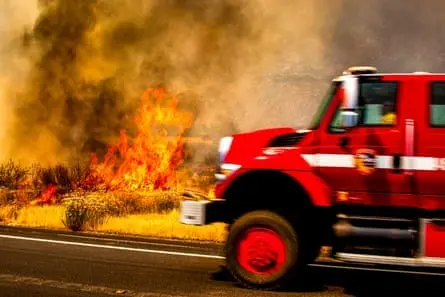
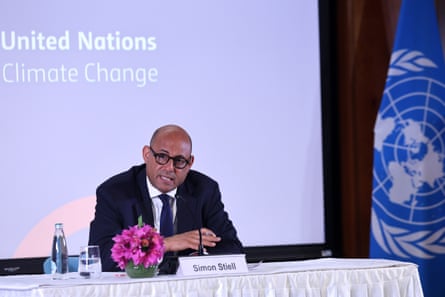
Concurrently, vast swathes of North America, central Asia, China, South America, and southern Africa experienced prolonged droughts and catastrophic wildfires. Emergency services in countries like Canada, the United States, France, and Greece were pushed past their operational breaking points as blazes tore through millions of acres of parched timberlands and residential peripheries.
The Copernicus Declaration
On a Thursday morning in September 2026, the Copernicus Climate Change Service published its monthly bulletin, sending shockwaves through international policy circles. The data revealed that August 2026 reached a staggering global average temperature anomaly of 1.65°C above the pre-industrial baseline (1850–1900). This tied the record set in July 2023, marking a dangerous return of global monthly averages crossing the critical 1.5°C threshold established under the landmark 2015 Paris Agreement.
Scientists noted that these unprecedented highs occurred even before the anticipated peak of El Niño—a naturally occurring climate pattern characterized by warmer-than-average sea surface temperatures in the central and eastern Pacific Ocean. Meteorological agencies have warned that this cycle, supercharged by anthropogenic global heating, threatens to become the most intense "Godzilla-level" El Niño ever documented, threatening further records as it reaches full maturity toward the end of the year.
Supporting Context & Metrics: The Economic and Ecological Toll
The financial architecture of Europe and the wider world is currently buckling under the weight of climate-induced damage. While climate action has frequently been framed by conservative or populist politicians as an expensive regulatory burden, economists and institutional analysts are increasingly quantifying the staggering cost of inaction.
Economic Shockwaves and the €180bn Tab
According to preliminary fiscal assessments cited by UN and European bodies, the severe heatwaves, droughts, and associated natural disasters across Europe this summer alone are estimated to have cost upward of €180 billion (£155 billion). These costs are distributed across several critical pillars of the modern economy:
- Infrastructure and Energy: Extreme heat forced the closure of multiple thermal and nuclear power stations due to a lack of adequate cooling water from warmed rivers. Urban asphalt, rail lines, and aviation tarmac buckled under thermal stress.
- Logistics and Trade: Low water levels on major inland waterways, such as the Rhine and the Danube, crippled cargo shipping, forcing companies to move significantly reduced loads at vastly inflated freight rates.
- Agriculture and Consumer Prices: Widespread crop failures and desiccated pastures have driven global food prices to multi-year highs. With domestic harvests severely compromised across major breadbasket regions, consumer food inflation has become a persistent, structural driver of the broader cost-of-living crisis.
- Sovereign Debt and Fiscal Space: The compounding financial burden of disaster relief, emergency infrastructure repairs, and declining tax revenues is driving up government borrowing costs. Stiell noted that this leaves nations with dangerously narrow "fiscal space" to fund essential public services, healthcare, and education.
The Science of "Feedback Loops" and Tipping Points
Beyond immediate economic damages, climatologists are sounding alarms over the acceleration of planetary feedback loops. Recent scientific studies indicate that self-reinforcing mechanisms—such as the thawing of Arctic permafrost releasing massive plumes of methane, the dieback of the Amazon rainforest, and the reduction of high-albedo sea ice—could amplify overall global warming by up to 30%.
Ruth Fuller, chief adviser on climate to WWF UK, emphasized the gravity of these thresholds: "This year has seen records broken left, right and centre, increasing the risk that natural systems will irreversibly change once they are pushed past tipping points." Once breached, these feedback loops could render human mitigation efforts functionally obsolete, locking the planet into an unalterable trajectory of runaway heating.
Official Statements: Dismantling the Climate Culture War
Addressing the European Parliament committee, Simon Stiell did not mince words regarding the political weaponization of environmental policy.
"The climate crisis is now a continent-wide economic security emergency," Stiell told lawmakers. "Climate is sometimes seen as a partisan issue, as territory in the culture wars. That is palpably false… Climate cuts across the core concerns of voters, whatever their politics: [affecting] family health, community safety and economic stability; affordable food and available water; jobs, business costs and household bills."
Stiell directly targeted populist talking points that suggest abandoning climate commitments will somehow alleviate economic pressures or secure national borders. On the contrary, he argued, the unfettered expansion of fossil fuel reliance is the primary engine of modern macroeconomic instability.
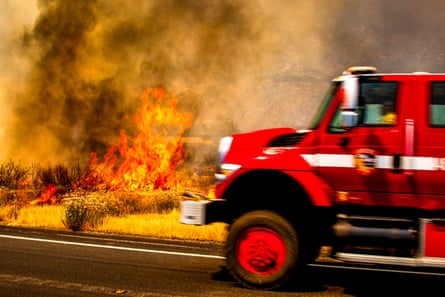
"To be soft on climate action is to be soft on inflation and the cost of living, soft on sovereignty and security, and soft on economic growth and jobs," Stiell asserted.
His sentiments were echoed by Dr. Friederike Otto, a leading climate scientist at Imperial College London: "While El Niño is starting to ramp up the heat, the underlying driver remains our relentless burning of fossil fuels. Climate change makes every El Niño hotter, and until we stop burning coal, oil and gas, these record-shattering months will simply keep on coming."
Samantha Burgess, strategic lead for climate at the Copernicus Climate Change Service, added institutional weight to these warnings: "Combined with record global sea surface temperatures and the warmest summer on record for western Europe, these observations show how climate change is driving extremes across the atmosphere and the oceans. The impacts of these conditions are increasingly being felt by communities, economies and ecosystems across the world."
Future Outlook: A Permanent Nightmare or a Course Correction?
The trajectory of the global climate over the coming decade hinges entirely on immediate, aggressive policy interventions. While individual months surpassing the 1.5°C threshold—such as August 2026—do not technically constitute a permanent breach of the Paris Agreement (which requires multi-year averages to cross the limit), they serve as terrifying preview indicators of a destabilized Earth system.
If governments succumb to populist pressure, roll back net-zero targets, and permit continued fossil fuel expansion, the consequences will be systemic and irreversible. As Simon Stiell warned in his concluding remarks to the international community:

"If humanity doesn’t cut the fossil fuel pollution… this summer’s brutal heat, fires and droughts will seem mild compared to the permanent climate nightmare that will follow."
The transition away from carbon-intensive energy systems is no longer merely an idealistic environmental crusade; it has emerged as the definitive economic imperative of the 21st century. Whether global leadership possesses the political courage to treat it as such will determine the viability of human civilization for generations to come.



