

NEW ORLEANS — Deep in the shipyards and engineering offices of coastal Louisiana, a quiet resilience has taken hold. While the nationwide expansion of offshore wind energy has ground to an abrupt and grinding halt under the weight of federal hostility, local maritime leaders are not packing up their equipment. Instead, they are looking toward a singular date circled firmly on calendars across the Gulf Coast: January 21, 2029—the first day following the conclusion of President Donald Trump’s current term in office.
For an industry that spent the better part of a decade transforming itself from a fossil-fuel servant into a dual-energy powerhouse, the current federal climate is nothing short of an existential crisis. Yet, rather than abandoning their investments entirely, Louisiana’s maritime firms, educational institutions, and regional innovators are choosing a strategy born of patience and pragmatism. As state lawmakers and industry executives put it: they are simply waiting for the clock to run out.
Executive Overview
The intersection of Gulf maritime expertise and renewable energy development represents one of the most compelling economic shifts of the past decade. Historically known as the beating heart of the nation’s offshore oil and gas infrastructure, Louisiana successfully pivoted its supply chains, engineering talent, and fabrication yards to capture a substantial slice of the burgeoning East Coast offshore wind market. By 2024, nearly a quarter of all offshore wind contracts nationwide were flowing directly to Gulf-based firms, injecting roughly $1 billion into regional manufacturing hubs.
However, the return of President Donald Trump to the White House has radically upended that momentum. Through a aggressive succession of executive orders, federal permitting halts, and unprecedented financial buyout offers, the administration has successfully dismantled or sidelined large swaths of the U.S. renewable energy landscape.
Nationwide, the administration has paid developers approximately $4 billion to walk away from major offshore projects, erasing some 21 gigawatts of potential clean energy capacity—enough to power more than 5 million homes. In Louisiana, the casualty list includes high-profile initiatives like a massive 2-gigawatt wind farm planned south of Lake Charles. Despite these sweeping federal setbacks, local leaders are striving to preserve their hard-earned expertise, supply chains, and specialized workforce, banking on a political and regulatory resurgence once the current administration exits the White House.
Detailed Chronology: From Pioneers to the Federal Freeze
The entanglement of Louisiana’s maritime sector with the wind energy movement is not a recent phenomenon. Long before federal green energy subsidies dominated national headlines, Louisiana engineers, metal fabricators, and vessel operators were quietly laying the groundwork for offshore renewables.
2016: The Block Island Genesis
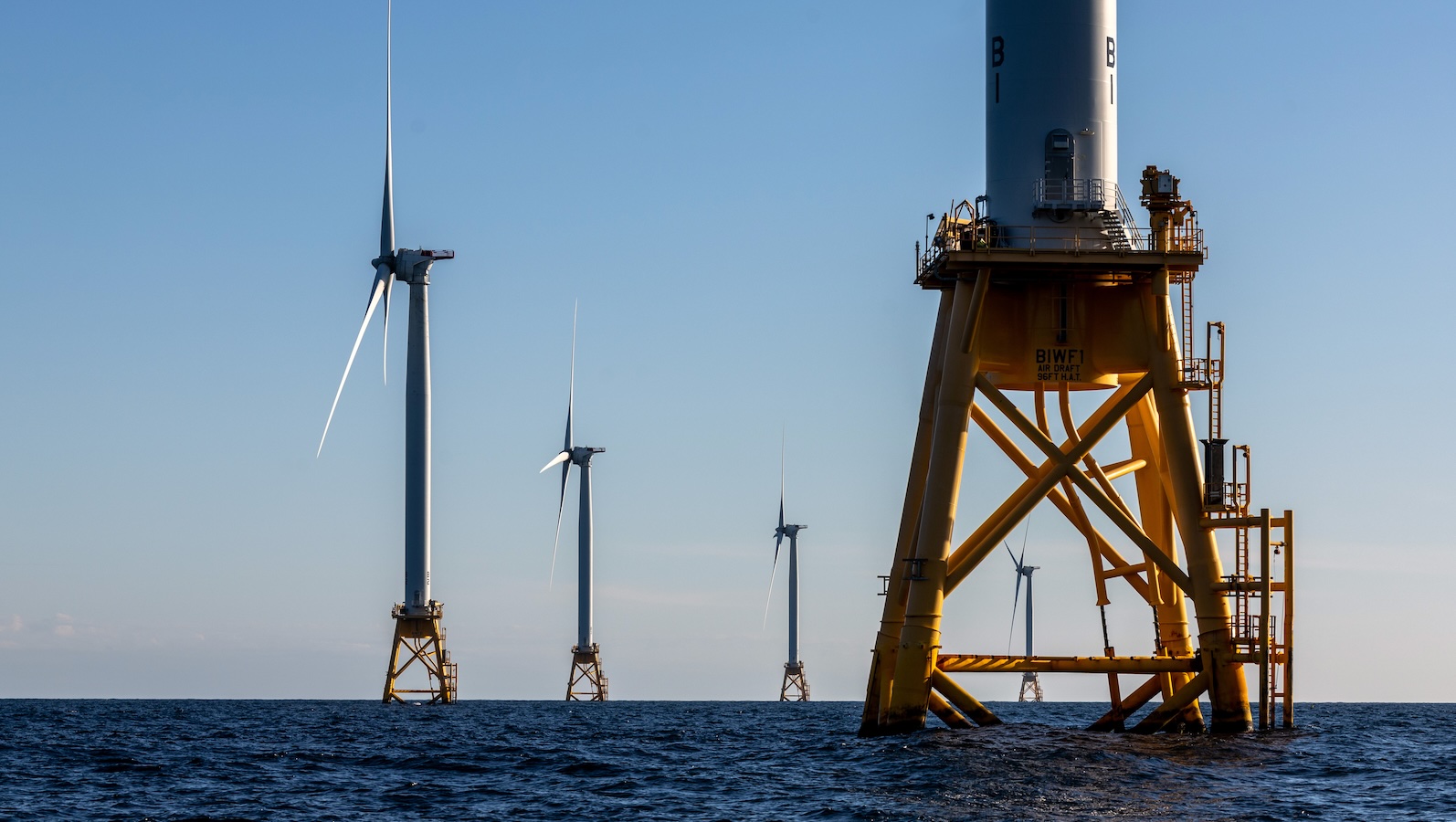
Louisiana’s footprint in offshore wind dates back to 2016, when local ingenuity played a foundational role in building the United States’ very first offshore wind farm near Block Island, Rhode Island. Family-owned supply boat businesses, such as those operated by Louisiana state Representative Joe Orgeron’s family, alongside specialized Gulf engineers, provided the vessels, heavy-lift capabilities, and technical know-how required to erect the turbines in open waters.
2020–2024: The Gulf-to-Coast Pipeline
As the Biden administration set an ambitious national goal of deploying 30 gigawatts of offshore wind by 2030, the pipeline of work connecting the Gulf of Mexico to the Atlantic seaboard exploded. By 2024, data from the Oceantic Network indicated that nearly 25% of all national offshore wind contracts had been awarded to Gulf-based enterprises. Local shipyards retooled to construct wind turbine installation vessels (WTVIs), while community colleges and universities rushed to establish specialized curricula. Nunez Community College launched a dedicated two-year turbine technician program, and the University of New Orleans inaugurated its Wind Energy Hub, offering engineering scholarships and targeted industry internships.
January 2025: Day One Executive Orders
The trajectory of the industry shifted violently on January 21, 2025—President Trump’s first day back in office. Fulfilling long-standing campaign promises and a personal opposition to wind energy that spans nearly two decades, the administration immediately issued sweeping executive orders. These directives formally withdrew federal waters from new offshore wind leasing and placed an indefinite freeze on the permitting of all active projects.
Mid-2025 to 2026: Legal Battles and Billion-Dollar Buyouts
When the initial federal stop-work orders triggered immediate, fierce legal challenges from developers and environmental coalitions, the administration pivoted to a novel financial strategy: federal buyouts. Rather than engaging in protracted courtroom battles, the White House offered developers multi-million-dollar payouts to voluntarily relinquish their federal leases.
Faced with administrative gridlock, escalating lease-holding costs, and a multi-year horizon devoid of viable regulatory pathways, developers accepted. A total of 12 major offshore wind leases nationwide were formally surrendered in exchange for federal compensation. Among the casualties was a planned 2-gigawatt project in the Gulf of Mexico, slated to be built roughly 44 miles south of Lake Charles by the German energy giant RWE, which had already secured a landmark power-delivery agreement with Entergy to supply electricity to 350,000 homes across Louisiana and Texas.
Supporting Context & Metrics: The Cost of the Crackdown
The scale of the federal intervention against the offshore wind sector is unprecedented in modern U.S. energy policy. Industry analysts and nonprofit coalitions have cataloged the staggering economic and infrastructural impact of the administration’s campaign.
- Financial Payouts: The federal government has expended approximately $4 billion in taxpayer funds to induce developers to abandon their offshore wind portfolios.
- Generation Capacity Lost: The surrendered leases represented a cumulative 21 gigawatts of potential renewable energy generation capacity.
- Homes Impacted: The erased generation capacity is equivalent to the baseline electricity needs of more than 5 million American households.
- Regional Market Share: Prior to the federal crackdown, Gulf-based firms had secured nearly 25% of all national offshore wind supply chain contracts, representing roughly $1 billion in direct investments into regional shipyards and fabrication facilities.
- The Lake Charles Casualty: RWE’s canceled 2-gigawatt project in the southern Gulf was projected to come online by 2035, utilizing local Louisiana labor and providing critical industrial power.
Official Statements & Industry Perspectives
The clash between federal policy and regional economic ambition has generated intense debate among policymakers, energy experts, and business leaders.
Speaking at Tulane University’s prestigious Future of Energy Forum, state Representative Joe Orgeron (R-Southeastern Louisiana)—himself a veteran of the offshore wind sector—did not mince words regarding the current political landscape.
"Come January 21st, 2029, we all get to wave goodbye," Orgeron remarked, characterizing the administration’s posture as a "one-man stopping show." Asked about the immediate survival tactics of local marine businesses, Orgeron offered a blunt, pragmatic summary: "Just wait for the clock to run out."
Madelyn Smith, a program manager with the Southeastern Wind Coalition, highlighted the stark economic reality driving developers to accept federal buyouts rather than fight the White House in court.
"The Trump administration has been pretty openly hostile to seeing the advancement of the offshore wind industry," Smith said during the Tulane panel. Regarding the administration’s buyout strategy, she added: "For many reasons, it’s very compelling. And there’s no real pathway for progress in the next two to three years, and some of these leases are quite expensive."
James Martin, CEO of Gulf Wind Technology—an Avondale-based enterprise specializing in the design, construction, and testing of advanced wind turbine blades—lamented the sudden cessation of momentum for a sector he views as having immense untapped potential.
"It is a shame," Martin stated at the forum. "It’s been a big pause button on what was a sleeping giant of an industry."
Martin noted that while some regional companies have managed to weather the storm by temporarily pivoting their skilled engineering workforces into the aerospace and defense sectors, others have been forced to implement severe budget cuts and widespread layoffs. "There’s huge layoffs in the wind space, and some of the best engineers on the planet — they’re giving up," he warned.
Future Outlook: Surviving Until 2029
As the offshore wind industry in Louisiana enters a protracted period of forced hibernation, the primary objective for local businesses, trade organizations, and educational institutions is institutional preservation.
The human capital developed over years of cross-industry collaboration—engineers who mastered the delicate dynamics of marine structural integrity, technicians trained in complex turbine maintenance, and shipyards equipped to handle massive components—cannot be easily replaced if dismantled entirely. To prevent a permanent brain drain, regional leaders are actively finding stopgap contracts in traditional oil and gas sectors, international markets, and defense manufacturing.
Whether these businesses can hold their teams together long enough to cross the threshold of January 2029 remains the central question for the Gulf Coast’s energy future. What is certain, however, is that the foundational expertise residing in Louisiana’s shipyards and engineering halls has not vanished. It is simply biding its time, waiting for the political winds to shift back in its favor.



