

Executive Overview
The momentum that once propelled the United States toward an industrial clean energy renaissance is facing an unprecedented reckoning. In September alone, private-sector enterprises scrapped or drastically scaled back nearly $1.6 billion worth of major factory and clean energy infrastructure projects across the nation. According to the latest monthly market analysis published by E2 (Environmental Entrepreneurs) in collaboration with the Clean Economy Tracker, this single-month contraction pushes the cumulative total of private-sector project cancellations for the year past the $24 billion mark.
What began as a localized cooling-off period for over-leveraged supply chains has evolved into a systemic retreat. Electric vehicle (EV) production lines, advanced battery gigafactories, and critical energy storage developments are bearing the brunt of this contraction. The fallout extends far beyond spreadsheets and macroeconomic indices; it represents the evaporation of thousands of high-paying manufacturing jobs, a chilling effect on domestic capital expenditure, and a strategic vulnerability for a nation striving to lead the technologies of the 21st century.
Compounding this private-sector pullback is a massive withdrawal of federal backing. The U.S. Department of Energy (DOE) recently canceled nearly $8 billion in funding allocated for over 200 federally supported clean energy projects nationwide—a staggering bureaucratic retreat that operates entirely outside E2’s tallies of private capital flight. As capital flees domestic shores in favor of more predictable international markets, analysts, industry leaders, and labor advocates are sounding the alarm: America risks forfeiting its hard-fought industrial leadership in green tech precisely when the global race is accelerating.
Detailed Chronology: How September’s $1.6 Billion Meltdown Unfolded
The month of September will likely be marked in economic retrospectives as a critical inflection point—and a deeply painful one—for the domestic clean energy ecosystem. The month was defined by a cascade of high-profile project cancellations, sudden facility closures, and sweeping layoffs that sent shockwaves through America’s heartland and industrial corridors.
Four major anchor projects—spanning advanced battery manufacturing, energy storage systems, and electric vehicle production—were either abandoned or severely downsized in quick succession across Kansas, Michigan, North Carolina, and Tennessee.
The General Motors Scaling Back
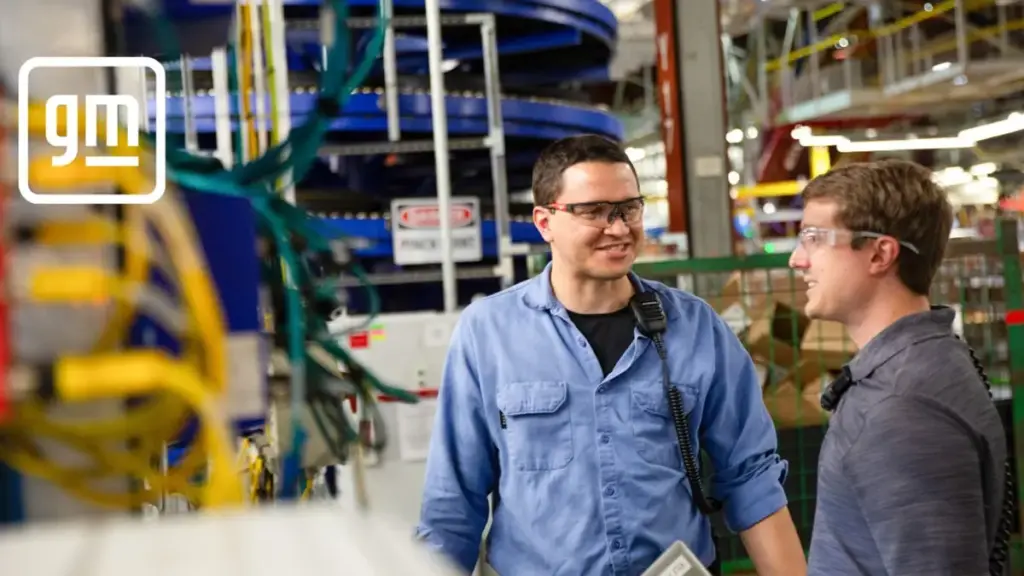
General Motors, once arguably the most vocal legacy automaker championing an aggressive, all-in EV transition, executed significant strategic retreats during the month. GM officially rolled back production targets across multiple lines, most notably impacting facilities in Tennessee and Kansas. These strategic recalibrations resulted in the immediate elimination of 1,600 jobs. The downsizing at these plants underscores a broader industry-wide re-evaluation of near-term consumer adoption rates, profit margins, and supply chain readiness, leaving workers and local municipal economies to absorb the blow.

Natron Energy’s Dual Blow
If GM’s production cuts signaled a cooling in legacy automotive commitments, the plight of Natron Energy represented a devastating gut punch to advanced battery innovation. The sodium-ion battery startup, which had previously positioned itself as a critical domestic alternative to lithium-iron-phosphate and nickel-manganese-cobalt chemistries, was forced to shutter its operational $40 million manufacturing plant in Michigan. This closure instantly put 150 local workers out of a job.
Worse still, Natron completely scrapped its ambitious plans for a massive $40 million—subsequently scaled to a $1.4 billion—gigafactory slated for North Carolina. That single canceled facility wiped out what was projected to be 1,000 family-sustaining advanced manufacturing jobs, dealing a crushing blow to the state’s burgeoning "Energy Corridor."
The Human Toll
When aggregated, September’s casualty list erased more than 3,000 direct, high-paying jobs in a single 30-day window. When viewed across the entirety of the year, the human toll becomes even starker: nearly 21,000 jobs tied directly to private-sector clean energy projects have vanished since January. These are not merely abstract statistics; they represent shuttered training programs, canceled mortgages, stalled local commerce, and a generation of skilled trade and engineering workers whose career trajectories have been upended by sudden policy and market volatility.
Supporting Context & Metrics: The Political Fallout and Macroeconomic Realities
To understand the full scope of this industrial contraction, one must examine the geographic and political distribution of the losses. E2’s data reveals a striking, albeit ironic, political paradox: Republican-led congressional districts are bearing the brunt of the negative economic impacts stemming from policies that undermine clean energy investments.
The Geographic Divide
According to the empirical breakdown:
- Republican-Led Districts: Have absorbed the heaviest losses, accounting for over $12.4 billion in canceled or frozen private-sector investments and nearly 15,000 jobs lost so far this year.
- Democratic-Led Districts: Have experienced comparatively lower, though still severe, attrition, losing approximately $7.5 billion in investments and roughly 5,000 jobs.
This stark disparity highlights the fundamental disconnect between political rhetoric and economic reality. Many of the manufacturing plants, battery gigafactories, and solar supply chain hubs catalyzed by federal clean energy legislation were purposely sited in conservative or swing districts due to available land, lower operational costs, and established manufacturing labor pools. Consequently, legislative attacks or regulatory uncertainty directed at green technologies disproportionately starve red-state communities of capital injection and job growth.
The Historical Trajectory: From Boom to Bust
To fully contextualize the current downturn, it is necessary to look back at the legislative watershed of August 2022, when historic federal clean energy tax credits were enacted under the Biden administration.

In the immediate wake of that legislation, the American clean energy landscape experienced an unprecedented gold rush. A total of 415 major clean energy projects were announced across 42 states and Puerto Rico. This represented an astronomical $135 billion in planned capital investments and promised roughly 125,000 permanent, high-quality jobs.
However, the tide has turned dramatically. Out of those initial 415 announcements, 65 projects have officially been canceled, indefinitely shelved, or radically downsized. The velocity of this destruction is particularly alarming when broken down chronologically: 42 of those 65 project failures have occurred in 2025 alone, coinciding with the return of the Trump administration and a renewed hostility toward federal decarbonization mandates and subsidies. In total, this ongoing contraction has erased approximately $27 billion in investments and 30,000 cumulative jobs from the books.
Official Statements and Industry Perspectives
The systematic dismantling of America’s green industrial pipeline has elicited profound concern from economic analysts, trade associations, and labor advocates who view the current trajectory as a self-inflicted wound to national competitiveness.
Michael Timberlake, a spokesperson and senior analyst for E2, did not mince words when assessing the broader implications of the September data:
"The loss of these projects isn’t just a setback for clean energy—it’s a setback for America’s workers and competitiveness. For every canceled factory or downsized plant, many more projects aren’t even being announced at all as more capital flees and businesses look overseas to invest instead. That means fewer paychecks, less local investment, and fewer opportunities for US workers to lead in the industries of the future."
Timberlake’s warning touches upon the most insidious long-term threat facing the U.S. economy: capital flight. Global automotive and energy conglomerates operate on multi-year, multi-billion-dollar strategic horizons. When regulatory certainty evaporates and tax credits face constant threats of repeal or truncation, corporate boards do not simply absorb the risk—they redirect their capital elsewhere.
Competitors in the European Union, operating under the Net-Zero Industry Act, and aggressive state-backed manufacturing hubs across Asia stand ready to absorb the capital, talent, and intellectual property that the United States is currently shedding. By failing to maintain a stable domestic policy environment, the U.S. risks ceding the undisputed high ground in battery technology, solar component manufacturing, and grid modernization to international rivals.

Future Outlook: A Glimmer of Resilience Amid Deep Uncertainty
Despite the bleak macroeconomic indicators, the landscape is not entirely devoid of progress. Pockets of resilience persist, driven by immutable market forces, surging electricity demand, and long-term technological imperatives.
The Silver Lining: AI, Grid Infrastructure, and Solar Manufacturing
Even during a devastating month like September, market momentum managed to break through the gloom. Companies announced approximately $542 million in new clean energy and manufacturing investments during the month.
Crucially, these new investments are not randomly distributed; they are strategically concentrated in sectors experiencing explosive, non-negotiable demand:
- Solar Parts Manufacturing: Domestic solar module and racking production continues to attract localized capital as developers seek to insulate themselves from international trade tariffs and supply chain bottlenecks.
- Grid Infrastructure for AI Data Centers: The exponential rise of generative artificial intelligence and hyper-scale data centers has created an insatiable demand for reliable, localized clean power. Technology companies and grid operators are frantically investing in energy storage, transmission upgrades, and dedicated clean energy generation to keep pace with soaring power loads.
These newly announced September projects are expected to inject nearly 1,000 jobs back into the economy. While this figure is dwarfed by the 3,000 jobs lost in the same month, it demonstrates that the underlying economic fundamentals—cheaper renewable energy, corporate sustainability mandates, and skyrocketing grid demands—refuse to be entirely extinguished by political headwinds.
The Path Forward
As the United States navigates the remainder of 2025 and looks toward the horizon, the path forward remains deeply precarious. The intersection of shifting federal policy, volatile capital markets, and international competition will dictate whether the clean energy sector can stabilize or whether the current contraction will deepen into a permanent structural decline.
For American workers, local communities, and industrial planners, the stakes could not be higher. The transition to a modern, low-carbon economy was never going to be linear, but the events of September serve as a stark reminder: economic dominance is fragile, and leadership won through historic legislation can just as easily be squandered through policy instability and short-sighted retreat.



