Executive Overview
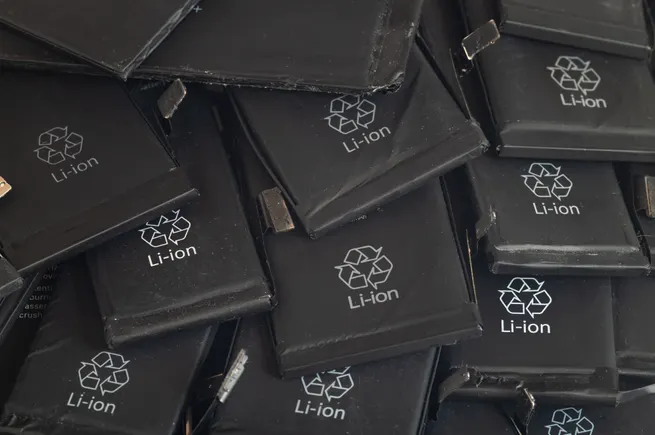
Lithium-ion batteries have fundamentally transformed modern electronics, powering everything from smartphones and electric vehicles to children’s toys and vaping devices. However, this energy revolution has spawned a severe, escalating hazard for an entirely different sector: the municipal waste and recycling industry. Compact, powerful, and ubiquitous, discarded batteries frequently find their way into residential recycling bins, trash chutes, and municipal collection trucks. Once compressed under the immense weight of compaction equipment or shredded within material recovery facilities (MRFs), these volatile energy sources frequently suffer structural breaches, triggering thermal runaway, toxic smoke, and devastating fires.
The problem has transcended the threshold of a localized nuisance; it has become an existential operational crisis. Facility operators across the United States are reporting multiple fire incidents in mere days—a harrowing operational reality that transforms waste-handling personnel into reluctant firefighters. In response, an array of industry stakeholders, technology developers, and policy advocates have mobilized. During a joint webinar presented by Waste Today and the National Waste & Recycling Association (NWRA), top industry leaders convened to chart a path forward.
The consensus was clear: mitigating the scourge of battery fires requires a multi-pronged offensive. Waste management companies are no longer waiting for disasters to strike; they are aggressively investing in advanced, artificial intelligence-driven detection technology. Simultaneously, trade organizations and legislative champions are pushing for vital policy overhauls at both the federal and state levels—ranging from federal recycling acts and streamlined Environmental Protection Agency (EPA) regulations to state-mandated Extended Producer Responsibility (EPR) laws. Together, these technological innovations and legislative frameworks aim to staunch the flow of hazardous batteries into public waste streams, safeguard human lives, and protect critical environmental infrastructure.
Detailed Chronology of the Crisis and Industry Response
To understand the current state of battery-related safety interventions, it is crucial to examine the timeline of escalation and the recent convergence of technological and legislative milestones that have defined the industry’s response.
The Escalation Point (Recent Years)
As consumer adoption of lithium-ion-powered devices surged over the last decade, the volume of "ghost batteries"—batteries hidden inside consumer goods that are improperly thrown away—skyrocketed. Municipal facilities began registering exponential increases in facility fires. Operators noted that traditional sorting methods, which relied heavily on manual human inspection along high-speed conveyor belts, were entirely inadequate for catching obscured or embedded power cells.
Spring to Summer 2023: Regulatory Stirrings
Recognizing the growing administrative and physical hazard, the EPA announced its intention in 2023 to develop a separate, dedicated category of "universal waste" specifically for lithium-ion batteries. This regulatory action promised to untangle a web of confusing, contradictory compliance standards under the Resource Conservation and Recovery Act (RCRA). However, progress stalled through bureaucratic channels, leaving facility operators without immediate federal clarity.
Late 2023 to 2024: The Rise of AI Sorting
Faced with regulatory delays, private industry took matters into its own hands. Major waste handlers and recycling facility developers began testing high-tech optical and X-ray sorting arrays. Companies like CP Group and its optical sorting division, MSS, accelerated the deployment of automated threat-detection units. Systems utilizing advanced machine learning began moving from experimental prototypes to frontline commercial deployments in MRFs nationwide.
Early 2024: Legislative Momentum in States
State legislatures stepped into the regulatory void by enacting Extended Producer Responsibility (EPR) legislation. Kentucky and Wisconsin joined a growing coalition—bringing the total to 13 states plus the District of Columbia—that require battery manufacturers to fund the collection, transportation, and recycling of consumer batteries. These laws fundamentally shifted the financial and logistical burden away from municipalities.
Recent Developments: Federal Bills and Strategic Alliances
The legislative push reached Capitol Hill with the introduction of the bipartisan Battery Recycling for America’s Competitive Economy Act (the "Brace Act"), sponsored by Rep. Mariannette Miller-Meeks (R-Iowa). This pivotal bill aims to update storage requirements, ease hazardous waste permitting bottlenecks, and compel the EPA to finalize its universal waste rules within 18 months of passage.
Culminating this wave of coordination, The Battery Network, the NWRA, and the National Waste & Recycling Foundation announced a high-profile strategic partnership designed to unify battery safety education, streamline recovery logistics, and build a cohesive national framework for consumer awareness.
Supporting Context & Metrics: The Anatomy of a Threat
The hazard posed by lithium-ion batteries is rooted in their chemical composition and energy density. Unlike traditional alkaline batteries, which are chemically stable at the end of their lifecycle, lithium-ion cells store immense electrical potential in a compact space. When damaged, short-circuited, or exposed to excessive heat, these batteries can initiate a chain reaction known as thermal runaway.
Thermal Runaway: Understanding the Warning Signs
Thermal runaway occurs when an internal fault causes an uncontrolled, self-heating cascade that rapidly escalates temperatures. Sean Finney, regional program manager at The Battery Network, emphasizes that recognizing the early indicators of thermal runaway is vital for preventing catastrophic facility loss.
- Acoustic Indicators: Operators and workers must listen for distinct popping or hissing noises emanating from collection bins, transfer trailers, or conveyor systems. These sounds indicate pressure buildup within the battery casing.
- Olfactory Indicators: A strong, sweet, or acrid chemical odor is often the first warning that internal electrolytes are venting.
- Visual Indicators: Wisps of grey or white smoke, followed rapidly by intense, self-sustaining flames, signify that thermal runaway is underway.
According to safety guidelines outlined by industry experts, if a thermal event is detected and it is safe to do so, personnel should immediately isolate the affected battery or container. If the event has progressed beyond containment capabilities, staff must immediately evacuate and follow established building fire emergency protocols.
The Regulatory Quagmire: RCRA and the EPA Dilemma
A primary institutional hurdle facing the recycling sector is the ambiguity of federal oversight. Under the Resource Conservation and Recovery Act, waste streams are strictly categorized. However, lithium-ion batteries feature a wide variety of proprietary chemistries—including lithium cobalt oxide, lithium iron phosphate, and lithium nickel manganese cobalt oxide.
This vast chemical diversity makes it exceptionally difficult for waste handlers and commercial recyclers to determine whether a batch of collected batteries should legally be classified as hazardous waste or managed under federal "universal waste" rules. The administrative burdens and liability risks associated with hazardous waste classification have historically discouraged many facilities from aggressively sorting and recovering batteries, inadvertently increasing the likelihood that these items end up in standard waste processing loops.
The EPA’s ongoing review—tracked closely via the agency’s unified agenda—aims to establish a distinct universal waste designation. Yet, bureaucratic delays continue to plague the timeline. Industry representatives recently learned that proposed rule language may not clear the Office of Management and Budget until late in the calendar year, extending the period of regulatory uncertainty.
Official Statements and Industry Insights
The gravity of the battery crisis has elicited candid commentary from top executives, policymakers, and safety advocates across the waste management ecosystem.
Joaquin Mariel on the Reality of Daily Incidents
Joaquin Mariel, Chief Commercial Officer at Circular Services, pulls no punches when discussing the sheer frequency of fires within the waste sector. Describing a recent operational anomaly where his company experienced three distinct battery-induced fire incidents in just 48 hours, Mariel noted the pervasive nature of the problem:
"I’m not even saying something that anybody in our industry would be surprised by. They’d say, ‘Yeah, you know, we’re right there with you.’"
Mariel underscores that waste facility operators are fundamentally processors of recyclable commodities, not professional firefighters. The influx of consumer batteries forces workers into hazardous emergency-response scenarios that distract from core operational tasks.
"We don’t want to just pass the problem on to our landfill partners that are managing the residue that comes out of these facilities," Mariel explained during the joint webinar. "We’re really excited to be at the forefront testing this technology with CP to see if this is something that can be added to everybody’s tool belt, just like we’ve added so many other tools through automation."
Felix Hottenstein on Technological Intervention
To alleviate the burden on facility workers, technology providers are introducing highly sophisticated automation tools. Felix Hottenstein, sales director at MSS (the optical sorting division of CP Group), detailed the mechanics of their flagship detection system, known as Sentry.
"It uses components such as X-rays, RGB cameras and artificial intelligence-based image analysis to detect batteries or hazards like propane cylinders along a belt," Hottenstein explained.
Rather than relying on human workers to spot a hazardous battery amidst a roaring stream of moving recyclables—an impossible task at modern operational speeds—the Sentry system is engineered to automatically flag and physically extract the hazard. This preemptive intervention stops volatile items before they reach high-pressure compactors, shredders, or trommel screens.
Sara Bixby on Federal and State Policy Alignment
Navigating the regulatory landscape requires constant advocacy, a task spearheaded by organizations like the NWRA. Sara Bixby, NWRA’s director of regulatory and environmental affairs, emphasizes that legislative reform must happen on dual fronts: federal statutory updates and state-level operational mandates.
Discussing the Brace Act and its implications for critical mineral retention, Bixby points out that streamlining permitting requirements for recyclers does more than just reduce legal overhead; it helps keep valuable materials within domestic supply chains.
Regarding state-level EPR frameworks, Bixby and other safety experts highlight the financial relief these laws bring to local communities and private operators alike. Sean Finney of The Battery Network notes the logistical advantages:
"And for these EPR states, whether you’re a private business or a public collection site, these solutions will be free, including freight. So that’s helpful when putting a collection system together."
By requiring manufacturers to foot the bill for collection, transportation, and public education, EPR frameworks transform battery recycling from a costly liability into an organized, publicly supported resource recovery network.
Future Outlook: The Road Ahead for Battery Safety
As the waste and recycling industry looks toward the horizon, the strategy for combating battery fires is coalescing into a comprehensive, three-pillar framework: Advanced Technology Integration, Proactive Regulatory Reform, and Unified Public Education.
1. Ubiquitous Adoption of AI and X-Ray Detection
The days of manual line-picking for hazardous materials are rapidly coming to an end. The successful commercial trial and rollout of AI-powered systems like CP Group’s Sentry and competing X-ray sorting technologies signal a technological turning point for MRFs. Over the next decade, automated hazard ejection systems are expected to become standard capital equipment in modern recycling facilities. By intercepting lithium-ion batteries, propane tanks, and other explosive contaminants at the receiving door or early transfer stages, facilities can dramatically reduce thermal events, protect infrastructure, and eliminate the severe safety risks borne by sorting staff.
2. Legislative Finalization and Policy Harmonization
The legislative push at the federal level—anchored by bills like the Brace Act—must translate into concrete regulatory action from the EPA. Finalizing a dedicated universal waste category for lithium-ion batteries will remove the legal ambiguity that currently hampers efficient recycling networks. Simultaneously, the proliferation of state-level Extended Producer Responsibility laws is expected to accelerate. As more states adopt EPR frameworks, manufacturer-funded collection kiosks and free freight logistics will make proper consumer disposal convenient, ultimately starving the municipal waste stream of stray batteries.
3. Industry Partnerships and Public Awareness
Technology and policy alone cannot solve a crisis driven by consumer behavior. The newly minted strategic partnership between The Battery Network, the NWRA, and the National Waste & Recycling Foundation underscores the industry’s commitment to public education. Future campaigns will focus on educating consumers on the dangers of tossing rechargeable electronics into curbside bins and directing them to dedicated, localized drop-off points.
Ultimately, solving the lithium-ion battery crisis requires an alignment of manufacturer responsibility, technological vigilance, and regulatory clarity. By taking proactive measures today, the waste and recycling industry aims to transition from a reactive posture of constant firefighting to a secure, sustainable, and technologically resilient future.