The landscape of domestic horticulture in the United Kingdom is undergoing a quiet, automated revolution. Once viewed as an expensive novelty for tech enthusiasts with immaculate, featureless lawns, robotic lawn mowers have matured into sophisticated, reliable, and increasingly accessible garden appliances. Driven by advances in artificial intelligence, computer vision, Real Time Kinematic (RTK) satellite positioning, and solid-state LiDAR, modern robotic mowers offer a welcome, hands-free alternative to traditional petrol and corded electric models.

For gardeners facing mobility constraints, those who travel frequently, or simply individuals looking to reclaim their weekends from the weekly chore of grass cutting, these autonomous machines present an appealing proposition. Powered by rechargeable lithium-ion batteries—often cross-compatible with wider cordless power tool ecosystems—today’s market features an expansive array of devices, ranging from budget-friendly “drop-and-mow” units under £400 to advanced, all-wheel-drive professional systems costing upwards of £3,000.

To help UK gardeners navigate this rapidly evolving market, the BBC Gardeners’ World Magazine expert testing panel rigorously evaluated a diverse cross-section of robotic mowers over several weeks. Tested in real-world conditions across complex layouts, steep slopes, and varied garden sizes, each machine was scrutinized for battery capacity, cutting proficiency, setup simplicity, and overall value for money. This report details the top-performing models, outlines critical buying considerations, and provides essential advice for modern garden automation.

Detailed Chronology of the Testing Process
The evaluation protocol developed by the reviews desk—overseen by Strategic Projects Editor Oliver Parsons, Magazines Editor Kay Maguire, and freelance powered-tools tester Harry Duncton—is among the most rigorous in British horticultural journalism.

Phase 1: Unboxing and Initial Assessment
Testing begins the moment a mower arrives at the evaluation grounds. The panel assesses the physical build quality, unpacking process, and assembly requirements. While some legacy systems require professional dealer installation, modern units focus heavily on user accessibility. Testers examine whether a mower arrives ready to run or requires complex component attachment, such as securing a vision module with a Torx screwdriver, as seen with the Mammotion Luba mini 2 AWD.

Phase 2: Configuration and Navigation Setup
The integration method forms a core component of the evaluation. Mowers are categorized by their spatial awareness technology:

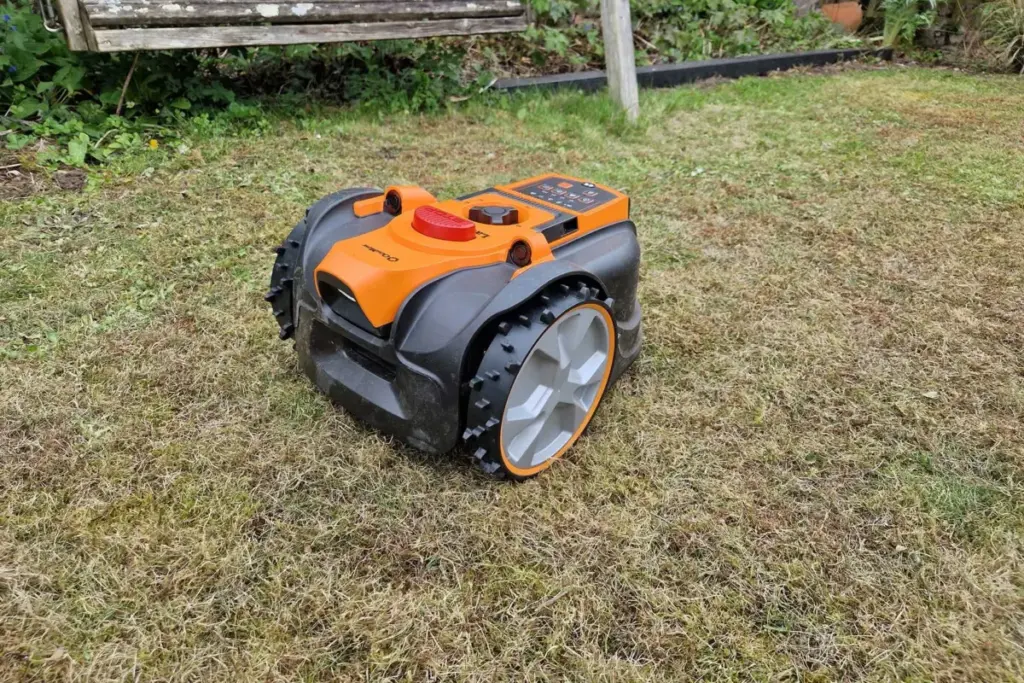
- Drop-and-Mow Systems: Basic units like the LawnMaster OcuMow 16 rely entirely on onboard cameras and optical sensors to identify defined turf edges, eliminating the need for installation apps or perimeter lines.
- Perimeter Wire Systems: Traditional models like the Stihl iMOW 5 and Cobra Mowbot 800 require manual layout of boundary and guide wires, a process that can take up to four hours on larger plots.
- Wire-Free Satellite & Vision Systems: Advanced models utilize RTK GPS, AI-enhanced cameras, or solid-state LiDAR. Testers evaluate how smoothly the software maps boundaries, establishes no-go zones around flower beds, and handles satellite signal degradation under heavy tree cover.
Phase 3: Field Trials and Long-Term Performance
Each mower remains in active service for weeks at a time. Testers monitor battery endurance, charging efficiency, obstacle avoidance capabilities in the presence of scattered toys or wandering pets, and the machine’s ability to navigate inclines. Particular attention is paid to edge-cutting proficiency, cutting deck floatation to prevent scalping, and the transition between multiple distinct lawn zones. Finally, every evaluated model is subjected to structured scoring across setup, cutting performance, smart features, and economic value, resulting in strict Gardeners’ World Best Buy designations for units scoring 4.5 out of 5 or higher.

Supporting Context & Metrics: The Top Contenders Compared
To provide a granular view of the UK market, the tested models span four distinct price and capability tiers. The following data highlights the technical parameters and real-world performance benchmarks established during testing.

Budget and Entry-Level Mowers (Under £400)
LawnMaster OcuMow 16
- RRP: £299.99
- Guidance System: Camera and ultrasonic sensors
- Max Lawn Area: 150 sq. metres
- Max Slope: 19°
- Rating: 4.5/5
- Overview: The ultimate expression of “drop-and-go” simplicity. Requiring no charging dock, app, or Wi-Fi, users simply charge the 24V lithium-ion battery (compatible with other LawnMaster tools), plug it into the rear of the chassis, and press auto-mow. It relies on well-defined borders (fences, paths, raised beds) and ultrasonic sensors to navigate. While it lacks a scheduling function and requires manual battery swapping, it offers an unbeatable hassle-free entry point for compact gardens.
LawnMaster OcuMow AMB16-400
- RRP: £399.99
- Guidance System: Camera and ultrasonic sensors
- Max Lawn Area: 400 sq. metres
- Max Slope: 19°
- Rating: 4.5/5
- Overview: Acting as the big brother to the OcuMow 16, this model introduces a self-charging docking station while retaining an app-free interface. It features a 16cm cutting width, aggressive tread patterns for uneven ground, and includes five metres of magnetic strip for manual boundary control. Self-charging takes approximately 60 minutes, making it an astonishingly affordable solution for straightforward medium-small lawns.
Mid-Range Automation (£400 – £1,000)
Ecovacs GOAT O600
- RRP: £449
- Guidance System: RTK positioning and camera
- Max Lawn Area: 600 sq. metres
- Max Slope: 24°
- Rating: 4.5/5
- Overview: Utilizing an RTK positioning station that communicates with up to 45 satellites, the GOAT O600 brings high-precision, wire-free navigation down to an accessible price point. Measuring just 40cm across, it effortlessly navigates narrow pathways down to 70cm wide. It cuts in clean parallel lines, alters its mowing orientation weekly, and features an IPX6 dust-and-water protection rating alongside a live-feed front camera accessible via the app.
WORX Landroid Vision Cloud WR303E
- RRP: £699.99
- Guidance System: AI camera and satellite integration
- Max Lawn Area: 300 sq. metres
- Max Slope: 17°
- Rating: 4.5/5
- Overview: Abandoning perimeter wires entirely, the WR303E uses an AI-enhanced vision system to map lawn boundaries automatically. It integrates seamlessly into the broader WORX PowerShare battery platform, allowing owners to swap in larger capacity packs. While its obstacle avoidance is exceptionally safe, its conservative approach around bushy borders can occasionally leave minor tufts of grass uncut.
Segway Navimow i208 LiDAR
- RRP: £1,099
- Guidance System: GPS, solid-state LiDAR, and AI cameras
- Max Lawn Area: 800 sq. metres
- Max Slope: 24°
- Rating: 4.5/5
- Overview: A technological leap forward, the i208 uses solid-state LiDAR—taking 200,000 laser measurements per second—to construct instant, highly accurate garden maps without needing a clear view of the sky or internet connectivity. Operating at an ultra-quiet 59dB, it features granular app controls and multi-zone cutting heights, though its two-wheel-drive configuration means it can struggle on heavily rutted, muddy terrain.
Premium & Heavy-Duty Performance (£1,000+)
Mammotion Luba mini 2 AWD 1000
- RRP: £1,399
- Guidance System: GPS and triple-camera AI
- Max Lawn Area: 1,000 sq. metres
- Max Slope: 38°
- Rating: 5/5 (Best Buy)
- Overview: The undisputed king of complex and hilly terrain. Featuring true all-wheel drive, the Luba mini 2 effortlessly tackles slopes up to 38° and negotiates small garden steps. Its defining innovation is a secondary, dedicated side-cutting disc mounted beneath the chassis, which delivers exceptional edge-trimming results. Combined with a robust build, 4G connectivity, and a "drop-and-mow" manual override mode, it represents the gold standard for challenging gardens.
Stihl iMOW 5
- RRP: £1,729
- Guidance System: Perimeter and guide wires
- Max Lawn Area: 500 sq. metres (up to 1,500m² variant equivalents)
- Max Slope: 22° (extendable to 31° with EVO upgrade wheels)
- Rating: 4.8/5 (Best Buy for Performance)
- Overview: For gardeners committed to traditional boundary wire reliability, the Stihl iMOW 5 offers supreme cutting performance. Following a 3-to-4-hour installation process using biodegradable bio-pins, the mower utilizes three free-swinging blades to achieve a flawless finish. Backed by a comprehensive 5-year warranty, it features an intelligent rain sensor and robust anti-theft alarms.
Official Industry Insights and Expert Commentary
Reflecting on the rapid technological shift in automated gardening, the testing panel emphasized that the consumer no longer needs to tolerate the friction of early-generation installations.

Strategic Projects Editor Oliver Parsons notes: "The standard of navigation has shifted dramatically over the past three years. Where users were once chained to perimeter wires and glitchy Bluetooth connections, modern AI-vision and LiDAR platforms mean a robot can map a complex domestic garden in minutes. However, buyers must remain realistic about their garden’s topography; flat, open lawns suit budget optical mowers, while sloping, multi-tiered gardens demand true all-wheel-drive systems like the Mammotion Luba."

Furthermore, industry guidance highlights the environmental benefits of robotic mowing. Frequent, micro-clipping returns fine organic nitrogen directly to the soil surface—acting as a natural mulch—while modern application software increasingly encourages owners to schedule mowing windows that avoid peak nocturnal wildlife activity, safeguarding hedgehogs and ground-nesting insects.

Future Outlook: What Lies Ahead for Robot Lawnmowers?
As artificial intelligence models become lighter and energy storage densities improve, the future of robotic turf maintenance points toward absolute autonomy and deep smart-home integration.

Industry trends indicate that physical installation kits, including boundary wires and auxiliary RTK masts, are rapidly being phased out in favour of multi-sensor fusion. Future iterations will likely see fully integrated onboard neural networks capable of distinguishing between desirable lawn grasses, delicate wildflower meadows, and invasive weed species on the fly, allowing for selective spot-treatment and targeted mowing heights without manual app intervention. Furthermore, as battery interchangeability standardizes across major tool manufacturers, owners can expect unified power ecosystems where a single lithium-ion pack seamlessly transitions from their robotic mower to hedge trimmers, drills, and chain saws.

For the British gardener, the message is clear: whether investing £300 in a basic drop-and-mow unit or over £1,000 in a LiDAR-guided, all-wheel-drive powerhouse, the era of automated, effortless lawn care has officially arrived.