Executive Overview
In an era often dominated by contentious planning disputes and polarized local politics, a proposed renewable energy installation in the Channel Islands has taken a remarkably harmonious turn. What began as a knee-jerk local objection—fueled by a common modern frustration with opaque online public notices—has culminated in an enthusiastic, unreserved endorsement. At the center of this narrative are two local residents: Chadwick, an initial objector whose concerns were rooted in environmental preservation and visual impact, and Shephard, the visionary applicant whose meticulous planning and ecological sensitivity ultimately won over his fiercest critic.
The project in question involves the installation of 72 solar panels on a locally significant plot of land. Initially, scant details available on the States’ planning portal led Chadwick to fear the worst: a sprawling commercial array that would sterilize the land, block sunlight from vital flora, and disrupt local fauna. However, a deep dive into the specifics of the application revealed a fundamentally different reality. Far from a profit-driven corporate venture, Shephard’s proposal is a carefully calibrated, ecologically conscious initiative designed to harmonize renewable energy generation with habitat preservation.
By elevating the panels off the ground to allow uninterrupted sunlight for grass and wildlife, and structuring the project as a long-term environmental investment rather than a short-term commercial windfall, the proposal has set a new benchmark for grassroots sustainability. Following a recent site assessment logged on the official planning explorer, this case study offers profound insights into how community engagement, transparent communication, and thoughtful design can transform local skepticism into unified environmental stewardship.
Detailed Chronology
The Genesis of a Misunderstanding
The controversy—if it can truly be called that in retrospect—began in the twilight days of the planning application’s public notification period. In the fast-paced digital age of municipal governance, local residents increasingly rely on online portals to stay informed about developments in their neighborhoods. Unfortunately, administrative bottlenecks and brief descriptions can often obscure the true nature of a project.
For Chadwick, the discovery of the planning application came dangerously close to the deadline. Upon navigating to the local planning website, he was met with a sparse and jarring description: a proposal for 72 solar panels.
"It just said 72 panels and my initial reaction was that’s going to cover all of the area," Chadwick recalled.
In the absence of architectural drawings, environmental impact assessments, or detailed elevations, the human imagination tends to fill in the blanks with worst-case scenarios. For a resident protective of local green spaces, a blanket of 72 industrial-grade solar panels conjured images of impermeable glass and metal suffocating the soil, disrupting drainage, and driving away local wildlife. Crucially, Chadwick noted that he had encountered the application "right at the end of its period of notification." This timing meant that the comprehensive supporting data, which might have mitigated his initial concerns, was either not fully indexed or simply overlooked in the rush of the impending deadline.
The Turning Point: Dialogue and Discovery
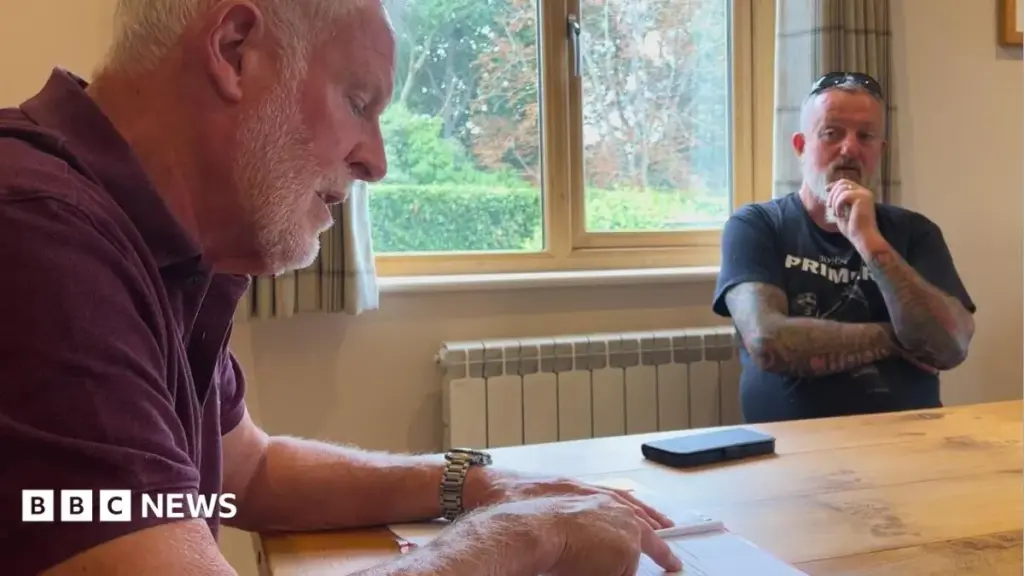
Rather than letting his anxieties ferment into a formal, adversarial objection, Chadwick initiated a process of direct inquiry and deeper investigation. Recognizing that a surface-level reading of a planning application rarely tells the whole story, he sought to understand the mechanics and motivations behind Shephard’s proposal.
This investigative pivot changed everything. As Chadwick examined the finer details of the submission and engaged with the specifics of the design, his perception shifted dramatically. He discovered that Shephard had not merely thrown together a commercial array to capitalize on green energy incentives, but had instead invested a profound amount of thought into the project’s ecological footprint.
"After learning more," Chadwick noted, Shephard "has put a lot of thought into making this work as best as possible."
The discovery of these design nuances dismantled Chadwick’s initial opposition piece by piece. He moved from a stance of cautious skepticism to becoming, in his own words, a "complete supporter of the plan." This metamorphosis was not born of political expediency or neighborly pressure, but of a genuine recognition that Shephard had proactively addressed every single ecological and aesthetic concern Chadwick had originally intended to raise.
The Current Status: Moving Through Planning
With the local community dynamic shifted from friction to alignment, the administrative wheels of the project continue to turn. According to updates on the official States’ planning website, the application has recently undergone a comprehensive site assessment.
This phase represents a critical milestone in the municipal approval process. Site assessments allow planning officers to verify topographical conditions, evaluate exact shadow profiles, ensure compliance with regional zoning laws, and double-check that environmental safeguards are robustly integrated. Given that the primary hurdle for local developments is often community pushback—which has now been entirely neutralized by this rare reconciliation between objector and applicant—the project stands in an exceptionally strong position as it awaits final statutory determinations.
Supporting Context & Metrics
Anatomy of an Eco-Friendly Solar Array
To fully appreciate why Chadwick moved from opposition to advocacy, one must examine the specific engineering and architectural choices that define Shephard’s proposal. Traditional ground-mounted solar arrays have occasionally faced valid criticism from environmentalists due to their potential to create "solar deserts"—expanses where panels are mounted so low and close together that they block rainfall and sunlight, effectively killing the vegetation underneath and displacing local fauna.
Shephard’s design actively subverts this critique through several key interventions:
- Elevated Mounting Systems: Crucially, as Chadwick highlighted, "the panels are being stood up off the ground." This elevation is not merely aesthetic; it is an ecological necessity. By raising the infrastructure, the design ensures that grass, wildflowers, and low-lying vegetation continue to receive vital sunlight.
- Habitat Continuity: The space beneath and between the elevated panels remains accessible to local wildlife, allowing small mammals, insects, and avians to traverse the landscape largely uninterrupted.
- Permeable Footprints: Unlike hard-paved commercial developments, ground-mounted residential and community solar arrays preserve the underlying soil matrix, maintaining natural hydrological cycles and preventing accelerated runoff or localized flooding.
The Economics of Altruism
Beyond the physical architecture of the installation, Chadwick’s reassessment of Shephard’s financial motivations adds a poignant dimension to the narrative. In a market where renewable energy is frequently evaluated through the cold lens of return on investment (ROI), payback periods, and feed-in tariffs, Shephard’s project appears to operate on an entirely different philosophical plane.
Chadwick observed that Shephard "probably won’t see financial return from it [in] his lifetime." This realization reframes the initiative from a standard capital expenditure into a generational, legacy-driven project. When an individual invests substantial capital and personal effort into infrastructure that will primarily benefit the environment and future generations—without securing a personal commercial windfall—it transcends traditional economic calculus.
"So it’s not a commercial decision," Chadwick summarized, "it’s an altruistic decision to actually do the right thing."
This altruistic framing resonates deeply within island communities, where land use is finite, and every square foot carries both ecological and cultural value. By demonstrating that personal property can be utilized for collective, planetary benefit without sacrificing local ecosystems, the project serves as a micro-level case study in sustainable development.
Official Statements
The transformation of this local planning application has been anchored by the candid reflections of its primary stakeholders. Below are the key statements that encapsulate the journey from conflict to consensus:
-
On the Initial Discovery and Lack of Transparency:
"Chadwick explained his initial complaint was due to ‘little detail’ being available online about the application. It just said 72 panels and my initial reaction was that’s going to cover all of the area. I saw the planning application right at the end of its period of notification so, by the time I looked at the website, the data wasn’t there."
-
On the Realization of the Designer’s Intent:
"After learning more, Chadwick said Shephard ‘has put a lot of thought into making this work as best as possible.’ Chadwick said he is now a ‘complete supporter of the of the plan’ because Shephard had ‘considered all of the things that I asked questions about’."
-
On Ecological Integration and Altruism:
"He said that ‘the panels are being stood up off the ground’ so that grass and wildlife has access to the sun. He probably won’t see financial return from it [in] his lifetime, so it’s not a commercial decision: it’s an altruistic decision to actually do the right thing."
These statements underscore a vital lesson for municipal planners and developers alike: transparent communication and ecologically sensitive design are the most effective antidotes to public apprehension.
Future Outlook
As the application moves forward following its recent site assessment, the broader implications of this local story extend far beyond a single plot of land. The trajectory of Shephard’s 72-panel installation offers a blueprint for how grassroots renewable energy projects can be successfully integrated into sensitive landscapes.
Lessons for Municipal Planning
- The Danger of Data Deficits: Local planning authorities must recognize that sparse online descriptions—such as a barebones mention of "72 panels"—inevitably invite suspicion. Ensuring that comprehensive environmental metrics, architectural renderings, and ecological safeguards are published simultaneously with the initial notice can prevent unnecessary anxiety and administrative friction.
- Proactive Community Engagement: Applicants who anticipate local concerns—such as wildlife disruption, loss of vegetation, and visual blight—and bake mitigation strategies directly into their designs from day one are infinitely more likely to secure community buy-in.
- The Power of Conversational Diplomacy: Chadwick’s willingness to investigate rather than simply litigate his objections highlights the value of open dialogue. When objectors and applicants engage in good faith, adversarial relationships can rapidly evolve into collaborative partnerships.
Next Steps for the Project
With the site assessment now completed by the States’ planning apparatus, the application moves closer to a final determination. Given the absence of community opposition—and the remarkable conversion of the area’s most vocal initial skeptic into an ardent supporter—the path to approval appears remarkably clear.
If granted, the installation will not only contribute clean energy to the local grid but will also stand as a physical testament to thoughtful, community-minded stewardship. It proves that with patience, transparency, and a genuine commitment to environmental harmony, modern infrastructure projects can unite neighbors rather than divide them.
For ongoing updates on this story and other regional developments, follow BBC Guernsey on X, Facebook, and Instagram. Readers with localized story ideas or planning inquiries are encouraged to reach out to the news desk at [email protected].