Executive Overview
In the quiet, undulating expanses of English farmland—far from the prying eyes of poachers and well-wishers alike—a silent conservation drama is unfolding. The Montagu’s harrier (Circus pygargus), officially designated as the United Kingdom’s rarest breeding bird of prey, has achieved a fragile yet remarkable milestone. For the second consecutive year, a single, tireless male harrier—designated simply as "AU" by conservationists—has successfully nested in a closely guarded, confidential location.
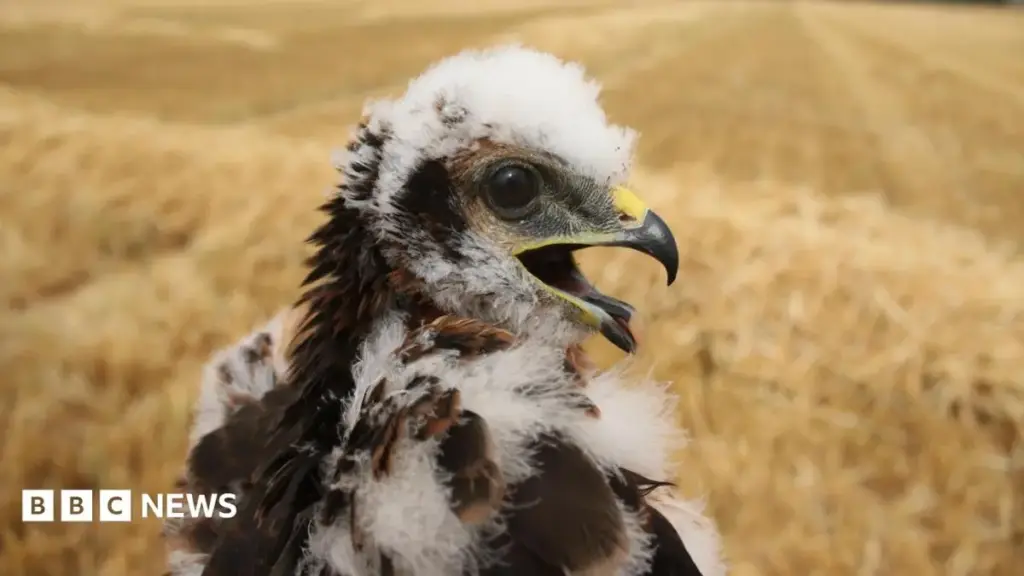
This year’s breeding season yielded an unprecedented output: AU successfully mated with two distinct females, overseeing the hatching and fledging of six healthy chicks across two separate nests. For a species teetering on the precipice of national extinction—a victim of habitat degradation, shifting agricultural timelines, and climate chaos—this micro-population boom offers a potent mixture of hope and heart-stopping anxiety.
The Royal Society for the Protection of Birds (RSPB), working in tandem with private landowners, has orchestrated an intensive, high-stakes rescue operation. From deploying physical electric-and-mesh fencing to outsmart subterranean predators, to pioneering the use of satellite telemetry on fledgling chicks, conservationists are throwing every available resource at the problem. Yet, the broader picture remains grim. Montagu’s harriers are emblematic of a wider crisis facing migratory raptors that attempt to bridge the fragile gap between European breeding grounds and African wintering quarters. With agricultural machinery encroaching faster than ever due to unseasonal weather patterns driven by climate change, the margin for error is razor-thin. This is the definitive story of how scientists, farmers, and a remarkably prolific raptor are fighting to keep an iconic species from vanishing into history.
Detailed Chronology of the 2024 Nesting Season
The success of the 2024 Montagu’s harrier breeding season was neither accidental nor instantaneous; it was the result of months of meticulous planning, sleepless nights, and real-time crisis management by RSPB field operatives and local agricultural partners.
Spring Arrival and Territory Establishment
The saga began in late April, as the African wintering grounds grew distant and the migratory urge pulled Europe’s summer visitors northward. Among the arrivals was "AU," an experienced male Montagu’s harrier easily identifiable by wing tags applied during previous ringing exercises. Upon touching down on English shores, AU bypassed traditional wild heathlands—now largely fragmented or degraded—and returned directly to the agricultural matrix that had served him so well the previous year.
Unlike many territorial raptors that maintain strictly monogamous bonds, AU exhibited rare polygynous behavior. Within weeks of establishing his territory across expansive cereal croplands, he successfully courted two separate females, establishing two distinct nests just a short distance apart. This behavioral adaptation is occasionally observed in raptors when food abundance is exceptionally high, but it places an immense physical burden on the male, who remains the primary provider during the incubation and early brooding phases.
The Incubation and Hatching Phase
By late May and early June, both nests contained clutches of eggs. Because Montagu’s harriers build their nests directly on the ground—often tucked deep within dense, growing crops like winter wheat or barley—they are acutely vulnerable to both mammalian predators and farming operations.
Recognizing the extreme vulnerability of the sites, RSPB field teams, bound by strict confidentiality agreements, initiated Phase One of their protective protocol: perimeter defense. Working closely with the landowning farmers, conservationists erected discreet, electrified and mesh-reinforced exclosures around the immediate nest perimeters. These physical barriers were specifically engineered to deter ground-dwelling predators, most notably red foxes (Vulpes vulpes), which have decimated ground-nesting bird populations across the UK.
Simultaneously, a covert surveillance operation was established. Utilizing high-powered spotting scopes and remote trail cameras from safe distances, RSPB monitors tracked the daily rhythms of the harrier families. It was during this intensive monitoring window that the BBC was granted exclusive access to document the raptors, capturing one of nature’s most cinematic spectacles: the mid-air food pass.
Observers watched in awe as AU approached the nesting territory laden with freshly caught voles or small birds. Rather than landing directly—which could reveal the nest’s exact coordinates to opportunistic corvids or mammalian scavengers—AU executed a breathtaking aerial transfer. Soaring high above the crop canopy, he released the prey item mid-air. In a split-second flash of acrobatics, the incubating female rolled completely upside down in flight, catching the tumbling meal in her razor-sharp talons before peeling away to feed her demanding brood.
Fledging and the Race Against the Combine
By late July, the six chicks across both nests had developed their juvenile flight feathers. The pressure on AU finally eased as the young raptors began taking their first clumsy, exhilarating flights above the golden waves of ripening grain.
However, the conclusion of the nesting period marked the beginning of a new operational hazard: the harvest. Due to compounding pressures from climate change, the 2024 harvest arrived roughly a month earlier than historical averages. This temporal shift created a terrifying overlap between heavy agricultural machinery—combines, balers, and tractors—and the newly fledged, ground-roosting harriers.
Through round-the-clock liaison with the farmers, the RSPB managed to establish harvest buffer zones, delaying cutting operations immediately surrounding the nest sites until the young raptors were fully capable of sustained flight. By August, all six juveniles had successfully fledged, marking a monumental victory for a population that produced zero successful nests just a few short years ago.
Supporting Context & Metrics: The Decline of the Montagu’s Harrier
To truly comprehend the significance of AU’s six chicks, one must examine the catastrophic trajectory of the Montagu’s harrier within the United Kingdom over the past quarter-century.
A Statistical Overview of Decline
Historically never a common bird in Britain—due largely to the northern periphery of its European range crossing the English Channel—the Montagu’s harrier was once a regular, if scarce, summer visitor to southern and eastern wetlands and downlands. However, historic persecution by Victorian gamekeepers and the widespread drainage of wetlands drove the species to the brink of extirpation by the mid-20th century.
By the early 21st century, a fragile recovery was underway, heavily reliant on conservation interventions on agricultural land. The modern statistical baseline highlights a species in freefall:
- 2011 Peak: The modern high-water mark for the species in the UK, recording nine successful breeding nests nationwide.
- 2020–2024 Drought: A catastrophic demographic collapse. Across this five-year window, the RSPB recorded zero evidence of successful breeding in the UK. Wandering individuals were occasionally sighted during spring and autumn migrations, but successful pairings, egg-laying, and fledging dropped to absolute zero.
- 2023 Turning Point: The solitary male "AU" successfully mates, producing four fledged chicks in a secret location—the sole bright spot in an otherwise barren decade.
- 2024 Consolidation: AU repeats his success, fathering six fledged chicks across two nests, effectively single-handedly doubling the species’ known UK reproductive output for the decade.
The Ecological Trap of Modern Agriculture
The primary driver of the Montagu’s harrier’s decline in Britain is not direct human persecution, but rather an insidious ecological trap: the modernization of European agriculture.
Unlike marsh harriers (Circus aeruginosus), which typically nest in impenetrable reedbeds, Montagu’s harriers show a strong preference for nesting in lowland agricultural fields, particularly cereal crops. To a ground-nesting raptor, a dense field of winter wheat mimics the tall, swaying grasses of a natural prairie.
However, modern farming is governed by efficiency and predictability, whereas nature is erratic. When farmers apply fertilizers, roll fields, or deploy massive combine harvesters, nests hidden inches above the soil are routinely obliterated. Even when nests are known, the acceleration of harvest schedules driven by global heating means that crops are cut while chicks are still flightless, leaving conservationists in a permanent, nail-biting race against time to negotiate harvest delays with landowners.
Official Statements and Expert Analysis
The fragility of the UK population has transformed the conservation community’s approach from passive monitoring to aggressive, data-driven intervention.
Speaking on the success of the 2024 season, an official RSPB spokesperson captured the mixture of relief and persistent dread felt across the organization:
"We are doing our absolute utmost to save this iconic species in the UK and are delighted with six flying juveniles this year. But make no mistake: this is a species on the absolute brink."
The frontline perspective was expanded upon by Mark Thomas, Head of Investigations at the RSPB, who emphasized the scientific unknowns that have historically hampered conservation efforts. For decades, once a juvenile Montagu’s harrier left its English birthplace, it vanished into the vast, undocumented expanse of the African migration corridor, leaving conservationists blind to the mortality factors operating outside British borders.
In a landmark move for the species in the UK, the RSPB broke new ground this season by fitting two of AU’s six chicks with state-of-the-art satellite telemetry tags prior to fledging.
"This will allow us for the first time ever to work out where they’re going, what migration route [they take], how long they’ll spend there, and will they come back to the UK in the first year or the second year?" Thomas explained, detailing the technological leap. "All of that information is the bit that’s missing from the jigsaw."
Thomas also underscored the compounding menace of climate change, noting how shifting weather patterns directly threaten the species’ physical survival:
"This is a species right on the brink, and climate change is not helping that. The harvest here, for example, this year, was like a month earlier than in previous years. So it almost puts any Montagu’s harrier nest at the peril of inadvertently being destroyed by farm machinery."
Future Outlook: A Precarious Horizon
As the autumn of 2024 settles over the British countryside, the immediate threat of agricultural machinery has subsided, replaced by the profound uncertainties of the East Atlantic flyway.
The Satellite Tagging Revolution
The deployment of satellite tags on two of AU’s progeny represents a paradigm shift in British raptor conservation. Previously, ringed birds relied almost entirely on opportunistic re-sightings by birdwatchers or recovery by foreign hunters—a scattershot method yielding minuscule data returns.
With real-time satellite tracking, conservationists will be able to map the exact geographical corridors utilized by British-born Montagu’s harriers. This includes identifying dangerous bottlenecks where illegal shooting or trapping is prevalent—particularly across parts of Southern Europe and North Africa—and tracking their wintering strongholds in the Sahel region of sub-Saharan Africa. Furthermore, understanding the precise age of return will reveal whether young birds attempt to breed in their first year or spend crucial formative seasons maturing abroad.
The Human Element: Rewarding Stewardship
The long-term survival of the Montagu’s harrier in the UK is inextricably bound to the cooperation of the farming community. Because the birds select private arable land for their nesting sites, top-down government legislation alone cannot save them.
The success of the 2024 season is a testament to the power of collaborative conservation. By working hand-in-hand with agricultural landowners—compensating for delayed harvests, establishing quiet zones, and sharing data—the RSPB has demonstrated that food production and apex predator conservation can, under the right conditions, coexist. Future conservation frameworks will likely rely heavily on Agri-environment schemes that financially incentivize farmers to protect ground-nesting raptors on their properties.
Climate Adaptation and the Road Ahead
Ultimately, AU’s extraordinary individual efforts cannot mask a stark biological reality: a population dependent on a single aging male and a handful of transient females is inherently unstable. Genetic bottlenecks, disease outbreaks, or a single severe storm during migration could wipe out the entire UK breeding contingent in a matter of days.
Saving the Montagu’s harrier requires a dual-pronged strategy: aggressive, hands-on protection of existing nests on British soil, paired with international diplomatic and conservation pressure along the African-Eurasian flyway.
For now, conservationists are holding their breath, watching the blinking digital signals transmitted from the satellite tags of two young raptors as they chart an ancient, perilous course toward the sun. In the fragile wings of AU’s chicks rests the immediate future of a species fighting tooth and nail to claim its place in Britain’s natural heritage.