Executive Overview
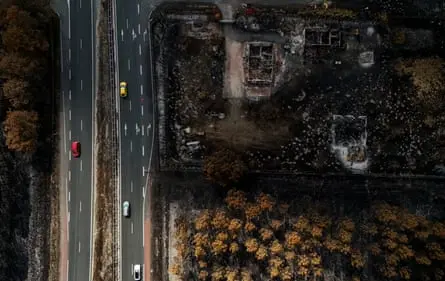
The arrival of a destabilized global climate is no longer a dystopian forecast or a distant theoretical modeling exercise; it is an undeniable daily reality. Across both hemispheres, seasonal rhythms have been upended by an escalation of ecological disorder. Wildfires now march unhindered into metropolitan centers, reducing entire neighborhoods to ash and turning vast swaths of forest into carbon tombs. Simultaneously, marine heatwaves execute a slow-motion catastrophe beneath the waves, bleaching expansive coral reefs and boiling seagrass meadows on a global scale.
In Europe, the northern summer has brought temperatures historically confined to the Australian desert—heat events that have paralyzed sovereign states, shattered critical infrastructure, and claimed the lives of thousands of citizens. This is the lived experience of a planet warming at a mere 1.5°C above pre-industrial levels. Yet, the most terrifying component of this crisis is not where we are, but where we are headed. Humanity is currently tracking toward nearly twice that level of warming—a trajectory toward 3°C and beyond that threatens the foundational structures of modern civilization.
Despite the mounting physical evidence, public discourse remains mired in a profound cultural malaise. Marked by febrile delirium, visceral rage, and a nihilistic lassitude, societies are suffering from an acute collective disorientation. This confusion is not accidental. It is the calculated product of an entrenched power elite who profit from ecological destruction and deliberately obscure the facts.
As prominent voices—including novelists and investigative journalists—point out, the climate emergency is neither a tragic accident nor a natural calamity. It is a manufactured crime driven by a narrow class of corporate and political oligarchs. Combatting this engineered ignorance requires an uncompromising commitment to factual, independent journalism. Now more than ever, the preservation of a habitable planet depends on the public’s access to unvarnished truth, collective solidarity, and a shared purpose in holding the architects of our crisis accountable.
Detailed Chronology: From Scientific Warning to Planetary Emergency
To understand how humanity arrived at this precipice, one must trace the divergence between scientific foresight and institutional inaction over the past half-century.
The Decades of Warning (1970s–1990s)
Long before the term "climate emergency" entered the vernacular, climatologists and geophysicists were mapping out the exact mechanics of industrial warming. In the 1970s and 1980s, corporate-funded internal studies—most notably those conducted by fossil fuel giants like Exxon—accurately predicted the very atmospheric tipping points the world is experiencing today. However, rather than sounding the alarm, these corporate entities weaponized uncertainty, initiating a decades-long campaign of obfuscation, lobbying, and climate denial designed to protect short-term profit margins at the expense of the biosphere.
The Threshold of 1.5°C (2015–2020)
The signing of the Paris Agreement in 2015 established 1.5°C as the crucial guardrail beyond which climate impacts would become severely destabilizing. At the time, scientists framed this threshold as a future boundary to be avoided through aggressive global decarbonization. Instead, global emissions continued to rise. By the early 2020s, the 1.5°C threshold crossed from a future warning into a present baseline. Consecutive years shattered global temperature records, turning what was once theoretical into an unrelenting sequence of climate disasters.
The Year of Extremes (2023–2024)
The years 2023 and 2024 marked a terrifying acceleration in planetary disorder. Unprecedented marine heatwaves triggered global coral bleaching events spanning multiple ocean basins. In North America and Southern Europe, mega-fires consumed millions of acres, forcing mass evacuations and bringing toxic smoke to major population centers. The summer of 2024 in Europe demonstrated the lethal vulnerability of modern infrastructure to hyper-heat events, cementing the realization that the climate system has entered a phase of nonlinear collapse. It was against this backdrop that cultural works addressing post-apocalyptic survival—such as Tim Winton’s novel Juice, set in a world ravaged by 3°C of warming—transitioned in the public imagination from speculative fiction to plausible prophecy.
Supporting Context & Metrics: The Mathematics of Catastrophe
The climate crisis is ultimately a crisis of numbers—concentrations of greenhouse gases, gigatons of carbon emissions, and rising global temperature anomalies.
The Carbon Budget and Temperature Trajectories
Pre-industrial carbon dioxide concentrations hovered around 280 parts per million (ppm). Today, atmospheric $textCO_2$ levels consistently exceed 420 ppm—the highest concentration in at least three million years. Under current global policies and nationally determined contributions (NDCs), the Earth is tracking toward approximately 2.7°C to 3.0°C of warming by the end of the 217th century.
A 3°C warmer world does not simply mean warmer summers; it represents an entirely different geological epoch:

- Sea-Level Rise: Accelerated melting of the Greenland and West Antarctic ice sheets would commit coastal cities housing hundreds of millions of people to eventual inundation.
- Agricultural Collapse: Major breadbasket regions across North America, Eurasia, and parts of Africa would face recurring multi-year megadroughts, threatening global food security.
- Feedback Loops: At 3°C, critical planetary tipping points—such as the dieback of the Amazon rainforest and the massive release of Arctic permafrost methane—would become irreversible, driving self-sustaining warming independent of human emissions.
The Economics of Exploitation
The continuation of this trajectory is not an oversight by policymakers; it is fueled by capital accumulation. A small, elite cadre of fossil fuel executives, institutional investors, and media barons continue to extract extraordinary rents from carbon-intensive industries. Despite historic commitments to the energy transition, global fossil fuel subsidies reached an all-time high of $7 trillion globally, according to International Monetary Fund (IMF) estimates, when accounting for environmental costs and undercharged supply taxes. This financial architecture ensures that the structural incentive to burn fossil fuels remains intact, even as the ecological costs mount exponentially.
Official Statements and Perspectives
The friction between corporate greenwashing and scientific reality has ignited fierce debates across international diplomacy, civil society, and independent media.
The Scientific Consensus: A Plea for Immediate Action
International bodies, led by the Intergovernmental Panel on Climate Change (IPCC), have repeatedly emphasized that humanity possesses the technological and financial tools required to limit warming, but lacks the political will.
"The choices and actions implemented in this decade will have impacts now and for thousands of years," the IPCC noted in its synthesis report. Scientists worldwide have transitioned from academic detachment to vocal advocacy, arguing that further delay in systemic transformation constitutes gross institutional negligence.
The Corporate Counter-Narrative: Distraction and Delay
Conversely, representatives of legacy energy conglomerates and allied political actors continue to push narratives of "pragmatic transition," arguing that rapid decarbonization threatens global economic stability. By emphasizing incremental carbon capture technologies and market-based offsets while simultaneously expanding fossil fuel exploration licenses, these entities seek to preserve the status quo. Critics argue that this strategy is designed less to solve the crisis than to pacify a concerned public while maximizing remaining asset extraction.
The Voice of Independent Media
Cultural and literary figures have increasingly stepped into the vacuum left by compromised mainstream outlets. Authors and journalists argue that the framing of the climate crisis must shift fundamentally:
"What we are all experiencing is not a mystery ailment. Neither is it inevitable. And it’s sure as hell no tragedy—it’s an outrage," writes novelist Tim Winton. This perspective reframes climate destruction not as a natural disaster to be mourned, but as a crime to be investigated, prosecuted, and halted through collective resistance.
Future Outlook: The Battle for the Narrative and Our Descendants’ World
The coming decades will determine whether human civilization can successfully stabilize the biosphere or whether it will stumble deeper into the dystopian futures currently being charted in both scientific models and cautionary literature.
Breaking the Cultural Malaise
Overcoming the paralyzing nihilism and corporate-sponsored confusion requires a democratization of information. The algorithmic architecture of modern social media platforms—largely owned or influenced by billionaire oligarchs—incentivizes outrage, division, and climate fatalism. Countering this requires sustained investment in independent, forensic journalism that refuses to sanitize the reality of the crisis or coddle the interests of polluters.
The Imperative of Solidarity
Factual reporting on the trajectory of our heating world is more vital now than ever before. Societies do not mobilize out of despair; they mobilize out of a shared understanding of reality and a collective belief in agency. Honesty about both the devastation unfolding and the pathways available for mitigation is what fortifies communities.
The battle lines are drawn between those who view the Earth as a ledger of extractable assets and those who recognize it as the irreplaceable home of future generations. Defending the planet requires defending the truth—ensuring that the stories told about our world are rooted in integrity, courage, and an uncompromising refusal to bend the knee to the flames.