

Executive Overview
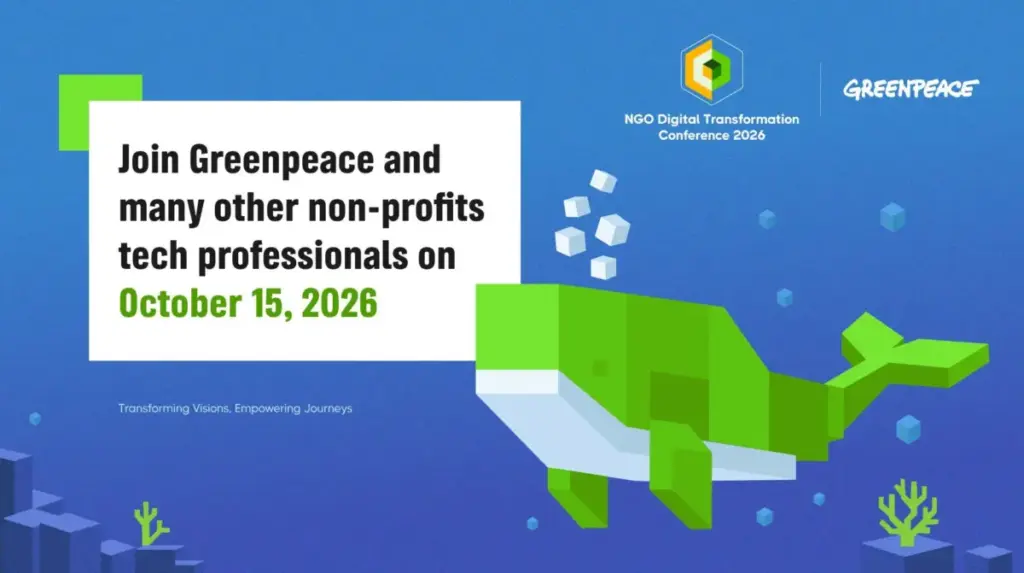
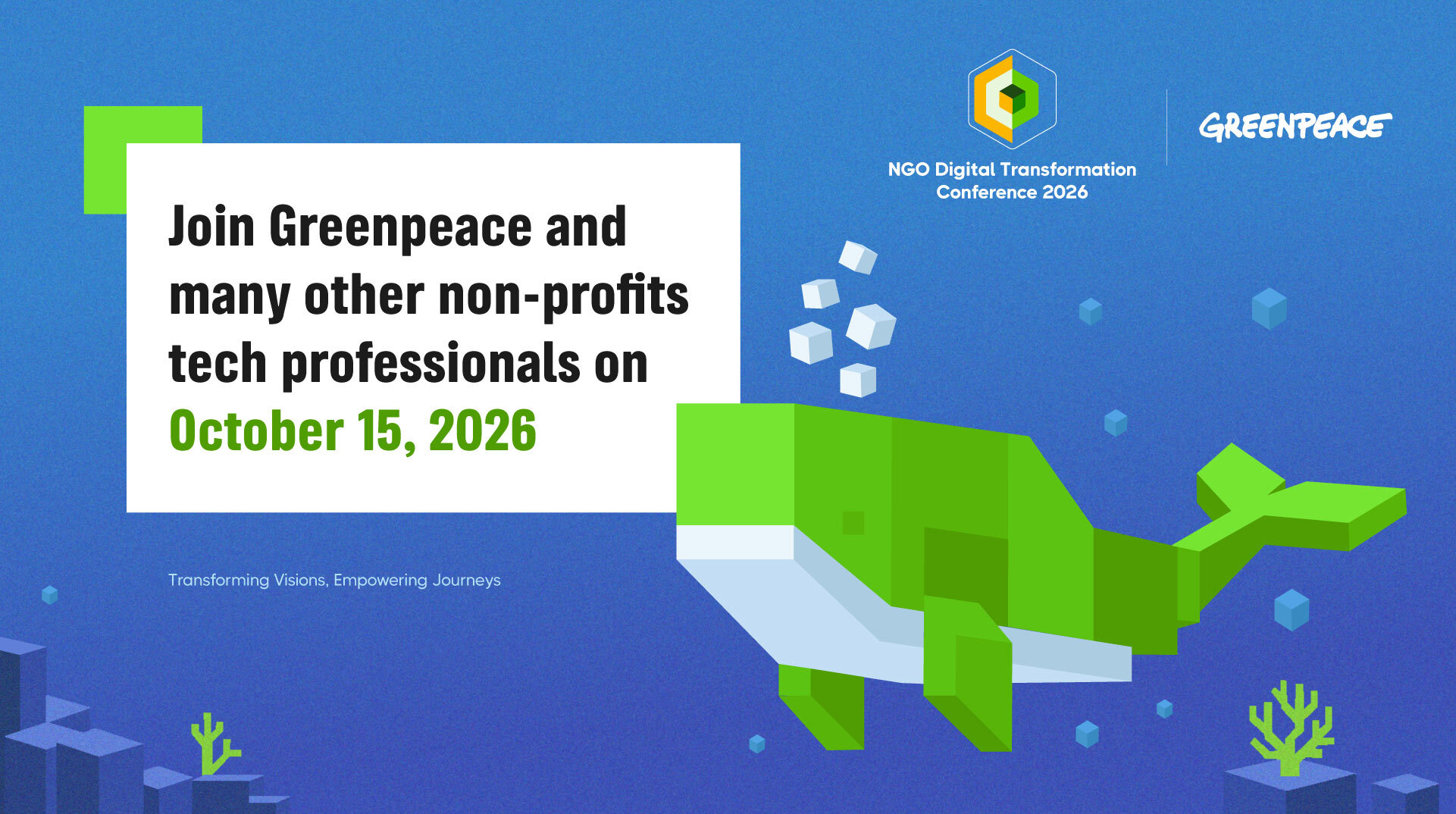
As the global sociopolitical landscape grows increasingly volatile, values-based non-profit organisations find themselves at a historic and perilous crossroads. On Thursday, 15 October 2026, Greenpeace International—in strategic collaboration with civil society technology collective Tactical Tech—will host its third annual digital transformation conference for the non-profit sector. Entitled “Leveraging our collective power in times of democratic crisis, AI and misinformation,” this premier online event arrives at a critical juncture for international advocacy, environmentalism, and human rights.
Modern civil society relies extensively on digital infrastructure to coordinate global campaigns, mobilize supporters, collect donations, and hold powerful institutions accountable. However, the ecosystem within which these charities and non-profits operate is fraught with systemic fragility. Organisations face stark disparities in digital capability and financial resourcing, forcing leadership teams into agonizing compromises regarding cybersecurity vulnerabilities, escalating operational costs, and the unseen environmental tolls of the software and hardware they deploy.
Simultaneously, the meteoric rise of generative artificial intelligence (AI), the insatiable energy and resource footprints of expanding data centers, and the unprecedented market dominance of Big Tech corporations have introduced severe ethical and ecological paradoxes. These technological disruptions are amplified by macroeconomic pressures, a tidal wave of weaponized misinformation, and a coordinated global retreat from democratic norms. Right-wing populism, authoritarian drift, fascism, and increasingly aggressive legislative restrictions on public assembly and free speech threaten the very legal and operational foundations upon which global activism is built.
The upcoming conference seeks to move past the superficial dogma of corporate digital adoption. Instead, it asks a more fundamental, existential question for the sector: How can non-profits select and build technological tools that genuinely serve people and the planet, protect fundamental human rights, and aggressively reduce their dependence on the monopolistic architectures of the Silicon Valley elite? By uniting experts from international NGOs, academia, civil society, and philanthropic development, this high-stakes summit aims to forge a resilient blueprint for the future of values-driven advocacy.
Detailed Chronology: The Evolution of Non-Profit Digital Transformation
To understand the urgency of the 2026 conference, one must trace the trajectory of how the non-profit sector has historically engaged with technological change. For decades, digital transformation within NGOs was viewed primarily through an operational lens—a matter of migrating databases to the cloud, modernizing email marketing platforms, and adopting customer relationship management (CRM) software to optimize fundraising yields.
The 2024 Genesis: Laying the Groundwork
The inaugural Greenpeace digital transformation conference in 2024 was born out of a quiet, growing realization across the sector: while commercial enterprises were reaping the exponential efficiencies of digital scaling, non-profits were lagging behind, often chained to legacy systems, constrained by restricted budgets, and vulnerable to sophisticated cyber threats. The 2024 event served as an exploratory lighthouse, bringing together disparate technology professionals from various NGOs to compare notes on infrastructure modernization, data privacy, and the operational bottlenecks preventing charities from scaling their impact in a hyper-connected world.
The 2025 Realignment: Confronting the Digital Shift
By 2025, the conversation had shifted dramatically. The initial novelty of cloud computing had been eclipsed by the sudden, disruptive emergence of generative AI tools, automated content generation, and sophisticated computational surveillance statecraft. The second annual conference addressed these accelerating pressures head-on, focusing on how non-profits could harness emerging technologies without compromising their ethical mandates. Discussions centered on data governance, the ethics of algorithmic decision-making, and the growing realization that relying on off-the-shelf commercial software often meant inadvertently supporting business models antithetical to environmental and social justice.
The 2026 Imperative: Crisis, Convergence, and Collective Action
Now, looking toward 15 October 2026, the stakes have escalated from operational optimization to institutional survival. The convergence of concurrent global crises—democratic regression, ubiquitous AI-generated misinformation, and ecological degradation—has created a hyper-complex operating environment. The 2026 conference is structured not merely as an educational seminar, but as a collaborative war room.
The day’s programming is meticulously designed to break down organizational silos. It features cross-sectoral panels, technical deep-dives, and an interactive workshop specifically engineered to feed data directly into an upcoming authoritative report on non-profit technology utilization. Every registered participant will receive a copy of this comprehensive study, providing them with actionable benchmarks to take back to their executive boards and technical teams.
Supporting Context & Metrics: The Triad of Modern Threats
The urgency behind the 2026 Greenpeace and Tactical Tech collaboration is underpinned by three interlocking crises that threaten to undermine decades of civil society progress: the technological paradox, the democratic recession, and the information ecosystem collapse.
1. The Technological Paradox: AI, Big Tech, and the Planet
Artificial intelligence is frequently touted as a silver bullet for non-profit productivity—capable of drafting grant proposals in seconds, analyzing vast troves of climate data, and personalizing donor outreach at scale. However, the underside of the AI revolution presents an acute ethical contradiction for values-based organizations, particularly those focused on environmental protection.
Training frontier AI models and powering the hyperscale data centers that house them requires staggering amounts of electricity and water, directly accelerating the very climate crisis environmental NGOs are fighting to mitigate. Furthermore, by depending on proprietary AI tools owned by a handful of trillion-dollar tech conglomerates, non-profits risk locking themselves into digital dependencies that mirror the extractive corporate models they frequently critique. The 2026 conference will confront this dynamic directly, exploring decentralized, open-source alternatives and sustainable technology frameworks that align with ecological stewardship.
2. The Democratic Recession and Civic Shrinkspace
Civil society does not operate in a vacuum. Around the globe, the foundational architecture of liberal democracy is buckling under the weight of authoritarian resurgence, right-wing populism, and democratic backsliding. Governments and corporate actors alike are deploying advanced digital surveillance, targeted legal harassment (such as Strategic Lawsuits Against Public Participation, or SLAPPs), and restrictive NGO registration laws to silence dissent.
For organizations that rely on public mobilization, peaceful protest, and investigative campaigning, digital security is no longer an IT concern—it is a matter of physical and operational safety. Activists, whistleblowers, and vulnerable communities supported by international NGOs face unprecedented digital tracking and state-sponsored espionage.
3. Misinformation and the Information Crisis
In an era where synthetic media, deepfakes, and automated troll farms can flood the information ecosystem with targeted falsehoods in minutes, truth has become commodified and contested. Values-based non-profits—whose entire theory of change rests upon public awareness, scientific consensus, and factual advocacy—find themselves outgunned by bad actors wielding algorithmic amplification. The weaponization of misinformation not only polarizes electorates but actively paralyzes effective public action on existential issues like climate change and human rights abuses.
Official Statements and Interdisciplinary Collaboration
The complexity of these challenges demands an unprecedented level of cross-sectoral solidarity. Recognizing that no single NGO can tackle these systemic pressures alone, Greenpeace has intentionally curated a diverse, world-class lineup of speakers, moderators, and partner organizations for the 2026 conference.
The event’s multidisciplinary roster reads as a who’s who of global civil society, humanitarian response, and academic research. Contributors hail from international heavyweights and specialized research institutions, including:
- Amnesty International (global human rights defense)
- Norwegian Refugee Council (humanitarian relief and displaced populations)
- 350.org (grassroots climate mobilization)
- Aldeias SOS Portugal (social development and child welfare)
- The Bertelsmann Foundation (democratic governance and public policy research)
- NetHope (technology collaboration for the global humanitarian sector)
- Tactical Tech (digital literacy, privacy, and civil society empowerment)
- Data Tank and Loughborough University (academic and data-driven civic research)
- Various national and regional entities from within the global Greenpeace network.
This breadth of participation ensures that the discussions will not be siloed within the environmental movement, but will reflect the shared systemic vulnerabilities experienced by human rights defenders, humanitarian agencies, and social justice advocates alike.
Leadership Insights
At the helm of this initiative are key figures from Greenpeace International’s digital and technological leadership: Luca Tiralongo, Head of Digital Transformation; Maria Julia van Boekel Cheola Torres, Digital Transformation Analyst; and Priscilla Chanda Chomba, Chief Technology Officer.
Their collective body of work emphasizes that digital transformation within values-driven organizations must be human-centric and politically conscious. Speaking on the ethos behind the annual conferences, Greenpeace leadership has consistently maintained that technology must serve as a liberatory force for social change, rather than an uncritical instrument of corporate efficiency that compromises organizational independence.
Future Outlook: Building a Safe Harbor for Civil Society
As the 15 October 2026 conference approaches, the organizing committee is placing heavy emphasis on cultivating a secure, confidential environment for participants. Given the sensitive nature of digital security threats, surveillance risks, and strategic vulnerabilities facing modern NGOs, the event is designed as a safe space.
To maintain the integrity of this collaborative environment and protect attendees from corporate co-optation or adversarial intrusion, strict registration protocols are in place. Participants are required to provide a valid organizational email address or verifiable evidence of their affiliation with a non-profit, academic, or civil society institution.
What Lies Ahead: Key Takeaways for Attendees
Participants logging into the 2026 digital conference can expect to walk away with concrete strategic assets, including:
- Actionable Technology Roadmaps: Frameworks for auditing existing digital stacks to minimize carbon footprints, reduce reliance on Big Tech monopolies, and optimize cybersecurity resilience.
- Cross-Sector Alliances: Direct access to a peer network of technologists, campaigners, and operational leaders facing identical systemic pressures across different humanitarian and environmental verticals.
- The 2026 Non-Profit Tech Report: Exclusive access to the findings generated by the conference’s interactive workshops, offering data-driven insights into how peer organizations are navigating AI integration and digital security.
- Strategic Defense Strategies: Practical methodologies for countering AI-driven misinformation campaigns, protecting organizational data integrity, and safeguarding vulnerable grassroots networks against digital authoritarianism.
Registration and Participation
Registration for the NGO Digital Transformation Conference is currently open, with digital access facilitated via the official Greenpeace International channels and collaborative portals managed alongside Tactical Tech.
For technology professionals, executive directors, data analysts, and campaigning leads working within the non-profit sector, this event represents an unmissable opportunity to step back from daily operational firefighting and engage in vital, long-term strategic alignment. In an era defined by overlapping democratic, ecological, and informational crises, the message from Greenpeace and Tactical Tech is clear: the survival and efficacy of civil society depend not on isolation, but on the deliberate, courageous forging of collective power.



