Executive Overview
The United States is undergoing a profound industrial transformation, driven by an urgent mandate to secure domestic supply chains for critical minerals, reduce reliance on volatile overseas markets, and fortify the manufacturing backbone of the nation’s energy infrastructure. At the heart of this movement is a high-stakes convergence of federal trade restrictions, aggressive industrial policy, and pioneering private-sector innovation in lithium-ion battery recycling.
As the electrification of transportation, the proliferation of artificial intelligence data centers, and the expansion of renewable energy storage accelerate demand to unprecedented levels, the federal government has intensified its efforts to onshore the entire lifecycle of critical materials. A cornerstone of this strategy is a newly enacted, aggressive trade measure: a one-year ban on the export of "black mass"—the valuable metallic powder produced by shredding spent lithium-ion batteries. Set to take effect on August 27, this directive aims to trap essential resources—such as lithium, cobalt, and nickel—within U.S. borders, forcing domestic processing and manufacturing.
However, restricting exports is only half the battle. Without robust domestic refining and processing infrastructure, stockpiled black mass and battery scrap cannot be converted into the high-purity materials required for new battery cells. To bridge this critical infrastructure gap, the U.S. Department of Energy (DOE) has channeled billions of dollars into domestic recycling and manufacturing projects through its Battery Manufacturing and Recycling Grants Program. Originally seeded by the bipartisan Infrastructure Investment and Jobs Act passed during the Biden administration, this initiative has navigated political shifts, budget realignments, and shifting administrative priorities to emerge as a vital catalyst for private investment.
This comprehensive report examines the multifaceted efforts by the federal government and private enterprises to build a resilient, closed-loop domestic critical mineral economy. We explore the timeline of recent federal interventions, the shifting tides of DOE funding, the technological breakthroughs driving direct recycling and electroextraction, and the broader geopolitical implications of establishing an independent American battery supply chain.
Detailed Chronology: Policy Shifts, Grant Reversals, and the Push for Domestic Refining
The evolution of America’s critical mineral policy over the past half-decade is a masterclass in the complexities of industrial planning. Navigating between legislative mandates, changing presidential administrations, and evolving market realities, the path to domestic self-sufficiency has been marked by major milestones, unexpected setbacks, and strategic reversals.
The Foundation: The Infrastructure Investment and Jobs Act (2021–2022)
The modern push for a domestic battery supply chain crystallized with the passage of the Infrastructure Investment and Jobs Act (IIJA) in late 2021. Recognizing that the United States lagged dangerously behind nations like China in the processing of critical minerals, Congress authorized billions of dollars to jump-start domestic manufacturing and recycling.
In 2022, the DOE rolled out the first round of its Battery Manufacturing and Recycling Grants Program. During this initial wave, emerging recycling and refining companies—such as Princeton NuEnergy and American Battery Technology Co.—secured critical seed funding to establish pilot plants and early-stage commercial operations. These grants were designed to de-risk innovative technologies aimed at extracting valuable elements from spent electric vehicle (EV) batteries and electronic waste.
Political Turbulence and Grant Reversals (2024–2025)
As federal administrations and priorities shifted, the trajectory of these clean energy investments experienced turbulence. Last year, the DOE sent shockwaves through the clean tech sector when it abruptly canceled more than $700 million in previously awarded program grants. The agency cited performance metrics, missed developmental milestones, and a reassessment of which projects best served the nation’s immediate energy and security needs.
Among the casualties was American Battery Technology Co., which saw its $57 million grant—awarded in 2022 to construct a commercial-scale lithium refinery in Nevada—rescinded. For a time, the cancellation highlighted the precarious nature of reliance on government-backed industrial policy, leaving stakeholders questioning the reliability of long-term federal commitments.
However, the volatility proved temporary for certain high-priority projects. In a dramatic reversal this past June, the DOE reinstated American Battery Technology Co.’s five-year grant, acknowledging the strategic necessity of domestic lithium refining capacity. This reinstatement signaled a pragmatic regulatory approach: while underperforming projects would be cut, foundational refining capabilities deemed critical to national security would be preserved and supported.
The Black Mass Export Ban and the Latest Funding Wave (2026)
The federal strategy reached a new level of aggression in August 2026, when the Trump administration announced a sweeping, one-year federal ban on the export of black mass, slated to take effect on August 27. Governed by a new Defense Production Act Title III (DPAS) directive, the ban prohibits the shipment of unrefined black mass overseas, ensuring that the lithium, cobalt, nickel, and manganese recovered from shredded batteries remain within the United States.
Simultaneously, the DOE announced a massive new round of funding—totaling approximately $500 million—focused squarely on bridging the gap between raw scrap recovery and commercial-grade material production. This third major funding round targets heavy industrial infrastructure, including demonstration projects, facility retrofits, and the construction of large-scale commercial facilities capable of closing the loop on battery manufacturing. Companies such as Princeton NuEnergy, Nth Cycle, Arcanum Ventures, Elevated Materials, Coreshell Technologies Incorporated, Jervois, and Lilac Solutions emerged as the beneficiaries of this capital infusion, setting the stage for a rapid expansion of domestic refining capacity over the next three years.
Supporting Context & Metrics: The Economics and Technology of Closed-Loop Recycling
To understand the urgency behind the federal government’s actions, one must examine the fundamental economics of battery manufacturing and the technological leaps being made by domestic recycling pioneers.
The Cost and Environmental Imperative of Direct Recycling
Traditional pyrometallurgical (smelting) and hydrometallurgical (leaching) recycling processes, while effective at recovering base metals, are often energy-intensive, expensive, and destructive to the complex chemical structures engineered into modern battery cathodes. These conventional methods typically break batteries down into their constituent elemental ions, requiring energy-intensive synthesis to rebuild them into functional cathode materials.
In contrast, emerging "direct recycling" and closed-loop technologies preserve the structural integrity of the cathode material. A prime example is Princeton NuEnergy, which received a $50 million DOE grant during the latest funding round to support the construction of a $110 million closed-loop cathode-to-cathode facility in Commerce, Georgia.
According to company data, Princeton NuEnergy’s proprietary process recovers cathode active material directly from lithium-ion battery scrap. By bypassing the need to recreate materials from raw elemental inputs, this approach can reduce the cost of manufacturing new batteries by about 45% compared to using virgin materials. Furthermore, the facility’s strategic location—built directly alongside battery manufacturing operations—minimizes transportation emissions and integrates seamlessly into the regional industrial supply chain. This project builds upon the operational success of the company’s advanced black mass recycling production facility in South Carolina, which came online last year with backing from a $12 million DOE grant awarded in 2022.
Solving the Refining Bottleneck Through Electroextraction
While black mass generation has grown rapidly due to an increasing volume of spent consumer electronics and electric vehicles, the United States has historically lacked the specialized refining capacity required to convert that black mass into battery-grade, high-purity metals.
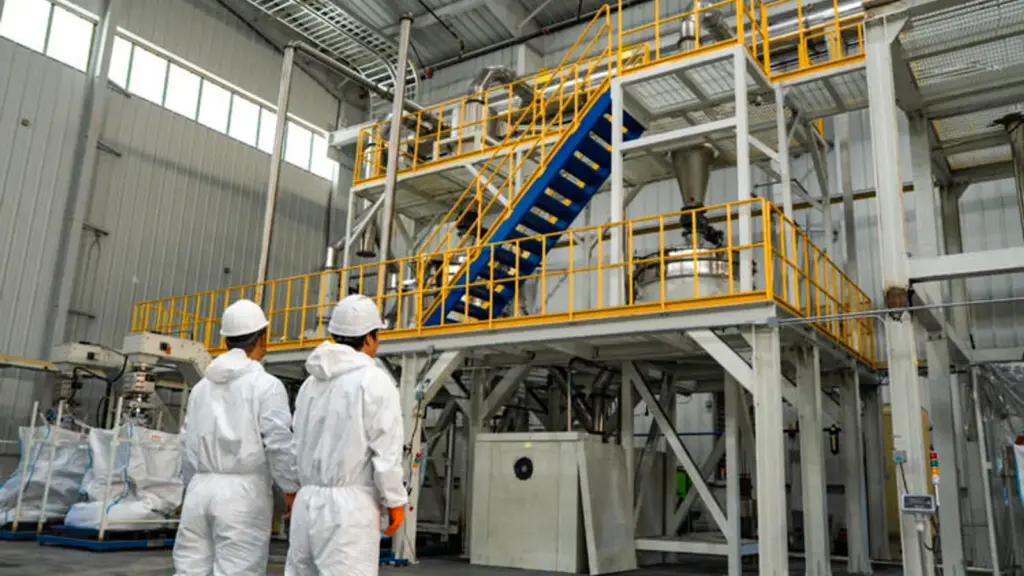
Nth Cycle, another major beneficiary of the recent federal funding push, is tackling this bottleneck head-on with its proprietary "electroextraction platform." Unlike traditional chemical separation facilities that rely on heavy chemical reagents and produce significant liquid waste, Nth Cycle’s technology uses electricity to extract high-purity metals directly from black mass.
The company plans to deploy this technology in a newly envisioned black mass refinery slated to open in the Southeast by 2029. This facility is designed to output battery-grade materials tailored for high-demand applications, including:
- Artificial Intelligence Data Centers: Powering the massive energy storage arrays required to back up uninterrupted computing infrastructure.
- Electric Grid Storage: Stabilizing regional power grids as intermittent renewable energy sources like wind and solar scale upward.
- Electric Vehicles (EVs): Supplying domestic automakers with localized, conflict-free critical minerals.
- Defense and Aerospace: Ensuring a secure, sovereign supply of critical metals for military hardware and advanced communication systems.
By establishing scalable refining operations like the ones planned by Nth Cycle and its peers, the domestic market aims to transform regulatory restrictions into competitive manufacturing advantages.
Official Statements and Industry Perspectives
The convergence of federal trade mandates and industrial funding has elicited strong reactions from industry executives, policy architects, and technological innovators who find themselves at the vanguard of the American critical mineral renaissance.
The shift toward resource nationalism is viewed by industry leaders not merely as a regulatory hurdle, but as a long-overdue alignment of national security and economic policy. Megan O’Connor, co-founder and CEO of Nth Cycle, emphasized the strategic importance of the government’s dual approach—pairing export restrictions with targeted infrastructure grants:
"The Trump administration has recognized that keeping recoverable critical minerals in the United States is a matter of national security. But without refining capacity, those resources can’t be used for new manufacturing. Being selected by the DOE to fill this gap validates the role we play to onshore one of the most consequential supply chains of our time."
Echoing this sentiment regarding the technical and economic efficiencies of next-generation recycling, Stephen Snyder, chief strategy officer at Princeton NuEnergy, highlighted the philosophical shift occurring within the recycling sector:
"Direct recycling allows us to retain more of the value already engineered into cathode materials rather than breaking them down and rebuilding them from their constituent elements."
These statements encapsulate the core philosophy of the modern industrial policy movement: raw material extraction alone is insufficient. True security requires an uninterrupted, domestic pipeline that transforms spent materials into advanced manufacturing inputs within U.S. borders.
Future Outlook: Challenges and Opportunities on the Road to 2030
As the United States looks toward the remainder of the decade, the roadmap for domestic critical minerals and battery recycling is filled with both immense promise and formidable challenges.
The 2029 Horizon and Infrastructure Scaling
With the one-year black mass export ban taking effect on August 27, domestic recyclers and refiners face an immediate trial by fire. For the ban to succeed without causing severe supply chain bottlenecks or plunging domestic scrap prices, refining capacity must scale rapidly. Projects supported by the latest $500 million DOE grant wave—such as Princeton NuEnergy’s Georgia facility and Nth Cycle’s upcoming Southeast refinery—are scheduled to come fully online between 2027 and 2029.
If these facilities meet their construction and operational timelines, they will collectively establish a self-sustaining domestic loop capable of processing hundreds of thousands of tons of spent batteries annually. This infrastructure will insulate U.S. manufacturers from geopolitical flashpoints, trade disputes, and foreign export controls.
Potential Headwinds
Despite federal tailwinds, several systemic challenges remain:
- Permitting and Regulatory Delays: Constructing chemical processing and refining facilities in the United States often entails navigating complex environmental reviews, local zoning laws, and protracted permitting processes, which can threaten tight project timelines.
- Workforce Development: Operating advanced electroextraction and closed-loop cathode facilities requires a highly specialized workforce. Training programs, academic partnerships, and technical academies will need to scale alongside industrial investments to prevent labor shortages.
- Feedstock Collection Logistics: Efficiently routing spent electric vehicle batteries, manufacturing scrap, and consumer electronics to domestic recycling hubs requires a mature reverse-logistics network. While EPR (Extended Producer Responsibility) laws in various states and Canadian provinces are helping to streamline collection, nationwide consistency remains elusive.
Conclusion
The strategic alignment of the federal black mass export ban, the multi-million-dollar infusion of DOE grant funding, and private-sector technological innovation marks a definitive turning point for American manufacturing. By forcing critical minerals to remain on domestic soil and actively financing the infrastructure required to refine them, the United States is laying the groundwork for a secure, resilient, and circular energy economy. As these state-of-the-art recycling and refining facilities come online ahead of 2030, America moves closer to achieving true energy independence and securing the foundational building blocks of the 21st-century technological revolution.