

Executive Overview
Back in 2007, an infamous tabloid-ready saga captured the public’s imagination: an astronaut allegedly donned a Maximum Absorbency Garment (MAG)—the high-tech diapers utilized during grueling spacewalks—and embarked on a non-stop, 900-mile cross-country drive from Houston to Orlando to settle a personal score. While the subject of the tale later disputed the sensationalized details regarding the apparel, the cultural imprint remained permanent, gifting the modern lexicon the unforgettable phrase "astronaut love triangle."
Nearly two decades later, this bizarre benchmark seems to have secretly infected the psyche of automotive journalism.
Whenever a new all-electric vehicle (EV) rolls onto the market, automotive reviewers reflexively fixate on a single metric: absolute, 100-to-0% highway range at sustained high speeds. If an electric vehicle cannot match the hyper-optimized aerodynamic efficiency of a Tesla sedan and deliver an uninterrupted 4 to 6 hours of high-speed cruising, it is frequently dismissed by critics as subpar or fundamentally flawed.
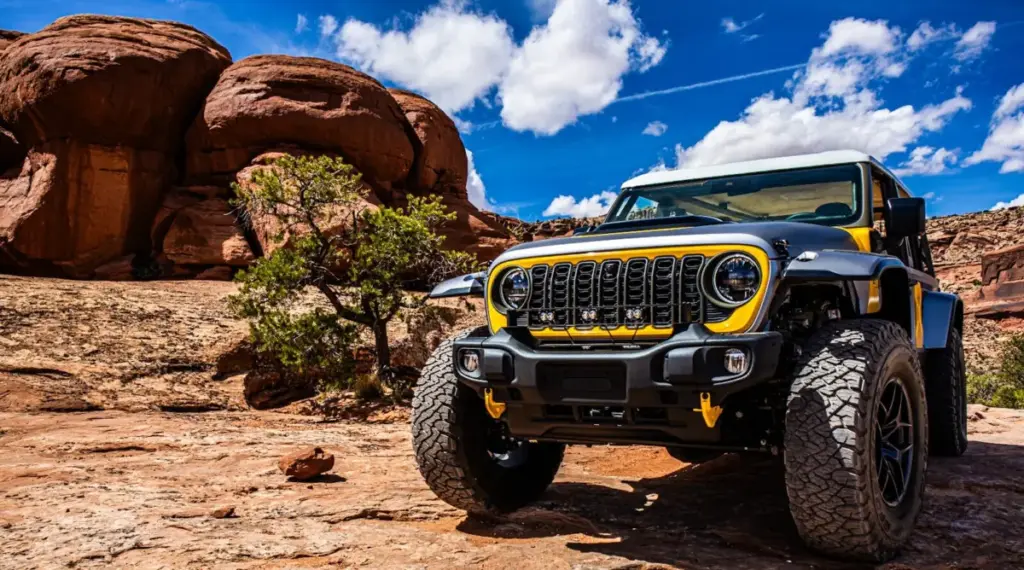
The latest casualty of this logic is the 2026 Jeep Recon Moab launch edition. Following a rigorous 80 mph highway range evaluation by Car and Driver—during which the off-roader yielded an estimated 160 miles of total range—automotive outlets like The Autopian were quick to label the vehicle’s highway capability a spectacular failure.
However, this relentless obsession with continuous, bladder-busting range ignores how human beings actually travel. Unless a driver is attempting a high-speed endurance record or fleeing across state lines wearing a space suit, nobody operates an EV by draining the battery from 100% to 0% in one agonizing, uninterrupted marathon. Interstate travel is governed by biological limits, passenger patience, and the fundamental mechanics of DC fast-charging curves. The Jeep Recon was never engineered to win a Cannonball Run; it was engineered to conquer the trail.
Detailed Chronology of the Controversy
The Test and the Immediate Backlash
The controversy surrounding the 2026 Jeep Recon Moab launch edition began taking shape the moment major automotive publications subjected the heavy-duty off-roader to their standardized highway battery depletion protocols.
- The 80 mph Benchmark: Car and Driver put the Recon through its paces at a locked 80 mph on interstate asphalt. Under these punishing aerodynamic conditions, the Moab edition managed a total range of approximately 160 miles.
- The Media Reaction: Within hours of publication, automotive blogs and social media channels erupted. Outlets such as The Autopian highlighted the limitation with biting sarcasm, posting updates questioning whether charging stations could be found deep at trailheads, effectively painting the vehicle’s electric architecture as a systemic liability for long-distance driving.
- The Paradigm Mismatch: This cycle highlights a recurring friction point in EV reporting. Reviewers evaluate utility vehicles using the same aerodynamic and efficiency rubrics applied to low-slung sedans, ignoring the inherent engineering trade-offs required to build a true, trail-rated off-road machine.
Supporting Context & Metrics: The Reality of Road-Tripping
To understand why a 160-mile 80-mph highway range is not the fatal flaw critics claim, one must examine the actual physics of road-tripping, battery chemistry, and human physiology.

The Myth of the 4-Hour Stint
Driving an EV from a full charge down to absolute zero in a single stretch requires ignoring every warning sign your body sends. Human beings get stiff backs, cramped legs, and fatigued eyes. More importantly, bladder capacity strictly limits driving intervals. Interstate travel is ultimately dictated by the smallest bladder in the vehicle.
Consider a classic long-distance route like Interstate 10 across Texas—the quintessential landscape for locking in at 80 mph for hours on end. If an electric vehicle possesses a total highway range of 160 miles, attempting to drive that entire span safely means executing comfortable, measured hops between charging infrastructure. At 80 mph, a 90-mile hop translates to just over an hour of continuous driving.
The DC Fast-Charging Sweet Spot
Rather than viewing frequent stops as a disadvantage, modern EV road-trippers utilize the vehicle’s optimal charging window. The 2026 Jeep Recon Moab edition packs a substantial 94 kWh battery pack. Operating within a 10% to 60% state-of-charge window aligns seamlessly with the spatial distribution of fast chargers along major corridors, such as the stretches between El Paso and San Antonio.
+--------------------------------------------------------------------------+
|                     RECON ROAD-TRIP CHARGING STRATEGY                    |
+--------------------------------------------------------------------------+
|  [ Drive 90 Miles (~1hr at 80 mph) ] ---> [ Arrive at Charger at 10% ]   |
|                                                     |                    |
|                                                     v                    |
|  [ Resume Journey at 60% ] <----------- [ Plug in: Restroom / Drink ]    |
+--------------------------------------------------------------------------+
This strategy maximizes charging speeds:
- Peak Power Delivery: DC fast chargers deliver maximum kilowatts when the battery state-of-charge is low. The Recon is capable of pulling around 200 kW at its peak speeds.
- The Restroom Break Window: By rolling up to a charger at 10% capacity, plugging in, and walking inside to use the facilities or grab a beverage, the vehicle pulls its maximum charging speed for the entire duration of the stop.
- Avoiding the Trickle Charge: By the time normal human maintenance tasks are complete, the Jeep has automatically replenished its reserves back up to 60%, completely bypassing the agonizingly slow taper rates that occur as a battery nears 100%.
Aerodynamics vs. Capability: Why the Recon is Inefficient
Critics frequently point out that the Recon is deeply inefficient on the interstate, returning roughly 1.7 miles per kWh at highway speeds.
The reasons for this efficiency penalty are structural and intentional:
- The Shape: The vehicle is purposefully designed with a boxy, utilitarian silhouette to maximize interior volume and off-road geometry.
- The Footprint: It rides on knobby, heavy 33-inch all-terrain tires designed to claw through mud and grip slick rock surfaces.
- Clearance and Gearing: The vehicle features over 9 inches of ground clearance and a heavy-duty 15:1 final drive ratio in the rear axle to deliver precise, low-end torque.
If Stellantis engineers had elected to chase a 300-mile EPA highway rating by smoothing out every edge, lowering the ride height, and wrapping the wheels in narrow, low-resistance eco-tires, the resulting machine would no longer be a Jeep. It would forfeit its approach angles, its open-air cabin capability, and the uncompromising rock-crawling performance that customers demand.

Official Perspectives and Industry Insights
Automotive analysts and engineers continuously balance the competing demands of consumer expectations and physical reality. While marketing departments often chase headline-grabbing range numbers, engineering teams must prioritize vehicle purpose.
Industry insiders note that the transition to electrification has forced a cultural reckoning among legacy off-road brands. Traditional internal combustion engine (ICE) Jeeps were never celebrated for their highway fuel economy; their aerodynamic profiles are akin to shipping containers, and their fuel stops on long trips are frequent. Yet, consumers readily accepted this because of what the vehicle could do once the pavement ended.
With EVs, however, consumers and journalists have been conditioned by early market entrants to expect hyper-efficient teardrop shapes that slice effortlessly through the wind. When a rugged utility vehicle enters the market retaining traditional proportions, the clash between "aerodynamic sedan metrics" and "trail-rated utility metrics" sparks intense editorial debate.
Future Outlook: Redefining Electric Capability
As charging infrastructure continues to densify across North America and battery thermal management systems improve, the anxiety surrounding highway range numbers is expected to mature.
The future of electric mobility will likely see a bifurcation in how vehicles are evaluated:
- Long-Haul Commuters and Sedans: Vehicles built explicitly for highway cruising will continue to prioritize aerodynamic drag coefficients and high-speed efficiency windows to satisfy traditional road-trippers.
- Dedicated Utility and Off-Road Platforms: Vehicles like the Jeep Recon will be judged on their ecosystem integration—how well their rapid-charging capabilities match the spacing of remote charging stations near trailheads, national parks, and rugged terrain.
Ultimately, the 2026 Jeep Recon Moab edition proves that an EV does not need to adhere to the mythical "astronaut love triangle" standard of non-stop, bladder-straining highway marathons to be successful. It is a vehicle built for the dirt, rocks, and trails—proving that being "Trail Rated" matters far more than satisfying an unrealistic highway range test.



