Executive Overview
For decades, human interaction with urban wildlife has followed a predictable, if grim, cadence: cities grow, trash accumulates, and pest control agencies deploy traps and chemical poisons. Yet, beneath the concrete veneer of the world’s major metropolitan areas, a profound biological shift is underway. Propelled by climbing global temperatures, shifting seasonal patterns, and human-made architectural environments, the planet’s rat populations are expanding at an unprecedented rate.
According to leading rodentologists, centuries of reactive, poison-heavy control methods are no longer sufficient. From the subterranean networks of New York City to the tightly guarded borders of western Canada, the battle against Rattus norvegicus (the brown rat) and Rattus rattus (the black rat) is entering a precarious new chapter. Researchers warn that unseasonably mild winters, driven by anthropogenic climate change, have eliminated the natural population bottlenecks that once kept rodent numbers in check.
Compounding the biological advantage of these resilient mammals is a growing philosophical fracture within the scientific community. While traditional exterminators rely on lethal interventions to maintain public health, a new generation of researchers, urban planners, and animal welfare advocates are championing holistic alternatives—ranging from structural sanitation enforcement and fertility control to large-scale civic mobilization. However, as cities grow denser and global weather patterns destabilize, the margin for error narrows. Planet Earth is changing, and the rat is uniquely positioned to inherit the spoils.
Detailed Chronology: From Sewer Exterminator to Global Authority
The life’s work of Dr. Robert Corrigan—one of the world’s preeminent rodentologists—offers a rare window into the subterranean world of urban pests. Now in his seventies, Corrigan’s career bridges the gap between grassroots extermination and high-level academic research.
The Early Years: The New York Sewers
Corrigan’s immersion in the world of rodents began not in a sterile university laboratory, but in the dark, damp, and labyrinthine sewer systems of New York City. Working grueling shifts as a municipal exterminator, Corrigan labored underground to finance his higher education. It was during these claustrophobic early morning shifts that he developed an abiding fascination with the animals he was tasked to eradicate.
Rather than viewing the rodents simply as targets, Corrigan spent his weekends camping out in agricultural barns and studying urban colonies. In these extended observation sessions, he documented complex social structures that challenged the monolithic depiction of rats as mindless vectors of disease. He witnessed acts of spontaneous altruism—such as a rat bringing food to a sick conspecific—alongside bursts of unprovoked aggression from dominant "bully" rats.
Graduate Studies and the Birth of Modern Rodentology
Transitioning from the field to academia, Corrigan pursued advanced degrees focused specifically on rodent pest management. His academic contributions helped transform urban pest control from a crude, scattershot trade into a rigorous discipline grounded in behavioral ecology.
Over the decades, Corrigan’s career has taken him to cities across the globe, advising municipal governments on how to redesign urban spaces to discourage infestations. Yet, his fundamental view of the animal remains deeply paradoxical. "Do I love that species and do I respect it as a scientist? Heck, yes," Corrigan reflects. "On the other hand, I know that they cannot cohabitate with us because they can kill us."

The 2025–2026 Climate-Rat Synthesis
The culmination of decades of observation came to a head when Corrigan joined a coalition of ten international scientists to publish a landmark study on the correlation between global heating and urban rat proliferation. Analyzing data across 16 major global cities, the research team demonstrated that rising ambient temperatures directly correlate with dramatic spikes in urban rat populations. This empirical link shifted the conversation around urban pests from a localized sanitation failure to an urgent symptom of global climate change.
Supporting Context & Metrics: The Biology of the Boom
To understand why modern cities are struggling to contain their rat populations, one must first understand the biological constraints—and newfound freedoms—of the two most pervasive species: the brown rat and the black rat.
The Winter Bottleneck Vanishes
Historically, neither the brown nor the black rat undergoes true hibernation. During harsh winters in temperate zones, low temperatures and frozen ground severely restrict foraging efficiency, metabolic demands skyrocket, and reproductive rates slow or temporarily cease. This annual winter bottleneck served as a natural reset button for municipal rodent populations.
However, as global climate trends deliver consecutive, unseasonably mild winters, this biological check has begun to fail. When temperatures remain elevated throughout the cold months, gestation cycles continue uninterrupted, litters grow larger, and infant mortality plummets.
As Corrigan notes, a marginal advantage for a single family of rats may seem insignificant at first glance, but the math changes rapidly when multiplied across hundreds of millions of individuals living in close proximity to human waste.
Public Health Risks and the Limits of Poison
Rats are not merely a nuisance; they are formidable biological vectors capable of transmitting a terrifying array of pathogens to human populations. Among the most notable zoonotic diseases carried by urban rats are:
- Weil’s Disease (Leptospirosis): A bacterial infection spread through rat urine that can lead to kidney damage, liver failure, and meningitis.
- Hantavirus: A severe respiratory illness that can be fatal to humans exposed to airborne particles from dried rodent urine or droppings.
- Variant Coronaviruses: Recent virological studies in cities like New York have confirmed that urban rat populations can harbor novel strains of coronaviruses, raising concerns about future spillover events.
Despite these grave risks, experts increasingly caution against an overreliance on conventional rodenticides. While poisons and snap traps serve as essential emergency tools for high-risk environments—such as hospitals, food warehouses, and hotels—their long-term utility is fundamentally flawed.
First, chemical rodenticides inflict slow, agonizing deaths on the target animals, drawing fierce opposition from animal welfare organizations. Second, these toxins frequently work their way up the food chain, poisoning predatory birds, domestic pets, and local wildlife. Furthermore, accidental human ingestions of household rat poisons account for thousands of emergency room visits annually in the United States alone.

Official Statements and Paradigm Shifts in Pest Management
As traditional poison strategies face mounting legal, environmental, and practical challenges, governments and scientists are locked in a debate over the future of pest control.
The Promise and Peril of Fertility Control
In response to public backlash against wildlife poisoning, innovators are turning toward immunocontraceptives and chemical birth control designed to limit rat reproduction without introducing lethal toxins into the ecosystem.
"Developing new forms of birth control is the key to managing the soaring number of poison-resistant rats compassionately," argues Richard Parr, director of the UK-based Center for Wild Animal Welfare. However, Parr points out that bureaucratic inertia is severely hampering progress. He argues that outdated biocidal product regulations within the European Union are actively "stifling innovation," creating a climate of regulatory uncertainty that deters private investment in next-generation fertility technologies.
Not all experts share Parr’s optimism. Professor Steven Belmain, an ecologist at the University of Greenwich, maintains a pragmatic skepticism regarding the immediate viability of contraceptives in urban settings.
"People are sometimes quite naive thinking we can use fertility control," Belmain warns. "If you’ve got a rat in your house, you’re not going to feed it contraceptives and just let it live there with you. Our restaurants, our hotels, our hospitals, our food warehouses will all just collapse without having any sort of poison management."
The Alberta Exception: A Masterclass in Collective Action
While major global capitals struggle to keep pace with multiplying rodents, one massive geographic jurisdiction stands out as a historic anomaly: the province of Alberta, Canada. Encompassing vast agricultural and urban landscapes, Alberta remains one of the only populated regions on Earth with a virtually negligible rat population.
Karen Wickerson, the Alberta government’s designated rat and pest specialist, oversees a state-backed eradication program that has operated continuously since 1950. Following the Second World War, as Alberta served as the primary agricultural breadbasket supplying Allied forces, the discovery of brown rats along the eastern border with Saskatchewan sparked immediate, province-wide panic.
Rather than relying solely on chemical treatments, the provincial government launched an unprecedented public mobilization campaign. Legislation was enacted making it a legal requirement for citizens to report and control rodents on their private property. Simultaneously, an aggressive public education initiative flooded schools, municipal offices, and agricultural outposts with informational pamphlets, graphic posters, and taxidermied specimens of the enemy.
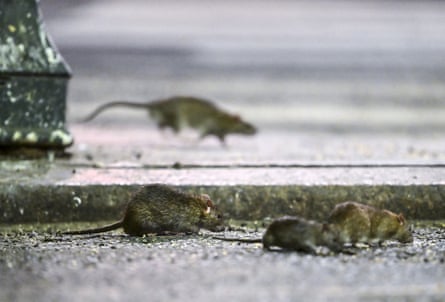
"There was a rat patrol that went out and started eradicating all the infestations along the border," Wickerson explains. "At that time there were probably six or seven hundred infestations a year."
By 2025, through a combination of proactive local vigilance, targeted anti-coagulant deployment, and stringent containment protocols, that number had plummeted to just five infestations across the entire province.
Future Outlook: Navigating a Warmer, More Crowded World
Despite the remarkable success of the Alberta model, modern pest management experts warn that future challenges are mounting on multiple fronts. Even in western Canada, citizens are increasingly traveling abroad, occasionally returning with accidental rodent hitchhikers tucked inside luggage and vehicles. Furthermore, expanding urban development creates complex sanitation challenges that invite new infestations.
Climate change remains the ultimate wildcard. As autumns grow warmer and winters lose their historical severity, the natural environmental barriers protecting northern regions are eroding.
Ultimately, Dr. Robert Corrigan believes that technological fixes—whether poisons or contraceptives—will always fall short if municipal governance remains lax. True rat control, he asserts, is fundamentally a question of civic discipline and political will. If a single property owner maintains poor sanitation habits, an entire city block can be compromised.
"Cities are not strict enough on punishing people that ruin the block or the area or the province for everybody," Corrigan says.
As the planet continues to warm, the global rat population stands ready to exploit every lapse in human vigilance. Whether modern society can transition from reactive chemical warfare to a coordinated, climate-conscious strategy of structural prevention and biological management will define the urban landscape of the 21st century.