Executive Overview
Coral reefs, often celebrated as the rainforests of the sea, are currently experiencing an unprecedented global decline. Fueled by escalating climate change, relentless overfishing, unchecked coastal development, and pervasive marine pollution, these vital marine ecosystems are facing existential threats. While decades of rigorous scientific research have meticulously documented this crisis, a growing consensus suggests that data alone is no longer enough to turn the tide.
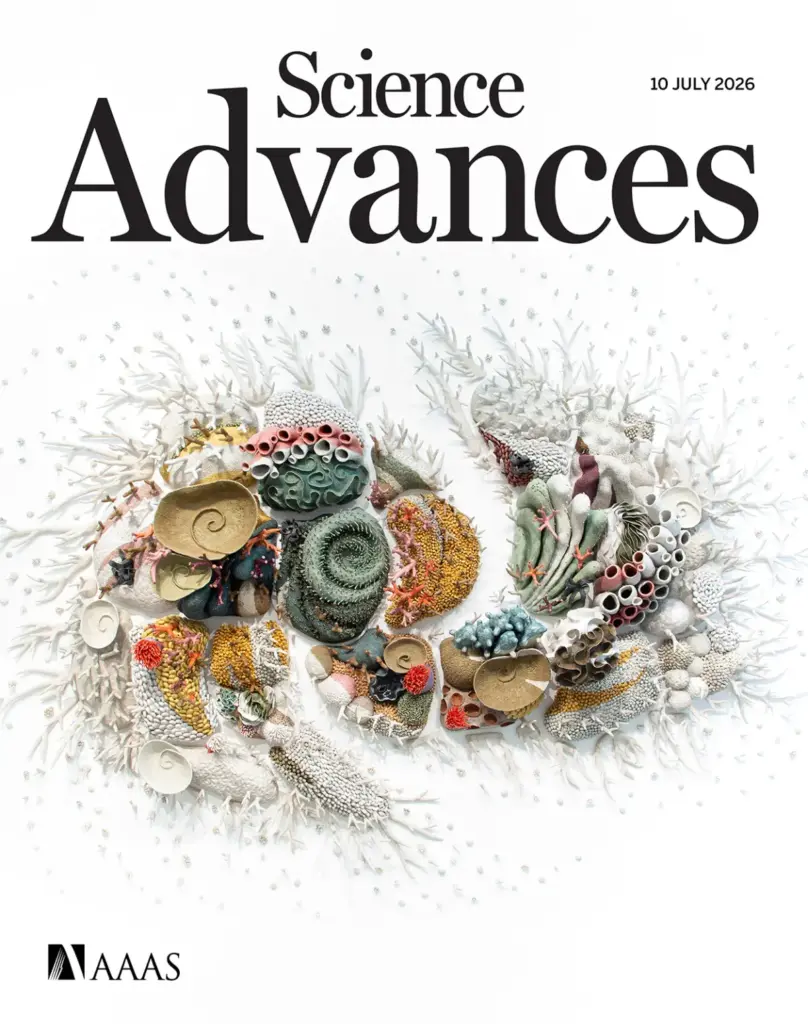
A landmark publication in the journal Science Advances argues that saving the world’s coral reefs requires a fundamental paradigm shift. Traditional conservation strategies—anchored strictly in ecological monitoring, academic papers, and top-down policy measures—must be aggressively augmented by non-traditional allies: artists, designers, storytellers, and community-led grassroots movements.
Authored by an interdisciplinary coalition of leading marine conservationists, including legendary oceanographer Dr. Sylvia Earle, the new article posits that art has a unique, irreplaceable capacity to bridge the gap between complex empirical data and human emotion. By translating abstract scientific metrics—such as rising ocean temperatures, acidification rates, and coral bleaching statistics—into compelling visual, cultural, and emotional experiences, creatives can make the largely unseen, underwater world of coral reefs intimately accessible to the public.
This movement moves far beyond aesthetic appreciation. It seeks to catalyze public engagement, foster deep empathy, and mobilize communities to advocate for robust legislative protections. Furthermore, the publication introduces the Coral Art-Science Consortium (CASC), a newly formalized global initiative designed to connect creative projects, amplify public outreach, and foster a unified cultural movement dedicated to marine conservation.
This comprehensive report examines the intersection of marine science and creative expression, detailing the chronology of this interdisciplinary awakening, contextualizing the metrics of the coral crisis, highlighting official statements from key figures, and outlining the future outlook for global reef preservation.
Detailed Chronology: The Evolution of Coral Conservation and Creative Intersection
To understand the significance of the Science Advances publication, one must trace the historical trajectory of coral reef conservation and how it has intersected with human culture over the last several decades.
Phase I: The Era of Pure Science and Discovery (1960s–1990s)
For decades, coral reef conservation was strictly the domain of marine biologists, oceanographers, and geomorphologists. Pioneers like Jacques Cousteau brought the vibrant beauty of the underwater world into living rooms globally through groundbreaking television documentaries, using film as a visual medium to foster wonder. However, within academic and conservation circles, the approach remained firmly rooted in quantitative assessment: mapping reef distributions, cataloging biodiversity, and measuring water chemistry.
As climate change began to exert its toll in the late 20th century—culminating in the first major global mass bleaching event in 1998—scientists responded by increasing the volume of data. Research papers proliferated, warning of systemic collapse. Yet, despite the alarming clarity of these scientific warnings, public urgency and political action lagged significantly behind the ecological reality.
Phase II: The Recognition of the Implementation Gap (2000s–2010s)
By the turn of the 21st century, conservationists encountered a psychological bottleneck known in environmental psychology as the "information deficit model." This is the flawed assumption that providing the public with more scientific facts will automatically yield pro-environmental behaviors.
During this era, marine scientists realized that while academic journals were meticulously documenting the death of the reefs, the general public remained largely disconnected. Coral reefs exist out of sight—beneath the waves—rendering them out of mind for billions of people. Conservation messaging often relied on dry statistics: gigatons of carbon, tenths of a degree Celsius, and percentages of coral cover lost. These metrics failed to evoke the emotional resonance required to drive systemic political and behavioral change. Slowly, conservationists began experimenting with multimedia campaigns, large-scale photography, and immersive virtual reality experiences to bring the plight of the reefs ashore.
Phase III: The Interdisciplinary Turn and the Birth of CASC (2020s–Present)
The current decade has marked a definitive turning point. Recognizing that traditional conservation frameworks are insufficient against the compounding threats of the Anthropocene, thought leaders began calling for radical collaboration.
The publication in Science Advances represents the formal crystallization of this movement. It moves past the era of isolated art installations or one-off awareness campaigns, calling instead for deep, structural integration between scientists, artists, indigenous communities, educators, and policymakers. Central to this new phase is the establishment of the Coral Art-Science Consortium (CASC). CASC acts as a global connective tissue, designed to coordinate creative conservation projects, share resources, and scale up grassroots initiatives into a synchronized, worldwide cultural movement.
Supporting Context & Metrics: The Scale of the Crisis and the Power of Perception
To fully grasp why this fusion of art and science is so desperately needed, one must evaluate the staggering metrics of the coral reef crisis alongside the psychological dynamics of human engagement.
The Ecological Reality
Coral reefs cover less than 0.1% of the ocean floor, yet they support an estimated 25% of all marine life. They are economic engines and ecological cornerstones, providing food, coastal protection, and economic livelihoods to over half a billion people worldwide. However, the pressures they face are compounding at an alarming rate:
- Mass Bleaching Events: Driven by unprecedented marine heatwaves, global coral bleaching has escalated from a rare anomaly in the 1980s to a recurrent, systemic disaster. Recent assessments indicate that over 50% of the world’s coral reefs have already been severely degraded or destroyed.
- Ocean Acidification: As the ocean absorbs roughly 30% of anthropogenic carbon dioxide emissions, seawater chemistry shifts, lowering pH levels and systematically dissolving the calcium carbonate structures that corals rely upon to build their skeletons.
- Local Stressors: Overfishing, destructive coastal development, agricultural runoff laden with fertilizers and sediment, and plastic pollution weaken coral resilience, leaving them ill-equipped to survive thermal stress.
The Psychology of Creative Engagement
Faced with these apocalyptic figures, the human mind frequently responds with apathy, fatalism, or "climate despair." When a problem feels too vast, complex, and distant, individuals often disengage entirely.
This is where art and design intervene. Psychologically, creative works bypass intellectual defenses and engage the limbic system—the emotional center of the brain. When an artist sculpts an artificial reef from eco-friendly materials, projects immersive under-ocean light installations in urban centers, or weaves indigenous folklore about the sea into contemporary storytelling, they humanize the data.
Studies in environmental communication consistently demonstrate that narratives and visual metaphors dramatically outperform raw data in shaping public attitudes. Art translates the ecological tragedy of a dying reef from a sterile spreadsheet statistic into a profound cultural loss. It transforms passive observers into active participants by fostering a deep, visceral sense of empathy and connection.
Official Statements and Expert Perspectives
The Science Advances article features contributions from a diverse collective of global experts who champion this interdisciplinary approach. Their insights underscore the urgency and validity of merging creative culture with hard science.
"We can no longer afford to speak only to ourselves within the scientific community," notes a lead contributor to the Science Advances study. "The language of peer-reviewed journals is precise, rigorous, and entirely necessary—but it speaks to the intellect, not the heart. To save the reefs, we must awaken a planetary empathy that transcends academic boundaries. Art gives a voice to the silent suffering of the sea."
Dr. Sylvia Earle, legendary oceanographer, National Geographic Explorer-at-Large, and co-author of the initiative, has long advocated for changing how humanity perceives the ocean.
"No water, no life. No blue, no green," Dr. Earle emphasizes. "People protect what they love, and they love what they understand. For too long, the ocean has been viewed merely as a resource to be exploited or a dumping ground out of sight. Artists, storytellers, and designers possess the rare alchemy required to make humanity fall in love with the ocean all over again—inspiring a protective instinct that policies and laws alone cannot enforce."
Furthermore, representatives from coastal and Indigenous communities emphasize that this movement must honor traditional knowledge systems. For generations, many indigenous cultures have maintained holistic, reciprocal relationships with marine ecosystems through art, song, and oral histories.
"Scientific metrics are vital, but they are only half the picture," shares an Indigenous community leader involved in regional conservation dialogues. "Our ancestors understood the ocean as a living relative, not an object of study. By bringing indigenous storytelling and cultural arts into the conversation with modern science, we reclaim a holistic worldview that views human beings as caretakers of the marine world rather than its masters."
Future Outlook: Building a Shared Cultural Movement
As the Coral Art-Science Consortium (CASC) scales its operations globally, the roadmap for the future of coral reef conservation is undergoing a profound transformation. The success of this interdisciplinary model will depend heavily on several strategic execution pillars over the coming decade.
1. Institutional Partnerships and Funding Integration
Historically, funding for conservation has been strictly bifurcated: scientific research grants rarely accommodate community arts programs, and arts funding rarely prioritizes ecological metrics. The future requires philanthropic organizations, governmental bodies, and international agencies to establish hybrid funding mechanisms. Grants must explicitly support projects that pair marine scientists with visual artists, musicians, architects, and digital designers to co-create public engagement campaigns.
2. Grassroots Community Empowerment
Top-down conservation decrees frequently fail when local communities—those who depend directly on reef ecosystems for tourism and fishing—feel alienated from the process. CASC aims to decentralize conservation by empowering local coastal communities to tell their own stories through regional arts, murals, theater, and indigenous knowledge sharing. When local populations take creative ownership of their marine environments, sustainable management practices naturally follow.
3. Urban Interventions and Immersive Public Education
Reef conservation cannot remain confined to coastal zones or academic conferences. To influence national and international policy, urban populations—millions of whom live hundreds of miles from the nearest coastline—must be reached. Future initiatives will leverage urban spaces, utilizing large-scale public art installations, augmented reality (AR) marine sanctuaries in city centers, and interactive museum exhibits to bring the ocean directly to the urban doorstep.
4. Policy Advocacy Rooted in Cultural Resonance
Ultimately, the goal of fusing art and science is to drive systemic political change. By shifting public consciousness from passive curiosity to passionate inspiration, and from inspiration to vocal advocacy, this movement aims to create unignorable political momentum. When millions of citizens emotionally connect with the fate of coral reefs, policymakers face mounting pressure to enact stringent carbon reduction targets, enforce sustainable coastal development laws, and establish truly protected marine reserves.
Conclusion
The decline of the world’s coral reefs is not merely an ecological crisis; it is a profound cultural failure. For decades, humanity has watched the steady degradation of these underwater ecosystems through the objective lens of science, yet the response has fallen tragically short of the urgency required.
The clarion call issued in Science Advances and championed by the Coral Art-Science Consortium offers a vital course correction. By tearing down the artificial walls that separate laboratories from artist studios, and data from emotion, we unlock a powerful new toolkit for planetary survival. Through the synthesis of rigorous science, evocative art, indigenous wisdom, and community-led action, humanity still has a fleeting window to move from awareness to inspiration—and from inspiration to the decisive action needed to ensure that coral reefs endure for generations to come.