Executive Overview
California finds itself navigating a high-stakes balancing act that energy experts call a “good problem.” As the state aggressively accelerates its deployment of solar panels and wind turbines, it achieves remarkable milestones: greenhouse gas emissions are plummeting, urban air quality is improving, and clean energy generation is shattering previous records. Yet, this green revolution brings an inherent, physics-bound challenge known as intermittency. The sun sets, the wind dies down, and traditional generation sources drop offline, creating a sudden deficit in electricity production.
To bridge these power gaps, California has embarked on a massive infrastructure buildout, constructing utility-scale battery farms at an unprecedented pace. Between 2019 and 2025, the state’s grid-connected storage capacity skyrocketed by an astonishing 2,100 percent. These colossal lithium-ion installations store excess daytime renewable energy to keep the lights on during peak evening hours.
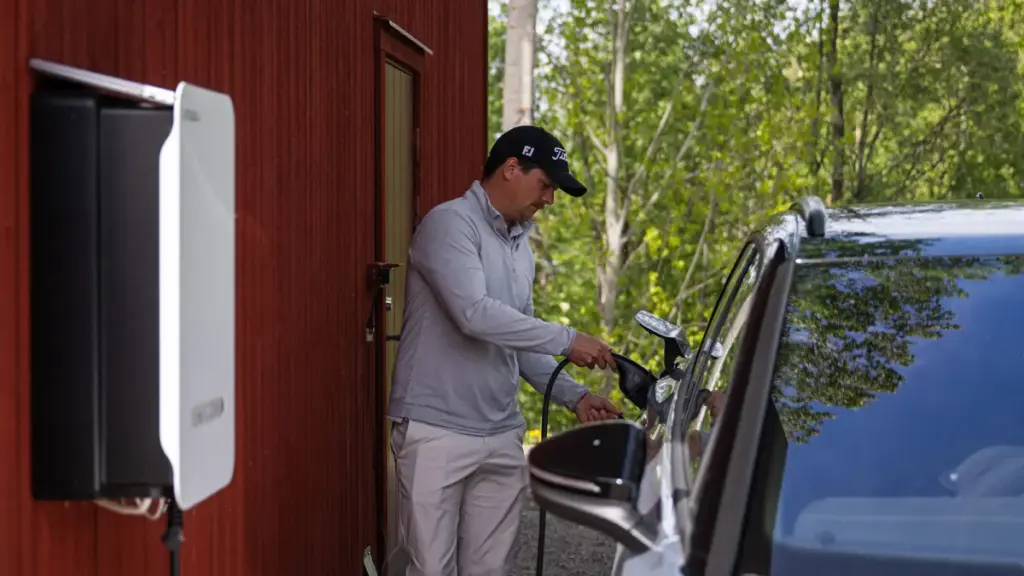
However, a revolutionary paradigm shift is underway that could radically alter how energy is stored and distributed. The Golden State is sitting on a vast, decentralized energy reserve parked quietly in residential driveways, corporate parking lots, and suburban garages: electric vehicles (EVs). Through advanced vehicle-to-grid (V2G) technology, modern EVs can transform from passive power consumers into mobile batteries capable of feeding surplus electricity back into the public grid during moments of high demand.
A landmark analytical report published by energy consulting firms GridLab and E3, in collaboration with grid software innovator Kevala, reveals a staggering projection. If a mere 10 percent of California’s projected EV owners enroll in V2G programs by 2036, their combined vehicular batteries will supply fully one-third of the state’s targeted long-duration energy storage capacity. This synergy of transportation and electrical engineering promises to accelerate renewable adoption, stabilize regional grids, and save consumers billions of dollars by bypassing the need to construct exorbitantly expensive stationary storage facilities.
Detailed Chronology: The Evolution of California’s Grid and the Rise of V2G
To understand how California arrived at the precipice of a decentralized vehicular energy network, it is essential to trace the historical progression of the state’s energy policy, technological advancements, and shifting grid dynamics.
Phase 1: The Renewable Expansion and the Storage Deficit (2015–2019)
For over a decade, California served as the vanguard of America’s clean energy transition. Guided by aggressive legislative mandates—such as the target to achieve 100 percent zero-carbon electricity by 2045—utilities aggressively procured large-scale solar and wind contracts.
While this transition successfully curbed carbon emissions, it exposed the structural vulnerability of the legacy electrical grid. For decades, utilities operated on a predictable, dispatchable model: when demand spiked, operators simply ordered natural gas-fired power plants to burn more fuel and ramp up generation.
The proliferation of solar energy disrupted this foundational model. Midday electricity production routinely outstripped demand, creating a notorious pricing and operational anomaly dubbed the "Duck Curve." As solar production peaked in the afternoon and tapered off just as citizens returned home from work, turned on air conditioning units, and plugged in appliances, the grid experienced an abrupt, severe drop in net load. Traditional thermal power plants struggled to ramp up fast enough to meet this steep evening ramp, forcing grid operators to rely on costly, highly polluting peaker plants.
Phase 2: The Grid-Scale Battery Boom (2019–2025)
Recognizing that renewable generation without storage was inherently limited, California aggressively pivoted toward battery deployment. State regulators, led by the California Energy Commission (CEC) and the California Public Utilities Commission (CPUC), streamlined permitting processes and incentivized the construction of massive lithium-ion battery installations.
The results were historic. Between 2019 and 2025, California’s battery storage fleet expanded by a phenomenal 2,100 percent. These grid-scale facilities successfully absorbed excess solar energy during peak daylight hours and discharged it seamlessly into the transmission network after sunset. Yet, despite these monumental achievements, relying solely on stationary utility-scale storage presents significant fiscal and spatial hurdles. Land acquisition, environmental reviews, raw material constraints, and multi-million-dollar capital expenditures mean that building enough fixed storage to balance a fully decarbonized grid carries a staggering financial price tag.
Phase 3: The Integration of Mobile Storage and V2G (2025–Present)
As the EV market matured, energy visionaries realized that millions of vehicles were sitting idle for more than 95 percent of their operational lifespans. Parked in home garages or workplace charging stations, these vehicles represented an underutilized asset class containing hundreds of gigawatt-hours of dormant electrical capacity.
The introduction of bi-directional charging hardware and V2G software protocols bridged the gap between the automotive and utility sectors. No longer viewed merely as transportation appliances, EVs began to be evaluated as distributed energy resources (DERs). Recognizing this potential, research coalitions initiated comprehensive modeling studies—culminating in the recent CA Flex Blueprint report—to quantify how vehicular fleets could alleviate grid stress without compromising driver convenience.
Supporting Context & Metrics: The Convergence of Pressures and Opportunities
The urgency to integrate V2G technology stems from a broader convergence of systemic pressures affecting electrical grids across North America, driven by climate change, demographic shifts, and industrial electrification.
Escalating Grid Demand and Climate Pressures
Across the United States, electricity demand is entering a historic growth cycle after decades of flat consumption patterns. This surge is driven by three primary catalysts:
- Building Electrification: Consumers and municipalities are actively replacing fossil fuel-powered natural gas furnaces, water heaters, and kitchen ranges with high-efficiency electric heat pumps and induction cooktops.
- Transportation Electrification: The rapid adoption of commercial and passenger EVs is shifting millions of gallons of petroleum consumption directly onto the electrical grid.
- Data Center Proliferation: The exponential expansion of artificial intelligence, cloud computing, and cryptocurrency mining has transformed massive data centers into colossal energy consumers, frequently operating 24 hours a day and drawing power equivalent to small cities.
Simultaneously, global climate change is intensifying extreme weather events. Persistent, prolonged heatwaves force millions of residents to operate air conditioning systems at maximum capacity for days on end. This creates severe electrical demand spikes during late summer afternoons—precisely the operational window when solar generation declines as the sun sets.
The Mathematics of Vehicular Storage
The economic and engineering implications of V2G deployment are illuminated by hard data compiled by energy analysts:
- The 10 Percent Threshold: According to findings from Kevala, GridLab, and E3, if merely 10 percent of California’s projected EV owners participate in managed V2G programs by 2036, their aggregate vehicle batteries will satisfy 33 percent of the state’s total long-duration energy storage targets.
- Capital Cost Mitigation: Procuring equivalent storage through traditional, stationary utility-scale battery installations requires billions of dollars in capital investments. Utilizing distributed automotive batteries avoids these major infrastructure expenditures, shielding everyday ratepayers from steep utility bill increases.
- Capacity Over Scale: Because a modern EV battery typically ranges from 60 to over 100 kilowatt-hours (kWh) of storage capacity—significantly larger than many home backup batteries—even a fractional draw from thousands of vehicles provides massive relief to regional substations without draining any individual car below its owner’s required driving threshold.
Official Statements and Expert Perspectives
Industry leaders and policy analysts emphasize that unlocking the full potential of distributed energy resources requires careful regulatory frameworks, transparent compensation models, and cross-sector collaboration.
Pete Skala, Vice President of Professional and Advisory Services at Kevala and co-author of the recent grid modernization study, underscores the efficiency of leveraging existing consumer assets rather than breaking ground on new industrial facilities.
"It won’t take a huge amount of participation to make a meaningful dent in what would otherwise be very expensive grid-scale storage purchases," Skala explains. By tapping into vehicles that citizens have already purchased and parked, society gains access to a massive energy buffer at a fraction of the traditional cost.
Addressing the financial mechanics of V2G programs, Skala notes that designing the correct economic incentive structure is paramount:
"If we can get this right, to take advantage of that resource in particular, [it] will reduce the amount of that grid-scale storage that we’d otherwise need to procure. We need to make sure that we set these incentives at levels in which everybody wins."
Energy regulators point out that compensating EV owners for exporting power back to the grid creates an active revenue stream for drivers, effectively lowering the total cost of vehicle ownership. However, utilities must strike a delicate balance: paying too little will fail to drive consumer adoption, while paying too much could inadvertently drive up retail electricity rates, eroding the cost-saving benefits that V2G is intended to deliver.
Furthermore, consumer protection remains a foundational design principle of modern V2G software platforms. Modern vehicle management applications allow drivers to input their daily commuting schedules and minimum state-of-charge requirements. If a motorist specifies that they require an 80 percent charge by 7:00 AM for their morning commute, the grid control software automatically restricts discharge parameters to ensure the vehicle is never found depleted when the owner is ready to drive.
Future Outlook: The Decentralized Energy Citizen
The future of electricity consumption and grid management will bear little resemblance to the top-down, centralized model of the twentieth century. As California and other pioneering jurisdictions chart the course toward a 100 percent clean energy economy, the traditional boundary between the energy consumer and the utility provider is dissolving.
The Synergy of V2G and Smart Demand Response
Vehicle-to-grid technology does not operate in a vacuum; it is designed to function as part of a comprehensive ecosystem of "flexible load" technologies. Utilities are already pioneering automated demand-response programs, such as remotely coordinating smart thermostats during peak heatwaves. By temporarily adjusting residential indoor temperatures by a few degrees—imperceptible to most occupants—utilities can effectively blunt peak electricity demand without building new fossil-fuel peaker plants.
When smart thermostats, commercial energy management systems, and bi-directional EV chargers operate in concert through advanced artificial intelligence and automated grid software, the modern household transforms into an active participant in energy markets.
A Win-Win Paradigm for Ratepayers
Crucially, the benefits of this transition extend far beyond affluent early adopters who purchase electric vehicles. By curbing peak demand and reducing the necessity for multi-billion-dollar utility-scale infrastructure projects, V2G integration helps stabilize baseline electricity rates for all ratepayers—including those who do not own an EV.
As regulatory bodies refine compensation frameworks, cybersecurity standards, and bi-directional hardware certifications over the coming decade, the paradigm of mobility will permanently merge with energy infrastructure. The car sitting quietly in your garage will no longer be viewed merely as a machine that takes you from point A to point B. Instead, it will be recognized as a vital, stabilizing pillar of a resilient, decarbonized electrical grid—ready to illuminate homes, power communities, and secure a sustainable energy future.